In 1985, 66,879 cars entered the United States outside the official importers. At the end of 1984 the Washington Post estimated that Mercedes alone accounted for around 22,000 that year, against 79,000 through its own dealers. Mercedes-Benz of North America bought some of these cars to check the conversions and found a 1984 sold as a 1985, and airbags that were on the list but not in the car. Together with the dealers' association it backed a bill. The Imported Vehicle Safety Compliance Act followed in 1988: a car that does not meet American standards cannot come in until it is 25 years old.
That law was about Mercedes. Japan hardly came into the story. Yet it is one of the reasons a Dutch buyer of a Nissan Skyline GT-R pays more than they would if the Americans were not there.
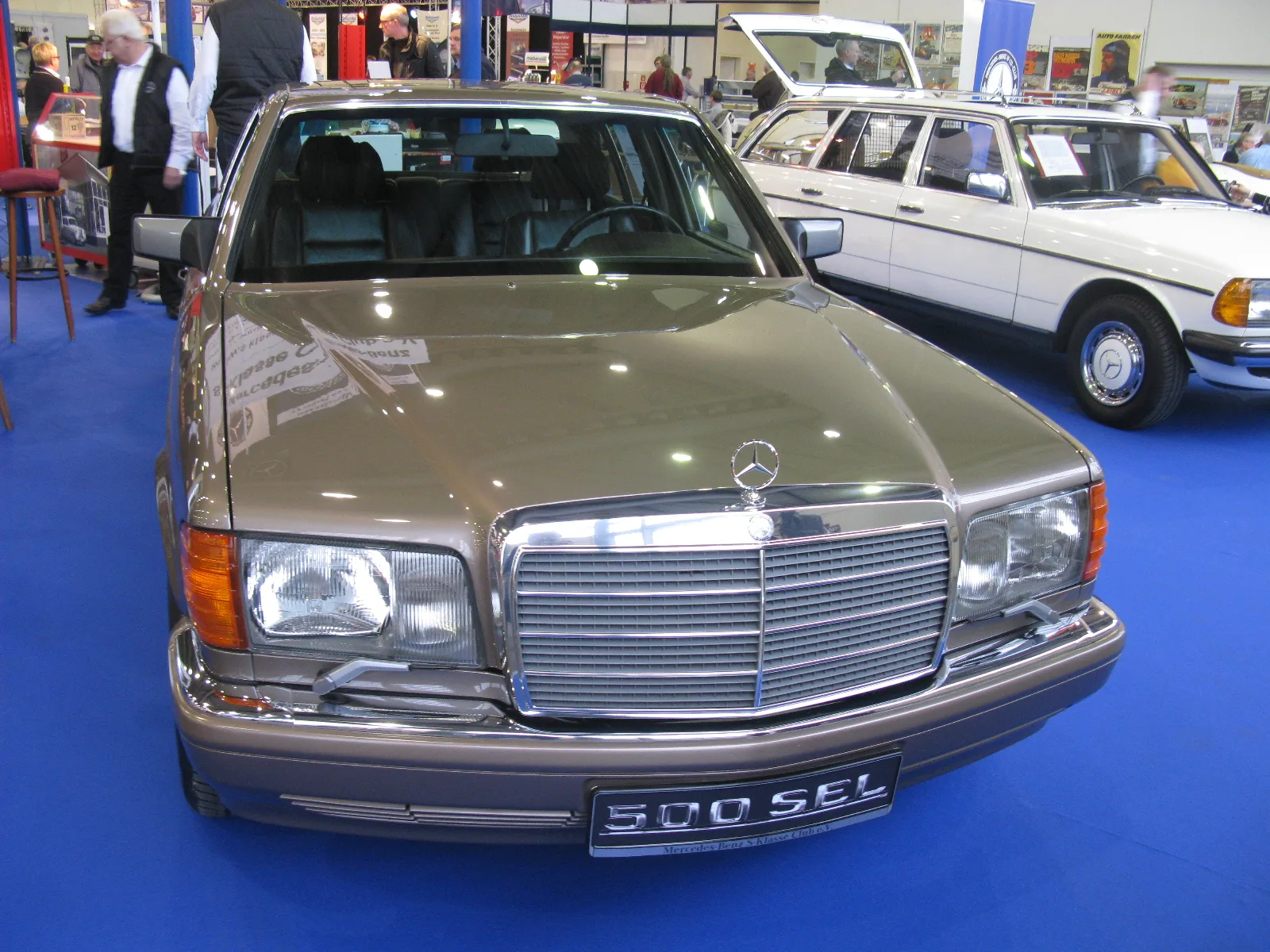
A W126 Mercedes-Benz 500 SEL at a classic car show.
A date everyone knows
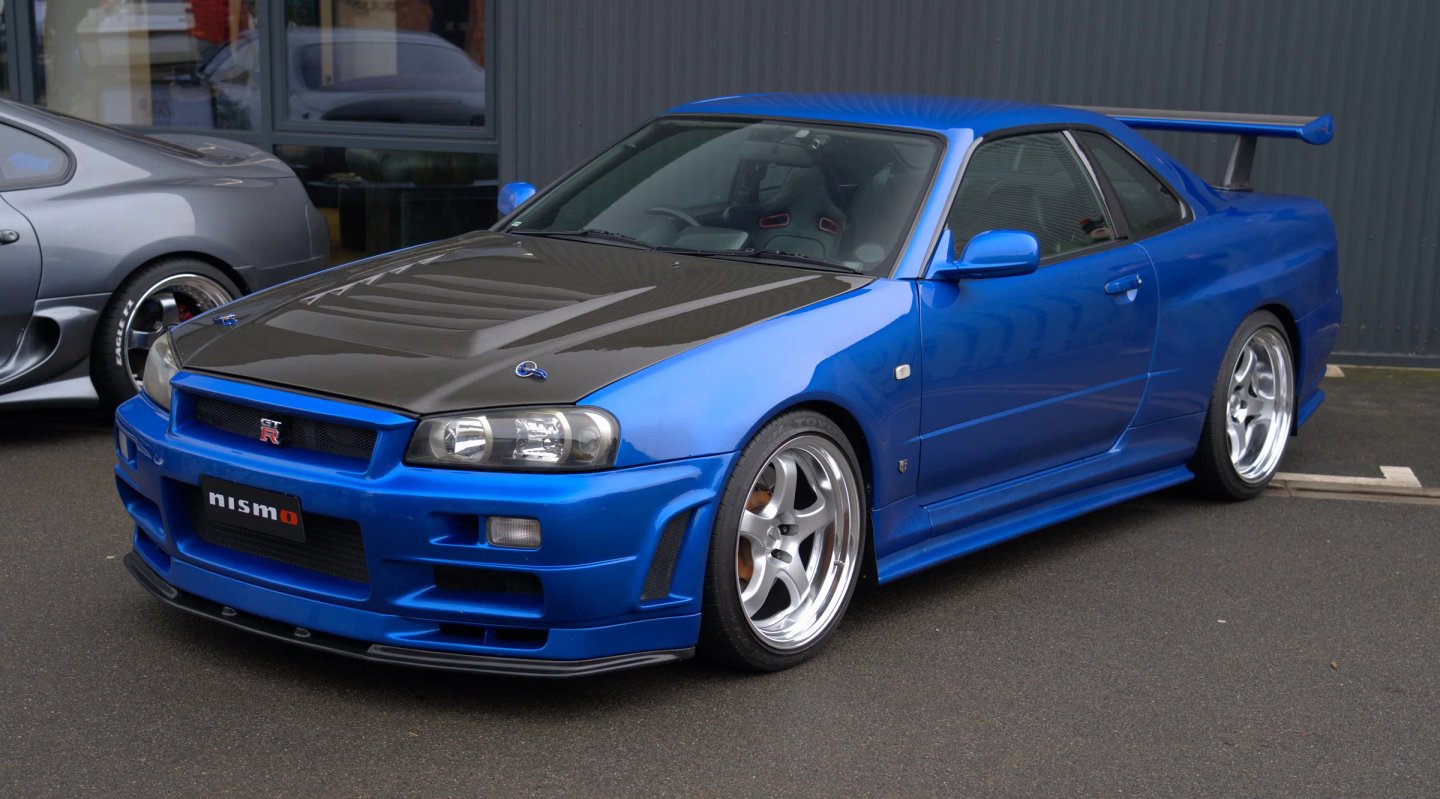
The 25 years run from the month of production. So for every car America never got, the day it becomes legal there is fixed. The first R32 GT-R in 2014, the first R33 in 2020, the first R34 GT-R in January 2024. Those dates were known the day the cars left the factory.
Investors know this kind of date from the stock market. When a share joins the S&P 500, index funds have to buy it, at an announced moment and more or less regardless of price. Andrei Shleifer measured in 1986 that shares added between 1976 and 1983 rose 2.79%. Lawrence Harris and Eitan Gurel found 3.13%, of which 2.49 points went away again over the next 29 trading days. Later studies disagree about that part. About the start they agree: if a new group of buyers is sure to arrive on a given day, the price moves before it.
The GT-R went the same way. Brian Jannusch of Top Rank Importers in California told Jalopnik in December 2022 that an R33 cost about $40,000 before turning 25 and about $65,000 almost immediately after. An R34, he said, had cost $70,000 to $80,000 a year earlier and now cost $120,000 to $200,000. Moacir Tanoue of RT JDM Performance in Nagano put prices 20% lower a year earlier and at least half as high five or six years earlier. These are dealers with cars to sell, not an index. But they also said what they were doing: R34s were sitting in storage in Japan, at Top Rank for $250 to $400 a month.
Why so late, if the date had been fixed since 1999? Our explanation is that waiting costs money. At $400 a month a year of storage is $4,800, and on an $80,000 car that is 6% a year before any interest. Nobody puts a used Nissan in a shed for 25 years in 1999. Somebody will when the date is three years off. So the price starts moving once waiting for the date becomes affordable.
What the law did not do
It is easy to give this law too much credit. In August 2015, Japanese Nostalgic Car reported importers saying R32 prices in Japan had doubled. The same piece shows America came last. Australia imported from 1993, Britain from the mid 1990s, New Zealand from 1998, the Middle East, Russia and Southeast Asia in the 2000s. By the time Americans were allowed in, the stock had been shrinking for twenty years. The law did not create demand for this car. It set the date on which the last large group of buyers arrived.
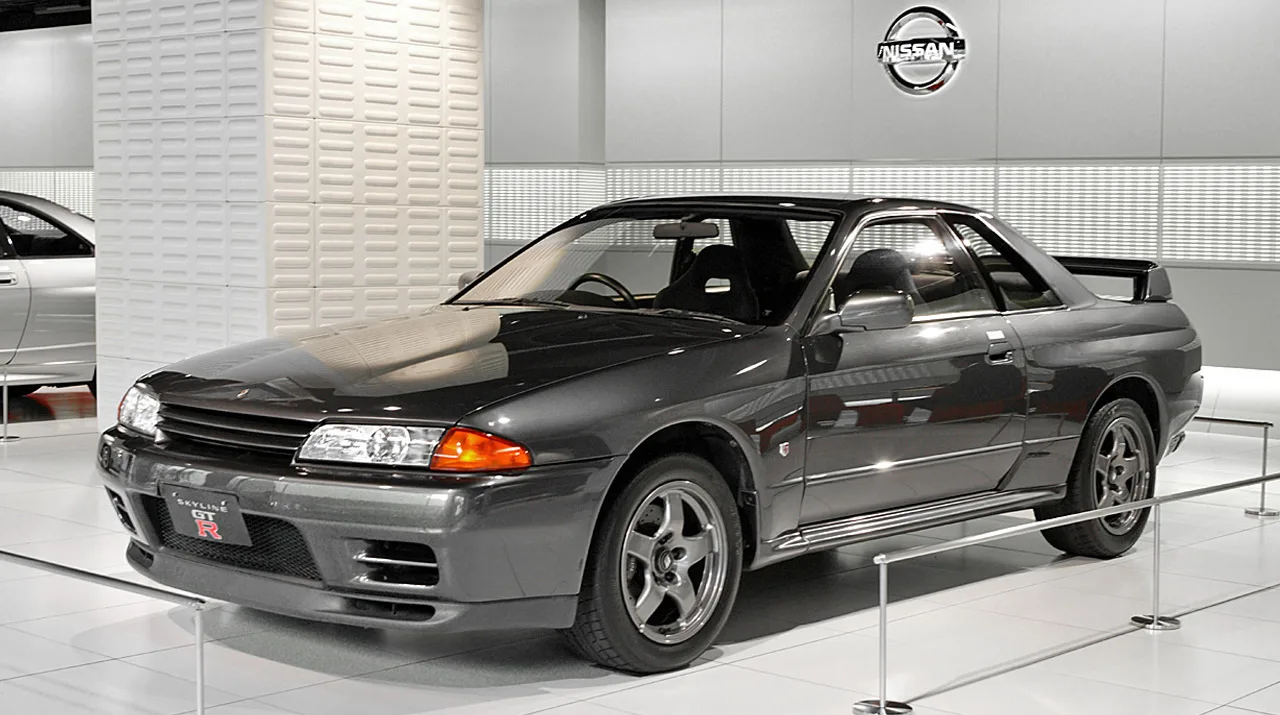
A Nissan Skyline GT-R R32 at the Nissan Ginza Gallery in Tokyo.
And it applies to only part of the list these stories always recite. The Toyota Supra A80, the Mazda RX-7 FD and the Honda NSX were sold new in America. No new buyer turns up on their 25th birthday, except for variants America never had, such as the RX-7 Spirit R. Anyone crediting the 25-year rule for a rise in an ordinary Supra should be able to say which buyer arrived that day.
Why a European buyer notices
An R34 sitting in Japan goes to whoever bids most, in whatever currency. Tanoue was already worried in 2022 that American demand could empty the Japanese market within five to seven years. A buyer in the Netherlands cannot step outside that. Cars already in Europe get compared with what they would cost in Japan too. Hagerty put the R33 on its Bull Market list in December 2025 at $82,350, noting that cars have come over from Japan since the exemption. That is more than twice the $40,000 from Jannusch, although it compares a price guide with a dealer.
So a European buyer is exposed to a rule written for somebody else, to solve a problem for a German brand. The same goes for European cars America never got. The 2001 Renault Clio V6 turned 25 in 2026. Whether enough American buyers stand behind it to move anything is another question.
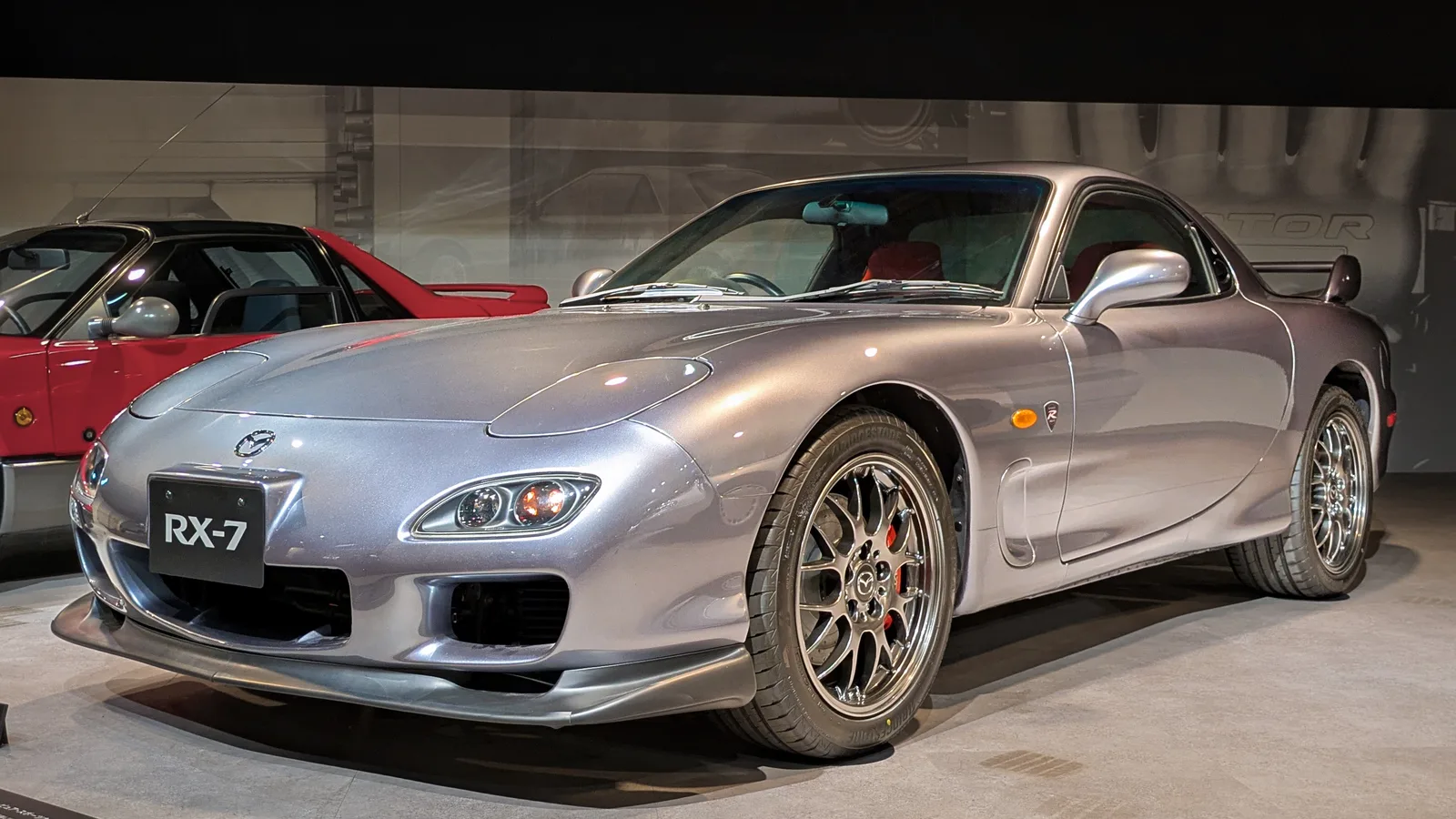
A Mazda RX-7 Spirit R Type A at the Mazda Museum in Hiroshima, from the final run of 2002.
What happens in 2027
The calendar has an end. R34 production stopped in 2002, and in the same year tighter Japanese emissions rules also finished the Supra and the RX-7. The last of those cars turn 25 in 2027. After that this generation has no more dates to come.
In the S&P 500, part of the rise went away again after inclusion. Hagerty allowed for R34 prices falling once enough were in America. What nobody has seen yet is what buyers and storage firms do when the calendar has nothing left to wait for.
Images: 1999 Nissan Skyline GT-R V-Spec BS J26 by MrWalkr (CC BY-SA 4.0); Mercedes-Benz 500 SEL W126 (12443810484) by nakhon100 (CC BY 2.0); Nissan Skyline R32 GT-R 001 by I, 天然ガス (CC BY-SA 3.0); Mazda RX-7 Spirit R (FD3S) (front three-quarter view) at Mazda Museum by Aos.1905 (CC BY 4.0). Images resized.


