
"Zoals gezien, bereden en accoord bevonden." As seen, driven and approved. Those words were on the receipt for a Citroën Visa Club built in 1983, bought in the Netherlands for 7,900 guilders. The seller knew the car had been repaired after a heavy collision, one the previous owners' insurer had settled as a total loss. The seller said they had told the buyer and were given the task of proving it. In December 1990 the case reached the Dutch Supreme Court, which recorded the words on the receipt among the facts and said nothing more about them. Its concern was something else. A seller who should have spoken cannot argue that the buyer should have looked harder. And a buyer who is no expert is not automatically required to have the car inspected by one.
Sellers still write that sentence, often believing it moves the risk to the buyer. That is not how it works. Nor is it useless. What it does is narrower, and Dutch case law shows the outline. This is general information about Dutch law and not legal advice: every ruling depends on its own facts, and other countries have their own rules.
What the law asks
Article 7:17 of the Dutch Civil Code says the delivered goods must conform to the contract. The car must have the qualities the buyer was entitled to expect, given its nature and what the seller said about it. Paragraph 5 holds the exception: the buyer cannot rely on a deviation they knew about, or could reasonably have known about, at the time of sale. That is where "as seen" gets its legal purchase. It covers what could be seen. Everything else turns on what the buyer could expect and what the seller knew.
It matters who is selling. When a consumer buys from a business, the seller cannot change the statutory rules in their own favour (article 7:6), and a defect appearing within a year is presumed to have been there at delivery (article 7:18a). In a private sale that presumption does not apply and the buyer has to prove it. The private seller is in a stronger position, but article 7:17 applies to them as well.
When the words do help
In 2015 a buyer paid a dealer €7,500 for a Fiat 280 camper from 1989. The invoice said "as seen, driven and approved" and "no warranty". After 44 days the engine failed on the motorway. The appeal court in Den Bosch wrote in February 2017 that excluding a warranty takes nothing away from the legal requirement. But it should have prompted the buyer to lower their expectations, and not every imperfection makes a 26-year-old camper non-conforming. The buyer lost.
The appeal court in Leeuwarden ruled the same way in January 2018 on a 12-year-old Chevrolet Trans Sport bought for €2,250, sold "voetstoots" (as it stands) and without warranty. The buyer had seen the car on the lift and noticed the welding. The roadworthiness test was ten days old. The court named the age, the price and those words in one breath.
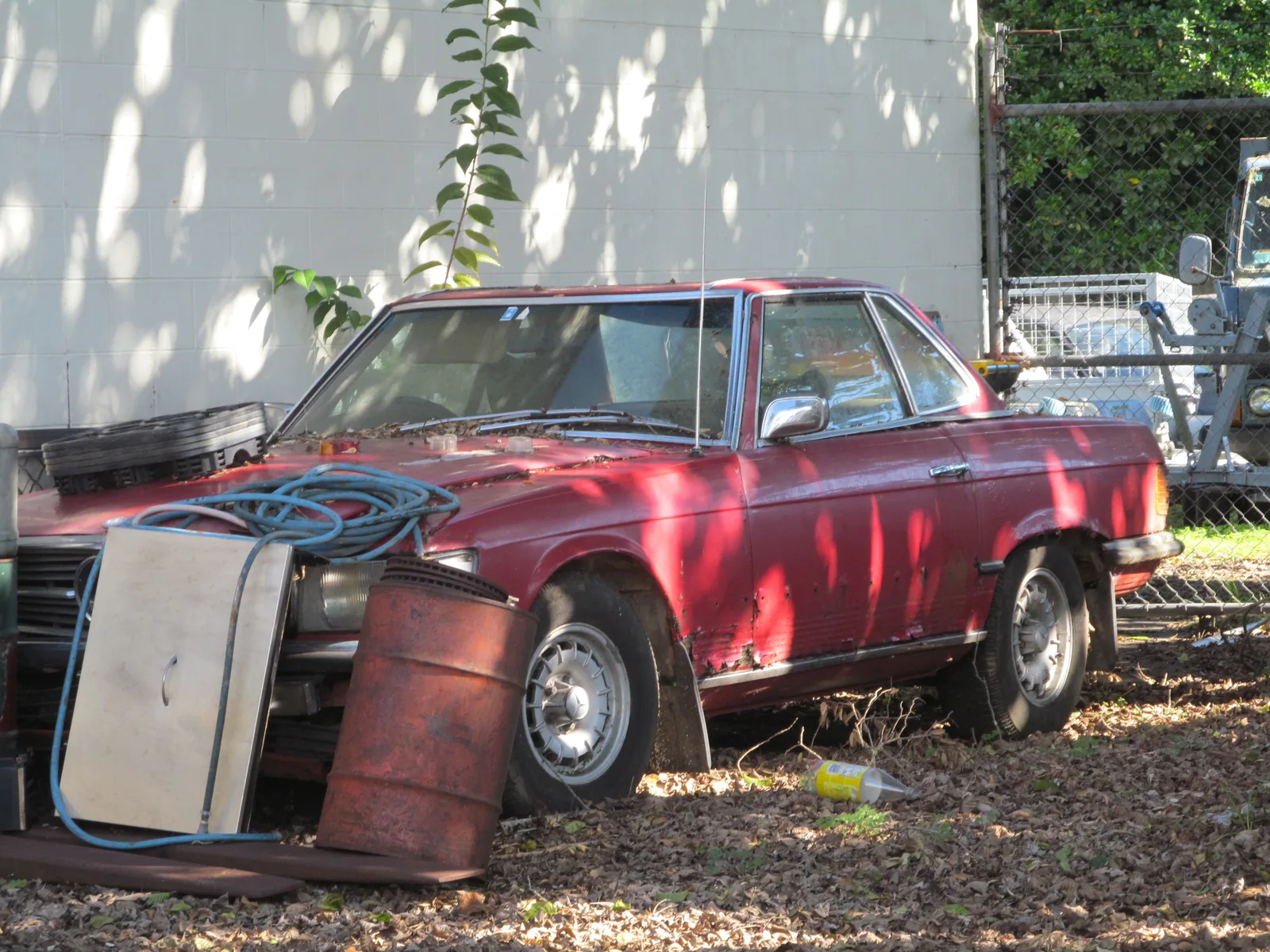
A Mercedes-Benz SL behind a garage in Auckland, with rust on the wing and sill. What a buyer has seen like this is hard to call a surprise later.
For anyone selling a classic this is good news with a condition. The words help, but alongside the age, the price and a recent test. They help mostly with wear and with what the buyer could see for themselves.
When they do not
With safety. In 2018 a Renault Twingo with more than 210,000 km was sold for €660 without warranty. It turned out to have a badly corroded brake line, and the Dutch vehicle authority, the RDW, found that its roadworthiness certificate had lapsed as a result. The district court in Amsterdam, treating it as a consumer sale, held the sale dissolved: the buyer did not have to expect a car she could not safely drive. The low price and high mileage changed nothing.
With the odometer. In 1993 the Supreme Court let stand the annulment of the sale of a 1985 Golf GTI, bought for 25,950 guilders "at the buyer's own risk". It showed 45,228 km, while a garage had recorded 61,963 km at the end of 1986. The appeal court found that a seller implicitly guarantees the odometer is right, and the clause did not stop that.
And with honest mistakes. In March 2022 a private seller sold a 2012 Mini Countryman on Marktplaats, the Dutch classifieds site, for €12,800. The advert said 93,000 km. The RDW had already recorded 162,223 km in May 2021. The seller had themselves bought the car from a dealer, and the court saw no intent. It annulled the sale anyway, for mutual mistake. The seller had to repay €11,586.83, the price less a charge for use, plus €1,351.56 in costs. The seller's argument that the buyers should have checked for themselves failed.
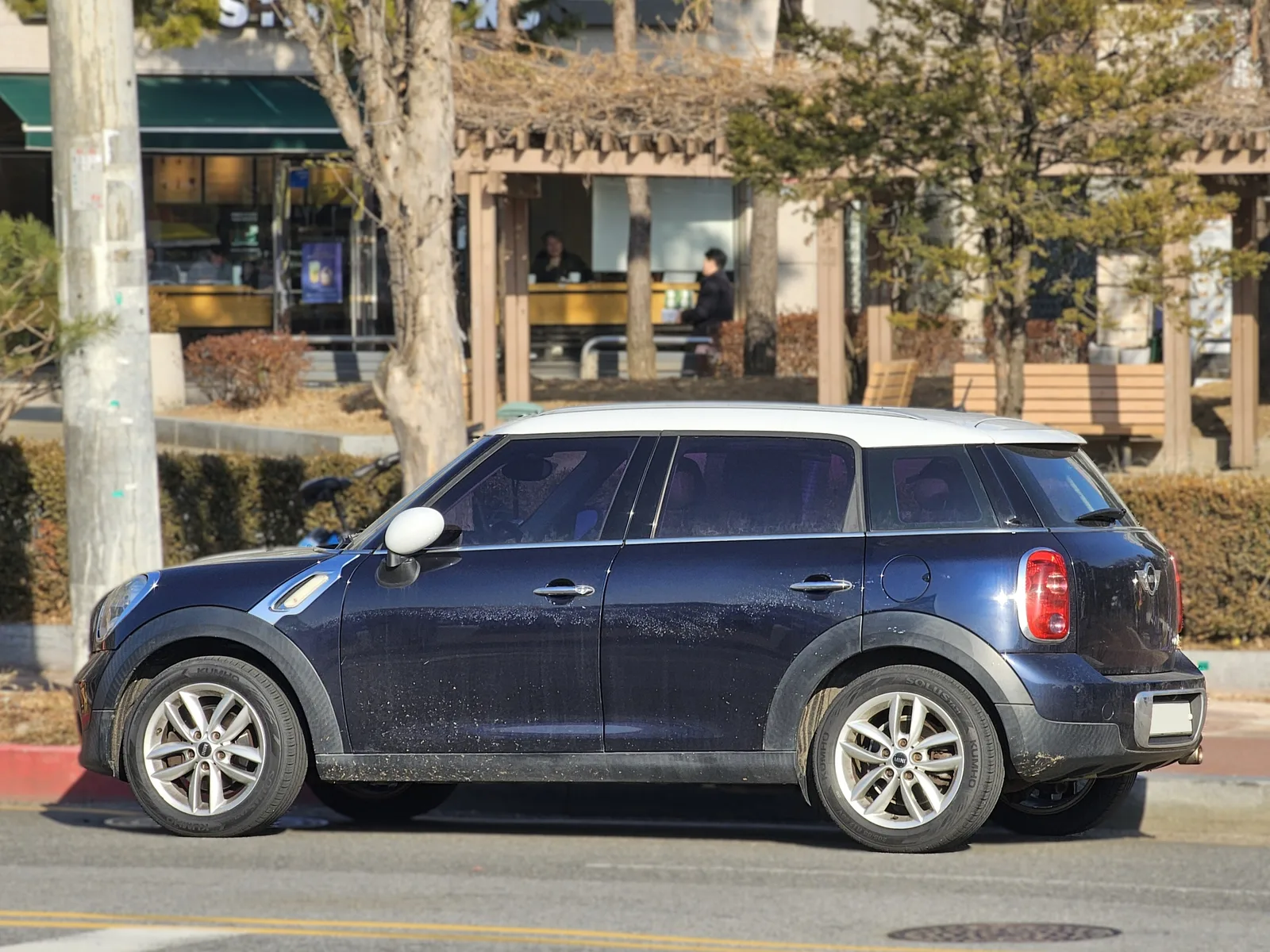
A Mini Countryman of the R60 generation, the type in the 2024 ruling.
What does protect a seller
Article 7:17 looks at what the seller said and what the buyer could know. A seller who wants "as seen" to mean something therefore makes sure something was seen, and that this can be established later. Say the seller of a 1972 Alfa puts this in the contract: rust in the left sill, right door resprayed, engine rebuilt in 2011 with invoice, mileage cannot be verified. Both parties sign. On those four points there is little left to argue about what the buyer knew. One line on that receipt would have spared the Visa's seller the burden of proof.
A list like that belongs with the paperwork a seller gathers anyway, and with any way of selling. At Octane, buyers ask questions publicly during the auction, so the answer sits online in plain view. That does not replace a contract, and it covers nothing nobody asked about.
But writing things down binds you as well. The seller of the Mini had written something down: 93,000 kilometres.
Images: Citroen Visa Club 1981 (37505057180) by RL GNZLZ from Chile (CC BY-SA 2.0); Mercedes-Benz SL (36683889995) by Riley from Christchurch, New Zealand (CC BY 2.0); MINI R60 Countryman Cooper Cosmic Blue Metallic (5) by Damian B Oh (CC BY-SA 4.0). Images resized.


