In 42% of eBay auctions of a board game called Cashflow 101, the winner paid more than the price at which the same game was for sale on the same screen. Two shops sold it new for $129.95, later $139.95, among the auctions in the search results. With shipping included, which was higher in the auctions, the figure becomes 73%.
The numbers come from The Bidder's Curse by Ulrike Malmendier and Young Han Lee, in the American Economic Review of 2011. They followed every auction of that game between February and September 2004. Then, in 2007, they looked at 1,929 auctions of everything from electronics to sports equipment, each with a fixed price alongside. There the share was between 44% and 52%, and the average gap was almost 10% of the fixed price before shipping.
A different curse from the winner's
The winner's curse is about uncertainty. Nobody knows what a thing is worth, so everyone estimates. Whoever estimates highest wins, and that is often whoever is most mistaken. With Cashflow 101 there was nothing to estimate. Whatever the game is worth to you, any bid above the price at the shop next door loses money.
The authors go through the obvious objections. The shops always supplied new copies with the bonus tapes, while only 17% of auction titles promised "new". Seller reputation does not explain it. Neither does experience: winners with little and with a lot of eBay history overbid equally often, 41.7% against 42.2%. And an auction ought to be cheaper on average, as payment for the waiting and the risk. Here the average auction ended $2.69 above the fixed price, shipping included.

Board games on a shelf. With a factory-made box, the alternative is easy to find.
What remains is attention. The closer a fixed price sat to an auction in the list, the less likely that auction was to get a bid. The link was strongest for a person's first bid. The authors read this as bidders keeping the shop price in mind at the start and losing it when they come back after the message "You have been outbid!". About a third of the auction listings also quoted the $195 list price, which puts a different number in the head.
Two people are enough
The second result matters more to anyone who uses auction prices to say something about a market. Of the 807 bidders, 17% ever bid above the fixed price. Yet 42% of auctions ended above it.
That works because an auction does not take its price from the average. The winner on eBay pays the second bid plus a step, so the price is set by the two bidders who keep going longest. Everyone else stops at $129.95 and has no further effect. One person not paying attention costs nobody anything. It takes two, and there are far more bidders than auctions.
So a market can be 83% people paying attention and still produce the other group's price more than four times in ten. In a simple calculation the authors show how fast this happens: once overbidders pass 10% to 20% of bidders, the share of overpriced auctions rises faster than their numbers.
With a car, the fixed price is not on the screen
This is a $130 game. We found no comparable study on cars, and at €60,000 people probably pay closer attention. So the 42% does not transfer. The mechanism does, because it sits in the auction format and not in the game.
The biggest difference runs the other way. The bidder on Cashflow 101 had the alternative in view. With an enthusiast car no identical alternative exists. There is a listing in another tab, sometimes in another country, with different mileage, a different history and a price still open to discussion. If a few lines on a screen make a difference, a dealer in Stuttgart is a long way off.

A Mercedes at the Classic Remise in Berlin, with a dealer's name on the number plate.
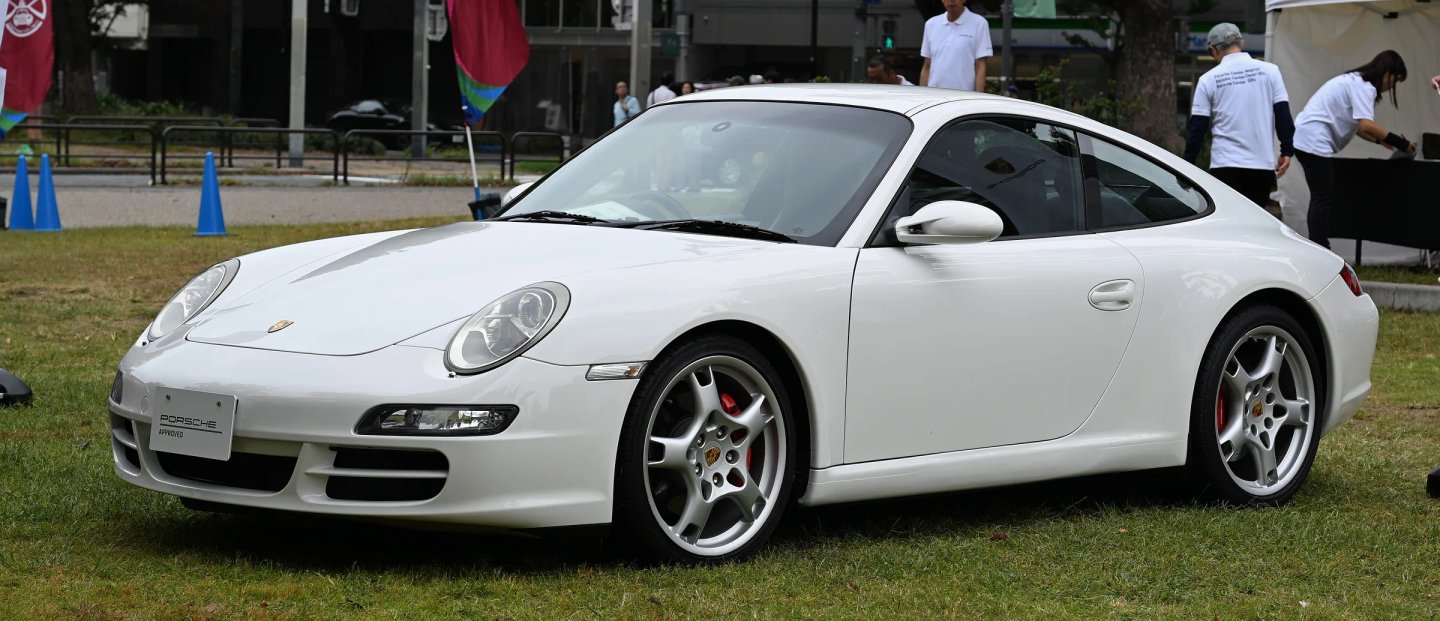
The bidder therefore has to build that limit themselves. Say a Porsche 997 Carrera S is at auction and a comparable one is at a dealer for €62,000. The figures are invented. Take 5% off the asking price for negotiation: €58,900. The dealer gives a warranty and has been over the car, so allow €1,500 for that: €57,400. The auction charges 3% buyer's commission, which puts the limit for the bid at about €55,700. Above that the dealer's car is the better buy, unless the auction car has something the other lacks. Then it should be possible to write that down as an amount.
That figure is not the same as a maximum based on what the car is worth. It says what the alternative costs, and that can change while the auction runs. So it needs looking up again at the moment the outbid message arrives, because according to Malmendier and Lee that is when it goes missing.
For the seller, this means the market does not have to be persuaded. Two people will do. For everyone afterwards it is less comfortable. With Cashflow 101 the $129.95 stayed where it was, so the next buyer could see the mistake. With a car of which a handful sell each year, there is no shop alongside. The hammer price goes into the list of comparable sales, the next seller bases a reserve on it and the next dealer an asking price. That is reasoning and not measurement. If it holds, the inattention of two people becomes the reference for the 83% who were paying attention.
Images: 2007 Porsche 911 Carrera S by TTTNIS (CC0); Photo by Zoshua Colah on Unsplash; Classic Remise Berlin, Wiebestraße 36, Berlin-Moabit, Bild 14 by Neuköllner (CC BY-SA 4.0). Images resized.

