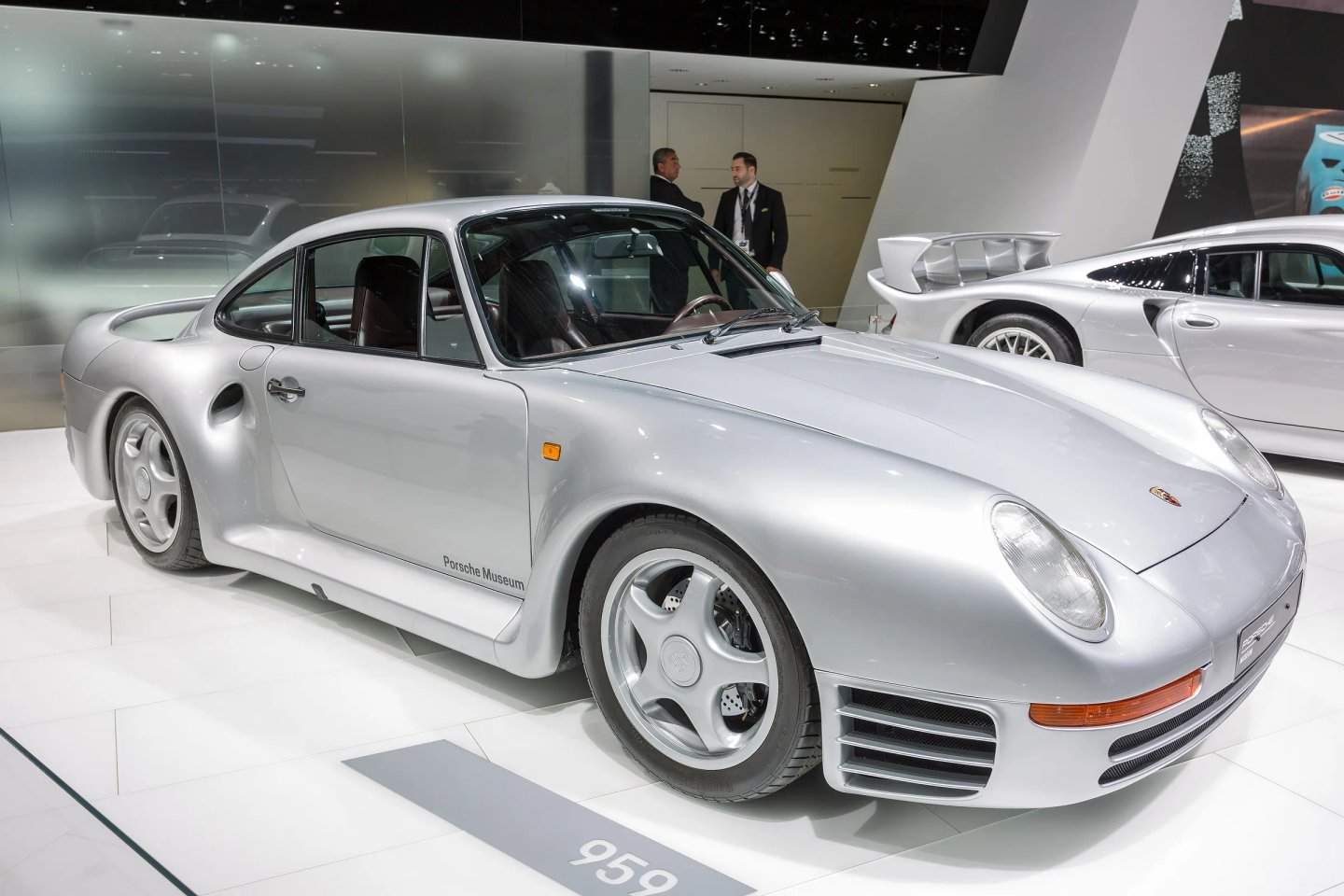
A clutch release lever is not a part anyone thinks about for long, unless it belongs to a Porsche 959. There are 292 of those. The lever was grey cast iron and at some point could no longer be supplied, because too few people wanted one. In February 2018 Porsche Classic announced it was back: now made of steel powder melted layer by layer by a laser, tested at more than 3 tons of load and driven on test cars. It was one of nine printed parts in a range of about 52,000.
A new casting mould could not be justified for those numbers. The sum is easy to check. Assume a mould costs €20,000 and one car in ten needs a lever over the next twenty years. On the 959 that is 29 levers and €690 each, before any material. On the 43,937 Nissan Skyline R32 GT-Rs it is 4,394 levers, and the same mould costs €4.55 each.
That is the sum behind every parts catalogue. On one side are the tooling and the smallest batch a supplier will make. On the other are the number of cars still running, the chance the part fails and what an owner will pay. Whoever does that sum is estimating what a model will be worth over the coming decades, with data nobody else has. The result is a valuation you will not find in any price guide.
The maker keeps count
Toyota does the counting almost in public. For its programme of reissued parts, owners can use a form to say which part they are looking for. Toyota adds up the requests and uses them to decide what to make again. By March 2026 that meant more than 300 parts for eight models: the 2000GT, the A70 and A80 Supra, the AE86 and four Land Cruisers. So half the list is an off-roader, and a Toyota Celica GT-Four or MR2 is not on it. That says nothing about those cars as cars. It says something about how many people still need a part for one and will fill in a form.
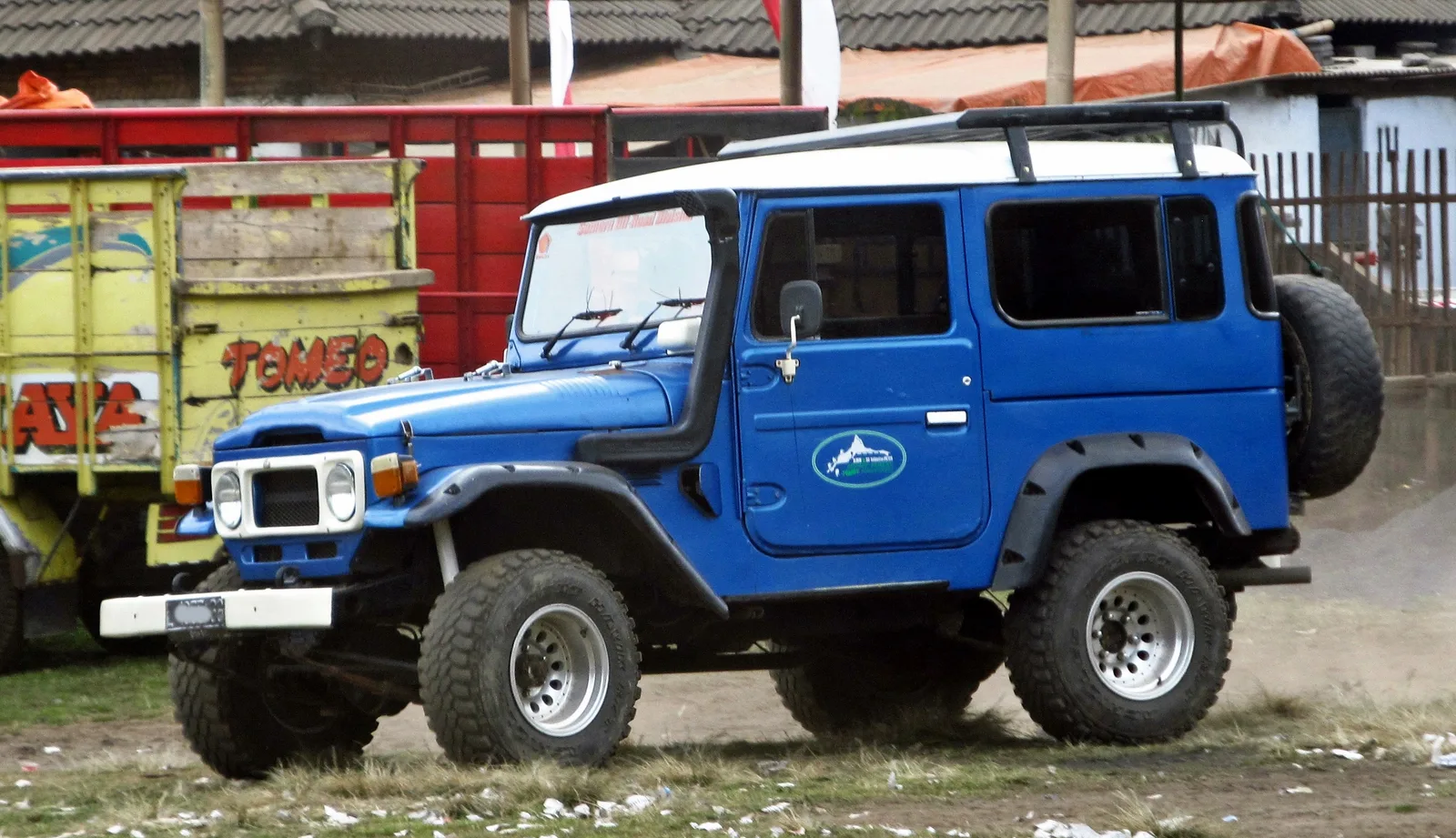
A Land Cruiser FJ40 in Ranupani, East Java. The 40 Series is on Toyota's list of eight models.
Nismo started on 1 December 2017 with 74 parts for the R32 GT-R. Most of them were needed to pass Japan's Shaken inspection: the first question was what keeps the car legal on the road. A new front bumper cost ¥108,000. By May 2026 the count stood at more than 300 parts, by then for the R33 and R34 as well, with 37 more on the way. Some carry a minimum order and some have already gone again since 2017. So a place on the list is no promise either.
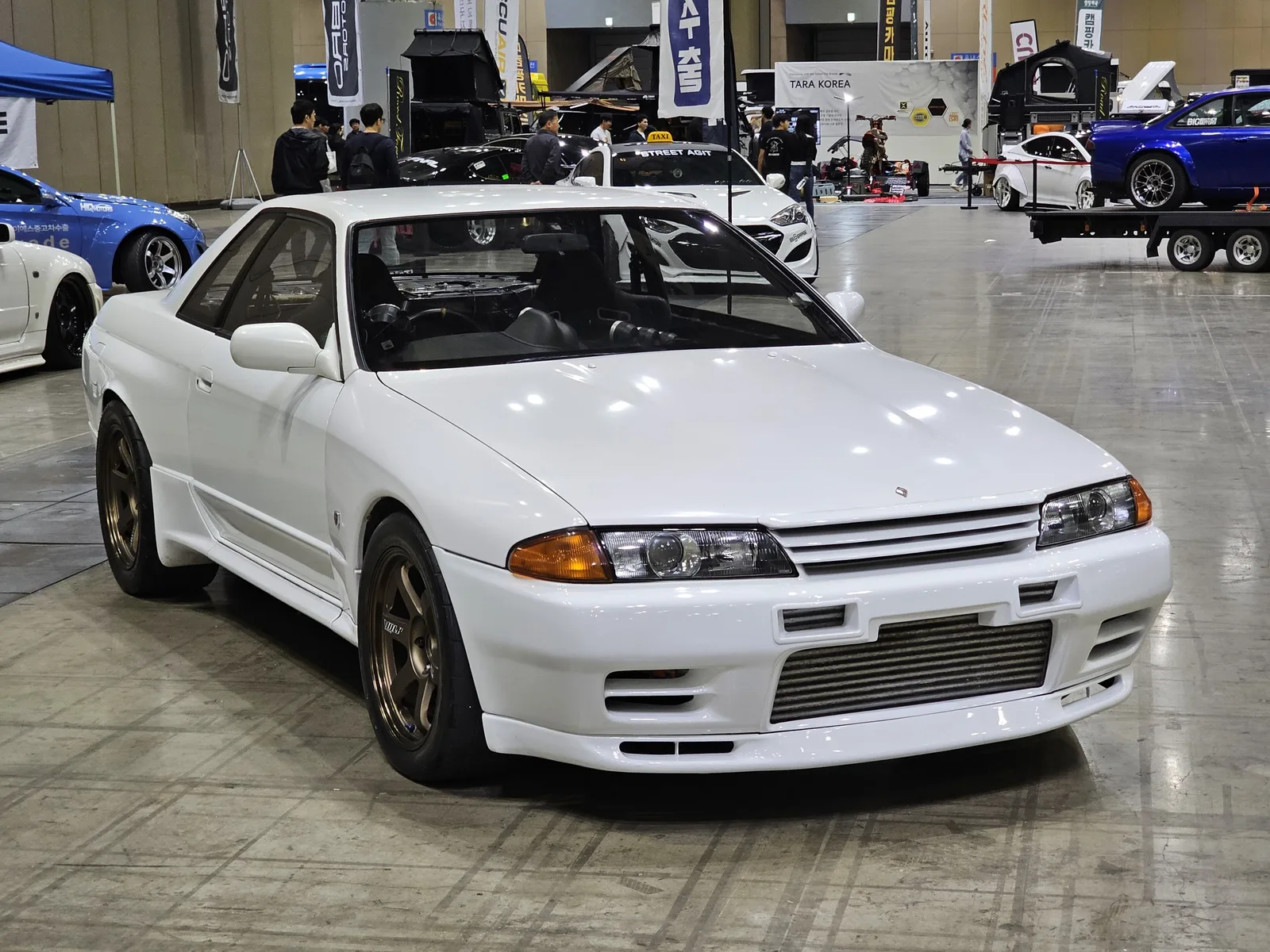
An R32 GT-R at the 2025 Seoul Mobility Show. Bumpers and hoses for this generation come from Nismo again.
The TR7 and the scrap heap
For one car the answer went the other way. About 115,000 Triumph TR7s were built. Around 2018 British dealers and clubs discovered that BMH, the British parts firm that supplied the panels, had scrapped the press tools. It came out when a large order for front wings could not be filled. The tools had probably gone years earlier, when the Blackburn site was cleared. The same company's site still lists complete bodyshells for the Mini, the MGB and the Midget.
292 against 115,000. If the number built decided the list, it would have gone the other way. The owner of a 959 pays what the lever costs, and Porsche still sells new cars to people who watch what an old one holds. A TR7 is cheap and its marque has built nothing since 1984. Nobody has a commercial reason to keep that press in a hall.
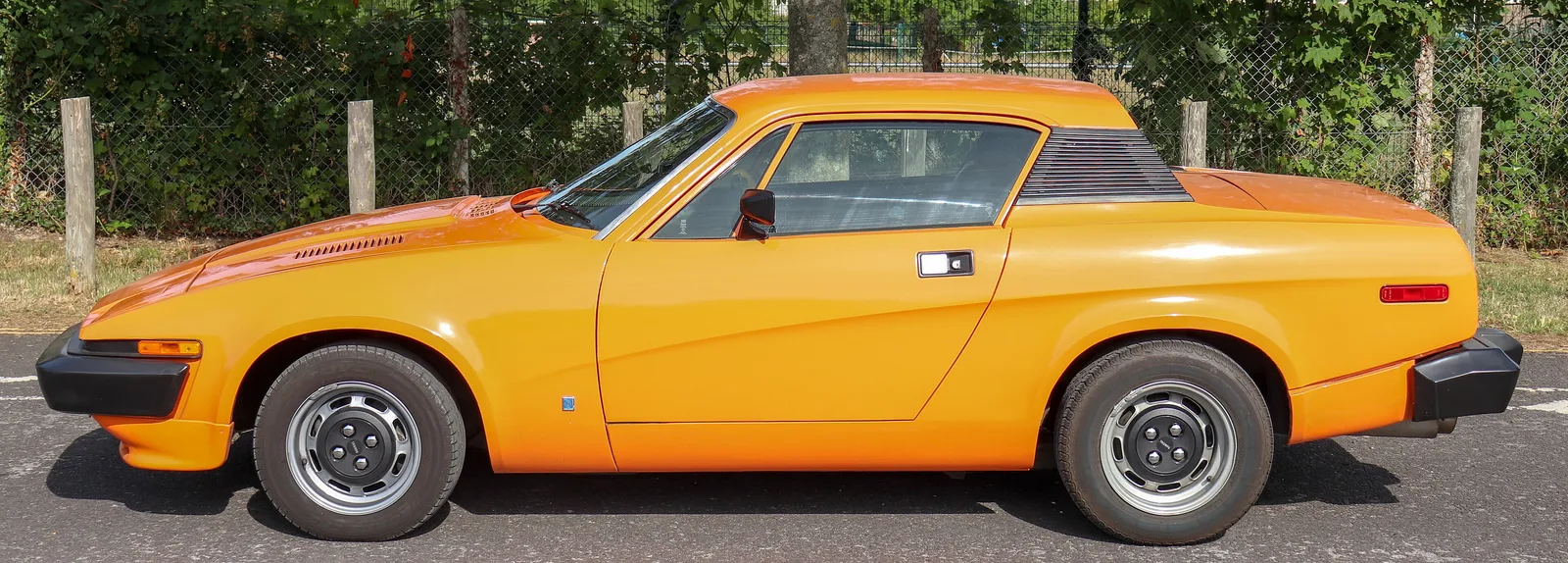
A Triumph TR7, photographed in Weymouth. The front wings for this car came from press tools that no longer exist.
The owners then took it on themselves. The TR Drivers Club and the TR Spares Development Fund had Ex-Pressed Steel Panels make a headlamp panel, the most complicated panel on the car. The first batch was ten, at £624.59 in bare metal. Front wings, sills and door skins will follow only if that panel sells. It is the same sum as at Porsche, but now the owners do it themselves and put their own money on the answer.
Does the list follow the price, or the other way round?
At first sight this adds little. The maker looks at what a car is worth and only then decides to reissue. Nismo started twenty-three years after the last R32 left the line, long after the car had become sought after. The list follows the price.
After that it also works in reverse. With a new bumper available, a collision is a repair. Without front wings, a rusty TR7 means hunting for used ones, of which there are fewer each year. The first car is easier to keep going, so more stay with people who spend money on them. That supports both the price and the orders. Buyers rarely allow for this. They look at comparable sales, when a phone call to a specialist about a wing, a windscreen and a dashboard says more about the next thirty years.
The sum itself is moving meanwhile. The fuel pipe clips for the R32 and R34 in Nismo's 2026 batch are printed, while the rest still comes from the original suppliers. With no mould there is no fixed cost for tooling, which leaves the drawing, the testing and the liability. That brings small parts within reach for cars that never met the old sum. For sheet metal, glass and big plastic parts the old sum still holds: Toyota announced a dashboard for the A80 only six years after its project began, for around autumn 2026. So the next thirty years will decide less whether a classic can run, and more whether it can come back from a collision or a serious patch of rust.
Images: Porsche, Paris Motor Show 2018, Paris (1Y7A1089) by Matti Blume (CC BY-SA 4.0); Toyota Land Cruiser FJ40 (Hardtop) by Rendywardana (CC BY-SA 3.0); Nissan Skyline R32 GT-R E-BNR32 Crystal White (1) by Damian B Oh (CC BY-SA 4.0); 1975 Triumph TR7 3.5 Side by Vauxford (CC BY-SA 4.0). Images resized.


