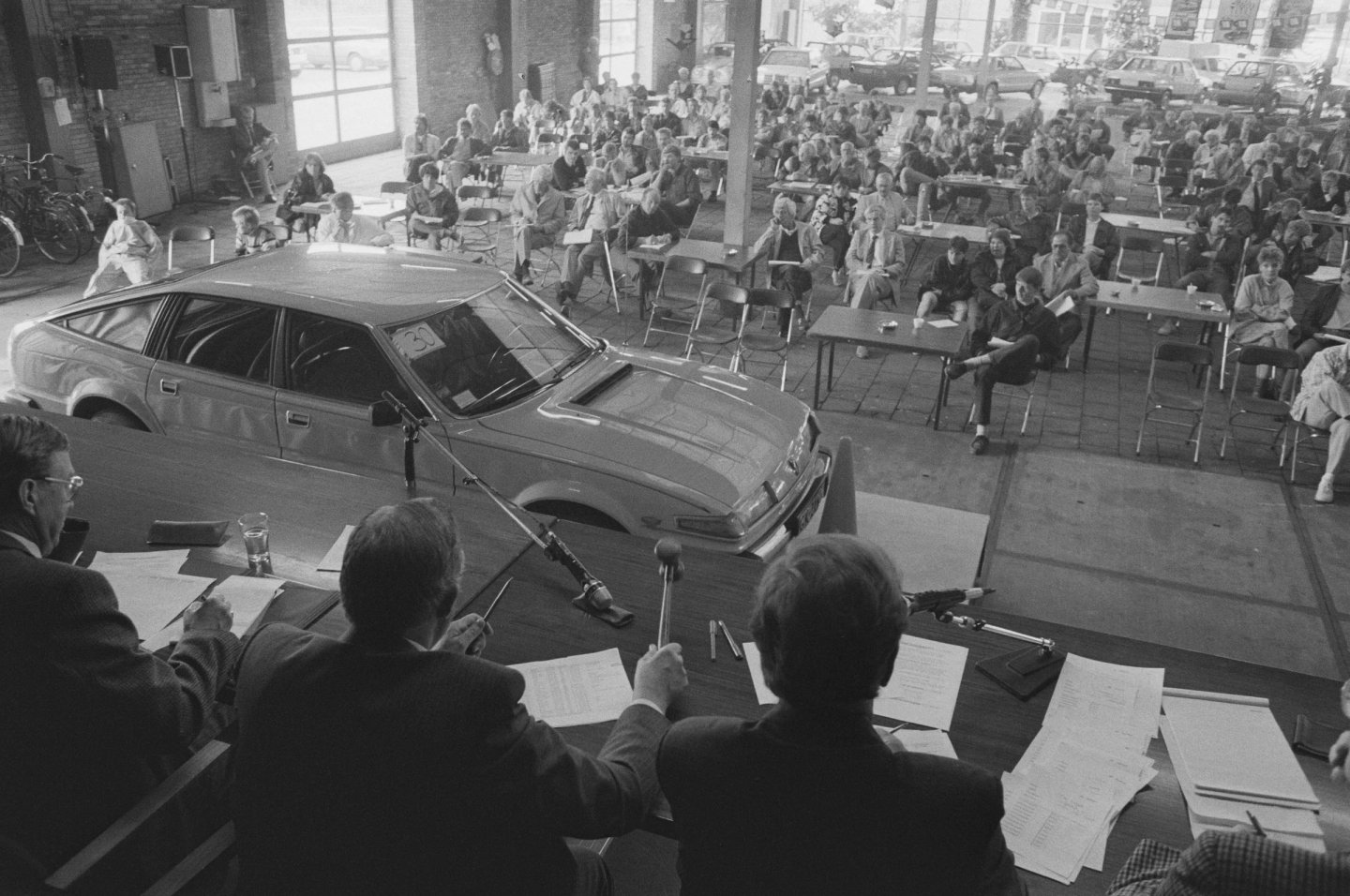
Anyone selling a car thinks about price as a matter of haggling: the figure in the advert, the counter-offer after the test drive, the moment you put the keys back in your pocket. Jeremy Bulow and Paul Klemperer showed in 1996 that all this skill is worth less than something settled before the first conversation: how many serious buyers there are.
Their paper, Auctions Versus Negotiations, appeared in the American Economic Review and was about selling companies. The result fits on one line. A seller with no bargaining power at all, running an open auction with no reserve and one extra bidder, earns more on average than a seller with all the power in the world and one bidder fewer, however well that second seller negotiates. As they put it, "the value of negotiating skill is small relative to the value of additional competition".
The sum
Say a car is worth €60,000 to its owner. Each serious buyer has a ceiling somewhere between €60,000 and €100,000, every figure equally likely. The seller does not know who sits where. This is a worked example and not a market figure.
With one buyer the best tactic is one number: €80,000, take it or leave it. Any higher and the chance of a no is too great. Any lower and you are giving money away. Half the time the buyer says yes. The other half the seller drives home in a car worth €60,000 to them. On average that comes to €70,000.
With two bidders and no reserve, the bidding stops where the lower one drops out. That ceiling averages a third of the way up the range: €73,333. The seller with no power has already overtaken the perfect negotiator.
Now give that seller all the power over their two bidders. The best they can do is let the auction run and put a floor of €80,000 to the last man standing. That earns €76,667 on average. Three bidders with no reserve and no tactics at all earn €80,000.
All that skill is worth €3,333 at two bidders, and the third bidder twice that. Those proportions belong to this example. What Bulow and Klemperer prove is that the direction holds when the ceilings are spread differently.
What Paramount and Mercedes did
Their own example is the fight for Paramount Communications. In September 1993 Paramount agreed to merge with Viacom at a value of $69.14 a share, with terms designed to keep other bidders away. The board argued that this had won more than an open auction would. QVC bid anyway: first $80, later $90. The Delaware courts took its side. By February 1994 there were two final offers on the table: $107 from Viacom and $104 from QVC, for the first tranche of shares. The figures are not strictly comparable, since part was paid in stock and the remaining shares went in a second step. The direction is clear enough.
In the car world, Mercedes-Benz in 2022 was the strongest seller you could imagine. It owned two 300 SLR Uhlenhaut Coupes and had no need to sell either. Even so, it did not pick a buyer and sit down with them. RM Sotheby's held a closed auction on 5 May in the Mercedes museum, for bidders reportedly chosen by the company itself. It raised €135 million. That does not prove the theorem, because nobody knows what a negotiation would have made. It does show where that seller put its effort: into the guest list.
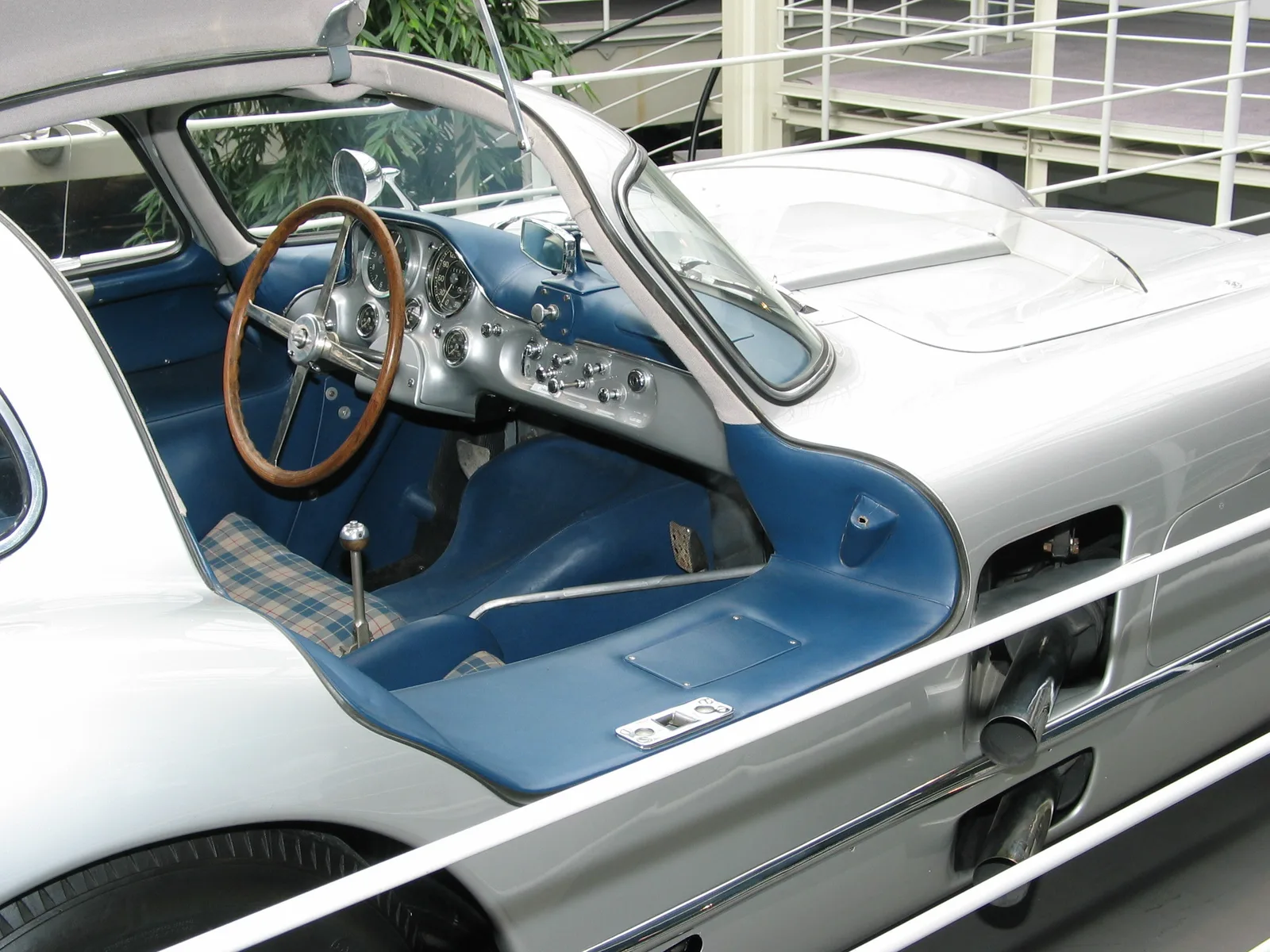
The cockpit of a 300 SLR Uhlenhaut Coupe. Mercedes built two.
What the proof assumes
The result rests on a few assumptions, and with cars they chafe.
The extra bidder has to be bona fide and come from the same group as the rest. Someone with a ceiling of €50,000 who is along for the ride adds nothing. The seller also must not value the car above the buyer who rates it lowest. An owner who would rather keep driving than sell under €85,000 is outside the sum. For them only bidders above that figure count, and there are fewer of them than the bid history suggests.
The ceilings need to be independent too, and with cars they only partly are. Everyone reads the same results, works from the same resale price and learns something about the car when someone else bids. With values linked in this way, the result holds only under limits on what the seller may do.
Taking part is not free either. The model leaves out the time it takes to gather bidders, and a buyer who pays for an inspection and takes a day off will not do that for a car they expect to lose. Patrick Bajari, Robert McMillan and Steven Tadelis found in Californian construction that auctions work badly for complex jobs with few bidders, because they choke off the conversation between the parties. A car with a complicated history resembles that more than it resembles a company in a bidding process.
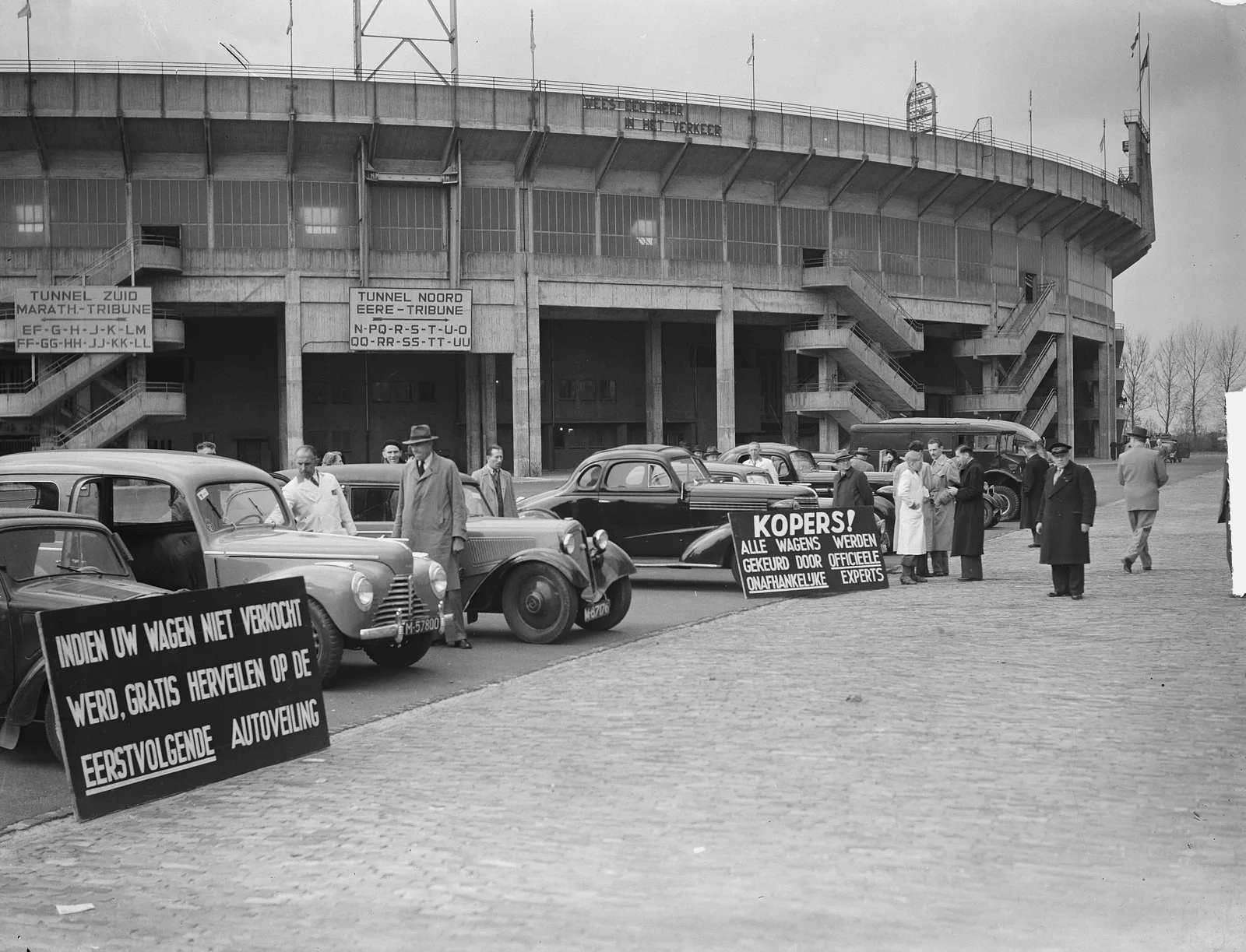
The first car auction in Amsterdam, at the Olympic Stadium, 3 May 1950. The sign tells buyers in Dutch that every car has been inspected by independent experts.
When there are only two buyers
The hard case is the car with perhaps two buyers in all of Europe. The theorem compares a number of bidders with one more, and here the one more does not exist. That leaves the €3,333: what a good floor can still add. With no reserve and one bidder, an auction sells at the opening bid. For a car like that, negotiating is no sideshow.
The paper also does not say that an auction will deliver the extra bidder. The condition is: if they come. That goes for every auction, Octane's included. Whether it is the better route for a particular car is a question for the comparison with a private sale.
What a seller can do with all this lies in the shrinking series. In the example the third bidder is worth €6,667, the fourth €4,000, the fifth €2,667 and the sixth only €1,905. A 911 Carrera usually finds its fifth bidder. With a Lancia Beta HPE the job is finding the second, who may well live in Turin and not read English.
Images: Eerste autoveiling van tweedehands autos in Zuid Oost Beemster auto onder de h, Bestanddeelnr 934-0217 by Rob Croes for Anefo (CC0); Mercedes-Benz 300 SLR, Uhlenhaut Coupé (51563094005) by Thomas Vogt from Paderborn, Deutschland (CC BY 2.0); Eerste autoveiling in Amsterdam bij het Olympisch Stadion, Bestanddeelnr 903-9407 by Jack de Nijs for Anefo / Anefo (CC0). Images resized.


