On 17 April 2008 Toshio Suzuki drove a Nissan GT-R around the Nordschleife in 7:29.03, and Nissan announced the time itself. Porsche did not believe it. In September that year the company ran a GT-R it had bought in the United States and came away with 7:54. The 911 Turbo did 7:38 the same day and the 911 GT2 did 7:34.
August Achleitner, who ran the 911 line at Porsche, said in early October that he could not make sense of it. The Nissan was over 120 kg heavier and had its engine at the front. He suggested Nissan had not used the standard tyres. In mid-October Nissan published photographs of the tyres and a second video. In April 2009 Suzuki came back and did 7:26.70, on optional tyres according to the usual lists of times. That same year the German magazine Sport Auto recorded 7:38, with Horst von Saurma at the wheel, on the Dunlop run-flats.
That makes four times for the GT-R: 7:26.70, 7:29.03, 7:38 and 7:54. Between the quickest and the slowest lie 27 seconds. None of the four has been shown not to have been driven.
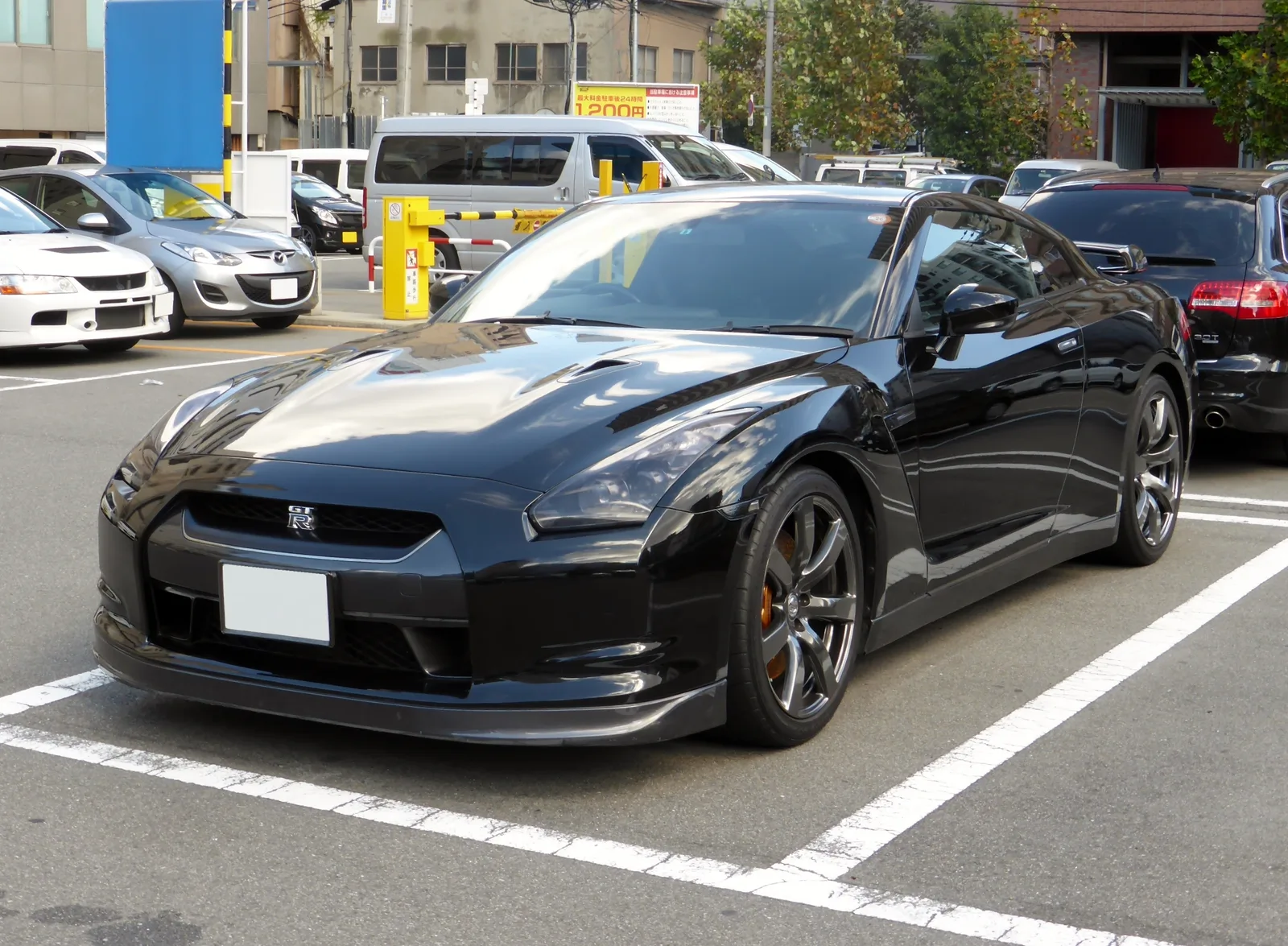
A 2009 Nissan GT-R, the generation Porsche and Nissan disagreed about.
What a lap time measures
A lap time is the sum of a car, a tyre, a driver, a temperature and a number of attempts. Until 2019 the maker chose all of that, including the length of the lap. It then published the time it wanted to show. A fuel consumption figure has to go through a prescribed test. A lap time was a press release.
The Porsche 918 Spyder shows how much room there is. In September 2013 Porsche's own driver Marc Lieb did 6:57 with the Weissach package on Michelin Cup 2 tyres, with Sport Auto observing. In June 2014 the magazine did 7:13 with the car itself, also on Cup 2. That is sixteen seconds, and nobody did anything wrong. A factory has a driver who knows the car and the track, a chosen day and as many attempts as it cares to pay for.
Nissan went furthest. On 30 September 2013 Michael Krumm drove a GT-R Nismo in 7:08.679, presented as a record for a volume production car. That car was lighter than the showroom Nismo, with bucket seats, different aero and different suspension. Nissan later sold those parts as N Attack. Kit A came closest to the record car and was reported at around $90,000, and with the optional six-point harness or the carbon bonnet part the car is no longer road legal. The lap sold the car first and then the kit.
What the time does say
None of this means such a time says nothing. The Nordschleife is nearly 21 km of brakes, cooling and suspension under load. A bad car will not do a good time there whatever tyre it wears. The objection is to the use. Two factory times side by side say little about two cars and a lot about two programmes. You could say the time measures the marketing budget. Nobody can show that, because what such an attempt costs is not published.
A real comparison takes something else: the same magazine, the same driver, the same lap. Sport Auto tested that way for years. Those times are slower and easier to compare. They have a limit too: a time from before 2019 was usually set over 20.6 km and one from after it over 20.832 km, and the lists in circulation simply put them one above the other.
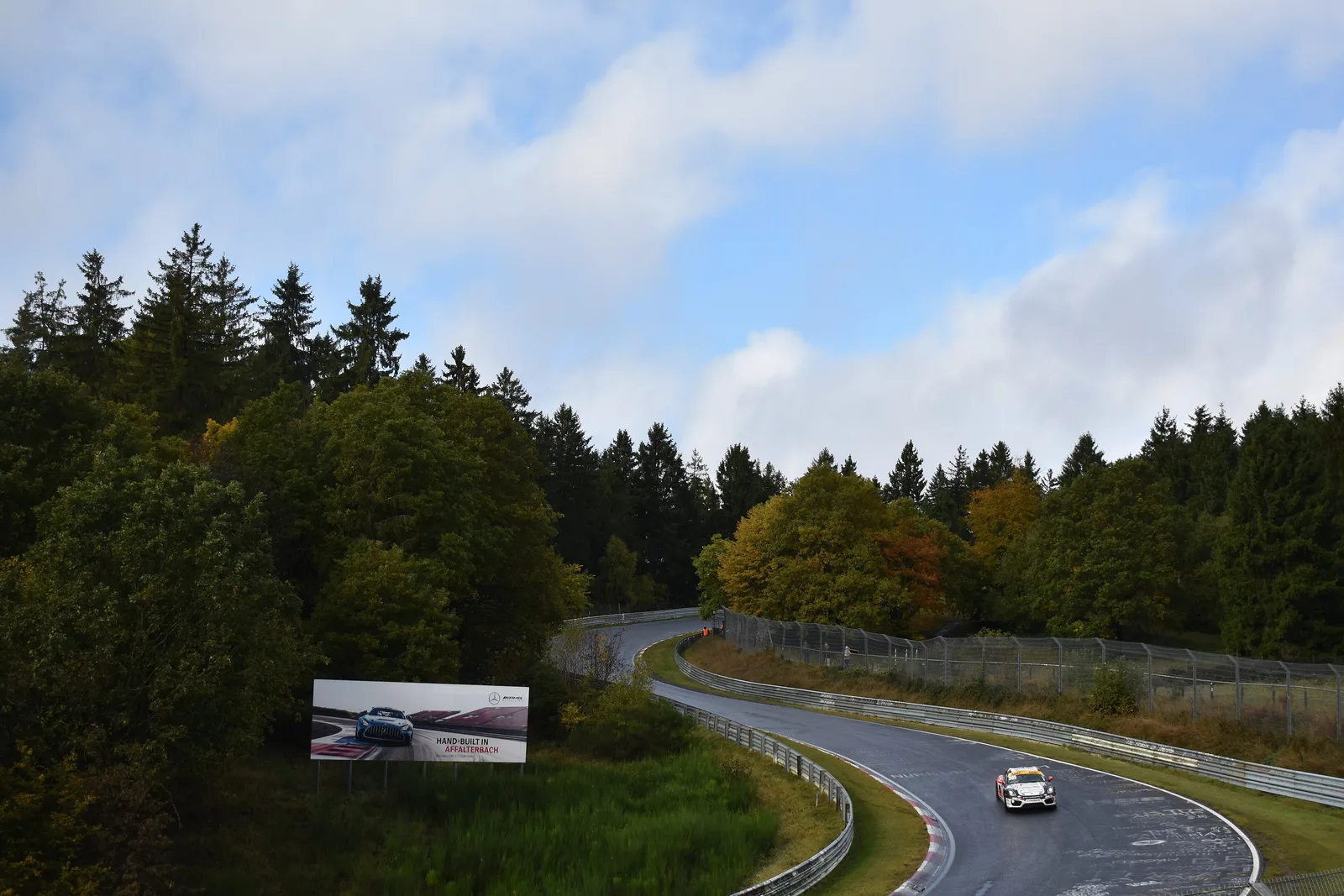
Brünnchen on the Nordschleife during an RCN race in 2023, with a Mercedes-AMG hoarding beside the track.
What changed from 2019
Since the 2019 season the Nürburgring itself has published official times. The lap is 20.832 km, with a flying start in section T13. A notary oversees the calibrated timing and a neutral testing body records the car's production status. Cars are listed in twelve categories based on those of Germany's federal transport authority. The maker has to rent the track exclusively and in return may put the Nürburgring logo beside its time.
That settled the measuring. The advert remains, and it now has a seal of approval. Twelve categories are twelve places for a fastest car. The public description of the rules does not mention tyres. And production status has some give in it. In June 2021 Porsche claimed 7:38 in the category of SUV, off-road vehicle, van and pick-up, with a Cayenne that had not yet been presented, still lightly camouflaged, with a roll cage and a racing seat. The notary confirmed its production status, according to the track. What that production car consisted of, nobody outside Porsche could check at the time. The same month Lars Kern drove a Porsche 911 GT2 RS in 6:43.300, notarised, on Cup 2 R tyres. That car wore a Manthey kit, an extra sold separately. The N Attack pattern carried on, now with a stamp on it.
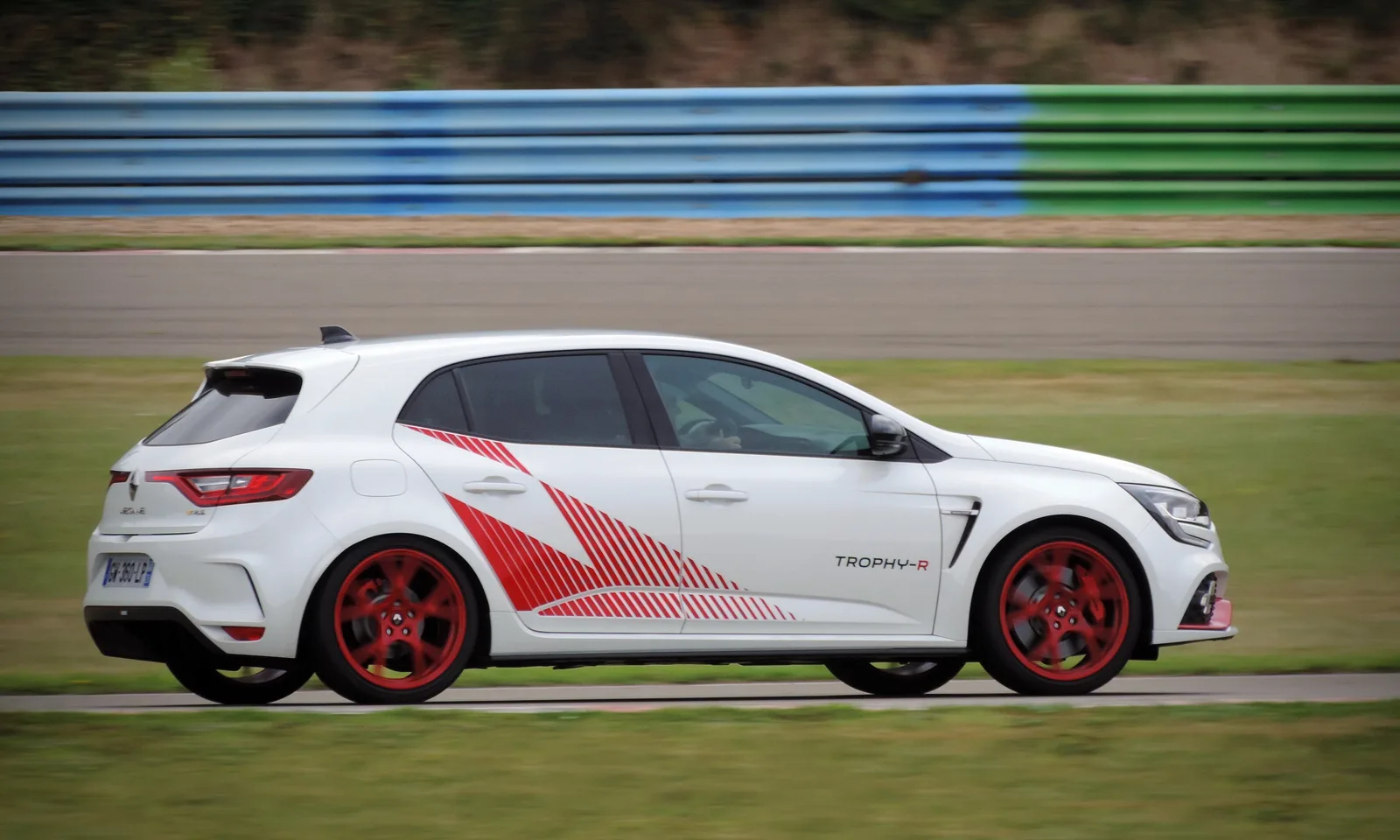
A Renault Mégane R.S. Trophy-R at the Pro'Pulsion circuit in 2025.
In the first year of those rules, the whole affair fits on one page. On 5 April 2019 Laurent Hurgon lapped in a Renault Mégane R.S. Trophy-R, a car from a run of a few hundred that was presented six weeks later. The press release of 21 May calls 7:40.100 a new record on the 20.600 km lap. On the official lap of 20.832 km it gives 7:45.389 as a reference time. It was one drive. Those 232 metres cost 5.289 seconds.
The previous front-wheel-drive record, held by the Honda Civic Type R, was 7:43.8, driven on the short lap. Renault duly wrote down both figures and explained the difference. Both are correct. The word record sits beside the shorter one.
Images: Porsche 996 GT3 RS at the Nürburgring Nordschleife Brünnchen by Agtlaw (CC BY-SA 3.0); 2009 Nissan GT-R (CBA-R35) front by Tokumeigakarinoaoshima (CC0); RCN 8. 2023 5 (Brünnchen) by SunflowerYuri (CC BY-SA 4.0); Renault Mégane IV RS Trophy-R - Rétrosport 2025 by Kilyann Le Hen (CC BY 4.0). Images resized.


