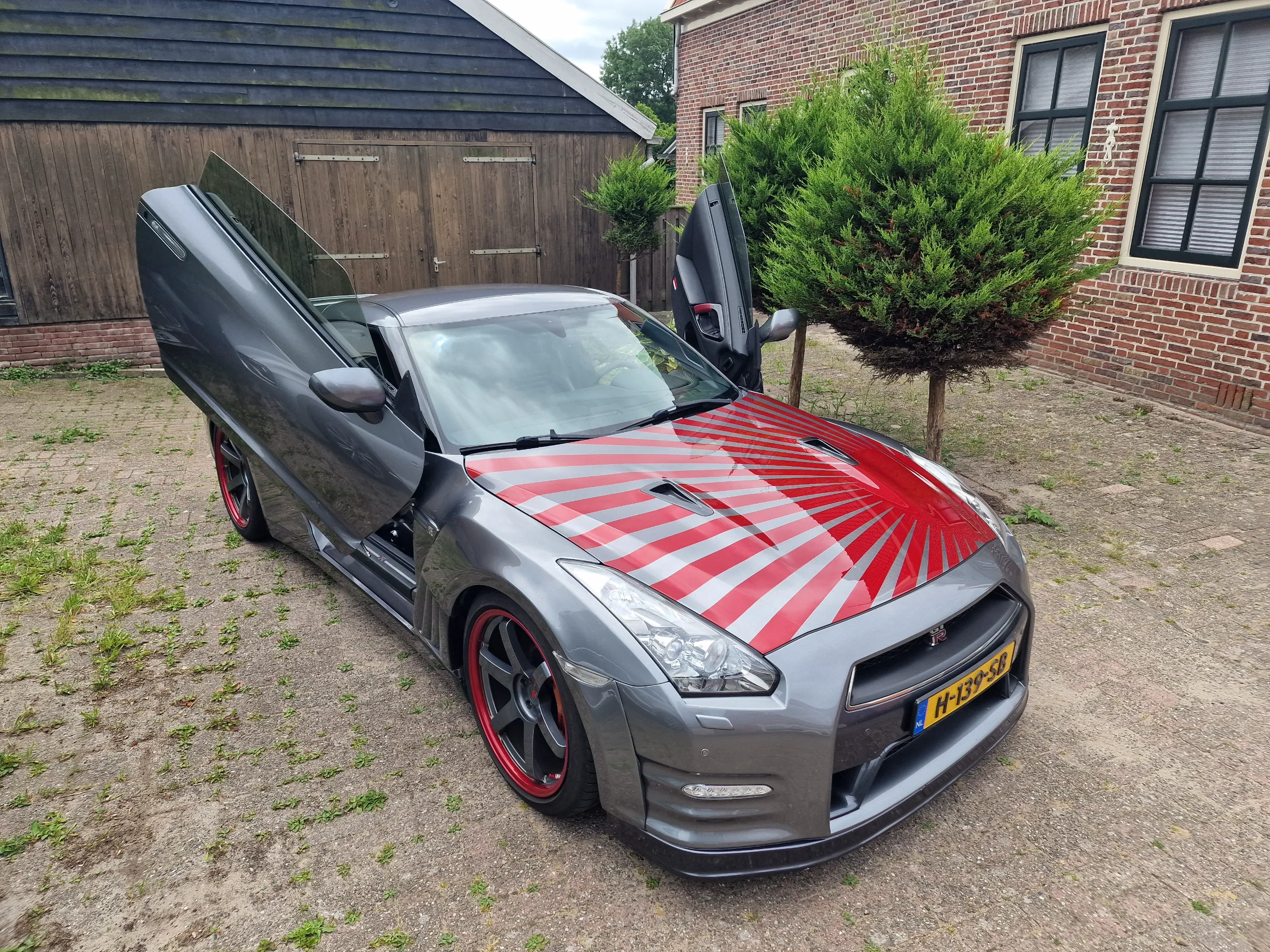
Nissan has shaped generations of enthusiasts, particularly through the Skyline GT-R lineage and the Z series. The Hakosuka GT-R from 1969 was the first GT-R and won 49 races in a row in Japan. The R32 through R34 Skyline GT-R dominated Japanese touring car racing and have now reached Europe through JDM import culture. The Z series, beginning with the 240Z in 1969, gave Nissan a sporting identity that still resonates in the modern Z (from 2022). And the R35 GT-R (from 2007) proved that a Japanese supercar can beat Porsche 911 Turbos for a fraction of the price. Owners of a sporting Nissan do not sell to a random buyer; they pass the car on to someone who knows the legacy.
Not sure if your car qualifies? Submit your car and our team will review it
The Skyline GT-R lineage represents one of the most varied collector markets in the world of Japanese cars. The Hakosuka KPGC10 (1969-1972) and KPGC110 (1973, 197 built) are historic collector items, reaching multi-million figures for top examples. The R32 GT-R (1989-1994) brought the GT-R back after a 16-year hiatus, with the RB26DETT 2.6 twin-turbo straight-six and ATTESA all-wheel drive. The R33 (1995-1998) and R34 (1999-2002) followed, with the R34 as the most sought-after 'modern collectible' GT-R; particularly the V-Spec II Nür versions from 2002.
On classic markets Skylines are often sold without context: mileage, colour, price. The gap between an R32 GT-R V-Spec II in provable original condition and a modified touge import can be many-fold. The auction format brings together buyers who know the difference between a V-Spec, a Nismo specification, a Tommykaira-tuned car, and a standard example. An R34 Z-Tune (only 19 built) is a museum piece; an R34 V-Spec II Nür with factory documentation is a strong listing for the right collector.
The Datsun 240Z (1969-1973), 260Z (1974-1978), and 280Z (1975-1978) brought the Japanese sports car to the global market. The S30 chassis platform was followed by the S130 (280ZX, 1978-1983), Z31 (300ZX, 1983-1989), Z32 (1989-2000, with twin-turbo VG30DETT), Z33 (350Z), Z34 (370Z), and the current RZ34 (from 2022). The early 240Z in original colour (Datsun Yellow, Safari Gold, Spectre Red) with proven low mileage is highly attractive to collectors.
For 300ZX Twin-Turbo (Z32) sellers, documentation of turbo rebuilds is essential; for 350Z and 370Z the condition of the VQ engine and gearbox (manual vs. automatic) matters most. The Octane community brings together buyers who know the Z series, from vintage 240Z to modern Z RZ34.
The R35 GT-R (from 2007), with the 3.8 twin-turbo VR38DETT V6 and advanced ATTESA system, transformed what a 'supercar' could mean. Early R35s (2007-2010) are now climbing in valuation, especially original factory-spec examples. Later Nismo specifications (from 2014) are the most expensive regular R35s. For R35 sellers, complete Nissan service history (especially GR6 gearbox rebuilds) is essential.
The Silvia (S13, S14, S15) and 180SX have become iconic for younger JDM enthusiasts through drift culture. An original S15 Spec-R with Nismo Aero pack and unstripped interior is worth far more to collectors than a drift-spec version. The 240SX/180SX represents an entry into the Nissan drift cult. For these cars Octane brings together international buyers who value specific JDM specifications.
Sporting Nissans have varied rust profiles. JDM imports from Japan are generally far better than cars with European winter history. On Skyline GT-R (R32-R34), buyers check wheel arches, sills, and boot floor; on early 240Z/260Z the wing roots, the area under the rear bumper, and the battery tray are known spots. On R35 GT-R rust is rarely an issue, but cosmetic details such as stone chips on the front splitter and brake ducts matter. A Nissan with proven JDM import history and panel-free past can attract a premium of five to fifteen percent.
For Skyline GT-R, originality is a major value driver. An R34 V-Spec II Nür in original Millennium Jade with factory-installed Nismo parts can command a significant premium over a modified example. For 240Z, an original Series I in factory colour with correct interior colour combination and original Ferrea instruments is gold. An R35 GT-R Nismo with low mileage and factory-installed carbon pack is highly attractive to modern collectors.
For JDM import Nissans, the JEVIC report is essential: it confirms year, original mileage at export, and factory specification. For Skyline GT-R, provable original Japanese registration papers are a strong selling context. The Nissan Heritage Collection in Japan provides historical confirmation for specific models. For modern Nissans (R35, modern Z), Nissan's own Vehicle Identification Database supplies original specification and service history.
Every car gets a tailored campaign: positioning, spec highlights, and distribution to enthusiasts and collectors across Europe.
A Skyline R34 GT-R V-Spec II Nür in concours condition is typically the most expensive regular Nissan, with factory Z-Tune (19 built) as the absolute top product. Next come early R32 GT-R V-Spec II, original 240Z Series I in factory colour, and R35 GT-R Nismo with low mileage. Hakosuka KPGC10 in concours condition is highly valuable to collectors.
The VIN prefix and production date confirm the variant. R32 GT-R (BNR32) runs from 1989-1994; R33 GT-R (BCNR33) from 1995-1998; R34 GT-R (BNR34) from 1999-2002. V-Spec, V-Spec II, Nür editions, and Nismo specifications have specific chassis number prefixes and factory-installed parts. Ask the Nissan Heritage Collection for historical confirmation.
Yes, fundamentally. Skylines were never officially sold in Europe (only the R35 GT-R, from 2009). Every pre-R35 Skyline GT-R in Europe is a JDM import. JEVIC report and original Japanese registration papers are essential; they confirm year, original mileage, and factory specification. A Skyline without this documentation is hard to sell at the level the car deserves.
With a focus on factory colour (Datsun Yellow, Safari Gold, Spectre Red, etc.), original Series I specification (1969-1972 with narrow bumpers and without smog exhausts), original interior in correct colour combination, and provably original paint. A 240Z with JDM import via JEVIC report or US provenance has a strong selling context.
Complete Nissan service history is essential, especially GR6 gearbox rebuilds (every 60,000-80,000 km), launch control use (Nissan logs this), and any performance tuning. An R35 with proven Nissan service at a specialist sells far better than a modified example. Document mileage, colour code, and factory-installed accessories.
For original JDM collectors, yes. For drift enthusiasts, not necessarily. An original S15 Spec-R in original colour with factory-installed Nismo Aero pack and unstripped interior can sell for many times more than a drift-modified S15. Both markets exist; honest presentation of the car's actual condition is decisive.
Original 240Z Series I with factory documentation, 300ZX Z32 Twin-Turbo manual in original condition, and modern 350Z/370Z with low mileage and manual gearbox. The modern Z (RZ34, from 2022) has limited collector market as a newer model, but Performance pack with manual is attractive to enthusiasts.
Registration document and ownership history, JEVIC report for JDM imports, Nissan Vehicle Identification or Heritage confirmation, all service invoices (especially GR6 gearbox for R35, turbo rebuilds for Z32/Skyline), photos of known rust spots, engine and chassis number photos. For rare models (Z-Tune, V-Spec II Nür, R35 Nismo) additionally: factory build sheet and original Japanese documentation.
Submit your car and our team will review it within 48 hours