A Mozart string quartet still takes four players and the same number of minutes as it did in 1791. In more than two centuries nobody has found a way to speed that up. The players earn far more than they did then. Pay them badly and they go and do something else.
William Baumol and William Bowen turned this into an economic argument in 1966, in their book Performing Arts: The Economic Dilemma. In a car factory productivity rises, so wages can go up without the car getting dearer. An orchestra has to pay comparable wages to keep its people, yet plays no faster for it. The cost of a concert therefore climbs faster than the prices around it. The idea has been known ever since as Baumol's cost disease.
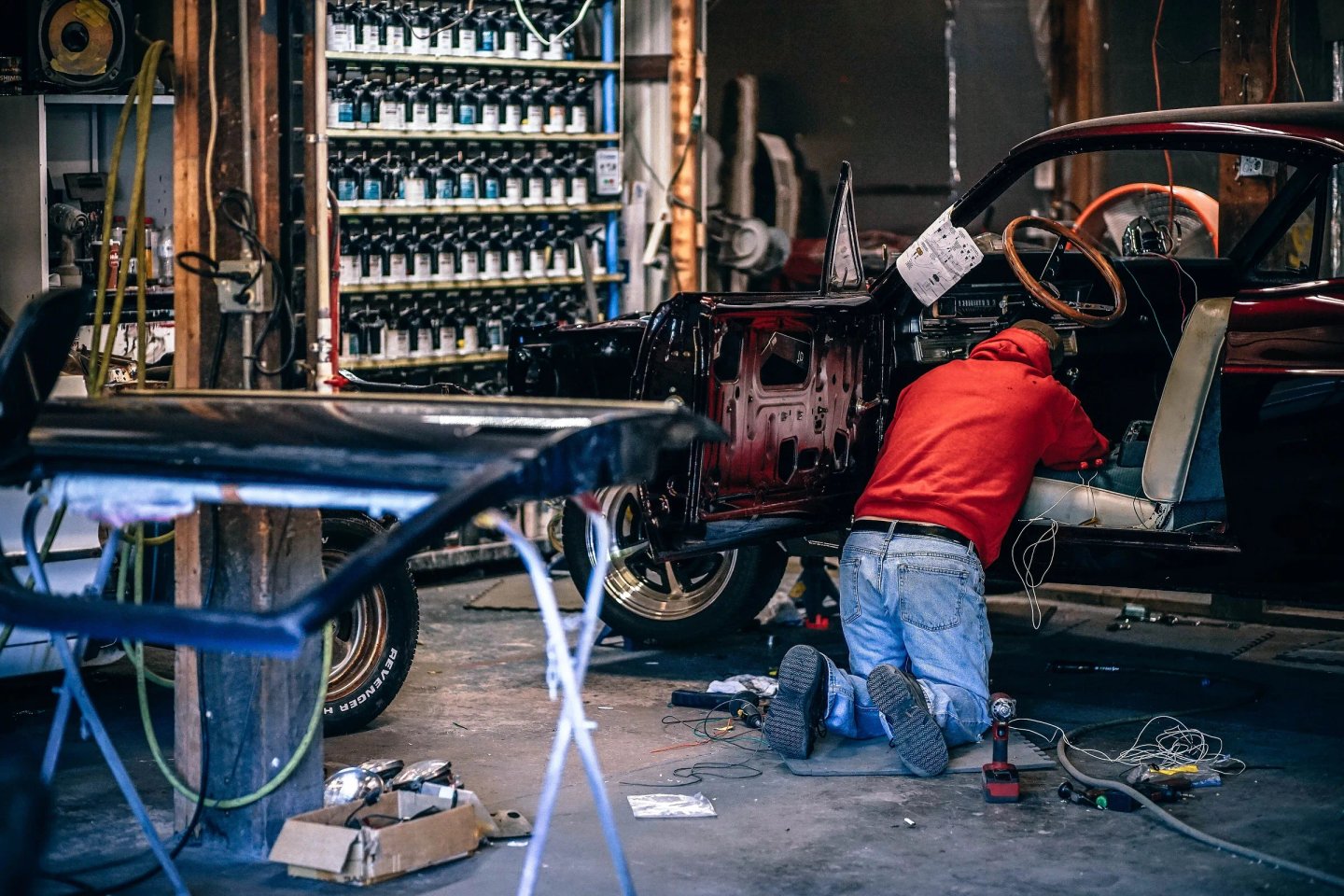
Restoration is the cleanest case the car world has. A panel beater shaping a sill does the job their predecessor did in 1970. They still have to be paid like someone who could have gone to work on an assembly line.
What an hour costs and what it buys
Alex Finigan of Paul Russell and Company in the United States told Hagerty in 2023 how this looks from inside. When he started in 1975 he was paid $5 an hour and the shop charged $19. It now charges $135. A full restoration there takes 4,000 to 5,000 hours and the wait is three years. This is one firm's memory from the very top of the trade, not an industry figure.
The sum can still be checked. The average American worker earned about $4.75 an hour in 1975 and $29.26 in October 2023, a little over six times as much. So Finigan started on the average wage. Multiply $19 by the same factor and you get $117. Consumer prices rose 5.7 times over the period, which would give $109. The $135 sits somewhat above both, but the rate has mostly tracked wages. What stands out is what comes back for that hour.
The Harbour Report, which measured productivity in the American car industry, put Toyota and Chrysler at 30.37 hours per new car in 2008, counting stamping, engines and assembly together. Finigan's 4,000 hours would build more than 130 new cars. His level is exceptional, but even the 700 to 1,000 hours that the American restorer Werner Meier quotes for a full restoration equal more than twenty.
Dutch garages show the same movement. According to the site Welingelichte Kringen, an independent garage charged €85 an hour before VAT in August 2026, against €68.50 five years earlier: 24% more, with a new wage agreement and a shortage of mechanics among the reasons.
An E-Type that does not cover its bills
Take a car on which restoration ought to pay: a 1961 Jaguar E-Type Series 1 3.8 roadster, an early flat-floor car in cream over black. Classic Motor Cars of Bridgnorth restored it between 2018 and 2020, for 17 invoices totalling £182,719.76. RM Sotheby's offered it at Monaco in 2024, estimated at £135,000 to £165,000. It did not sell.
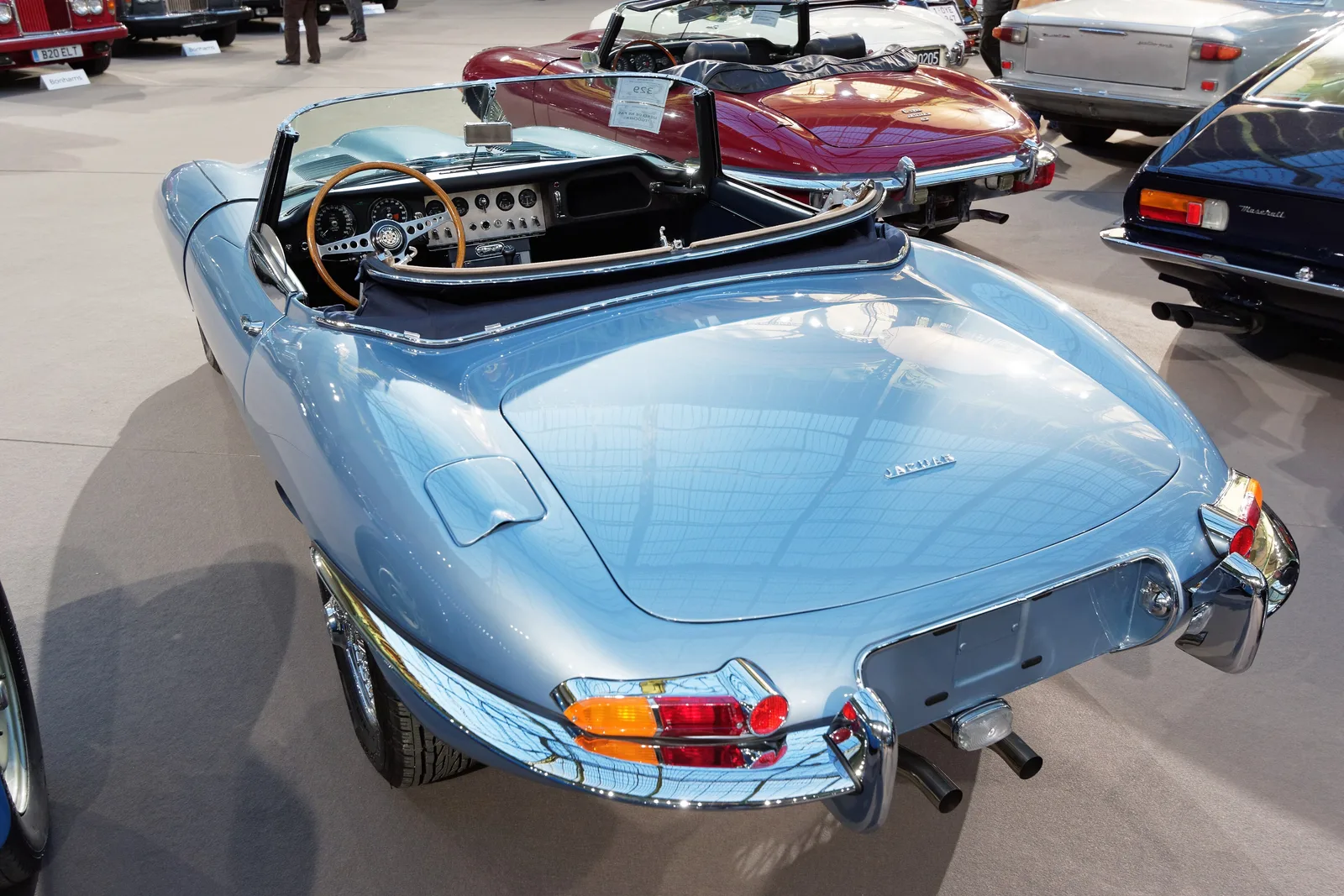
A 1961 E-Type Series 1 3.8 flat-floor roadster, in Paris in 2015. Not the Monaco car, but the same type.
So the estimate sat below the invoices, and the invoices do not include buying the car. One lot proves little. The original engine had been replaced at some point, a new block was stamped with the factory number and the car was in the EU on a temporary import bond, any of which may have put bidders off. But this is the most expensive kind of E-Type there is. A 1966 4.2 2+2, a barn find after 25 years in storage, went for $20,000 at RM Sotheby's Auburn sale in 2017, and its body is no less work to put right.
Listings of restored E-Types quote anything from 1,300 to 3,500 hours, on the seller's own say-so. Price those at the Dutch garage rate with VAT, €102.85 for a private customer, and 1,600 hours is €164,560. At 3,200 hours it is €329,120, before parts and paint. A specialist may charge differently from a high-street garage, but the scale is right: Jaguar itself asked from £285,000 for the E-type Reborn, a factory-restored car, in 2017.
Where the line falls
What a restoration can earn back is the gap between the car's value in poor condition and in perfect condition. In November 2020 Hagerty worked that out for the 2,000-plus models in its British price guide, from Condition 4 to Condition 1. Divide the gap by the hourly rate and you can see how many hours a model can pay for. Here at €1.15 to the pound and €102.85 an hour:
- Austin Allegro 1750: £2,150, 24 hours
- Land Rover Discovery Series 1: £13,400, 150 hours
- Porsche 924 Carrera GT: £27,800, 311 hours
- Porsche 356 A coupe: £172,500, 1,929 hours
Take 1,000 hours as a floor for a professional job. The gap then has to exceed €100,000, before parts. On this list only the 356 gets there. These are 2020 prices and a real wreck sits below Condition 4, so the sum is rough. At the rate of five years earlier the same line sat around €83,000. Nothing happened to the car in that time. Nearly €20,000 arrived because a mechanic's pay went up.
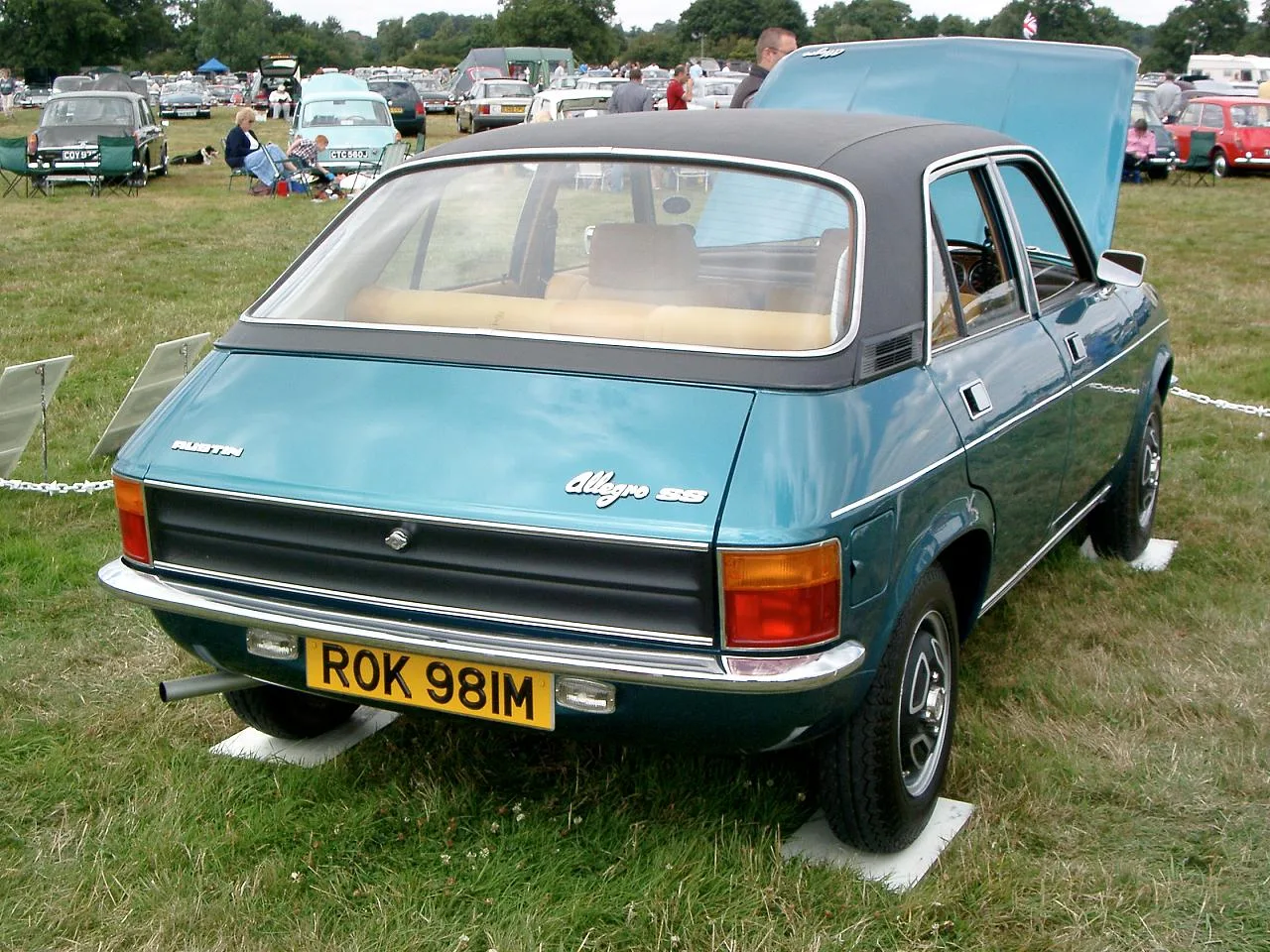
A 1973 Austin Allegro 1750 SS in near-new condition. On Hagerty's figures the Allegro 1750 can pay for a few days of work.
There are objections. Productivity growth is not quite nil: whoever can buy a new panel does not have to beat one. Orchestras also still exist, because the rest of the economy grew richer and can pay for them. The same goes for the 356. It does not go for the Allegro.
Nor do wages always follow. E-Type UK advertised for a restoration technician at £30,000 to £40,000 on an average 47.5-hour week (an undated vacancy, read in November 2026). That is £12 to £16 an hour, when the British full-time median stood at £19.67 in April 2025. The trade pays below average, and then what you would expect from Baumol happens: too few people join. As far back as 2011, according to the Federation of British Historic Vehicle Clubs, half of the sector's 28,000 employees were 45 or older. Low pay holds the cost back, but the bill then arrives as a queue, like Finigan's three years.
What happens below the line
Below the line only one kind of hour is left: the owner's own. Those are outside Baumol's sum because nobody has to pay for them. Professionally restored examples of cheap classics will become scarce, apart from the old ones, which hold hours at the wages of their day.
That is what a buyer of a restored car gets: hours at the rate of the year they were worked. At Monaco the auction house valued those hours below what they had cost. For a buyer it is then cheaper to take what somebody else has paid for than to start on the invoices themselves. Every buyer who does that sum leaves a wreck standing somewhere. That is how a whole type sinks below the line, without anyone ever deciding it should.
Images: Car Restoration Workshop (Unsplash) by Igor Ovsyannykov igorovsyannykov (CC0); Paris - Bonhams 2015 - Jaguar E-Type Series 1 Flat Floor 3.8 Litre Roadster - 1961 - 002 by Thesupermat (CC BY-SA 4.0); 1973 Austin Allegro 1750 SS by John Shepherd from Tooting, London, Great Britain (CC BY 2.0). Images resized.


