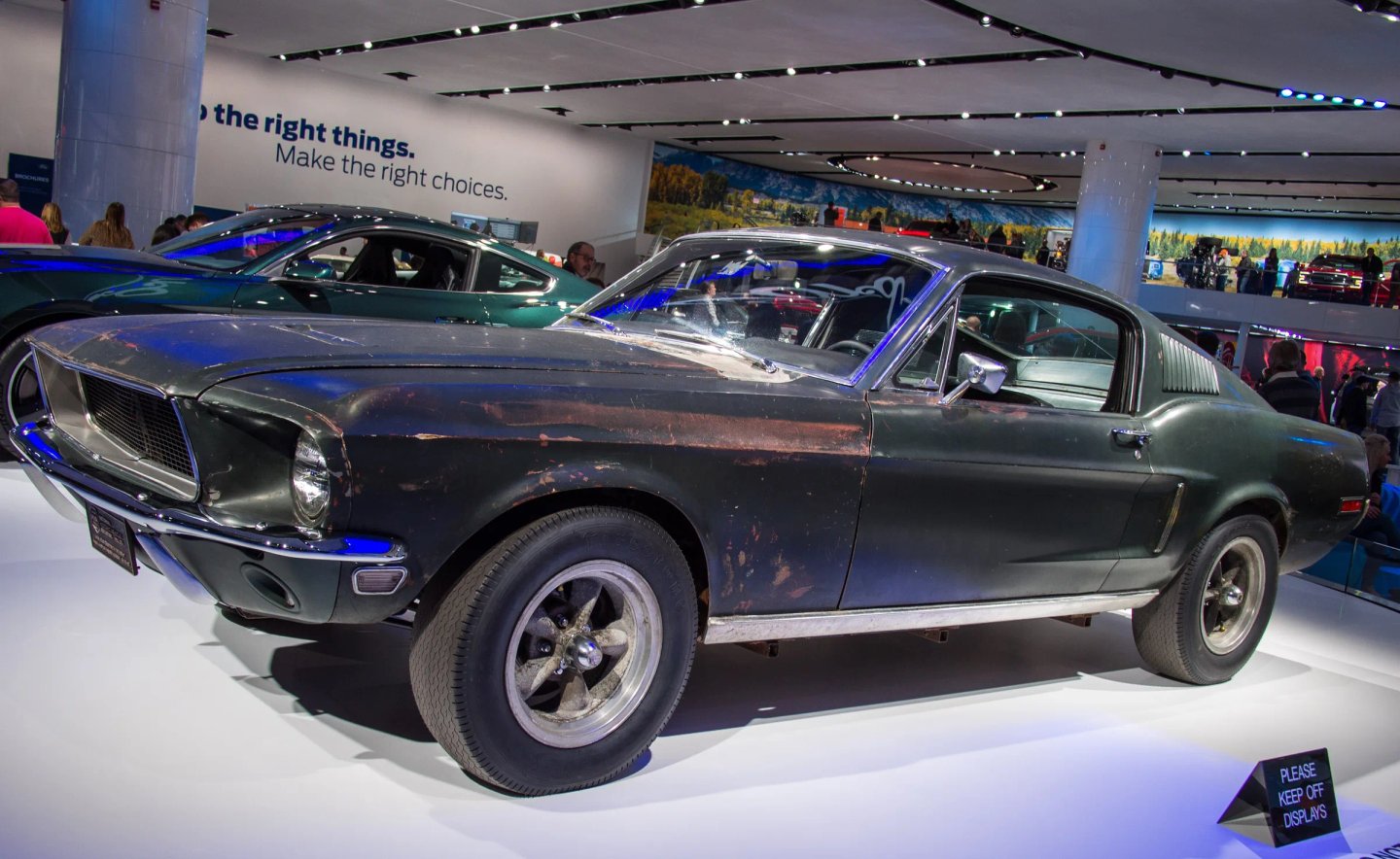
Nearly 16,000%: that is how much more than an ordinary 1968 Ford Mustang GT the car from Bullitt fetched, by Hagerty's sum. At Mecum in Kissimmee in January 2020 the hammer fell at $3.4 million, or $3.74 million with fees. The car had never been restored and looked it. Nothing about the metal or the engine explains that figure. Steve McQueen had driven it.
The easy answer is that people pay for fame. That does not say what for. A McQueen poster is famous too and costs next to nothing. What is in that Mustang that is not in a poster?
Three explanations and a sweater
George Newman, Gil Diesendruck and Paul Bloom looked into this in 2011 for the Journal of Consumer Research. They start with a tape measure from the estate of Jacqueline Kennedy Onassis, which made $48,875 in 1996. They tested three explanations. Association: the object reminds you of someone. Market demand: there is a next buyer. And what they call contagion: the belief that something of the previous owner has stayed in the object.
The experiment went like this. Participants named someone they admired or despised, and said whether they would buy that person's sweater. Then they were given one more sentence. The owner wore it often, or never opened the box. With admired owners, willingness to buy dropped when the sweater had never been worn. With despised owners it rose. A sentence about resale demand pushed both groups the same way. So the next buyer does count, but does not explain why touch counts. In a follow-up the sweater was sterilised. According to the press release, people then wanted to pay 14% less for an admired person's sweater and 17% more for a despised person's.
In 2014 Newman and Bloom turned to real auctions: Kennedy, Marilyn Monroe and Bernard Madoff. In the first two, objects with a lot of physical contact fetched more. With Madoff, contact counted against the object.
Those are sweaters and tape measures. Nobody has measured this for cars. It does fit an object someone has sat in, with their hands on the wheel and their back against the seat.
Same celebrity, different premiums
For its Power List, Hagerty compares what such cars make with an ordinary example. A 1988 Volvo 740 estate owned by Paul Newman made $84,777, against a normal value of $4,923. Freddie Mercury's 1974 Rolls-Royce Silver Shadow went for £286,250 in 2022, against £7,500, although that sale was for charity. Clark Gable's cars average 76%, over eight sales.
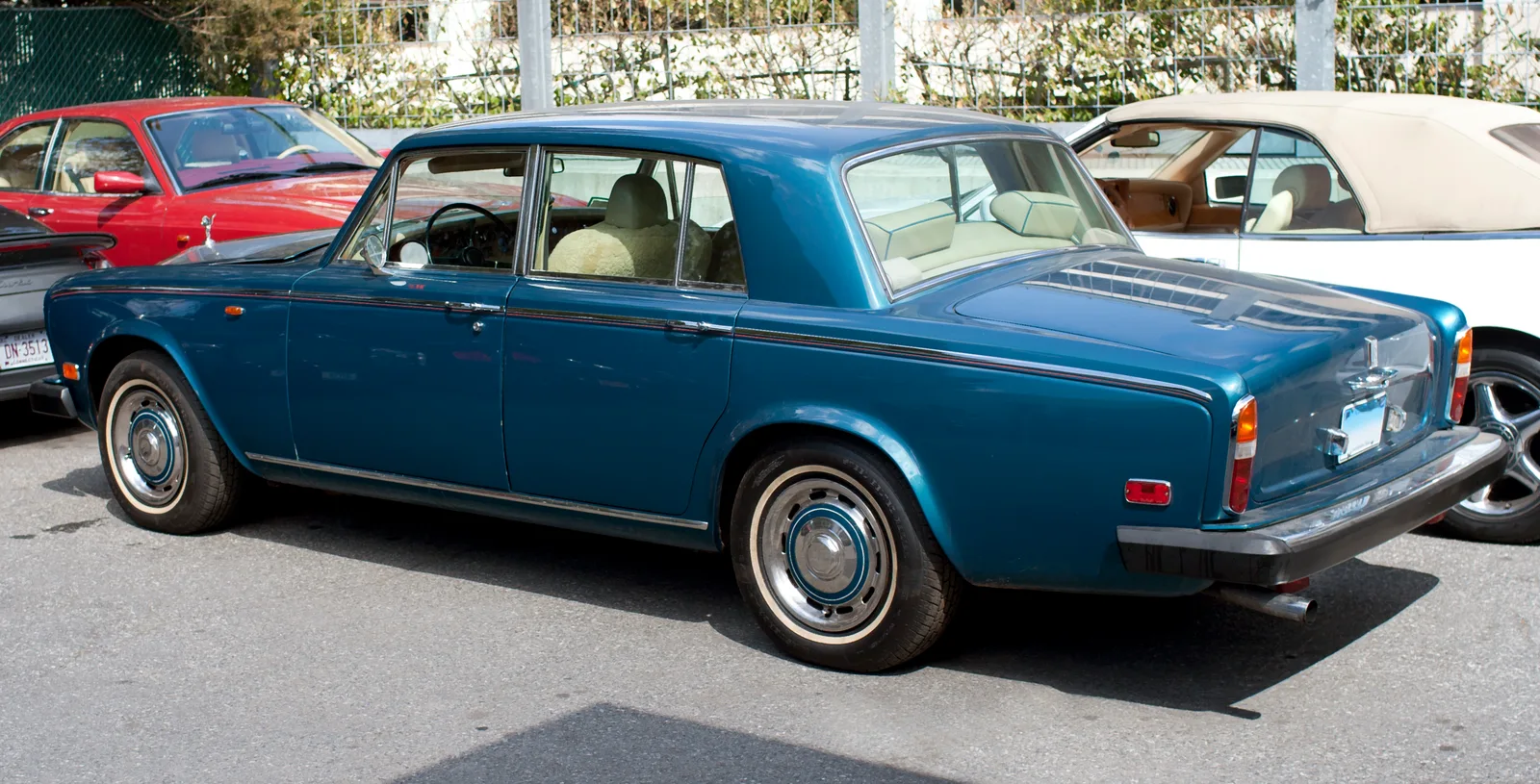
A Rolls-Royce Silver Shadow I from 1974-1976, the same type as Freddie Mercury's car.
Those percentages need care. On a cheap Volvo, more than 1,600% is about $80,000. On an expensive car, 76% can soon be more money, so the percentage also says something about the base. And the premium does not hang on the person alone. McQueen's own 1970 911S made $1,375,000 at RM in August 2011, which Jalopnik put at $1.31 million more than a 911T of that year. That is more than twenty times as much. The Mustang is at about 160 times. McQueen was the same man in both cars. The part each car plays in his story was not, so association counts as well.
Does the premium wear off? It seems likely, because contagion only works on a buyer who knows who the previous owner was. Gable died in 1960 and stands at that 76%. But one figure proves little: his cars were expensive without him, and the list was not built to test this. We found no research measuring it for cars.
That the premium depends on proof is easier to see. The Porsche 928 from Risky Business made $1.98 million in 2021, and Hagerty says the same car had sold for under $50,000 ten years earlier. Newman and his colleagues point out that the buyer of that tape measure would want the money back if it turned out not to come from the Kennedy household, though nothing about the tape had changed. This is why provenance belongs on paper.
When the owner is the wrong one
Contagion also runs in reverse. In January 2018 Worldwide Auctioneers in Scottsdale offered a 1939 Mercedes-Benz 770K, an open Grosser bought for the fleet used by Hitler and other senior figures. A valuer told Fox News the car was worth $5 million to $7 million on its own merits, setting that history aside. The seller pledged 10% of the proceeds to the Simon Wiesenthal Center, for Holocaust education. The high bid was $7 million, and the reserve was not met.
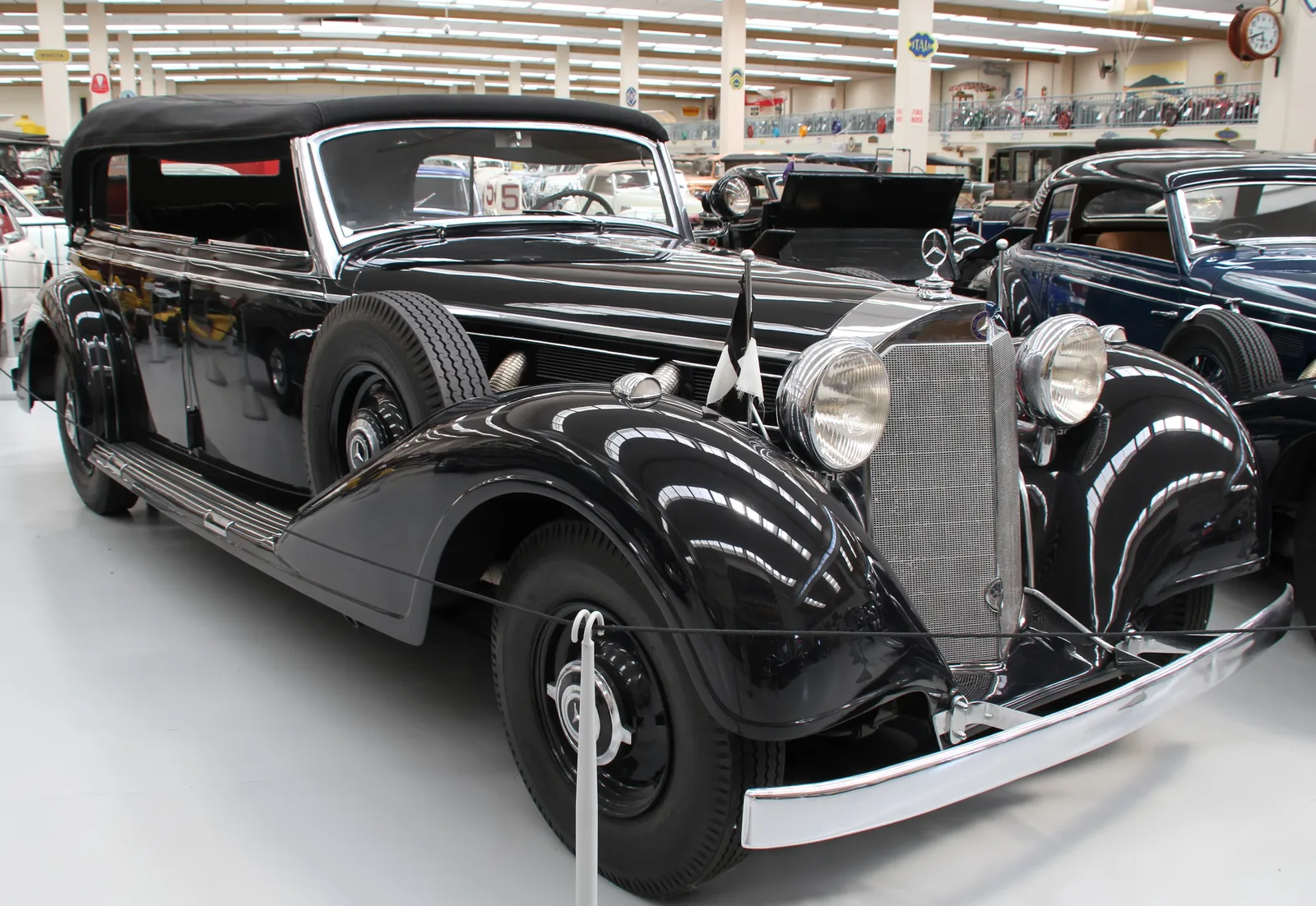
A 1939 Mercedes-Benz 770K in a car exhibition. This is not the Scottsdale car.
So a car like that is not unsellable: $7 million was on the table. It simply earned no premium. The high bid sat at the top of what the car would make without the history. In our reading the pledge to the Wiesenthal Center resembles that sterilised sweater. The object stays the same, but the buyer has less reason to think about where it came from.
Harder on a buyer is a sign that flips after the hammer. Jimmy Savile's Rolls-Royce Corniche, a 2002 Last of Line, went to an internet bidder in Leeds on 30 July 2012 for £130,000, against an estimate of £60,000 to £90,000. Savile had been dead for nine months. In October, ITV broadcast the documentary in which women accused him of sexual abuse. We found no later public sale of the car. Anyone paying for a name is taking a position in someone's reputation. That is not settled on the day of the auction, even when the owner is dead.
McQueen believed in it too. In 1977 he wrote to Robert Kiernan, the New Jersey man who had bought the Mustang in 1974, to say he wanted the car back. He named no price. The car was personal to him, he wrote. He offered to find Kiernan a similar Mustang, as long as it did not cost too much. Kiernan never replied. On Hagerty's sum, a similar Mustang was worth roughly $23,000 in 2020.
Images: NAIAS Original 1968 Mustang GT Bullitt Movie Car, Steve McQueen (39147860754) by F. D. Richards from Clinton, MI (CC BY-SA 2.0); 1974-76 Rolls-Royce Silver Shadow I, rear side by Mr.choppers (CC BY-SA 3.0); 1939 Mercedes Benz 770K (31468249550) by Tony Hisgett from Birmingham, UK (CC BY 2.0). Images resized.


