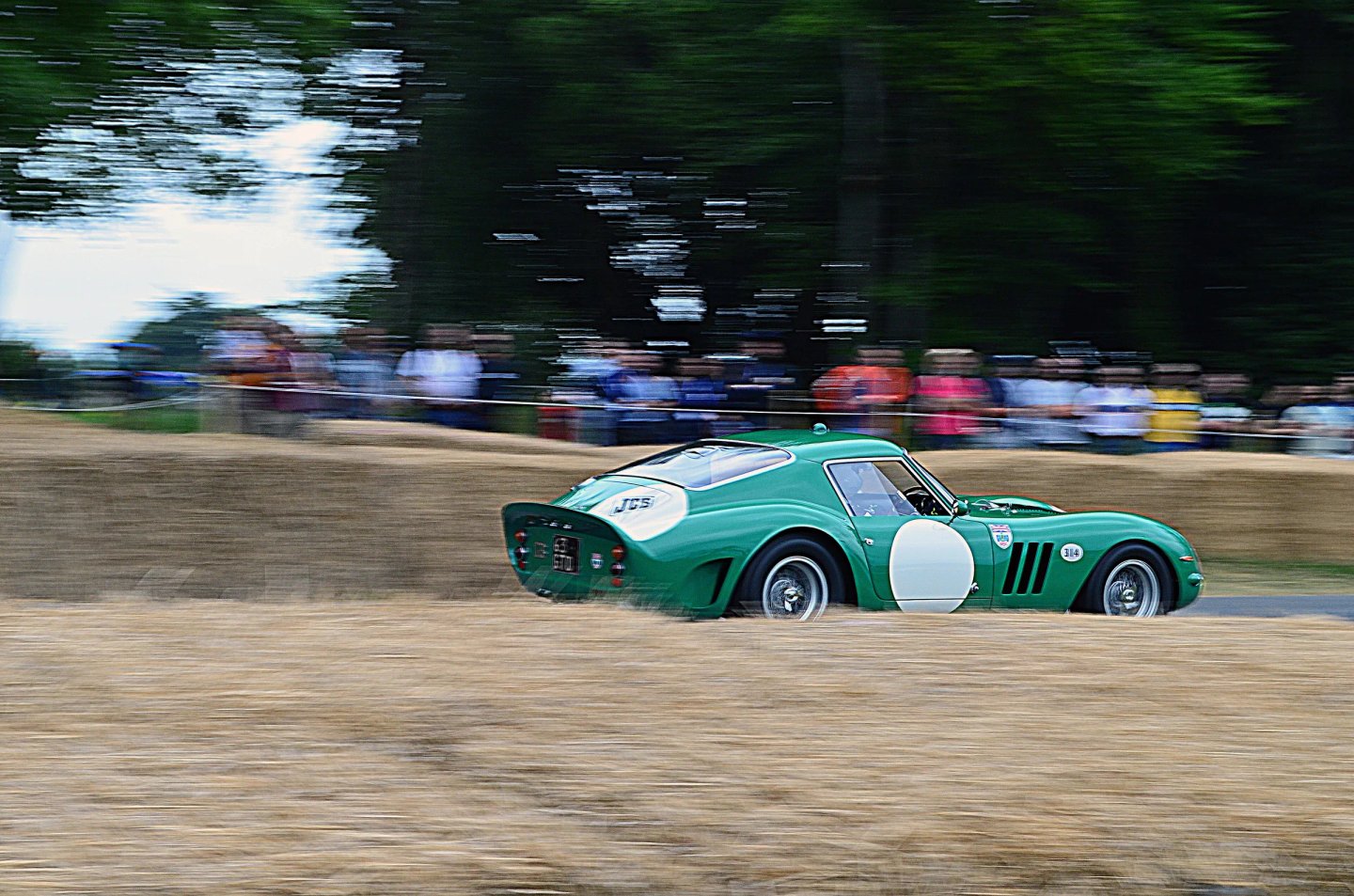
$38,500,000. That is what someone paid on 17 January 2026 at Mecum in Kissimmee, Florida, for a Ferrari 250 GTO. The previous GTO at a public auction went for $51,705,000 at RM Sotheby's in New York in November 2023. Do the sum and the GTO lost a quarter of its value in just over two years. Start instead from the Bonhams sale of August 2014, at $38,115,000, and it rose 1% in twelve years.
Both sums are correct, and neither says anything about what a 250 GTO is worth. The 2023 car ran at Le Mans for the factory in 1962. RM Sotheby's expected more than $60 million for it, so the one result was both a Ferrari record and over $8 million short. The 2026 car is the only white one and has never been fully restored. The 2014 car came from a collection sold without reserve. There is a fourth between them.
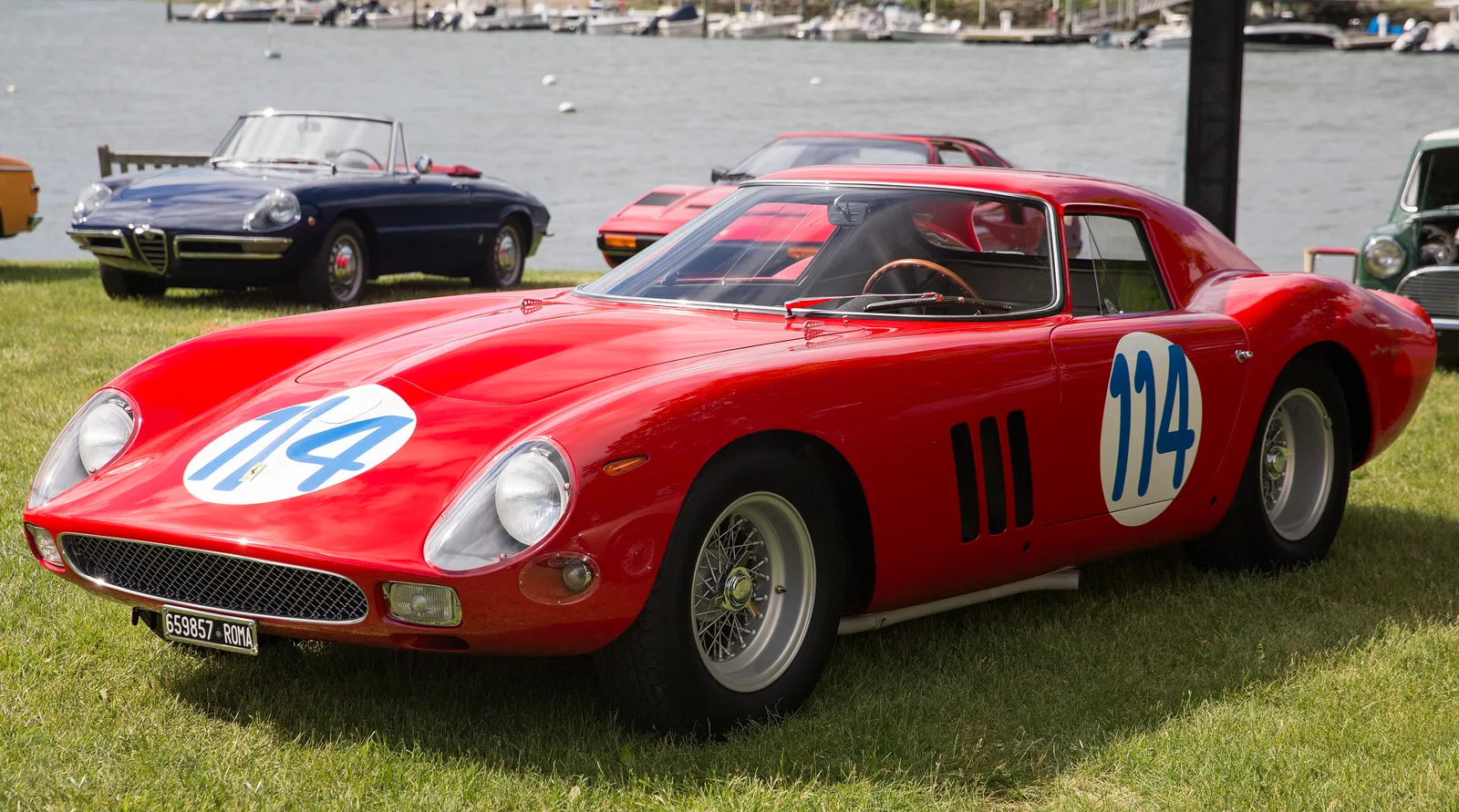
Ferrari 250 GTO chassis 3413, which received a Series II body in 1964 and fetched $48,405,000 at RM Sotheby's in 2018.
Draw a line through those four points and you are measuring the differences between the cars. You are not measuring time.
A result is not a sample
A sample only works if every car of a model has the same chance of being in it. Auction results do not work like that. A car reaches the table only if the owner wants to sell, wants to do it in public, picks an auction and sees the bidding reach the reserve. Each step filters. Statisticians call the outcome selection bias.
With the GTO, the first steps are the clearest. There are 36 of them, and since 2014 four have gone through a public auction. Private sales are said to have reached $60 million and $80 million, figures nobody can check. If they are right, the most expensive GTO is not in the table. If they are wrong, we have no way of knowing that either. In both cases most of what happens to these cars is missing.
Owners also filter on what they paid. In the Review of Financial Studies, Korteweg, Kräussl and Verwijmeren studied 32,928 paintings sold more than once between 1960 and 2013. Those repeat sales show a return of 8.7% a year. Correct for the fact that it is mostly the winners that return to auction and it falls to 6.3%. We have not found the same correction for cars, but the reasoning carries over: someone who overpaid would rather keep the car than take the loss.
The cars that did not sell
The strongest filter is the reserve. In Monterey in August 2023, according to Hagerty, more than 1,200 cars crossed the block for $400.1 million in sales. 68% sold. Among cars with a reserve, about two-thirds of the entry, it was 50%, against 67% a year earlier. Between $5 million and $10 million, one in three sold. The rest have no price. It has happened to a GTO too: the one that stalled at CHF 13 million at Brooks in Gstaad in 2000 is missing from every list.
Say ten identical cars each have a €100,000 reserve. The highest bids are 70, 75, 80, 85, 90, 95, 100, 105, 110 and 130 thousand euros. Four cars make the reserve and the table records an average of €111,250. The average top bid was €94,000. That is an 18% difference, only because six bids were never written down.
The effect is largest when things are going badly. An owner who gets a low bid takes the car home. Bad news therefore shows up first as a car that does not sell. In the same report on 2023, Hagerty wrote of stable values while half the cars with a reserve stayed unsold. Anyone following only sale prices sees a fall last.
The venue is in the price
In Monterey, Hagerty rates condition on site and sets each sale price against what its price guide gives for that condition, across more than 400 cars. The median was 18.3% above the guide in 2022 and 9.8% in 2023. That may be the cars, since anyone with something special takes it to Monterey and not everything special shows in a condition score. It may be the bidders. Either way, such a result says little about what a comparable car would make elsewhere.
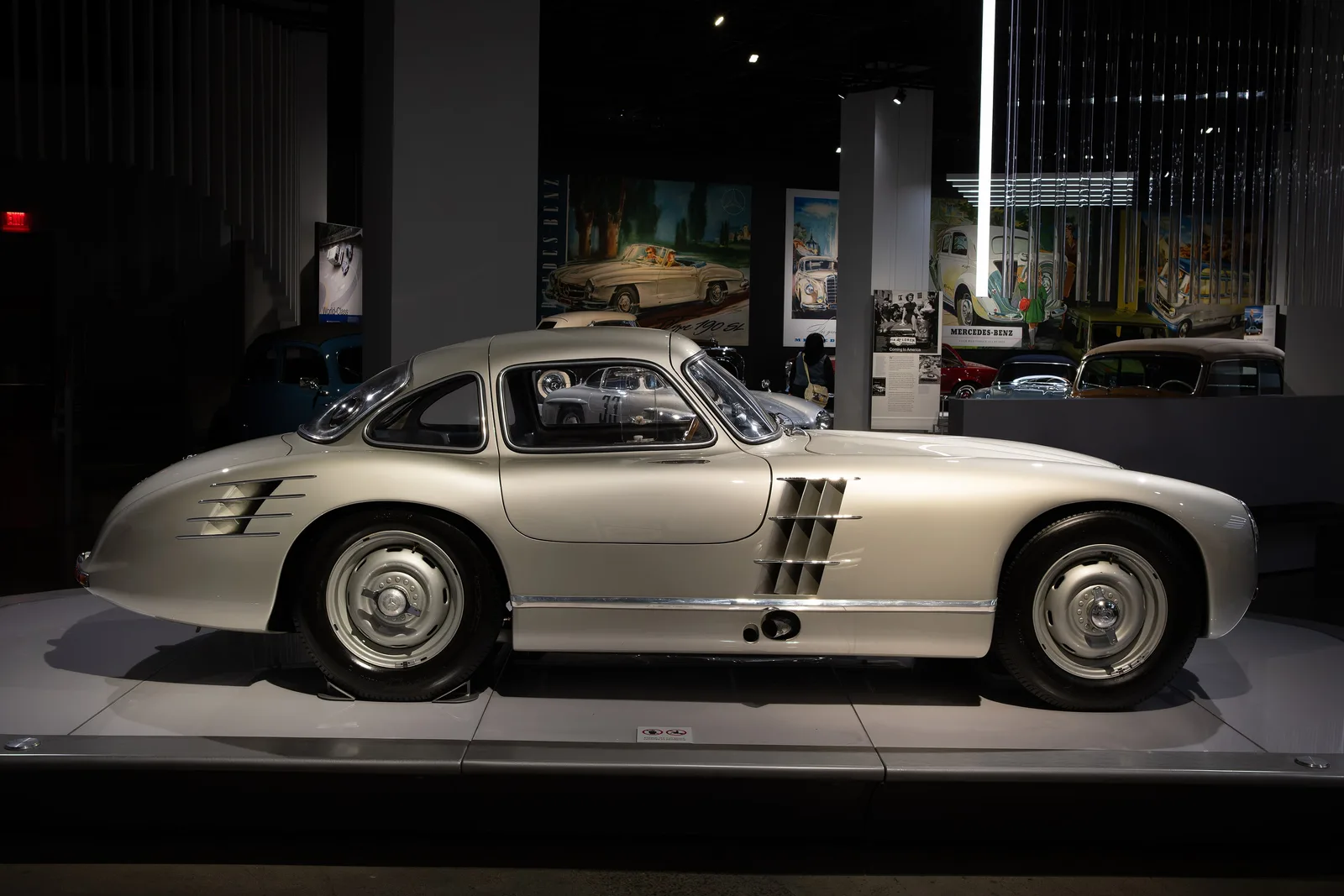
A Mercedes-Benz 300 SLR Uhlenhaut Coupe at the Petersen Automotive Museum in Los Angeles, one of the two built.
The extreme case is the Mercedes-Benz 300 SLR Uhlenhaut Coupe, sold on 5 May 2022 for €135 million. RM Sotheby's held the auction at the Mercedes-Benz Museum in Stuttgart, bidders were invited and the other car stays with Mercedes. That is the price of one car on one day. No market value follows from it, because there is no second sale to compare it with.
Then you need to know what is inside the number. Mecum's $38.5 million is a $35 million hammer price plus a 10% premium. Sports Car Market recorded a 964 RS sold on Bring a Trailer in November 2022 at $474,999: a $469,999 bid and $5,000 in buyer's fees. Which of those numbers goes in a table depends on who makes the table. On a $200,000 bid, the gap between a 10% premium and that $5,000 is already $15,000.
The result that does say something
Of the four GTOs, the 2014 Bonhams car looks the least impressive: the lowest price, and its record long since broken. It is also the only one we can say for certain was offered without reserve. It had to go that day however low the bids were, so it never passed through the strongest filter.
That result is no clean measurement either. An owner drops the reserve when counting on plenty of bidders or when forced to sell, and that collection came from an estate. Even so, anyone trying to value their own car learns more from five comparable no-reserve sales than from the model's record, and more from the top bid on a car that stayed unsold than from the one that went. At Octane the reserve is confidential, so there too an unsold car does not show how far the bid fell short. Look first for the no-reserve cars and the cars that stayed unsold. Hardly anyone quotes that part of the table.
Images: Ferrari 250 GTO (52344050278) by Neil (CC BY 2.0); 1962 Ferrari 250 GTO 3413GT, Series II update, front left by Mr.choppers (CC BY-SA 4.0); Mercedes-Benz 300 SLR Uhlenhaut Coupe - Petersen Automotive Museum - Los Angeles by Guywelch2000 (CC BY 4.0). Images resized.


