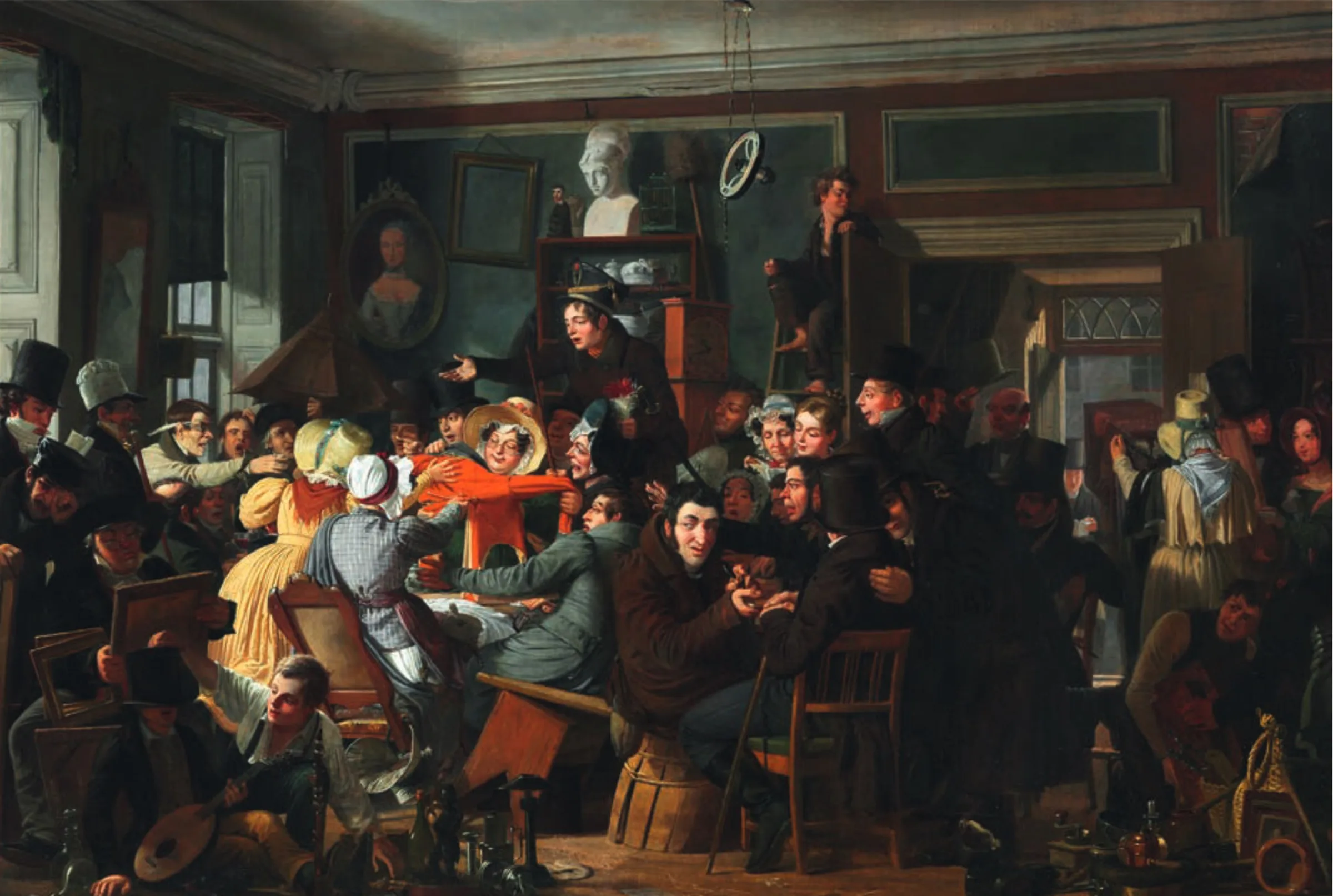
The invoice from an online car auction says who pays the commission. On a €40,000 car at 3%, the buyer sends €1,200 and the seller sends nothing. An economist wants to know something else: what would that buyer have bid without the €1,200?
Who sends the money and who bears the cost
Tax economists have long drawn this line. The oil company sends fuel duty to the treasury, but the person paying it is standing at the pump. The word for this is incidence: where a charge ends up, whoever happens to send the money. With an auction commission the buyer sends the money, and part of the cost lands on the seller.
The reasoning is short. The winner of an auction pays about what the runner-up was still willing to bid. Say that runner-up will spend €41,200 at most, everything included. They know 3% goes on top, so they stop at €40,000. With no commission they would have gone to €41,200, and the winner would have had to go just past that. So the seller gets €1,200 less, and no document says so. Orley Ashenfelter and Kathryn Graddy set this out in 2005 with 10% and a formula: the hammer price is the second bidder's maximum divided by 1.1.
Two auction houses, one spring
The clearest evidence comes from wine. In spring 1986 Sotheby's in London charged a 10% buyer's premium at its wine auctions and Christie's charged none. Hammer prices at Christie's were 12% higher. In the autumn Christie's adopted the same premium and the gap vanished.
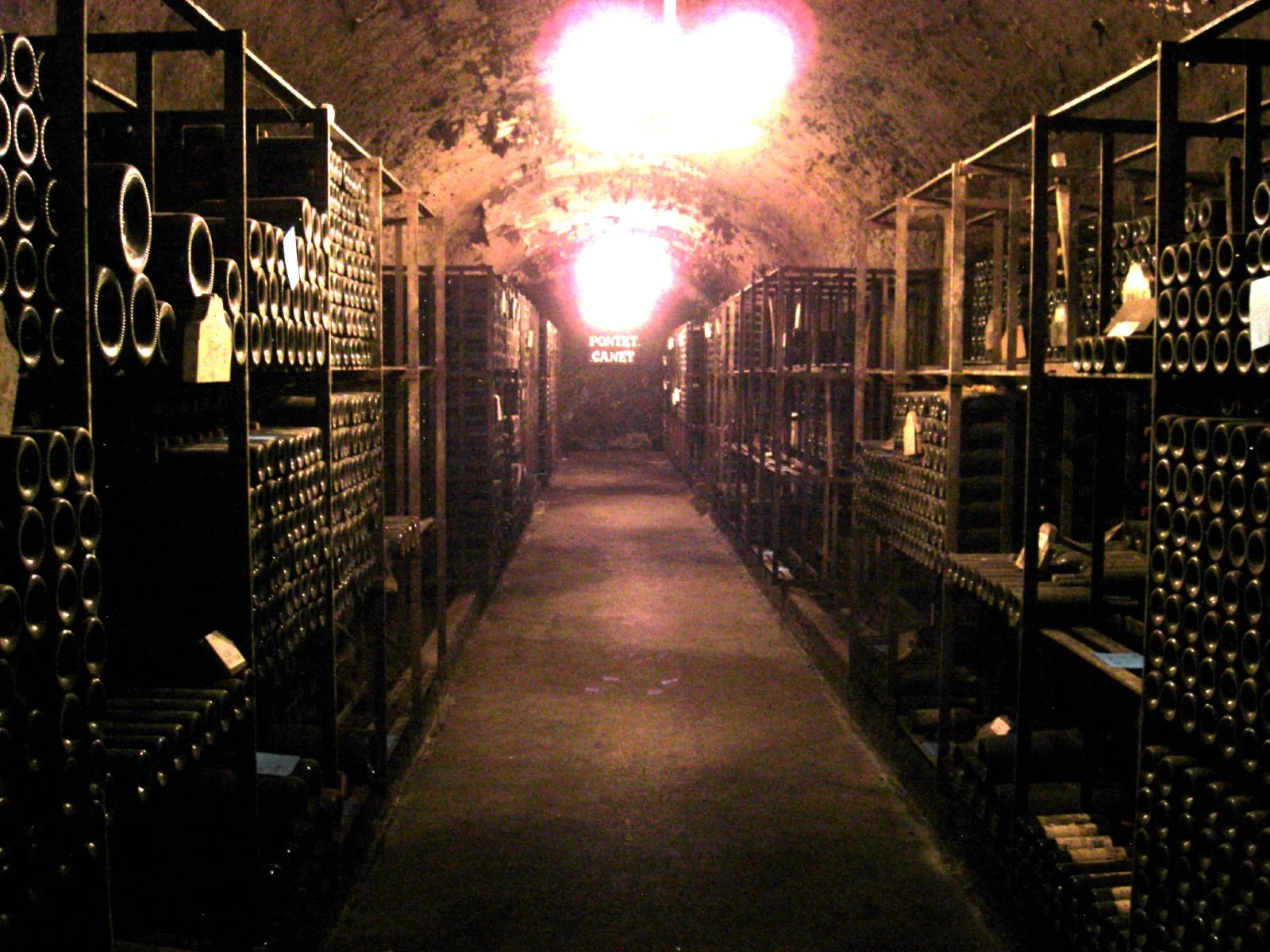
The cellar at Château Pontet-Canet in Bordeaux.
Denton Marks looked at Bordeaux sales in 2009 and found the same: bidders took the full premium off their bids. Wine is not a car. Traders bid at wine auctions too, and a lot is easier to compare than a Porsche with a history of its own. We have found no such measurement for cars.
Nor does every bidder do the sum. Tanjim Hossain and John Morgan sold CDs and Xbox games on eBay and moved money back and forth between opening bid and postage. In some of their trials a low opening bid with high postage brought in more, because bidders did not fully count the postage. On a CD that is understandable, on €1,200 less so.
A settlement that followed the invoice
That makes the best-known lawsuit about auction fees an odd one. Christie's introduced a 10% buyer's premium in 1975, and Sotheby's followed at once. In the early 1990s the two houses fought for consignments and sellers' commissions often fell to zero. In March 1995 Christie's announced a fixed rate that could not be negotiated, and on 13 April Sotheby's did too. It turned out to have been agreed between them. The civil case, before Judge Lewis Kaplan in New York, ended in a $512 million settlement, $256 million from each house.
The split followed the invoice. Sellers' losses were put at 1% of the hammer price, buyers' at 5% up to $50,000 and $2,500 above that, so buyers received most of the money. Ashenfelter and Graddy thought that misplaced: winning buyers had already adjusted their bids and as a group were probably not harmed.
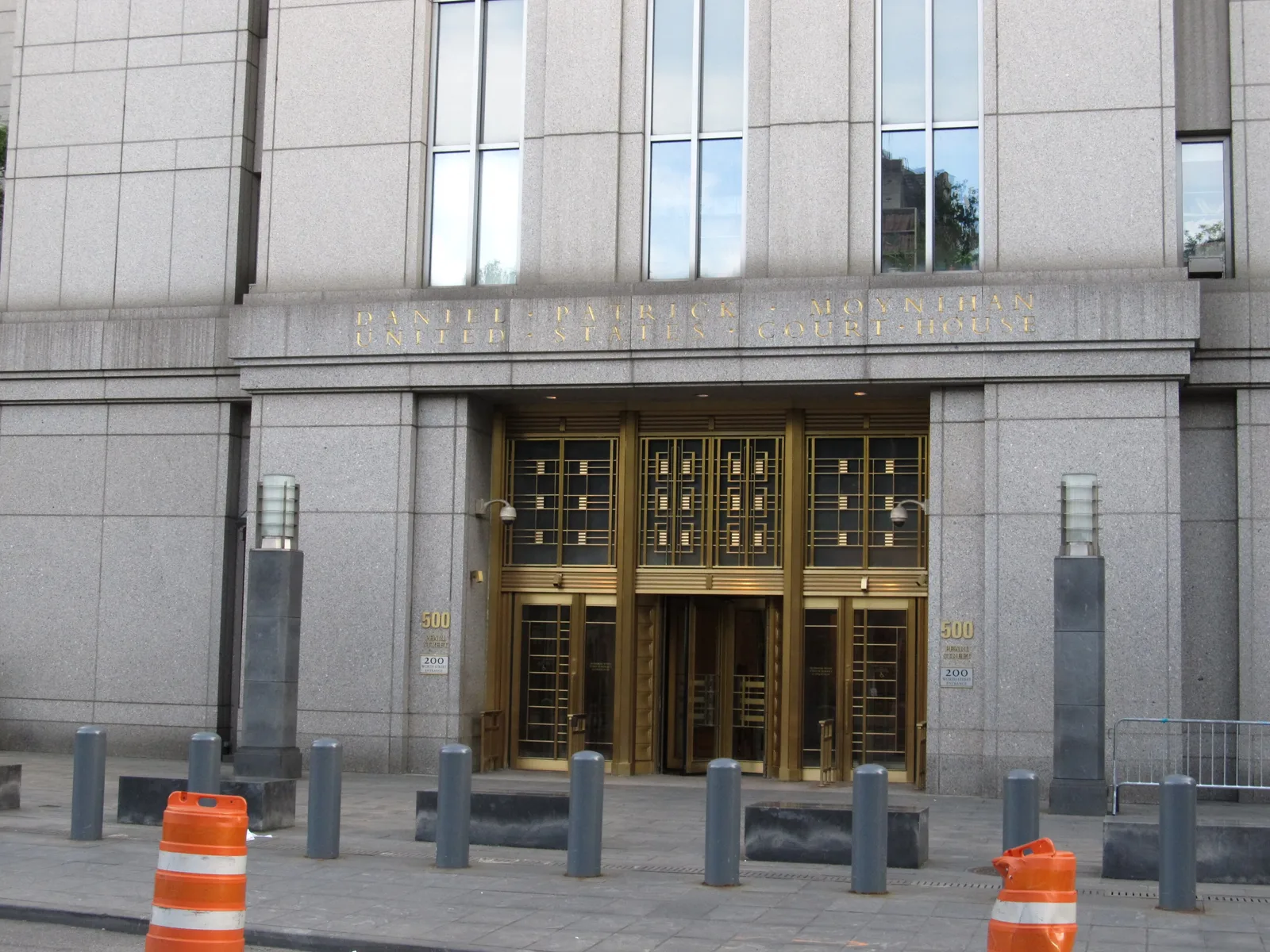
The entrance of the federal courthouse on Pearl Street in Manhattan, home of the court where the case was heard.
How much disappears in total
So for a seller "who pays?" is the wrong question. The better one is how much disappears in total between what the buyer spends and what the seller receives.
Octane charges no seller fees. The buyer pays 3%, with a minimum of €350 and a maximum of €3,600, VAT included. If bidders do the sum, the seller bears part of that, as on any platform that puts its charges on the buyer. It cannot be more than the commission. At this price other sites take more. Here is what the same €41,200 bidder can bid on each:
- Octane, 3% including VAT: €40,000
- Bring a Trailer, 5% plus VAT on European lots: €39,238, before that VAT and the €99 the seller pays
- Collecting Cars, 6%: €38,868, before any VAT
- The Collectables, 10% including VAT: €37,455
- Classic Car Auctions, 12.5% plus VAT at its car auctions: €35,787, before its seller's commission
At Classic Car Auctions the seller therefore receives €4,213 less than at Octane, and their own commission still comes off. That holds only if the same bidder turns up on every site, and nobody can guarantee that. Bring a Trailer and Collecting Cars have a different audience from a Dutch site, and Classic Car Auctions takes the car in and holds viewing days. A low commission with a weak second bidder is no gain.
We read these rates on the sites themselves between August and October 2026. They can differ per auction or lot and they can change, and the sources are listed per platform on our comparison pages.
On dearer cars the gap widens, because the 3% commission stops rising at €120,000. On a €150,000 bid it is €3,600, or 2.4%. Collecting Cars reaches its €7,000 maximum there, and The Collectables, which publishes no maximum, comes to €15,000 at its standard rate.
At the bottom the minimum weighs more. On a €6,000 car, €350 is already 5.8%. The gap can still be large, above all where the seller pays too. Catawiki charges the buyer 9% plus €3 and the seller 12.5% plus €10, excluding VAT. A bidder who will spend €6,350 in all stops there at €5,823, and a seller in the Netherlands keeps €4,930 of that. At Octane the same bidder brings €6,000. We could not confirm whether Catawiki's rate applies unchanged above €10,000, so the comparison stays with this one sum.
When the reserve sets the price
So far the second bidder has set the price. A reserve can take over that job, and then the result turns round.
Say the reserve is €40,000. The top bidder would spend €50,000 in all, and the second dropped out at €35,000. The winner only has to reach the reserve and at 3% pays €41,200. With no commission it would have been €40,000. Here the buyer bears the whole commission. Ginsburgh, Legros and Sahuguet showed in 2004 that a binding reserve can have this effect.
Now say that top bidder will spend €41,000 at most. Their highest bid is then €39,806, just under the reserve. The car stays unsold, although the seller wants €40,000 and the buyer would pay €41,000. That €1,000 of room is smaller than the commission. Nobody pays anything, and there is no sale either.
A seller who wants the buyer to carry the commission in earnest therefore has one tool: a reserve high enough to set the price. It is the same reserve that takes the seller closest to that second result.
Images: En auctionsscene (Marstrand) by Wilhelm Marstrand (public domain); Underground wine cellar of Pontet-Canet by seligmanwaite (CC BY 2.0); Daniel Patrick Moynihan U.S. Courthouse, Manhattan, New York (7237347688) by Ken Lund from Reno, Nevada, USA (CC BY-SA 2.0). Images resized.


