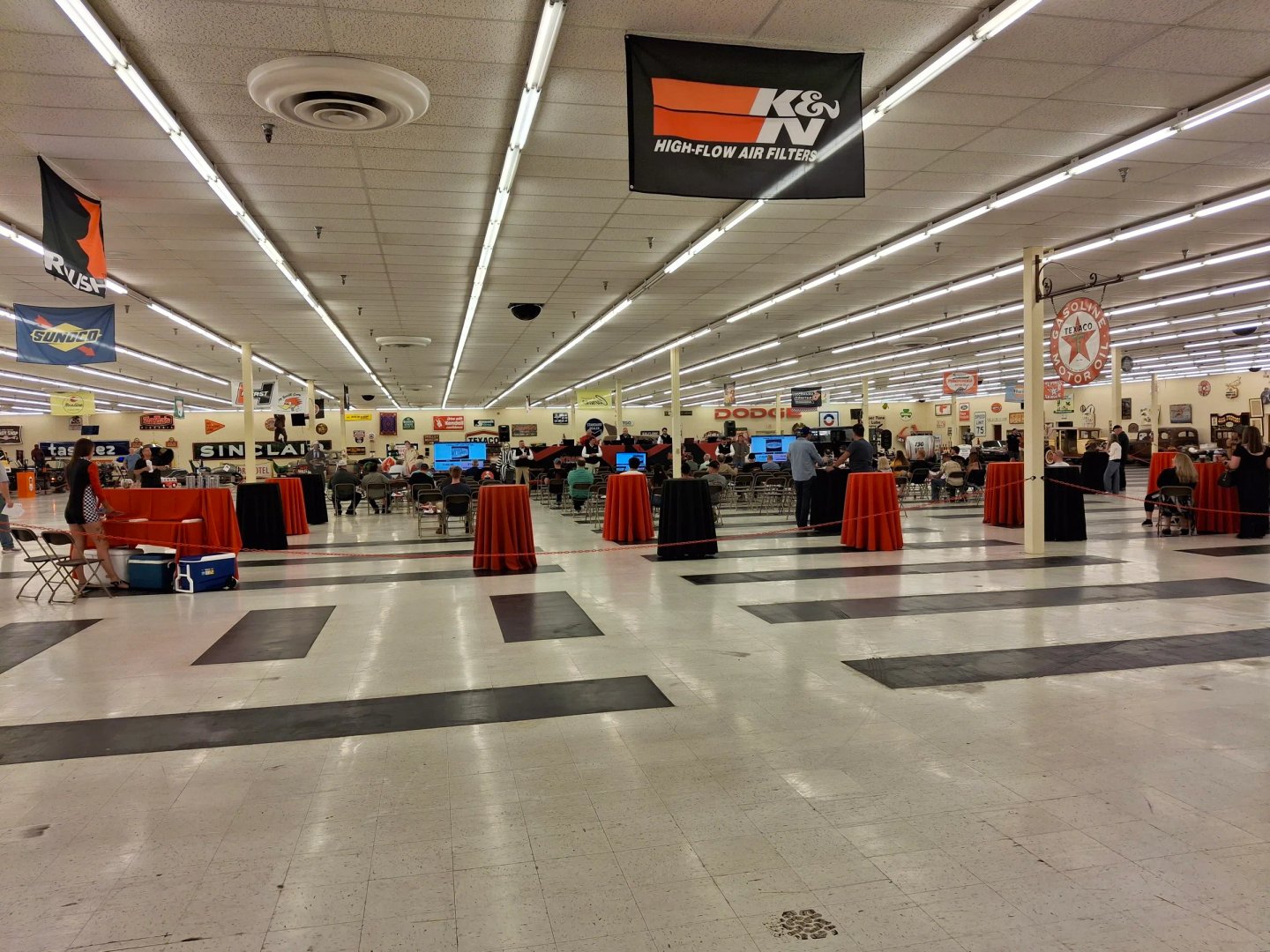
When an auctioneer calls €65,000 and points to the back of the room, who has bid? Somebody in the room. Somebody on the phone. Somebody who left a written bid beforehand. Or nobody.
That last one is allowed, and it is in writing. RM Sotheby's conditions say the auctioneer may bid on the consignor's behalf, up to the amount of the reserve. Artcurial in Paris keeps the same right and bars the seller from bidding personally. In their 2002 survey of art auctions, Orley Ashenfelter and Kathryn Graddy describe it as part of the trade: to get a lot moving, the auctioneer accepts fictitious bids, off the chandelier. Legally the auctioneer is then bidding for the seller, and has to stop once the reserve is reached.
When a seller does the same on eBay, it is called shill bidding. Someone in Britain has been convicted for it.
Why an auction invents bids
The reserve is secret. Take a car with a low estimate of €60,000 and a reserve of €50,000 (the amounts are invented). If the auctioneer opens at €50,000, the whole room knows the reserve. An auctioneer who opens at €30,000 and waits for two real bidders can see the lot stall while someone sits there willing to pay €55,000. With one bidder in the room, nothing rises. So the auctioneer supplies the opponent, as far as the reserve.
The defence is that this costs nobody anything. Below the reserve, the car cannot be sold. Check the sum. A bidder with a limit of €70,000 is the only real buyer. With a public reserve they pay €50,000. With invented bids up to €50,000 they pay the same, or one step more. The price does not change, as long as their limit stays where it was.

Chandeliers in the ballroom of the Château Frontenac in Quebec. A bid nobody made is known in the trade as a bid off the chandelier.
What an invented bid does cost
That limit does not always stay put. You buy a classic to drive, but with an eye on what someone will give for it later. So what others bid is information about what the car is worth. Economists call this a common value: part of the worth is the same for everyone and nobody knows it exactly. That is why bidders watch each other.
Take the same car and a bidder who settled on €48,000 at home. They hear €40,000 and €45,000 and cannot place those bids. They decide they have priced the car too low, go to €51,000 and buy it. Their judgement has been moved by someone who did not exist, and without those bids there would have been no sale. The defence above does not apply to them.
The same bid online
In July 2010, Bradford Crown Court sentenced Paul Barrett, owner of a minibus firm, in the first British prosecution for shill bidding. He used a second eBay account to bid on his own goods: a minibus, a Land Rover, a Mercedes, two phones, a cash register, a refrigerated display counter and a pie and pasty warmer. It came out through a complaint about the minibus, advertised with 55,000 miles and found by its buyer to have done more than 132,000. Barrett admitted 11 charges and received a £3,500 fine and 250 hours of community service.
Another case comes closer to the saleroom. In 2023 the dealer Doug Tabbutt told VINWiki, and Carscoops wrote up, the story of a Mercedes-AMG G63 on Bring a Trailer with a $90,000 reserve. According to him, the seller bid it up personally to $86,000. That is just what an auctioneer may do: bid below the reserve. But with the 5% buyer's premium that bid came to $90,300, the car counted as sold and the seller owed $4,300 in premium. One source, otherwise unconfirmed.
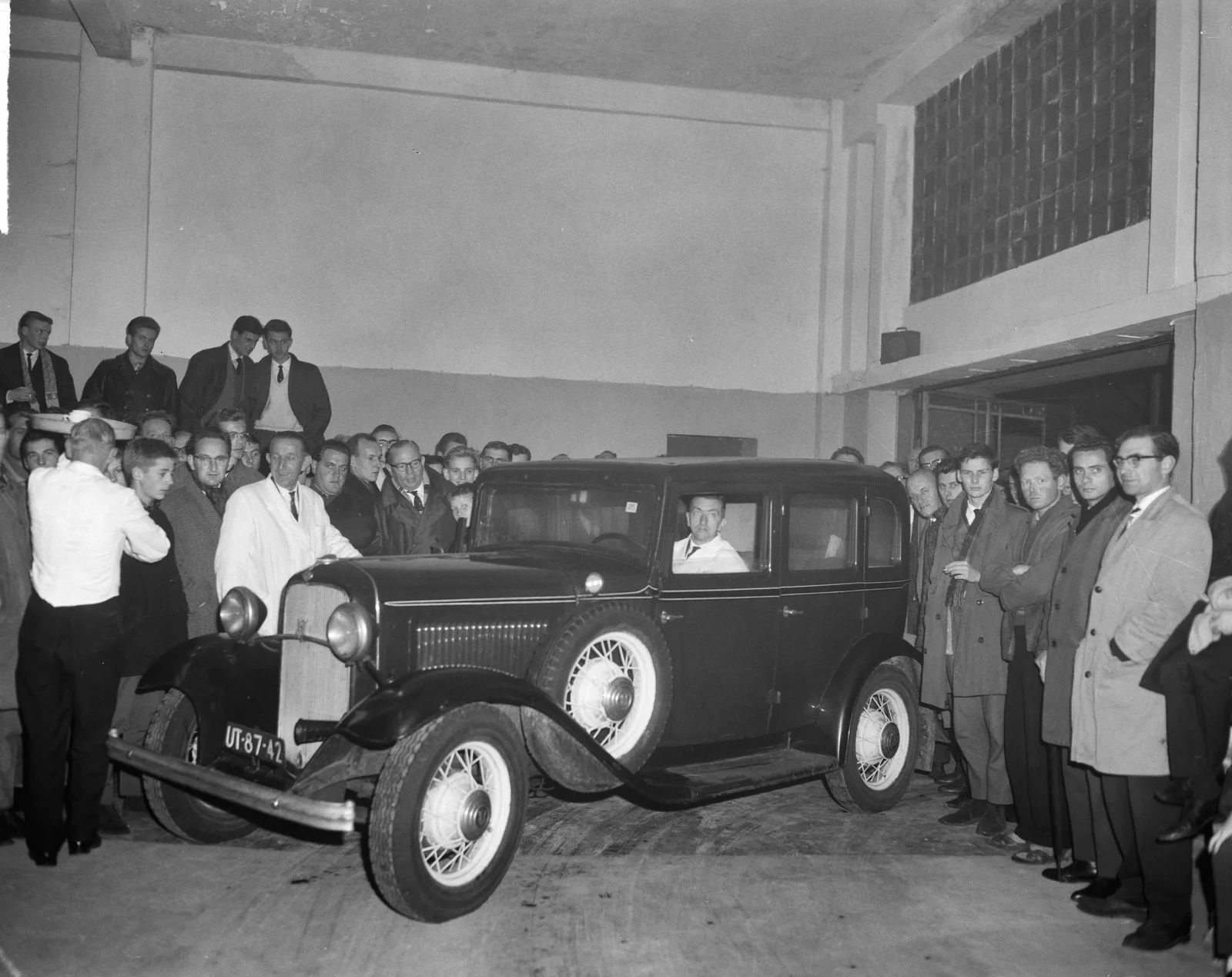
A car auction at the Olympic Stadium in Amsterdam on 1 October 1963, in aid of the charity Het Dorp.
So the law does not draw its line between the room and the internet. Under section 57 of Britain's Sale of Goods Act 1979, a rule already in the 1893 Act, a seller may not bid or hire anyone to bid unless that right has been notified in advance. Without notice, the buyer may treat the sale as fraudulent. With notice, it is allowed. RM Sotheby's also puts its clause in the conditions of online sales, such as the one in April 2020 with a single 911. That says what is permitted, and nothing about what happened there.
The ceiling at the reserve is not in section 57. It comes from the auction houses' own conditions. Barrett had two things against him: he had notified nothing, and his bids stopped nowhere.
The rules he was sentenced under were Britain's version of the EU directive on unfair commercial practices. In the Netherlands that directive sits in article 6:193a onwards of the Civil Code. We did not find a Dutch shill bidding case.
What a bidder should do with this
Notice settles the legal question. It does nothing for the bidder in the room at that moment: the clause says it can happen, not which bid it was. On eBay it is forbidden, and there too you cannot see who is behind an account. Nobody knows how often it happens. The bidder is in the same position either way: a bid below the reserve does not prove there is another buyer.
So count what cannot be invented: earlier sales of comparable cars, the paperwork, what an inspection found. The number of bids and their pace do not count. Where a platform or auctioneer announces that the reserve has been met, the bids after that point start to mean something.
Proxy bidding adds one more thing. Anyone who leaves a maximum lets the system bid for them up to that amount. In a 2009 paper, Joseph Engelberg and Jared Williams argue that this makes fake bids work especially well, and the mechanism is simple: the system answers each step, so a second account can see there is still room above it. A high maximum, days before the end, is a number someone can look up.
The honest seller gets a bill from this too. In 2007, Georgia Kosmopoulou and Dakshina De Silva had test subjects bid knowing the seller could take part. The seller then earned less on average from fake bids, because the bidders turned cautious. A lab is not a sale hall, and those subjects knew for certain what a real bidder only suspects. The direction makes sense, though. Anyone reasoning as above bids a little lower on every car, including the car of someone who would never invent a bid. The shill takes the gain from one buyer. The discount is paid by every seller who comes after.
Images: Rodz & Bodz Movie Car Museum auction 2025-08-22 by Xnatedawgx (CC BY-SA 4.0); Ballroom, Château Frontenac 01 by Thomas1313 (CC BY-SA 4.0); Op Autoveiling in Olympisch Stadion . Auto geveild ten bate van Het Dorp . De , Bestanddeelnr 915-5848 by Joop van Bilsen for Anefo (CC0). Images resized.


