A car collection usually has one owner and one person who knows what is in it, and they are the same person. That person knows which car will not start after two months without a trick, which specialist has the original engine on a shelf, which deposit is still outstanding and which of the two Alfas is the good one. On the day of the funeral the cars are exactly where they were. The knowledge is not.
Investors call this key person risk: the value depends on someone who can drop out. Private equity funds write a clause for it into their agreements. If the named person goes, the fund stops making new investments until a solution is found. Nobody writes that clause for a collection.
What the auction results show
You would expect an estate to sell cheaply as a result. The well-known results say the opposite. Willy Michiels, Belgium's bingo king, died in 2020. In September 2026 RM Sotheby's auctioned 94 of his cars online, most of them without reserve. The expectation was €5 to 6 million and the result was €6.59 million.
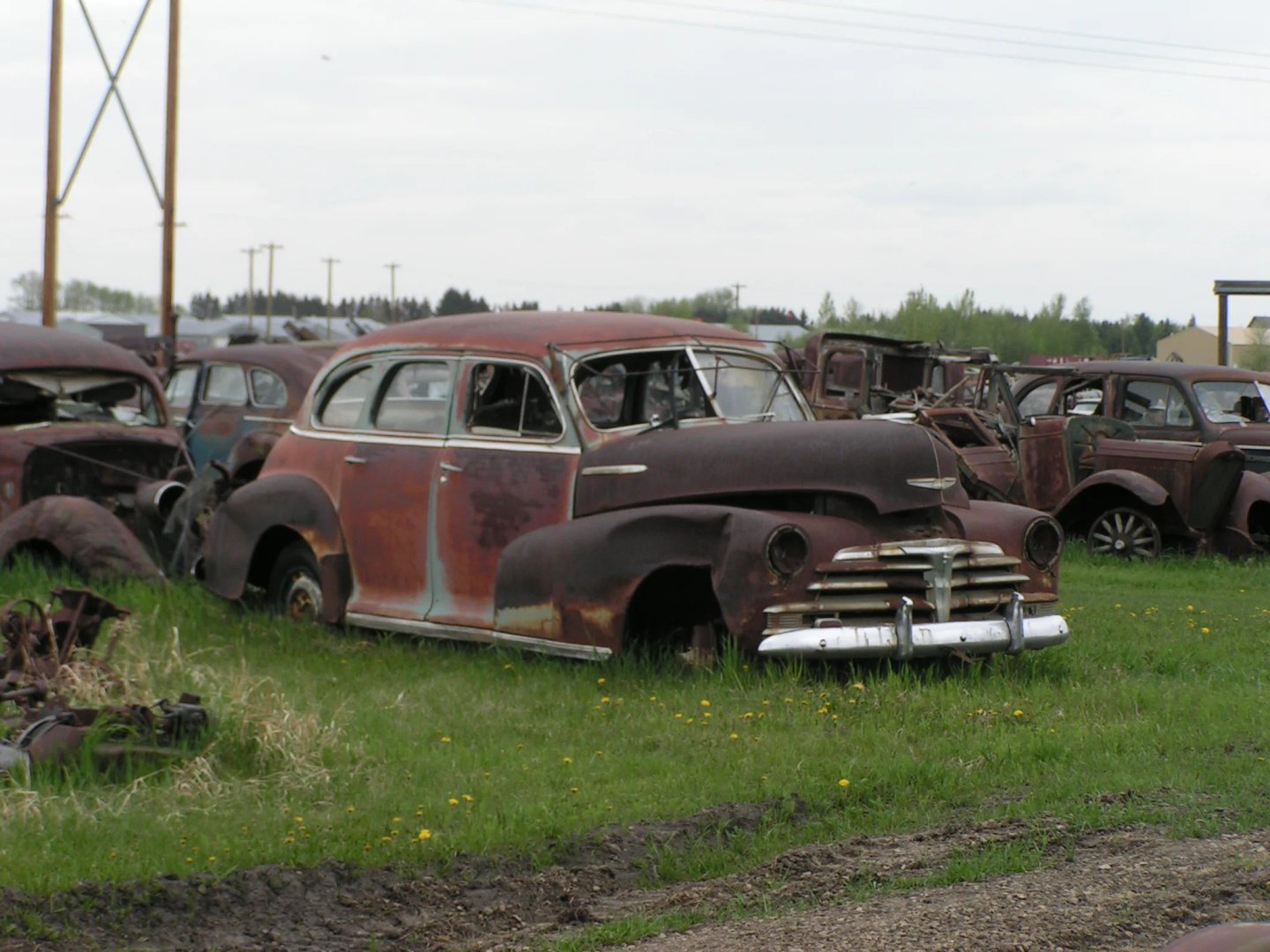
Rudi Klein ran a Los Angeles salvage yard full of European exotics and died in 2001. His yard stayed largely untouched until it was auctioned in October 2024: more than 500 lots of cars and parts, bidders from 39 countries and, according to RM, $29.6 million. An alloy 300 SL Gullwing, the 26th of 29, made £7.22 million. Hagerty's price guide gives £6.5 million for one in the best condition.
So whatever goes wrong does not show in the final score. Four things get lumped together here, and one of them is not even a loss.
What had already gone
Take the best-known purchase in the Michiels collection. In 2017 he paid about €1.2 million in Knokke for a Mercedes-Maybach G 650 Landaulet, then the most expensive car ever auctioned in Belgium. In 2026 it sold for €612,500 with 200 kilometres on the odometer. That is a loss of nearly half and it has nothing to do with his death.

A Mercedes-Maybach G 650 Landaulet at the 2017 Frankfurt show, the same type as Michiels's car.
A living collector never has to hold the cars up against the market. Nobody asks. At death it happens to every car at once, and accountants have a word for it: mark-to-market. Part of what seems to be lost has simply been counted for the first time.
Time and haste
The first real loss is time. Klein's cars stood partly outdoors in the California sun, and according to Hagerty many of them were wrecks fit only for parts. With Michiels, six years passed between his death and the sale of the cars. A car that stands that long comes with a bill for rubber, brakes and fuel system.
In the Netherlands the heir has to act in the meantime. According to the Dutch motoring club ANWB, a car must be in an heir's name within five weeks, with a notary's certificate of inheritance. The insurance does not stop by itself and the road tax keeps running even if nobody drives. Someone who wants to decide nothing can suspend the registration, but only once the car is in their name. For one car that is an afternoon. Say there are fourteen, and it becomes a project for someone who has just buried a parent.
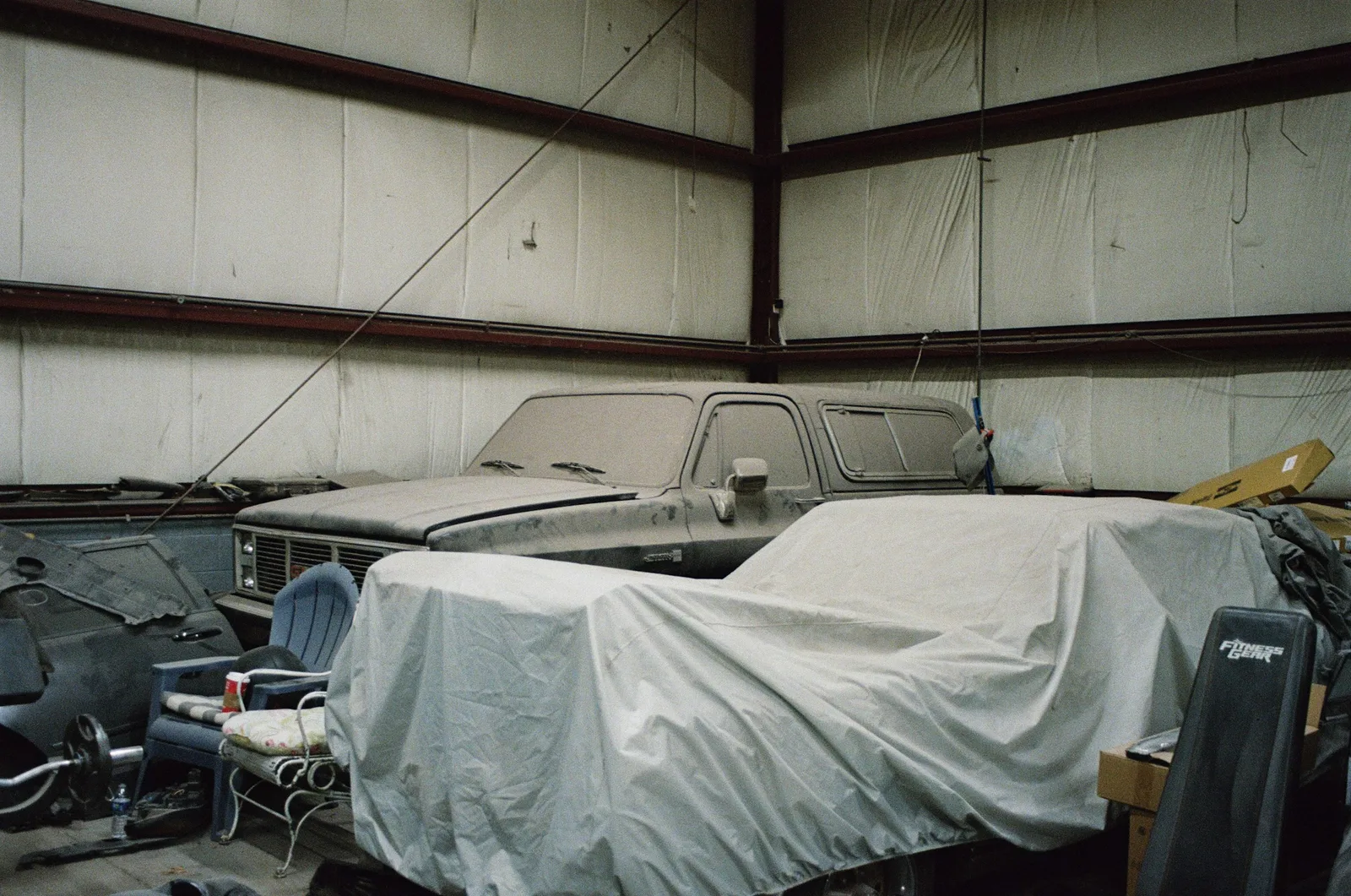
One vehicle under dust and one under a cover in a storage hall.
The second is haste. John O'Quinn, a Houston lawyer, died on 29 October 2009 with about 800 cars. His executor spoke of debts of about $90 million. By March 2010 the first cars were already going under the hammer, 138 of them without reserve at Fort Lauderdale for $6,843,000 in total. That is about $49,600 each. O'Quinn had his own research library with a binder for every car, so knowledge was not the problem. Anyone who has to sell sells a lot at once. That pushes the price down. American courts call this a blockage discount when it comes to art. For the 90,000-plus works in Andy Warhol's estate, Christie's proposed an average discount of 60% and the court settled on 25%.
The same pressure can arise under Dutch rules. Say one child inherits a €400,000 collection and little else. In 2026, €26,230 is exempt, the first €158,669 is taxed at 10% and the rest at 20%. That comes to €58,887, based on the value at the time of inheritance. A partner is in a different position, with an €828,035 exemption. For deaths from 2026 onward the heir has 20 months to file instead of 8, which helps. The heir still has to know which car to sell to pay it, and for how much. What applies in a given case is a question for a notary.
What the results do not show
Which leaves the knowledge this article began with. At Klein's yard, RM's specialists worked out what was there and wrote it down. That explains the good results. Heirs who reach a major auction house buy the knowledge back, on commission. Their collection was also large or famous enough to make that possible.
So we only see the estates that have already been rescued at that point. Say a Jaguar from a collection of six cars goes cheaply to an old club friend. That produces no result. There is no register of cars sold too cheaply. We do not know how big this loss is. Nobody can.
One sheet per car
The fix is dull and takes an evening per car. It overlaps with the papers a seller needs anyway. One sheet, in a folder the heirs can find.
- What the car is: chassis number, engine number, what is original and what is not.
- Where the papers are, the second key and any parts no longer on the car.
- Who works on it, what is due next and how it starts.
- What it cost, and what someone independent said it was worth on what date.
- Who to ring, and who not to.
Without that sheet, the first person to ring sets the price. An heir who does not know what is in the garage cannot tell a €40,000 offer from one that should have been twice that. They sign and the car leaves. They never learn what they missed.
Images: Rusting Vintage and Classic Cars (2551898241) by dave_7 from Lethbridge, Canada (CC BY-SA 2.0); Mercedes-Maybach G 650 Landaulet IMG 0753 by Alexander Migl (CC BY-SA 4.0); Photo by Jacob Skowronek on Unsplash. Images resized.

