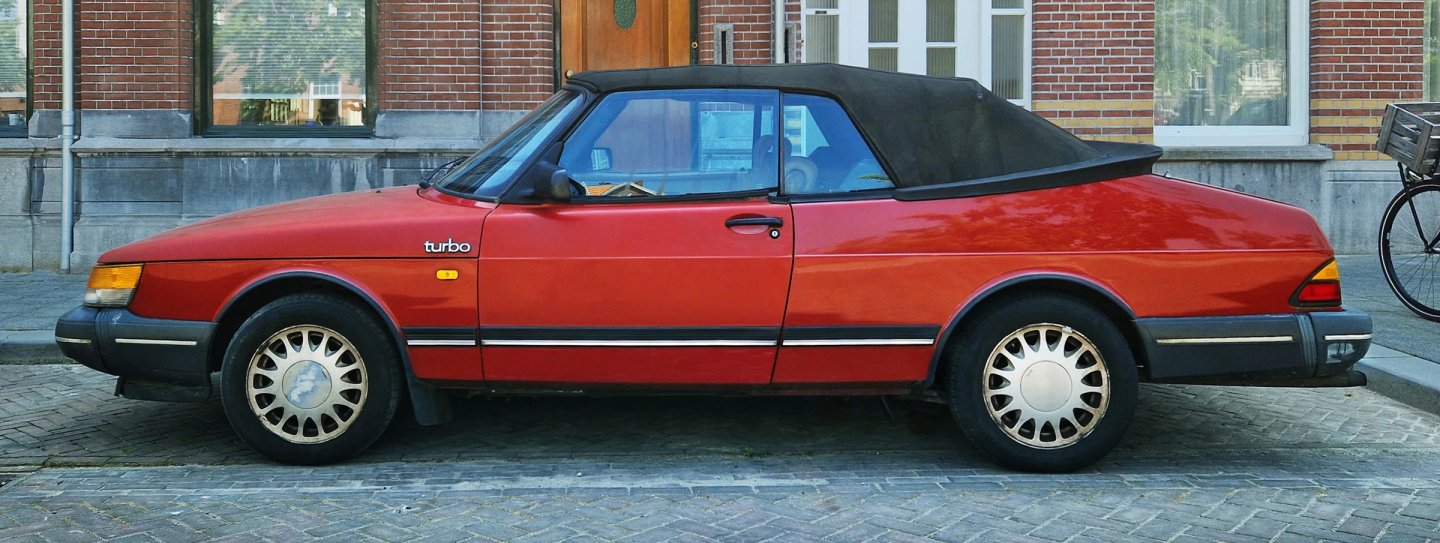
On 5 December 2012 the Riksgälden, the Swedish agency that manages the national debt, decided to become the owner of Saab Automobile Parts. This had nothing to do with cars. In February 2010 the agency had guaranteed a European Investment Bank loan to Saab Automobile, taking the shares of the parts company and the tooling company as security. On 19 December 2011 Saab went bankrupt, at the time owned by the Dutch firm formerly called Spyker. The Riksgälden turned out to be the largest creditor and called in its pledge.
That made a debt office the only supplier in the world of original Saab parts. The owner of a Saab 900 was no party to any of it. They had no contract with anyone and no say.
What a bankruptcy cuts into pieces
While a brand exists, the name, the stock, the tooling and the drawings all sit in one company. In a bankruptcy they become separate assets, and each can go its own way. At Saab they did:
- The factory and most other assets went in 2012 to Nevs, which meant to build electric cars there.
- The parts company stayed out of that sale and came to the state.
- The tooling held at suppliers, which makes the parts, ended up with Nevs. The parts company only had the right to use it.
- The name stayed with the defence company Saab AB, which took Nevs's right to it away again in 2014.
The third point is the dangerous one. In 2014 Nevs itself applied for protection from its creditors. At that moment, the supply of Saab parts depended on tooling owned by a company in trouble. That December the parts company, by then called Orio, bought 12,500 tools from Nevs. That was three years after the bankruptcy.
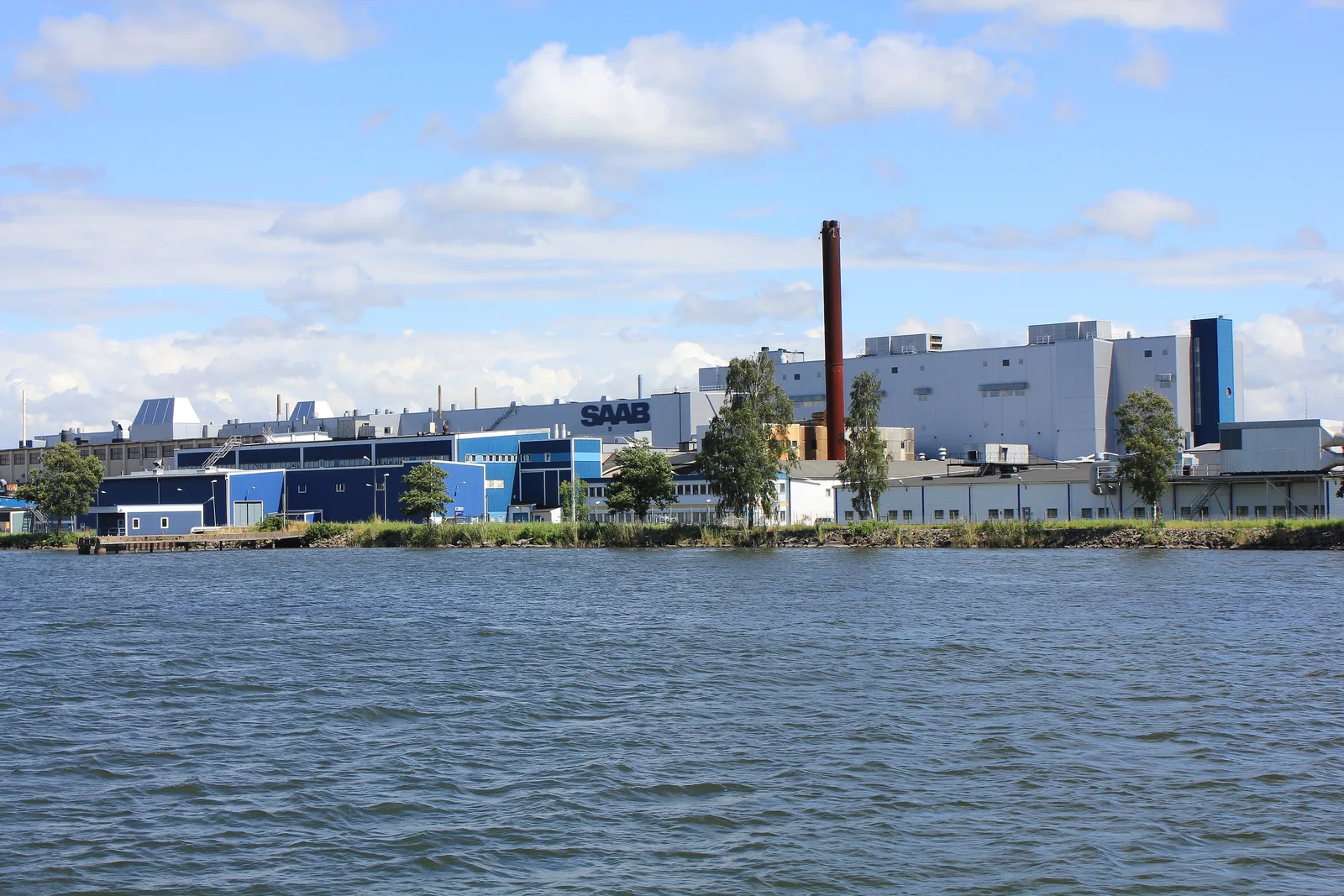
The Saab factory in Trollhättan, seen from the river. The factory and the parts went separate ways.
A business with no new customers
Insurers have a word for this: run-off, a book of policies that takes no new customers and is wound down until the last one expires. A parts company for a vanished brand works the same way. No more cars are added and a few disappear every year. At the same time there is no development cost, no model change and no other supplier of the original part.
That can go well for a long time. In 2021, ten years after the bankruptcy, Orio had about 140 employees, some 18,000 items and sales of SEK 360 million. In June 2022 the Swedish state sold it to Hedin Mobility Group for SEK 503 million, including dividends and an expected payment from the estate. That is almost one and a half times annual sales, for a business whose customers only ever get fewer.
This is why Saab drivers can still buy parts. Nobody had to be kind about it. The state wanted its money back, which only worked if the company kept supplying. For a while the creditor's interest and the owner's ran side by side.
Running side by side is not the same as a promise. On 1 February 2023 Orio AB ceased to exist and carried on as Hedin Parts and Logistics, with a statement that nothing would change for Saab. We have found no reports saying otherwise. But a run-off ends by definition. One day an item earns less than its place in the warehouse costs, and it drops off the list. Club members do not get a vote.
The stock of one company in Texas
DeLorean shows another version. The factory in Northern Ireland closed in 1982 after fewer than 9,000 cars. In 2007 an estimated 6,500 were still on the road, over 70%. The stock went to the Ohio company Kapac. In 1997 it was bought by Stephen Wynne, an English mechanic repairing DeLoreans in Houston. He would not say what he paid. His DeLorean Motor Company is based in Humble, Texas.
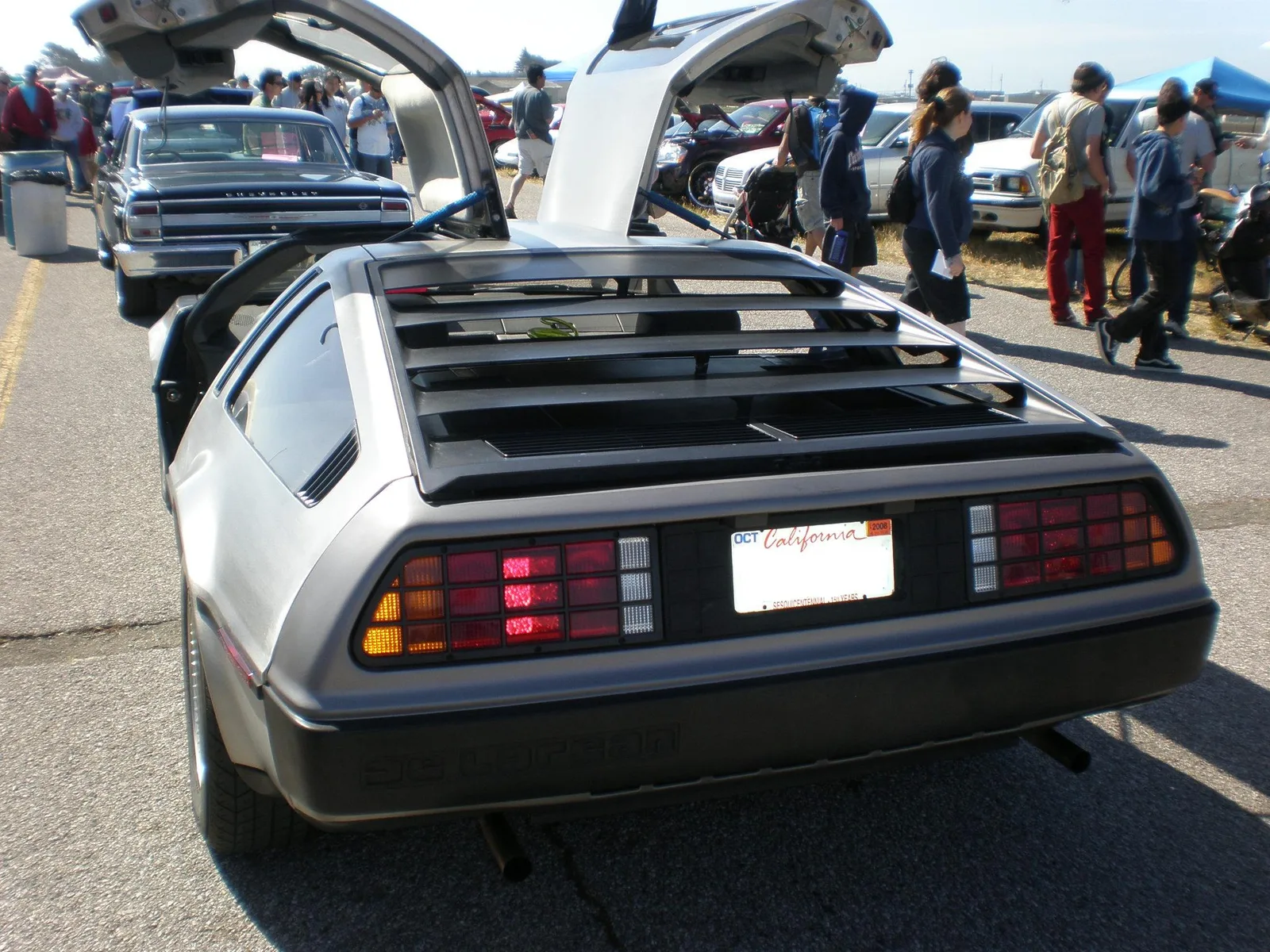
A DeLorean DMC-12 with its doors open at a car show in California.
Here the customer base hardly shrinks, because a DeLorean rarely gets driven to the scrapyard. What shrinks is the stock. A 2007 newspaper report said doors were the limit on building new cars: there were enough for about 500. Wynne told CNBC in 2016 that he had put about $5 million into the business and that the high cost of holding the stock had cost him profits.
On 2 January 2026 the Italian firm Italdesign asked a Texas court to enforce an arbitration award of $4.6 million plus interest, the Houston Chronicle reported. It concerned unpaid design work on the Alpha5, the electric car announced under the DeLorean name. The defendant was not the San Antonio startup that advertised the car but the company in Humble. We have not been able to establish how the case ends, and we have read nothing to suggest the parts are at risk. It does show where they stand: with a company that has other plans, and so other creditors. At Saab, it took a bankruptcy to show who held the pledge.
What a buyer can do with this
A BMW buyer need not think about any of it. Someone buying a youngtimer from a vanished brand needs to know four things before bidding. Who has the stock? Who has the tooling? Is there a second source for the difficult parts? And what else does that company do? An owners' club is the first place to ask. It will not be in the advert.
The answer changes the sum. With a living brand, a rare part is expensive. With a dead one, a part no longer made runs out one day. The car then stands still until another one gets broken up somewhere. Its value then rests on two things no valuation mentions: how many are still running, and the accounts of a company in which the owner holds no share.
Images: Red Saab 900 Turbo side view by Renée Kools (CC BY 4.0); The SAAB factory in Sweden by Øyvind Holmstad (CC BY-SA 3.0); DeLorean DMC-12 rear by BrokenSphere (CC BY 3.0). Images resized.


