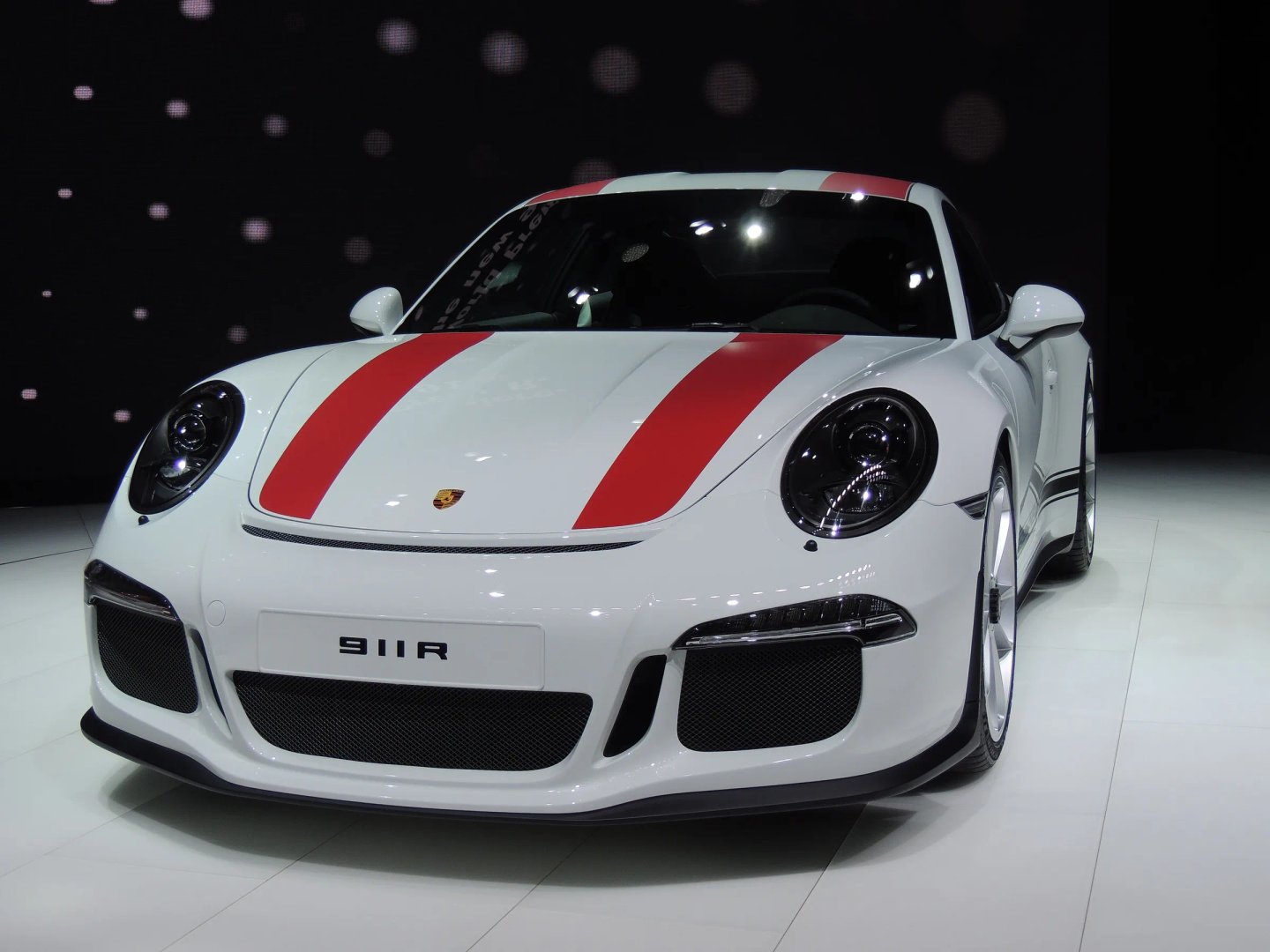
A yellow Porsche 911 R with under 7,000 km on the clock was for sale at Porsche Centrum Gelderland in the Netherlands in August 2017. Asking price €435,000, before Dutch registration tax. A little over a year earlier the same car had cost €189,544 new in Germany.
In September Porsche showed the 911 GT3 with Touring Package in Frankfurt. Manual gearbox, no fixed rear wing, a naturally aspirated 4.0 with 500 PS. Price in Germany: €152,416. There was no production limit. Porsche said it would build the car for as long as people wanted it.
Porsche made 991 of the R and has not made one more. The promise was kept. Even so, the reason buyers had paid several times list could now simply be ordered. What, then, does a production limit actually promise?
What a production limit promises
In 1972 the economist Ronald Coase published a short paper on monopolists who sell something durable. His point was that such a seller competes with themselves. A buyer who expects more later, or cheaper, can wait. The seller therefore has to make it believable that supply has run out, or the seller will not get the high price.
A numbered run is that kind of promise. But it covers this model and nothing else. Talk about limited editions tends to blur two things here: the scarcity of the car and the scarcity of what the car offers.
The car stayed scarce. What it offered did not.
The 991.1 GT3 came only with PDK, so anyone who wanted a new GT engine with a manual and no wing in 2016 ended up at the 911 R. That reason went away in Frankfurt. The R stayed lighter, which is worth something. But the gap to the GT3 Touring could now be stated in kilos, and the gap in price ran to six figures.
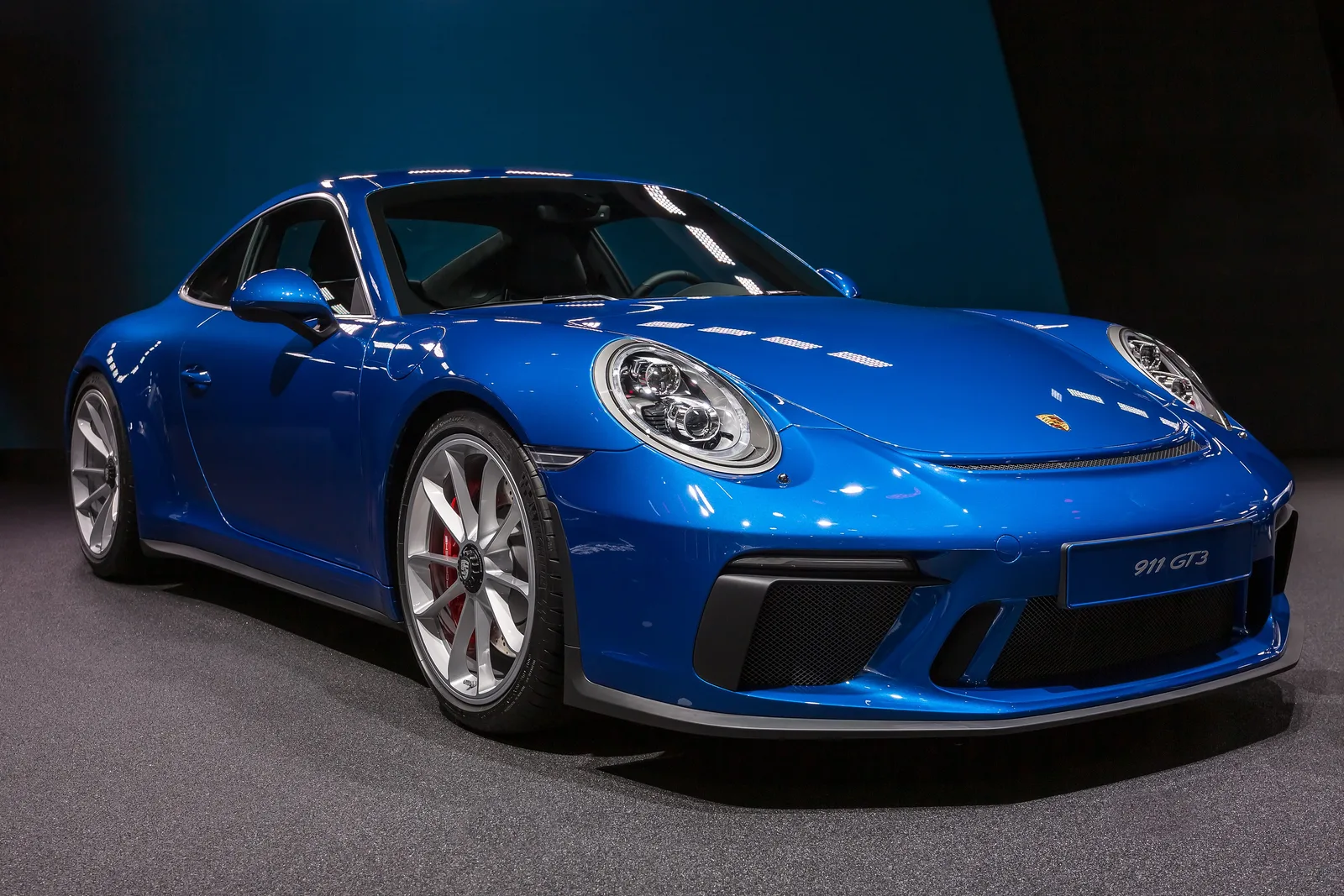
The 911 GT3 with Touring Package at the Frankfurt show in 2017. It came with no production limit.
What happened to the price
American motoring media reported used R's at almost $1.3 million in July 2016, against a new price of $185,950. Figures like that are hard to check. In June 2018 The Drive wrote that Porsche had introduced the Touring to counter the flipping of the R. One price database lists a Mecum sale at $308,000 in January 2020. In 2023 RM Sotheby's sold an R with 742 miles at Amelia Island for $467,000.
Less follows from this than it seems. The fall does not prove that the Touring caused it. A market in which a car is offered at seven times list within months can collapse without any new model. Nor was the R a failure: in 2023 it fetched two and a half times its new price.
Run that $467,000 through. The gap to the new price is $281,050. Times 991 that comes to about $278 million. It is a rough sum, because not every R has 742 miles. It does give the order of magnitude of what landed with the first buyers instead of in Stuttgart. A manufacturer can do that sum as well.
What Porsche did next
The 997 Sport Classic of 2009 came in a run of 250 and cost the equivalent of about $200,000. The 992 Sport Classic of 2022 came in a run of 1,250 and cost $274,750. Five times the cars, almost seven times the revenue at list.
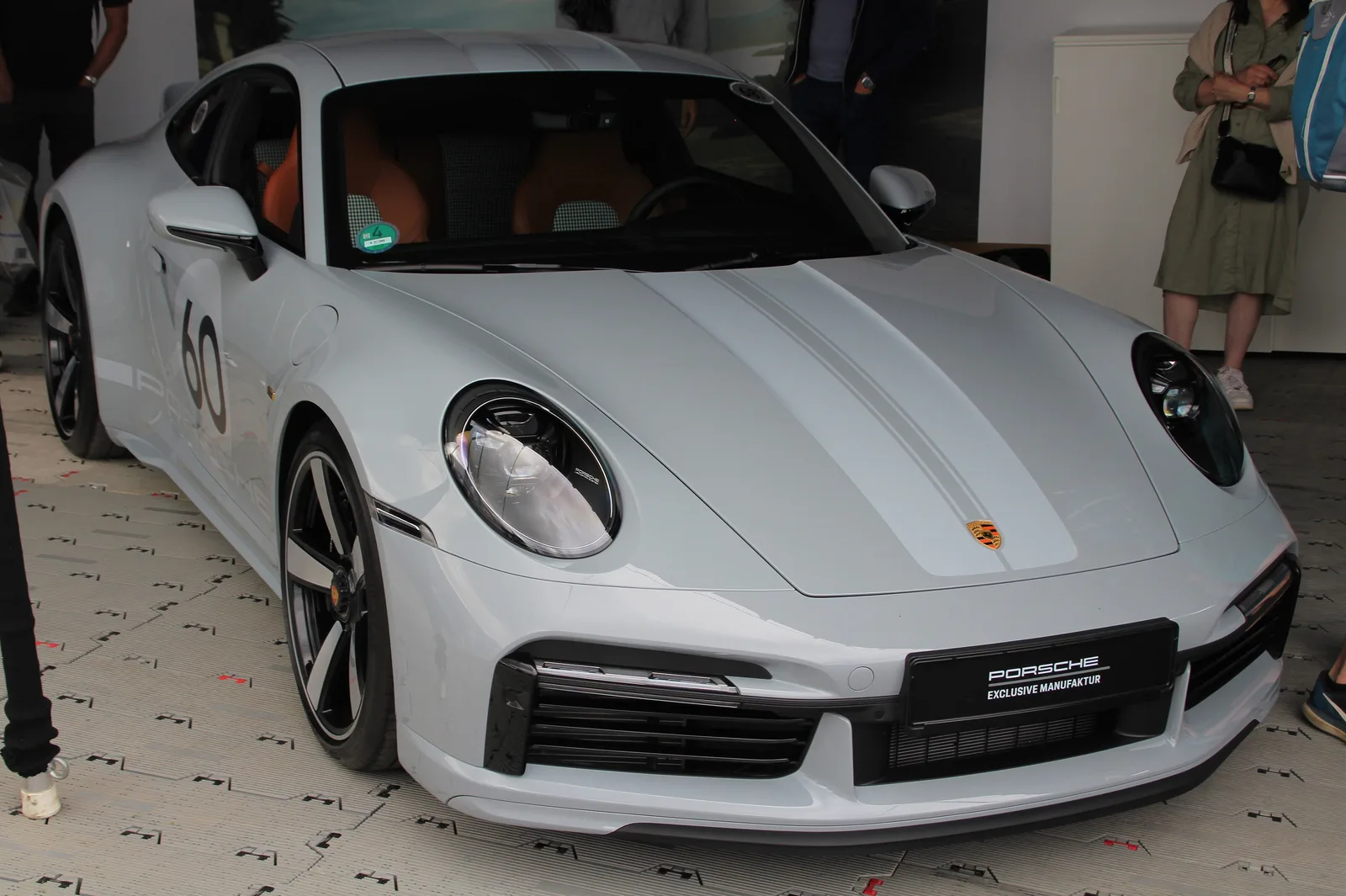
A 911 Sport Classic at the Goodwood Festival of Speed in 2022.
The 911 S/T of 2023 is the idea of the R in a new generation: manual gearbox, the engine from the GT3 RS, 1,380 kg. In Germany it cost €292,187, up 54% on the R a little over seven years earlier. That is almost 6% a year. The ordinary GT3 went from €152,416 to €170,969 between 2017 and 2021, about 3% a year. So the special series got dearer twice as fast as the car standing next to it.
The number itself tells you something too. The R came in 991 cars, the same as its type number. The S/T came in 1,963, which Porsche calls a nod to the year the 911 made its debut. Porsche delivered 50,146 new 911s worldwide in 2023, so 1,963 is 3.9% of one year. A limit taken from the calendar says little about how many buyers there are.
Who carries the risk
Has the premium gone, then? No. In July 2025 an S/T with 787 miles stopped at $726,000 on Bring a Trailer, below reserve, against a list price of $291,712. Between February and April 2026, S/Ts sold there for £461,725 to £476,272 according to The Classic Valuer, roughly double the new price. Anyone who assumed that each limited edition must fetch less than the last gets no support from these figures.
What matters is who runs the risk. The first buyer paid list, at a Porsche dealer who gave them an allocation. For them the limit works as a discount. The second buyer pays double and is buying something the seller cannot deliver: certainty that Porsche will not build a car that does the same job.
Say an S/T costs €600,000 second-hand. That puts €307,813 above the German new price. If that premium halves because Porsche announces something similar, €153,906 has gone. That is more than a complete GT3 cost in 2017.
The manufacturer sits on the right side of the information. Every auction result tells it what it left on the table with the previous car. It can adjust the next list price, enlarge the run or bring out a version with no limit at all. Porsche has done all three since 2016. The higher an S/T goes at auction, the more reason there is to build something that can stand beside it.
The only scarcity that does not rest on a promise is what a manufacturer can no longer build, or is no longer allowed to. Whether that will ever apply to a manual, naturally aspirated 911, nobody knows. In 2023 a new one still left the factory.
Images: 2016-03-01 Geneva Motor Show G076 by Ghoster (CC BY-SA 4.0); Porsche 911 GT3 Touring, IAA 2017, Frankfurt (1Y7A2766) by Matti Blume (CC BY-SA 4.0); 2022 Porsche 911 Sport Classic 992 by MrWalkr (CC BY-SA 4.0). Images resized.


