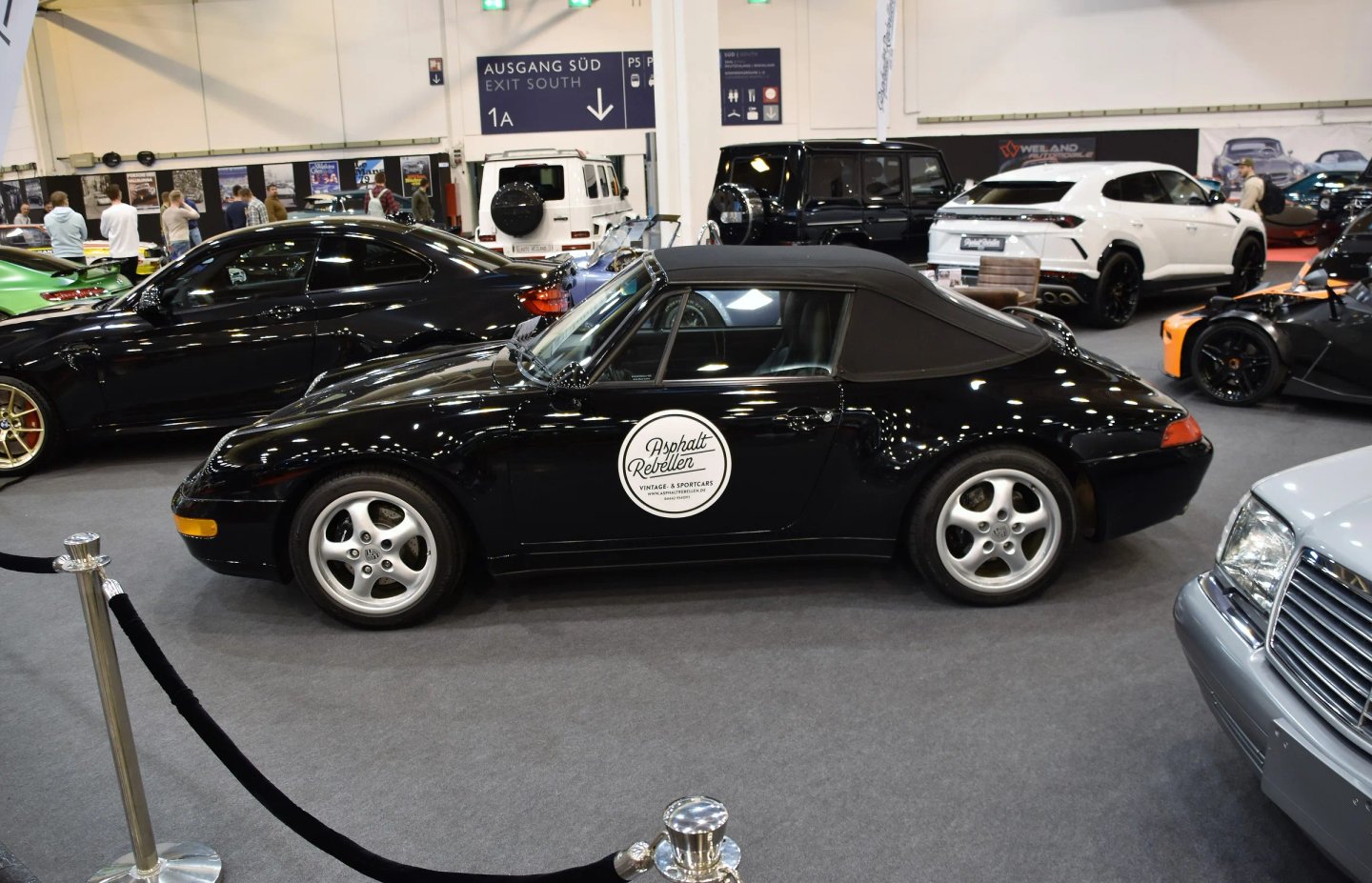
A Porsche 993 first registered on 1 June 1996 has been able to get a German H plate since 1 June 2026, provided it is still original. In France the same car has been able since that day to have the word collection added to its registration document. In Britain it pays £375 a year in road tax (November 2026 rate) until 1 April 2037, and in London £12.50 a day inside the ULEZ. In the Netherlands the exemption from road tax starts in 2036.
It is the same car and it is the same age everywhere. So what these countries are measuring is something other than age.
A European definition does not settle it. FIVA, the international federation of classic car clubs, uses 30 years plus authenticity and no daily use, but FIVA does not make laws. The EU directive on periodic testing has the vehicle of historical interest: at least 30 years old, type out of production, kept in original state. That text leaves it to each member state to call a car that, and it concerns testing. On tax and city centres it says nothing.
The German H plate
German law calls a car an Oldtimer if it first took to the road at least 30 years ago, is largely in original condition, is well preserved and serves "zur Pflege des kraftfahrzeugtechnischen Kulturgutes", the care of automotive cultural property. An inspector has to establish this. Changes are allowed if they are contemporary: made in the first ten years after first registration, or possible at that time.
The reward is a flat tax of €191.73 a year. On a big old engine that is a bargain. On the cars now turning 30 it is not always: a 2.0 petrol with Euro 2 pays €174 without an H plate, which is €18 less. According to Auto Motor und Sport, there is also a one-off €240 to €410 for the inspection, the report and new plates. What the owner of such a car is buying is access, because an H plate opens every Umweltzone, the German low-emission zones.

A Mercedes 170 S with a German historic plate. The H sits at the end of the number.
Of cars older than 30, 57.3% have one. The number of passenger cars with an H plate rose from 422,213 in 2017 to 752,587 on 1 January 2024. The rest have done the sum or would not pass.
A line that moves with the Budget
For British road tax the build date is what counts. From 1 April 2026 a car is exempt if it was built before 1 January 1986, and nobody comes to look at its condition. Only the MOT exemption requires that nothing substantial has been changed.
That 40-year line is not a law of nature. Until 1997 it stood at 25 years and moved along each year. The incoming Labour government abolished that, and a fixed date applied afterwards. Only since 2014 has it rolled again, now at 40 years. A car from 1973 would have been exempt from 1998 under the old rule. It became April 2014, sixteen years later, thanks to an election and a Budget.
London works the same way. A petrol car must meet Euro 4 or pay £12.50 a day. An exemption goes only to what was built before 1973, or is over 40 and registered as historic with the DVLA. So that 30-year-old 993 pays, however original it is, while a rebuilt car from 1980 drives through town free of charge.

Ultra Low Emission Zone signs in London.
In France it is about the city
In France it is the carte grise de collection: over 30 years old, type out of production, characteristics never modified, with an attestation from the maker or from the FFVE, the French federation for old vehicles. Inspection goes from every two years to every five. Commercial use is then barred. The entry is voluntary, and a car can simply stay an old car.
The value lies in the low-emission zones, the ZFEs. According to answers to parliamentary questions from the period up to 2022, all of them had a local exemption for cars marked collection. A 30-year-old car without that entry does not qualify. The National Assembly voted in April 2026 to abolish the zones, but on 21 May 2026 the Conseil constitutionnel struck that out of the bill. So the local rules still apply, and they differ from city to city.

A sign at the low-emission zone in Lyon, photographed in February 2025.
What is already on the calendar
Each country wants something different from this. Germany trades tax for preservation. Britain keeps down the cost of its exemption by starting it only at 40 years. France wants cleaner cities and holds a door open for a small group. All this feeds into what a car means to a buyer. Say a BMW from 1990 has coilovers from 2015. A German buyer either takes them off or gives up on the H plate, and may then have to stay out of the Umweltzone. To a British buyer it makes no difference for tax. When buying across a border, the year of manufacture is the least interesting line in the listing.
These rules can also be read as a calendar. A BMW M3 E46 first registered in 2001 can get an H plate in 2031, gets the Dutch exemption in 2041 and the British one on 1 April 2042, if that keeps rolling. Only the German date has a condition already in play. The period in which changes count as contemporary ended for that car in 2011. A set of coilovers fitted in 2026 to a 2001 M3 falls outside it, unless the inspector accepts they could have been fitted back then. The owner is deciding that now, five years before anyone asks.
Images: Porsche 911 Carrera Cabriolet (993, 1996) (52574737964) by Charles from Port Chester, New York (CC BY 2.0); MercedesBenzkenn170 by Alfredte (CC BY-SA 3.0); ULEZ Zone signs by Matt Brown (CC BY 2.0); Lyon 5e - Rue Sœur Bouvier - Panneau entrée zone à faibles émissions (ZFE) (fév 2025) by Sebleouf (CC BY-SA 4.0). Images resized.


