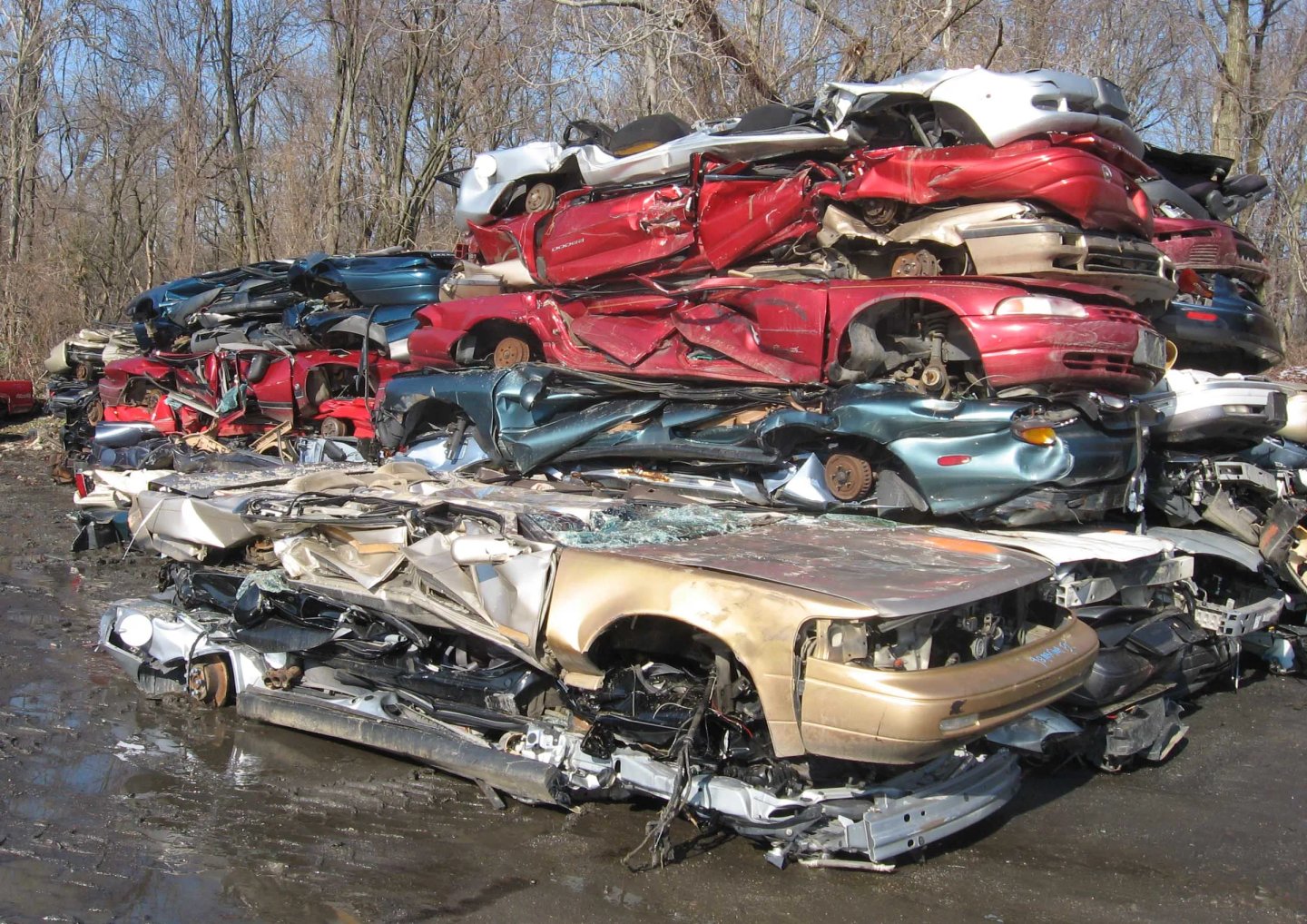
On 3 August 2009 the Dutch national scrappage scheme opened. Anyone handing in an old car and buying a newer one got €750 for a petrol car without a three-way catalyst and €1,000 for one built between 1990 and 1996. The minister's letter announcing it contains a condition that drew little attention: the car had to be in proper working order with at least three months left on its roadworthiness test. A wreck did not qualify.
The Dutch were not unusual in this. The British scheme that same year asked for a valid MOT. America's Cash for Clunkers wanted a driveable car, registered and insured for a full year. The intention is easy to follow, because nobody wants to pay a premium for a car that had already left the road. The result is that such a scheme selects in the opposite direction to ordinary scrapping.
A price floor that only applies on destruction
A scrappage scheme is a price floor with one extra condition: the car must not exist afterwards.
Say that in 2009 you own a 1992 car that would fetch €600 on the used market, and you wanted something else anyway. The scheme pays €1,000, so you hand it in. If the same car is worth €1,500, you simply sell it. So the scheme buys the cars worth less than the premium, and it does not ask why they are.
The reason is what matters. A car can be worth €600 because it is finished. It can also be worth €600 because it is 17 years old and nobody misses it yet. The figure is the same. In 2009 nobody was paying for what a car would mean in 2026, because the buyers of 2026 were not yet looking for a youngtimer.
Nobody in the chain could fix that. The owner compared two sums and was right. In Britain the dealer had to have the car destroyed, and it could go neither back on the road nor abroad. Michael Nobes, a Hyundai dealer, told Hagerty there was no time to assess them either.
America went further. There the oil was drained and replaced with sodium silicate, and the engine ran until it seized. The scrapyard could not sell the engine, the cylinder heads or the rolling chassis. The shell had to be crushed within 180 days. A car like that cannot even be a parts donor.
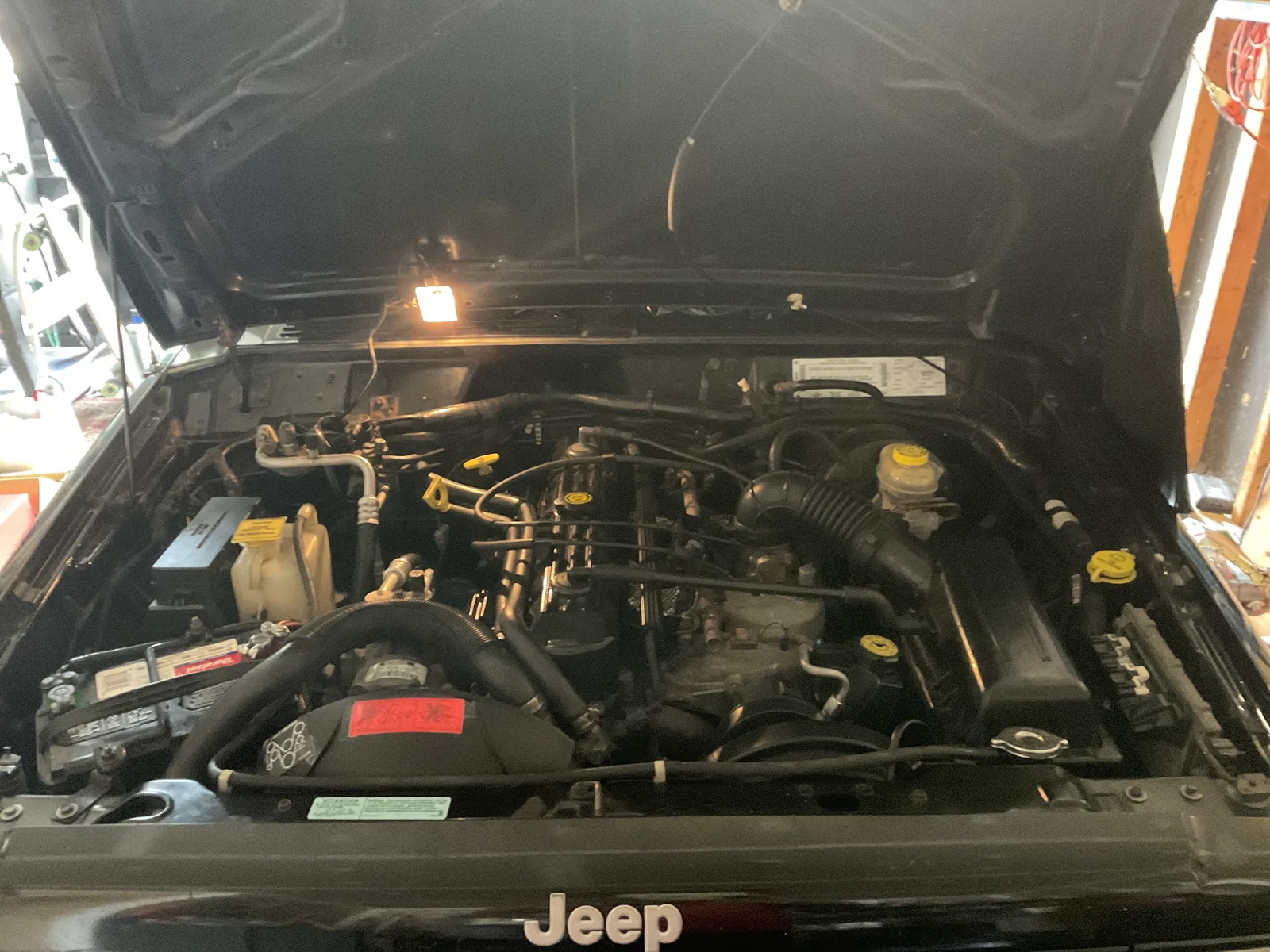
The 4.0 litre in a 2000 Jeep Cherokee XJ. Under Cash for Clunkers an engine like this could not be sold on as a part afterwards.
What was really in there
Most of it was simply what the word clunker promises. In Germany 1.78 million cars reached the breakers in 2009, more than three times the usual number. The list from Bafa, the agency running it, is mainly Golf and Jetta together (12%), Corsa (7.7%) and Astra (7%). In America the most common car was the Ford Explorer.
In among them are the cars this piece is about. In the 392,227 British cars, Hagerty found in 2020 31 Peugeot 205 GTIs, 14 Subaru Impreza Turbos and 3 Porsche 928s, plus uncounted Alpinas, BMW M5s and 850is and original Audi Quattros. In the final American list of 677,081 cars, The Drive counted 225 Toyota Supras from 1986 to 1993.
The best story is false. In 2009 lists went round of exotics supposedly destroyed in America, up to an Aston Martin and a Bentley. Jalopnik checked its own top ten in January 2010. Three were real, and those were the least exotic. The Aston Martin turned out to be a Mercury Grand Marquis, because dealers had clicked the wrong make in a drop-down menu.
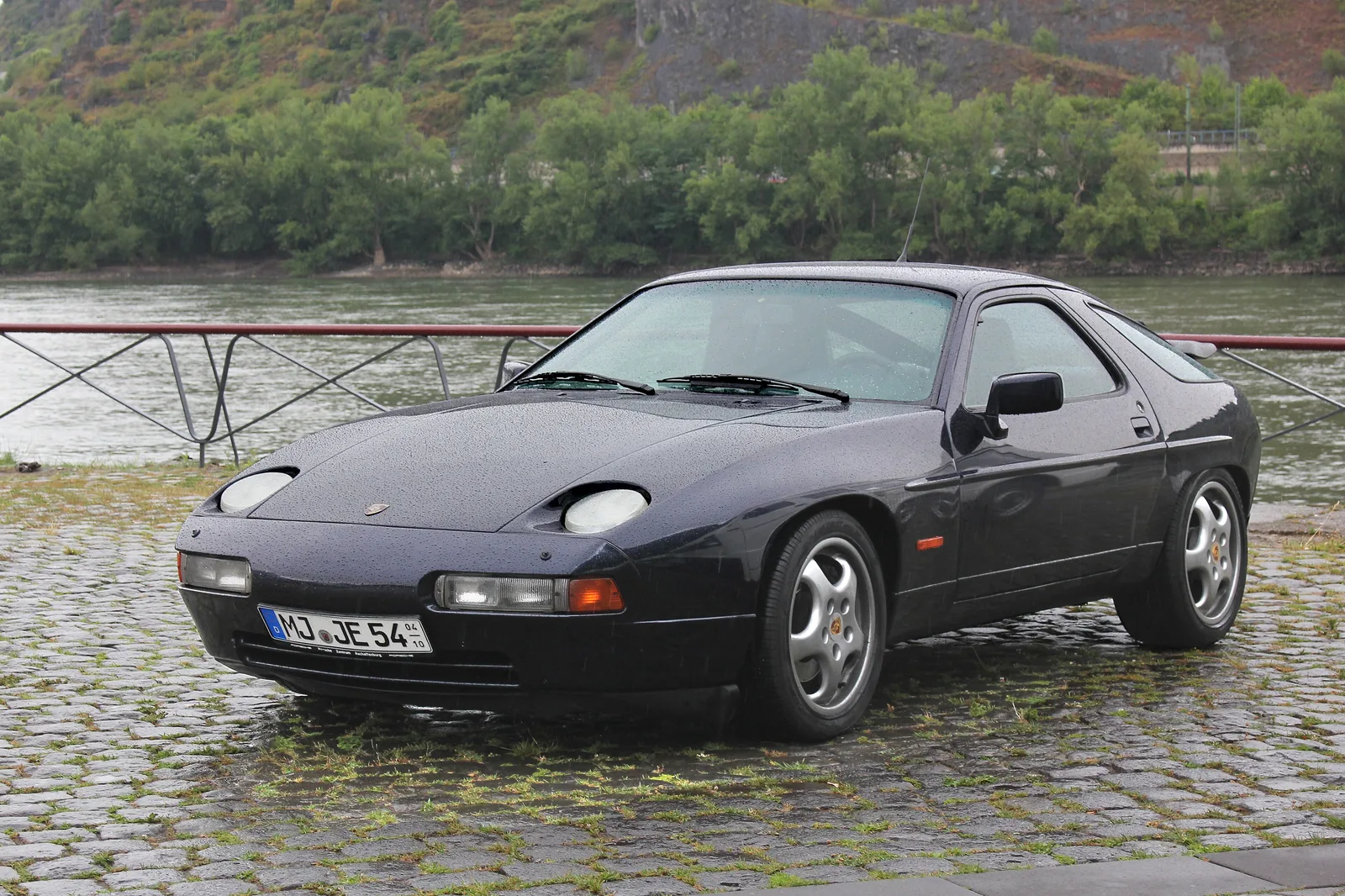
A 1990 Porsche 928 GT. Three 928s went through the British scheme, and this is not one of them.
The count shows nothing
You would expect an intervention like this to show up in survival figures. For the 205 GTI it does not. In the first quarter of 2009 there were 7,334 on the British register, and a year later 6,670. That is 664 fewer, and the scheme explains 31 of them at most. In 2008, before the scheme, 962 disappeared. A count of one model shows no kink, and we found no study of the effect on used prices.
That moves the question. The scheme did not remove many cars, it removed different ones. Ordinary attrition takes what rusts, fails its test or hits a barrier, so the worst go first. The scheme took cars with a valid test whose owner wanted something new. Tony Whitehorn, then head of Hyundai in Britain, argues in the same article that many of those cars interested nobody a decade earlier and were in poor condition, and that the clubs did not come to save them. For most of them that will be true. According to the MuConsult evaluation, a large share of the Dutch cars would have been scrapped later anyway.
Taxpayers did not get much back for it. Atif Mian and Amir Sufi showed that Cash for Clunkers produced about 370,000 extra sales in summer 2009, and that these had almost gone by March 2010 because buyers had only brought their purchase forward. Another study put the carbon saving at $92 to $288 per ton. For the Netherlands, with just over 81,000 cars, the recycling body ARN reported a modestly positive environmental effect.
The British owner who got £2,000 for a 205 GTI in 2009 made no mistake. Lancaster still put a poor one with over 130,000 miles at about £2,000 in 2021, and after twelve years of tax and tests the owner would only have been worse off. The loss sits with nobody you can point to. A scheme that has to work 392,227 times cannot look at the car, and that tells you which car comes next: under the same rules a fifteen-year-old one, cheap and with a valid test, that is on nobody's list.
Images: Auto scrapyard 1 by IFCAR (public domain); 2000 Jeep Xj Cherokee Engine Bay by Garylittlewood (CC BY-SA 4.0); Porsche 928 GT, Bj. 1990 (2017-07-01 Sp r) by Lothar Spurzem (CC BY-SA 2.0 de). Images resized.


