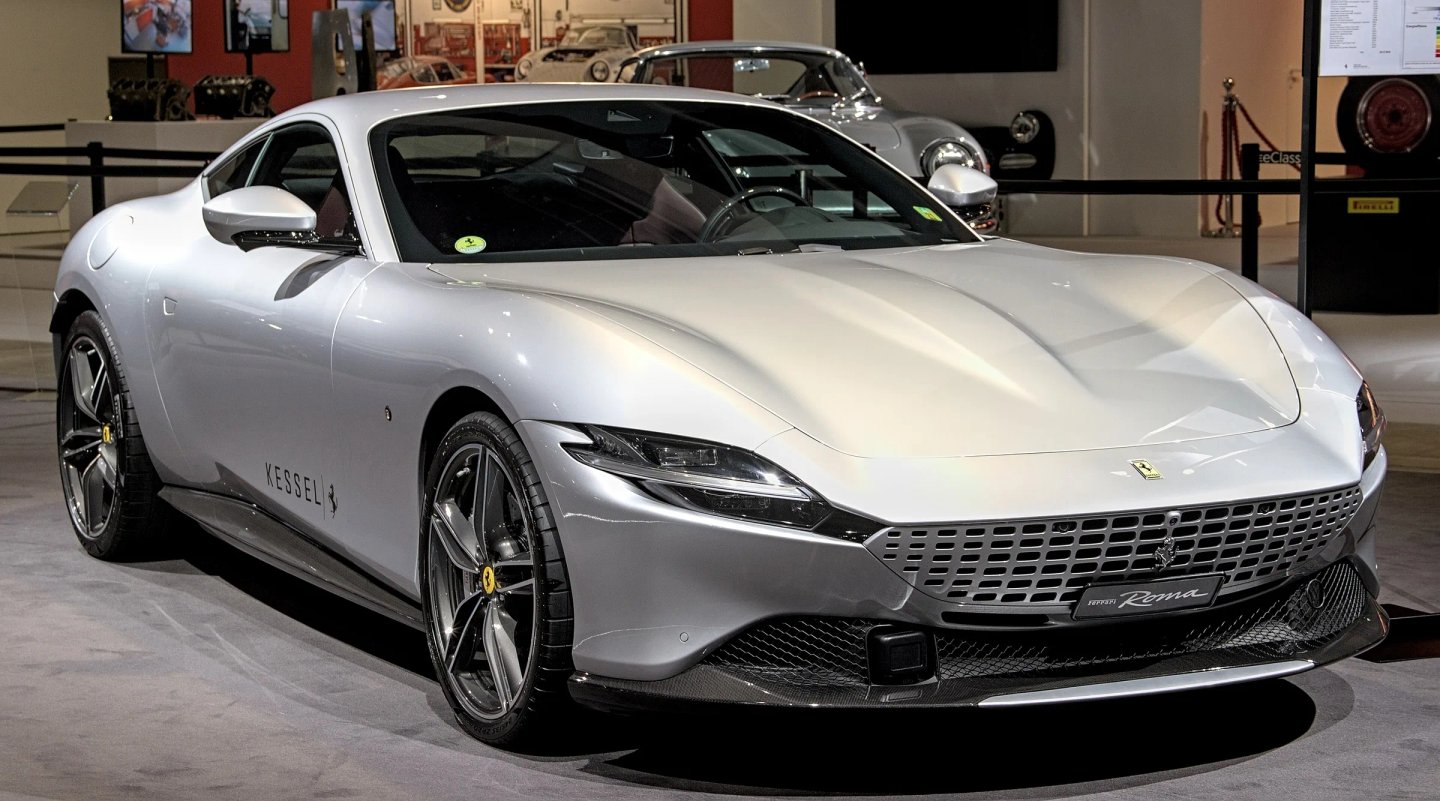
Almost €97,000. That is what the buyer of a new Ferrari spent on personalisation, on average, in the second quarter of 2026. Ferrari does not publish the figure, but the parts are all there. Revenue from cars and spare parts was €1,629 million. Chief financial officer Antonio Picca Piccon put personalisation at more than 20% of that, with carbon and paint doing the growing. Ferrari delivered 3,366 cars. A fifth of the revenue is €326 million, and divided by 3,366 that is €96,800 a car. It is an average, and the €3.6 million F80 is in the same sum.
Nobody publishes the matching figure, which is how much of it the owner gets back on selling. Our claim: almost nothing, apart from a handful of options. With those the question is not really about price.
One option, two prices
An option gets priced twice, by two different parties. The first price comes from the factory, which at that moment is the only seller. Anyone who wants carbon on a new Ferrari Roma has nowhere else to go. Economists call this price discrimination: everybody gets the same base price, and the options list lets those willing to pay more do so. An option price therefore tells you mainly about the buyer.
The second price comes from the used market, where nobody is the only seller. The next buyer sets this car beside the others on sale that month. For the carbon, they pay what it is worth to them to choose this one over that one. That sum has no fixed relationship to the old price.
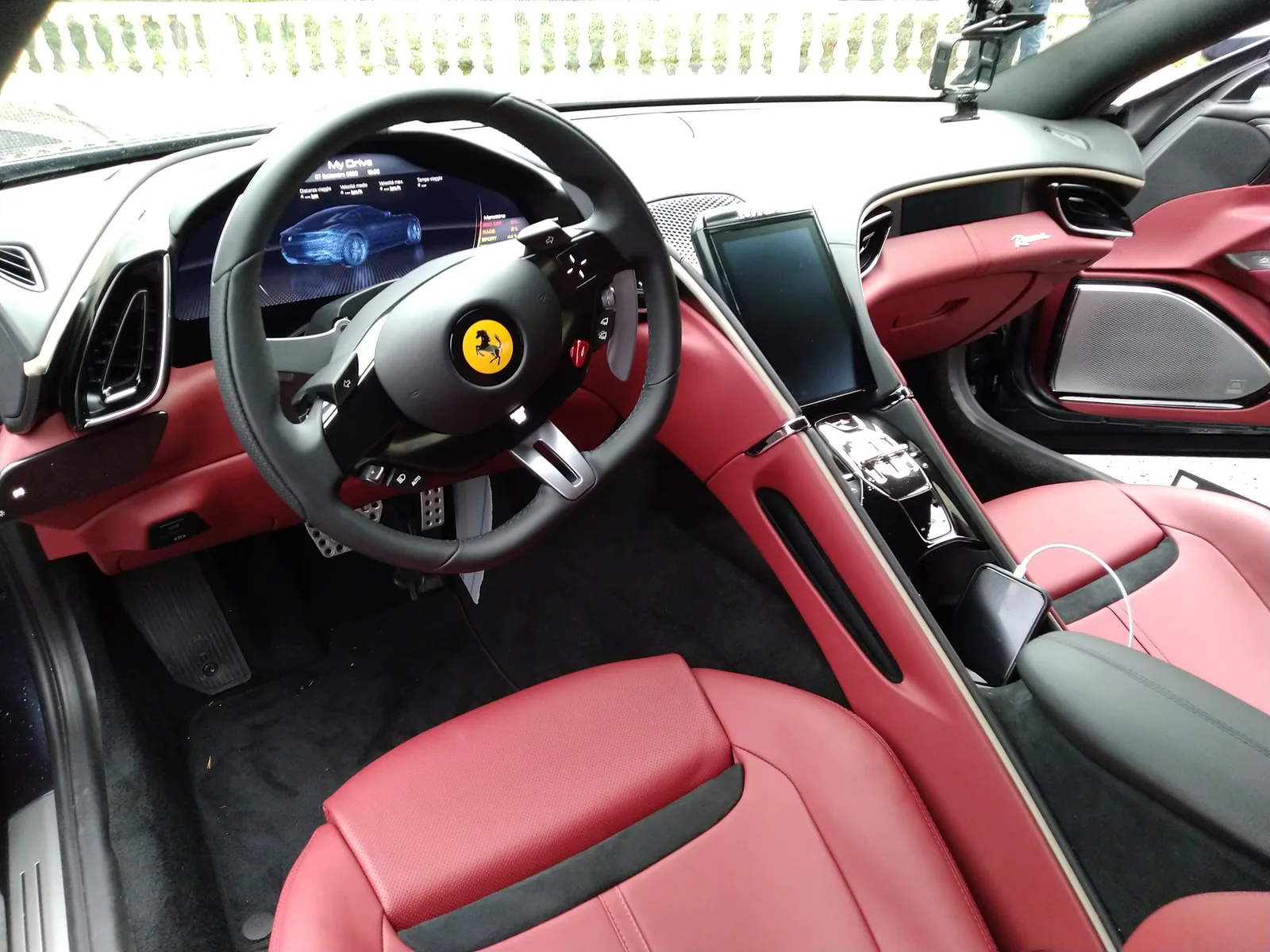
The interior of a Ferrari Roma in red leather.
The same equipment, paid for two ways
The cleanest measurement we found has nothing to do with Ferrari. In 2011 the British valuation firm CAP worked through a BMW 318d. A 318d ES carried £1,520 of options: cruise control, parking sensors, automatic air conditioning, a multi-function wheel, different alloys. After three years and 60,000 miles they were worth £300 between them: 20%. The SE version of the same car had that equipment as standard and cost £1,030 more than the base car when new. After the same three years and 60,000 miles, 90% of that was left: £925.
The same kit on the same car, with a £625 difference that came down to how it appeared on the invoice. CAP's Mark Norman supplied the reason. The 318d ES had 74 paid options. A used buyer does not know which features were standard and which were extra, and will not pay for what they do not know about. A trim level has a name, which goes in the advert and can be searched for. An option first has to be noticed by someone.
A Ferrari buyer reads more closely than someone buying an ex-lease 318d. The sums are bigger too. In the United States a 2024 Roma started at $247,308. In February 2026, Cars & Bids listed one with 130 miles that had cost $387,510 new, about $140,000 above the base price. Four days before the end, the bid stood at $190,000. That is a midway figure. Bids at such auctions tend to come late, and we could not find the final price. The bare car falls in value as well, so this does not prove the options lost everything. Even so, the car still had $57,000 to climb at that point just to reach the new price of a Roma with no options, before the options came into it at all.
None of this is an argument against options. An interior you sit in for five years is something you use, like a good hotel. Accountants call that consumption. The trouble starts when someone adds it to the residual value, or when a seller builds an asking price on the old window sticker.
The option you only notice when it is missing
On Ferrari forums, the same items keep appearing for used 458s and 488s: the front axle lift (about 40 mm, according to Ferrari), carbon racing seats, Scuderia shields on the wings. These are owners' opinions and not sales figures, and they disagree among themselves about the lift. One calls it mandatory, another expected more from it.
The mechanism makes sense without the forums. Someone with a steep drive at home strikes every car without a lift off the list, whatever else it has. Say six buyers are looking seriously and four of them will only consider a car with a lift. The car without one has two buyers and the car with one has six. An option like that does not show up as a premium. It shows up in the number of people bidding.
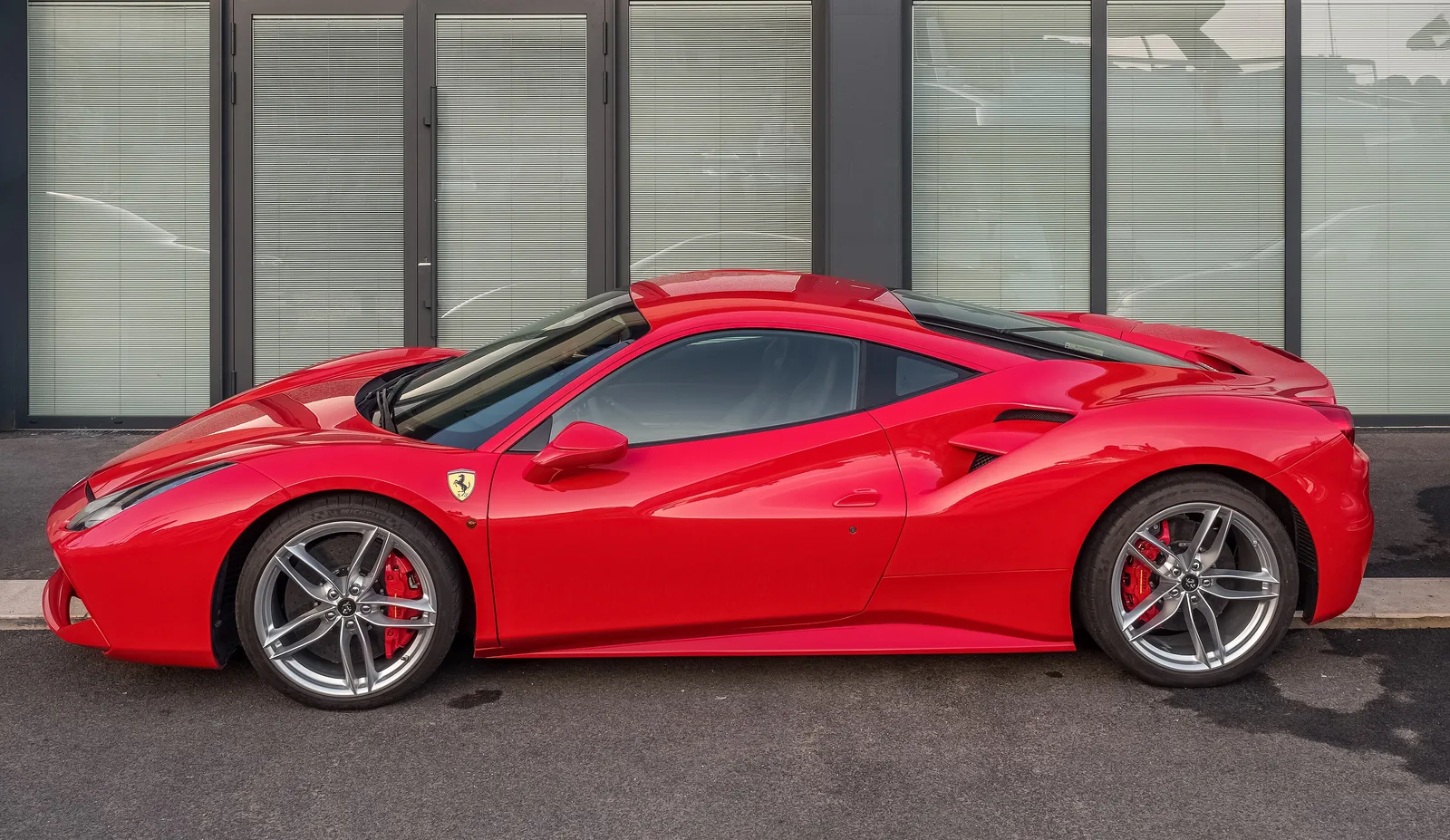
A Ferrari 488 GTB with the Scuderia shield on its wing.
Norman would object here. In his view the essential option does not exist: the discount for lacking something is often smaller than what it cost new. For a 318d we believe him, because there are always plenty on sale. With a car that attracts a handful of buyers a month, each one lost matters more. It is still no investment. Ordering the lift to avoid a later discount can cost more than the discount would have.
Ceramic brakes cut both ways
Ceramic discs are the awkward case. In 2019 Porsche in the United States asked $8,520 for PCCB on the 992-generation 911 and $9,210 on the GT3. Replacement discs for the front axle alone cost $11,500 at the time, more than the whole option new. Paul Watson, Porsche's technical representative in Australia, was asked who the brakes are really for. "People who don't like cleaning their wheels," he said. For hard track work he recommended steel.
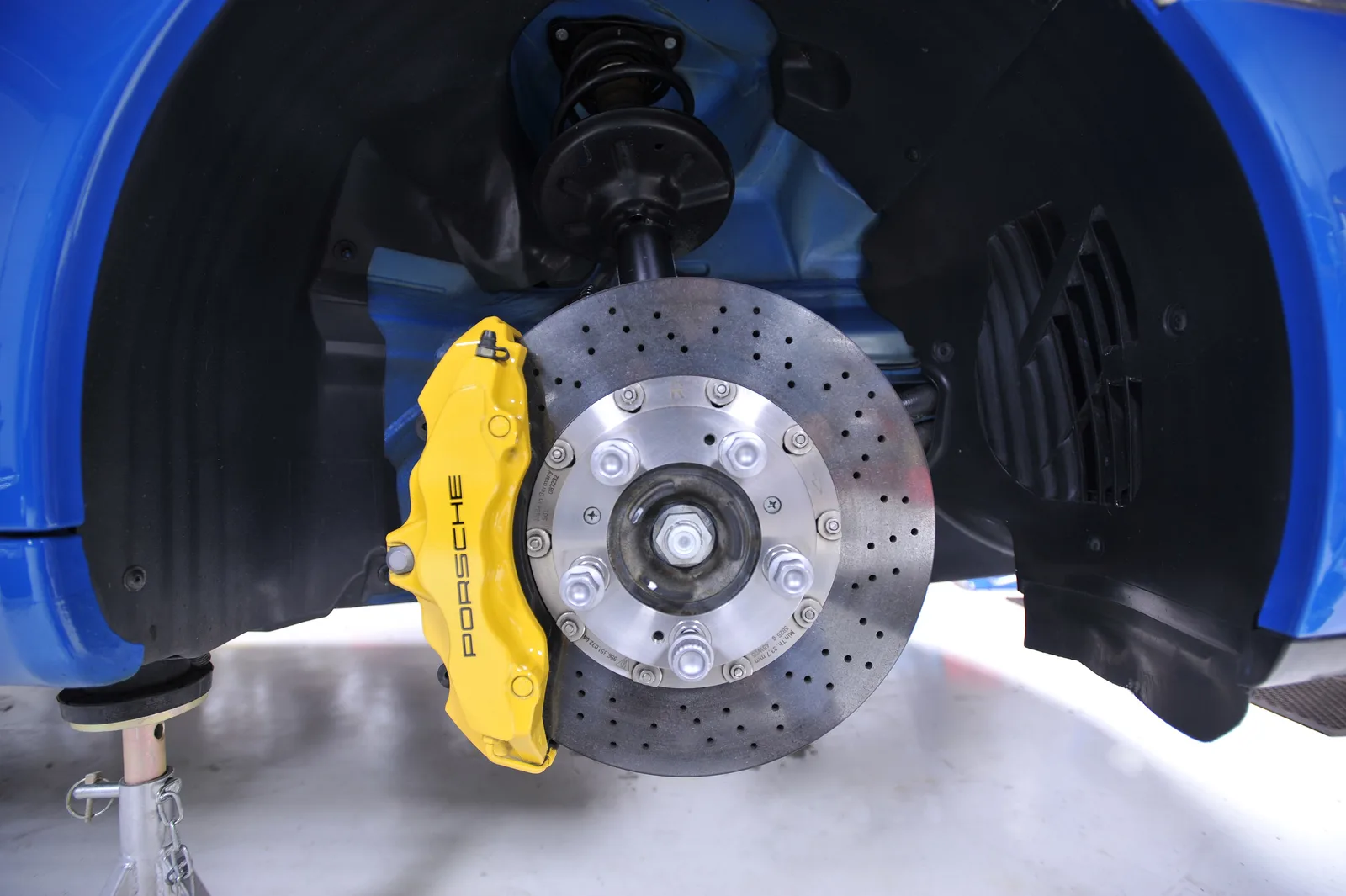
Ceramic disc and yellow calliper on a Porsche 911 Carrera S of the 997 generation.
The first buyer is counting less brake dust. The second is counting an unknown amount of wear on a part that costs more than it ever did as an option. With measured discs and an invoice, PCCB is a plus. Without a measurement it is a possible bill, and the buyer takes that off the bid in advance.
On the Porsche Club GB forum, the owner of a 997 Turbo writes about swapping the ceramic discs for something else early on, with a plan to refit them when selling the car. Another member describes how many track users with a 996 or 997 did the same, for fear of the replacement cost. The original set spends years in the garage and goes back on the car when it is time for it to leave.
Images: Ferrari Roma Auto Zuerich 2021 IMG 0414 by Alexander Migl (CC BY-SA 4.0); Ferrari Roma-08 by Y.Leclercq© (CC BY-SA 4.0); Ferrari-Monaco-4071008 by ermell (CC BY-SA 4.0); PCCB Wiki 9949 by User:Edgy01 (Dan Lindsay) (CC0). Images resized.


