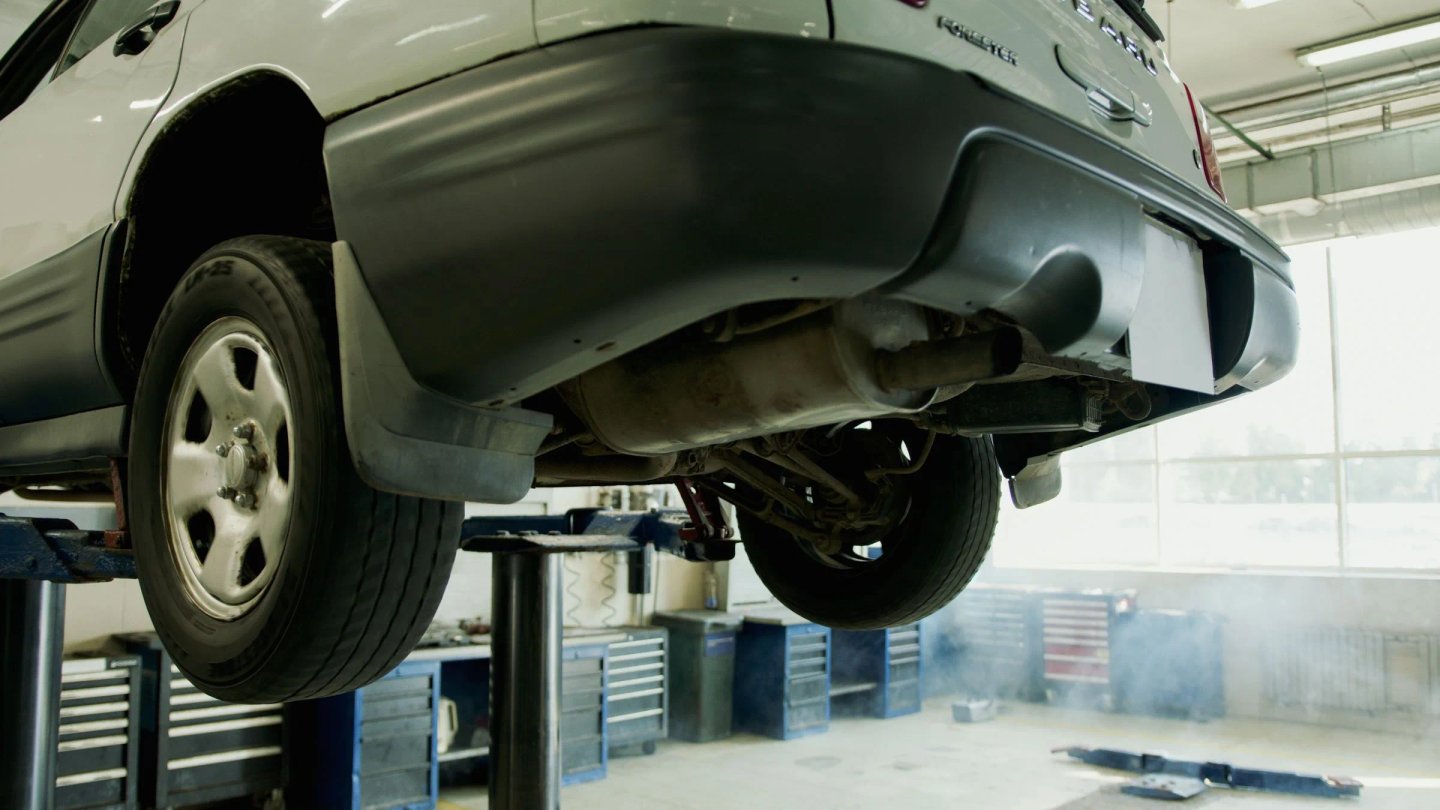
In August 2017 Tom McParland described on Jalopnik how he went looking for a 911 of about $30,000 for a client, which pointed him at the 996. The first candidate was a black Carrera 4 in Texas. A specialist inspected it for $250 and found a wrong-sized battery, contaminated brake fluid, mismatched tyres front and rear, leaking axle seals, a clutch near the end of its travel, signs of over-revving and a leak at the back of the engine that might be the IMS bearing or the flywheel. The client walked. The second was a Carrera 2 at a dealer in Ohio, for about the same money, with a thick file of invoices. In it was proof that the previous owner had replaced the IMS bearing. The inspection found a worn wheel bearing and old tyres. That was the car they bought.
McParland tells it as a case for inspections. Look at what the inspection did at each point and it says something else. On the first car, it gave the client a reason to leave. On the second, the answer to the most expensive question, the one about the bearing, came from an invoice.
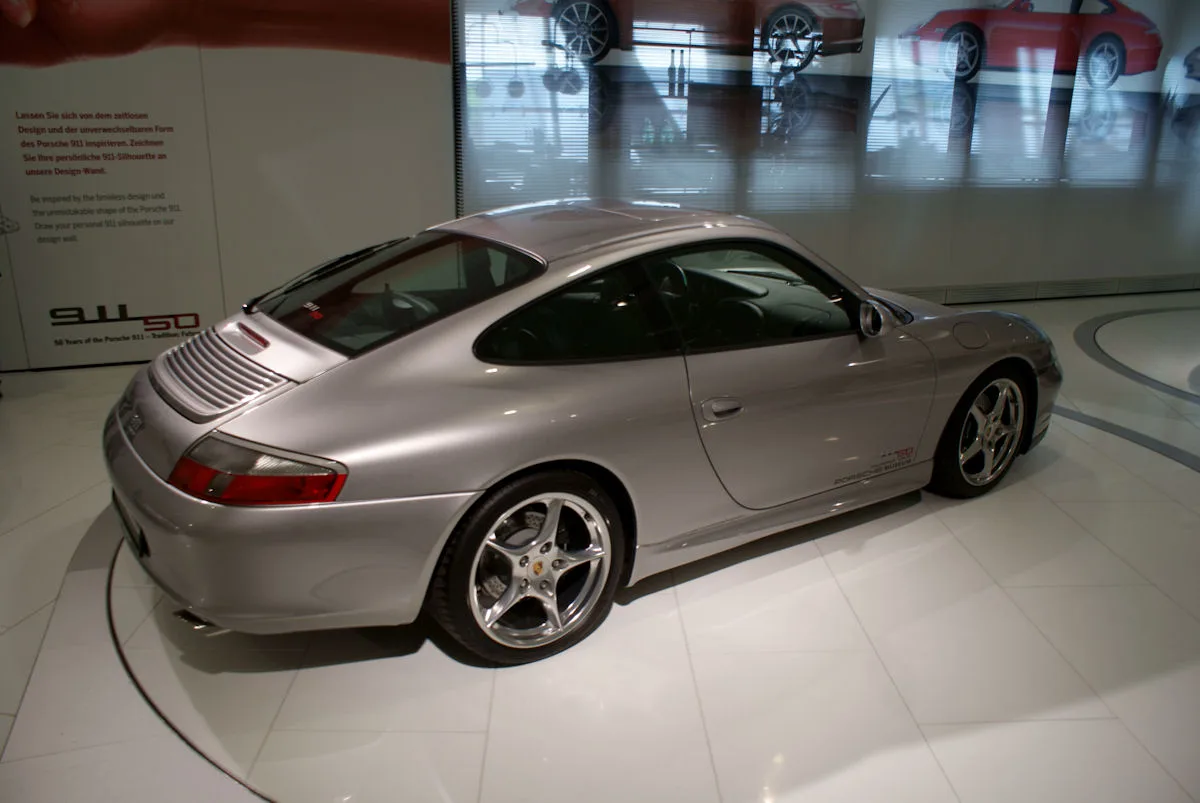
A 2003 996 Carrera in the Porsche Museum. The bearing discussed here sits inside the engine and cannot be seen from anywhere outside it.
What an inspection can see
An inspection measures the condition of a car on one day. That is a different thing from what the car will cost you. The Dutch motoring club ANWB puts a typical inspection at €150 to €350 and adds that it never gives 100% certainty and that the content varies a lot between providers.
The terms of PRO Aankoopkeuringen, a Dutch provider, are clearer than most brochures. The inspection is "slechts een momentopname", only a snapshot. Parts, covers and trim are not removed. Body and chassis are looked at from outside only, so internal rust falls outside it. If the inspector misses a fault, compensation is limited to the repair bill up to €500. That is not sloppiness. Someone who unbolts nothing cannot vouch for what is behind it.
From this follows something rarely said aloud. An inspection can show that something is wrong. It cannot show that nothing is. A leak is a fact. No leak means there was no leak that day.
The bearing nobody can see
The M96 engine in the Porsche 996 is the best-known example. The IMS bearing cannot be examined without opening the engine. How often it fails came out in the American case of Eisen v. Porsche Cars North America, covering 57,929 Boxsters and 911s from model years 2001 to 2005, excluding Turbo, GT2 and GT3. According to Sports Car Market, reviewing the settlement in 2014, Porsche had repaired about 3,100 of them at a cost of more than $20 million. That is over 5% of the cars and around $6,450 each on average. The plaintiffs' lawyer put it at about 10%. Bills ran from $3,000 to more than $20,000.
What a specialist can do is indirect. They cut open the oil filter and look for metal. They use Porsche's diagnostic equipment to read how often the engine has been over-revved. Metal in the filter says a lot. A clean filter says there is no metal in it today. Neither tells you how long this bearing will last. So that risk belongs in the price, and an inspection does not remove it. An invoice for a replaced bearing does, which is why that file in Ohio was worth more than the report.
On a BMW E46 M3 with the S54, the questions are different. Buyers' guides point to the rod bearings, especially on early engines. They also point to cracks in the floor around the rear subframe mounts, which sometimes can only be confirmed with the subframe out. A mechanic who does not know that will not look for it. So the first question for an inspector is how many of these cars they have seen.
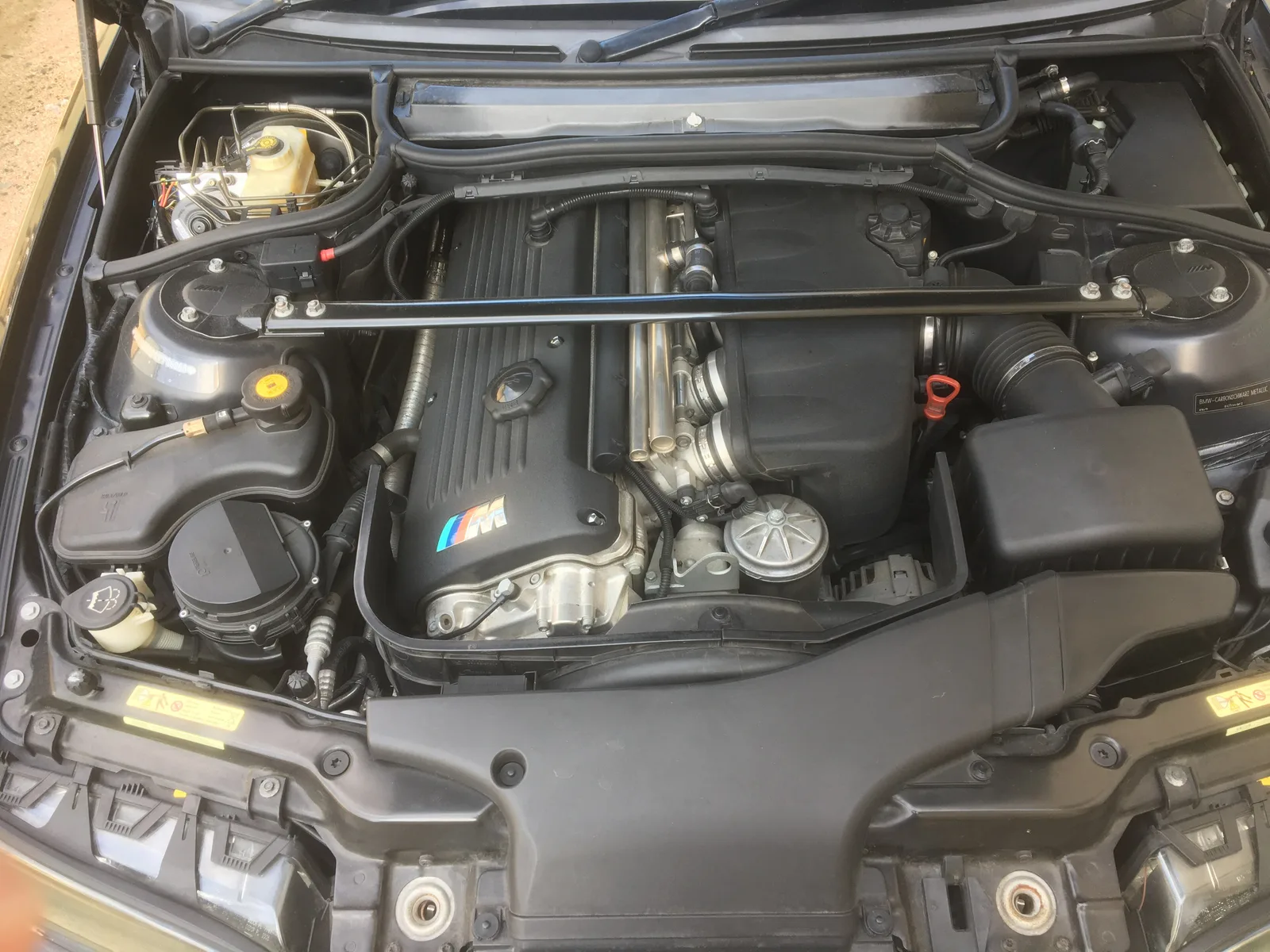
The S54 in an E46 M3. The rod bearings sit low in this block, out of reach of an inspection that dismantles nothing.
What information is worth
Decision theory calls this the value of information. Ronald Howard wrote the 1966 paper that started the field: you can work out what it is worth to be less uncertain. One consequence is that information which cannot change your decision is worth nothing.
Say you want to buy a €40,000 car and you put the chance of an €8,000 problem at 20%. A €350 inspection finds it three times out of four. Those figures are invented. If a bad result means you walk away or get €8,000 off the price, you avoid an average of 0.20 x 0.75 x €8,000 = €1,200. Take off the inspection and €850 is left.
Now take a buyer who has already cleared the garage and reads the result as a list of jobs. They buy anyway, at the same price. For them the same report produces nothing and costs €350.
Decide in advance what would stop you
That is why the most important part of an inspection comes before the appointment. Write down what makes you walk and what you would merely adjust the price for. Metal in the filter: gone. Cracks in the floor: gone, or a quote and a lower price. Then also write down how much lower. Once the report is in, it is too late to work that out. By then you have seen the car, paid the mechanic and told people at home it is coming. Every fault sounds fixable.
An online auction adds something else. At Octane the car stays with the seller during the seven days, and once the reserve is met, the sale is binding on the highest bidder. An inspection afterwards offers no way out. It has to come before the bid, while you do not yet know whether you will win. So you also pay for it if you are outbid.
Win one in three of the auctions you have inspected for and the inspection costs €1,050 per car bought, leaving €150 of the €1,200 from the sum above. At one in four you are at a loss. Anyone who inspects every car that appeals to them pays more than the inspections bring in. First the list, then the one car you will bid on to the end. Only after that the mechanic.
Images: Photo by Artem Podrez on Pexels; Porsche 911 2003 Carrera 3.6 Coupè 40Jahre RSideRear PorscheM 9June2013 (15012264352) by Valder137 (CC BY 2.0); S54B32-BMW-E46-M3 by melvil (CC BY-SA 4.0). Images resized.

