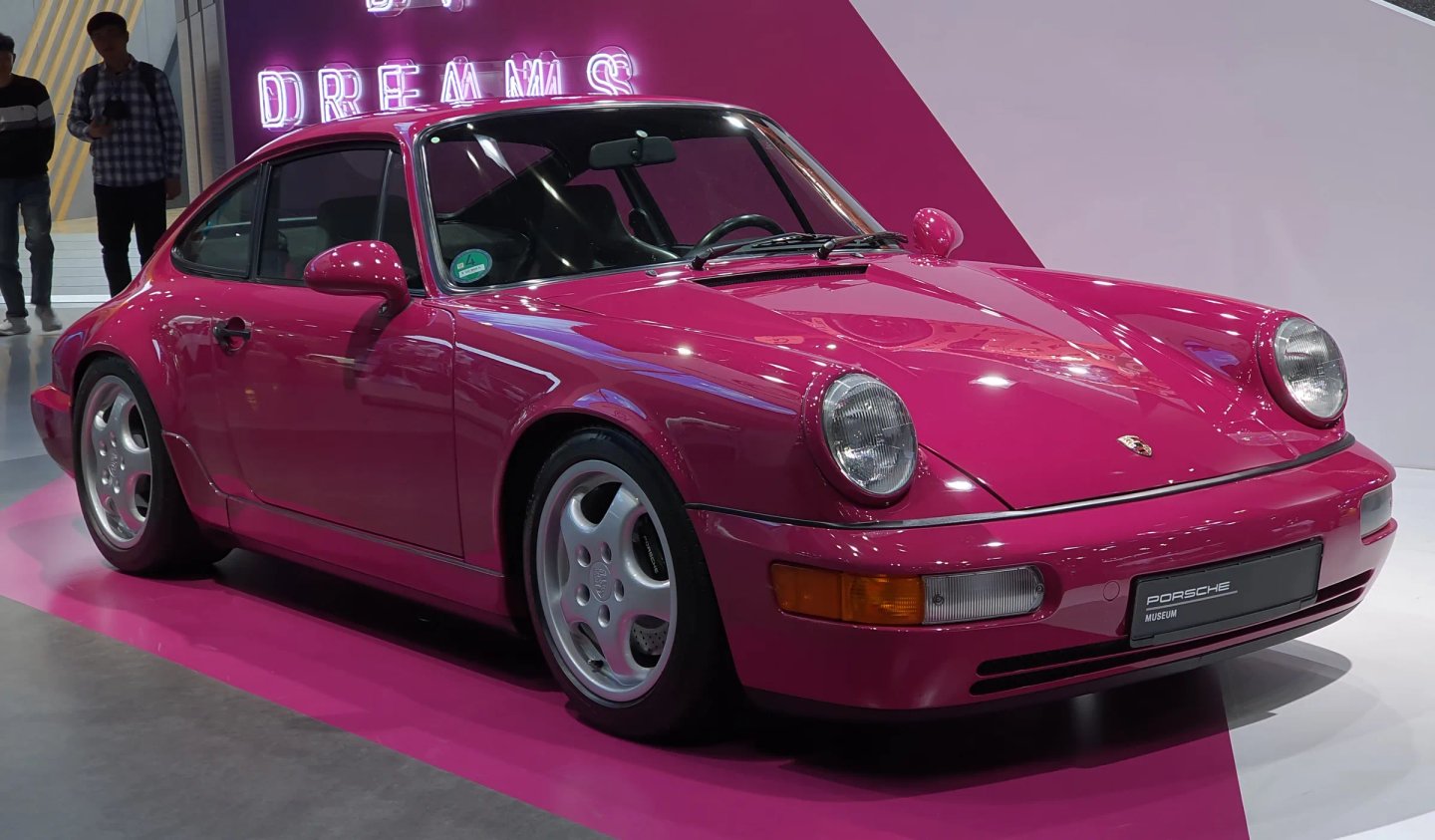
How much of $511,000 is paint? That is what someone paid at RM Sotheby's in Monterey in August 2026 for a 1992 Porsche 964 Carrera RS with 36,068 km. The car is Rubystone Red, which is closer to magenta than to red. According to RM, 235 of the 1,987 RS models built for that year left the factory in it.
The same month, another Rubystone RS sold on Bring a Trailer for the equivalent of about £229,000 with 88,000 km on the clock. Three months earlier, Bonhams sold an RS of the same model year in Guards Red in the United States, with just over 52,000 km, for about £230,000. Same money, 35,000 km apart. If those two cars were otherwise alike, the colour was worth roughly 35,000 km in 2026.
They almost certainly were not, and two cars prove nothing. In February 2026 a third Rubystone RS with about 27,000 km fetched $302,925 on duPont Registry, over $200,000 less than the Monterey car, with fewer kilometres and the same paint. That car did have a roll cage and different wheels. Condition, originality and the venue are all in the price too. The question is how to get the paint out of it.
Taking a price apart
There is a method for that, and it started with cars. In 1939, a General Motors volume carried a paper by A.T. Court that assigned car prices to characteristics such as horsepower. He called them hedonic prices. Sherwin Rosen gave the idea its economic form in 1974: compare enough sales and you can read off what each feature implicitly costs.
Almost every feature has something behind that price, some job it does. Less weight gives quicker laps, even if no buyer cares any more. Colour has nothing behind it. A Rubystone RS is no faster than a black one. That makes the price of a colour the most direct measure of taste inside a car's price: what a group of buyers will pay extra, at a given moment, for something that does nothing else.
Rare is not the same as wanted
The usual explanation is scarcity. It already struggles with Rubystone, since one car in eight is not rare.
Better evidence comes from America. In 2022 Hagerty matched nearly 1,300 auction sales of Mopar muscle cars since 2010 to its price guide and adjusted for condition and gearbox. Engine swaps and heavy modifications were left out. Citron Yella/Curious Yellow came in 17% above the market, and within the loud High Impact colours the rare shades generally did best. Outside that group they did not. Burnt Tan and Citron Mist are uncommon and worth little, while Blue Fire is common and wanted. Plum Crazy is everywhere and carries a premium. Tor-Red/Hemi Orange is everywhere too and carries almost none.
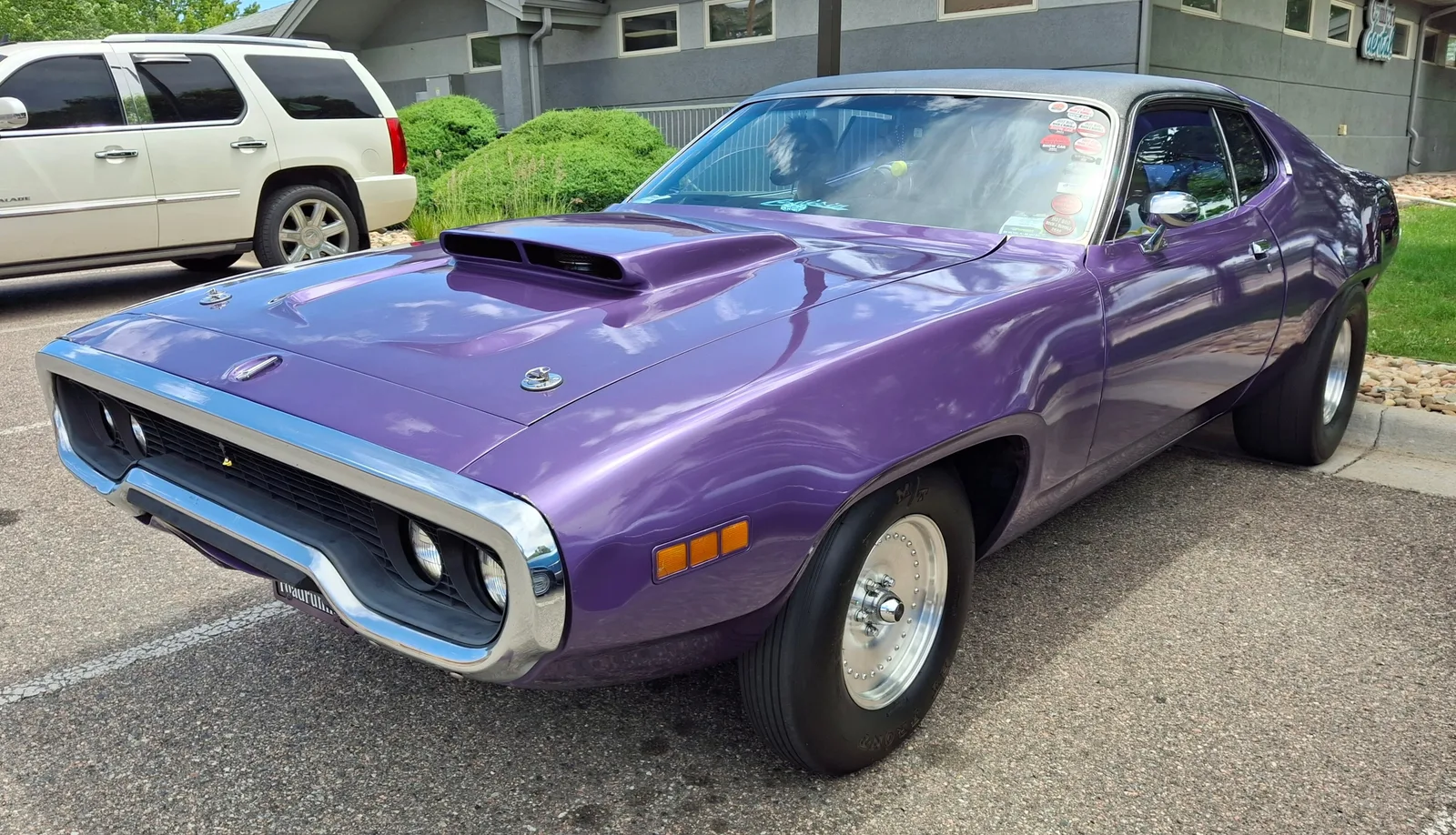
A 1971 Plymouth Road Runner in Plum Crazy, a common colour that still carries a premium in Hagerty's count.
So scarcity multiplies whatever demand there is. If demand is zero, nothing is left, however few cars were built in that colour.
More money, fewer buyers
A colour also changes who bids. In January 2021 Hagerty looked at 3,500 Porsche sales since 2013, live and online. Yellow Porsches made nearly $3,000 more than average but sold less often: 63.6% against an average of 70.8%. Black came in $1,385 below average. The supposedly safe choices, white, black and silver, did no better than mid-table on price or on the chance of a sale.
That fits a smaller group willing to pay more. Those who want yellow keep bidding and those who do not stay out. The $3,000 was measured on cars that found such a buyer. The yellow car that went unsold is not in it.
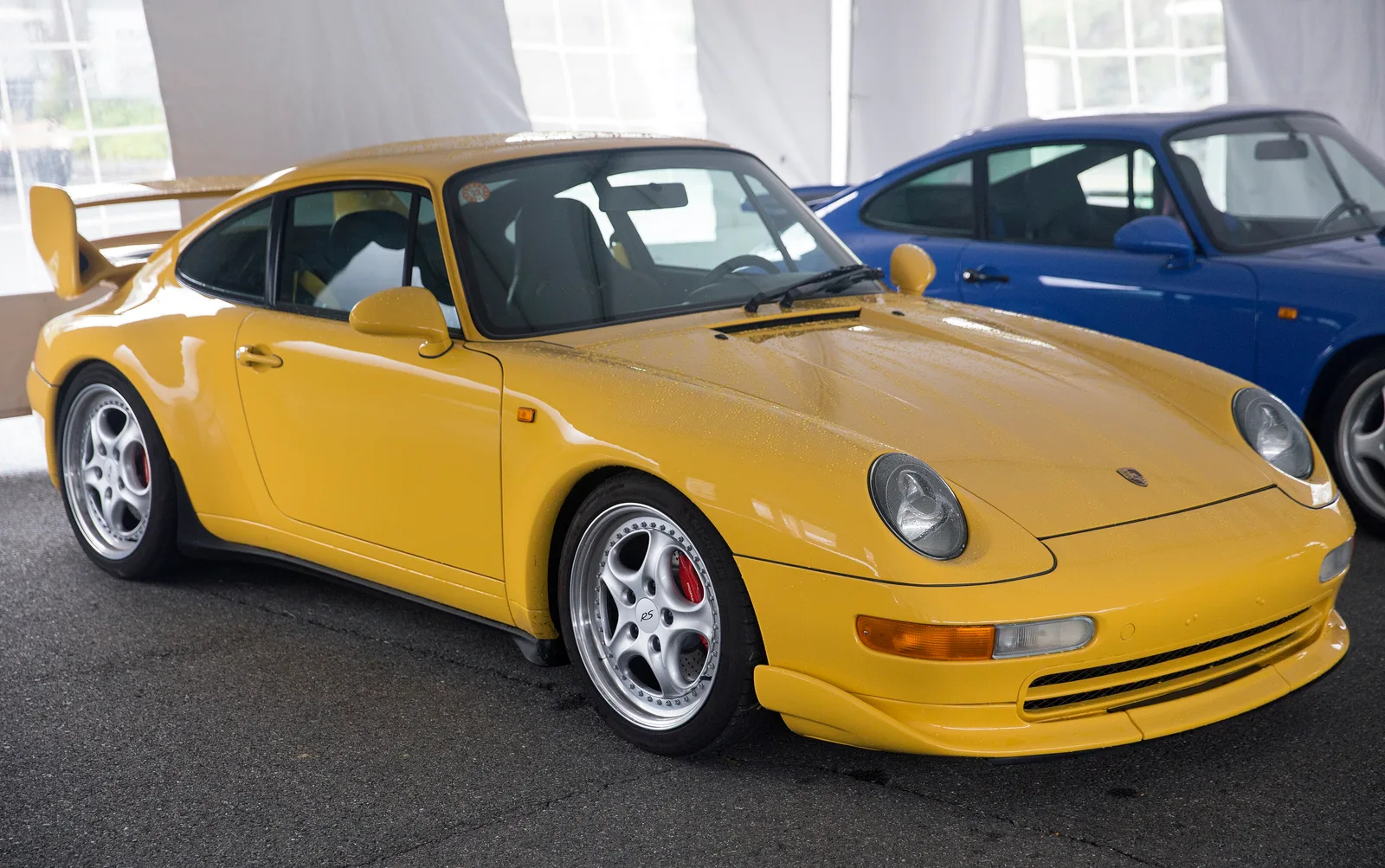
A 1995 Porsche 993 Carrera RS in Speed Yellow.
In a Hagerty survey of nearly 1,300 Porsche enthusiasts, respondents said they would pay 20% to 27% more for their favourite colour. On a $100,000 car, $3,000 is only 3%. An average across all yellow Porsches is not the same thing as one buyer's favourite colour, but that is a wide gap.
The Paint to Sample gamble
On 30 November 2021 Porsche announced that colours from the 1990s were coming back: Maritime Blue, Mint Green and Rubystar Red, Porsche's name for what the RS world mostly calls Rubystone. In Germany, Paint to Sample then cost €8,806 on most 911s and €9,877 on the Turbo and GT models, VAT included.
Say you order a GT3 in Rubystar and keep it for ten years. Charge the money 3% for what it could have earned elsewhere, and the colour has to bring in an extra €13,274 to break even. On a car then worth €150,000, also an assumption, that is almost 9%. It is well above the $3,000 on those yellow Porsches.
The temptation is to treat the Rubystone RS as proof that such an order pays. But the buyer in 1992 had no $511,000 result to look at. Someone ordering Rubystar today has seen it, and so has everyone ticking the same box. Porsche said demand for special paint had risen sharply and gave no numbers. How many GT3s leave the factory that way will help decide what the colour fetches later. You do not know that figure when you order.
Taste moves as well. In the same survey, baby boomers leaned towards red, black, silver and white, Generation X towards blues and millennials towards greens. Many of the people bidding in twenty years are not buyers yet.
Red as the counterexample
At Ferrari the shift can be followed in figures, though they come from different sources. In 2012 press officer Joanne Marshall told a visiting journalist that 45% of its cars were red, against 90% in the past. Maranello Motors, the Cologne dealer, reports 25% of its deliveries in 2024. The same dealer writes that most new customers for a used Ferrari go looking for a red one.
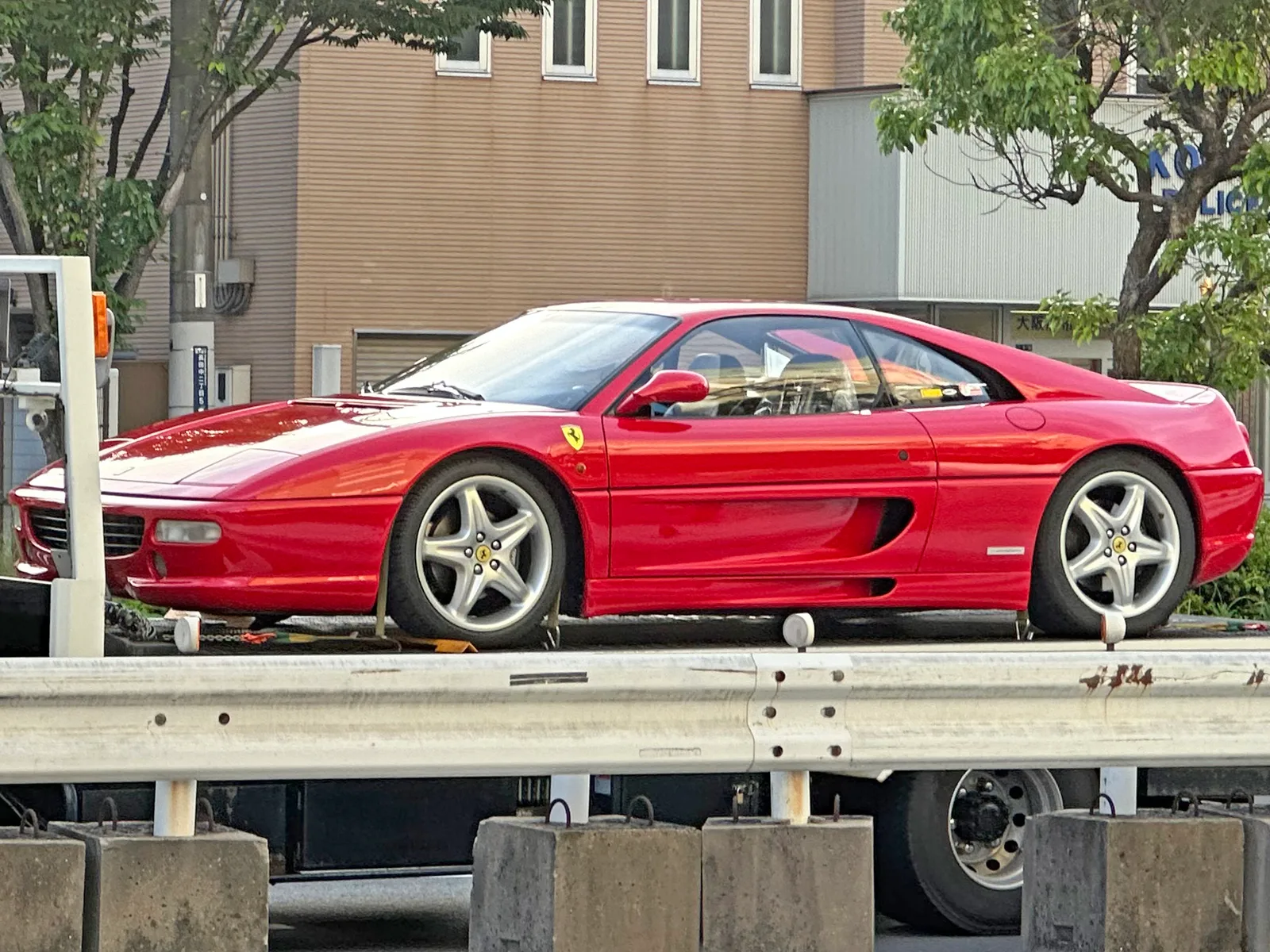
A red Ferrari F355 Berlinetta on a transporter.
That is the reverse of Rubystone. A red F355 from the 1990s is not scarce, but every year somebody buys a first Ferrari. Such a colour may earn no premium, but it does have buyers who do not depend on fashion. We have not found a reliable measure of what non-red does to a Ferrari's price.
Paint is also the one part of this sum you can change afterwards. Hagerty's Mopar count did not separate cars that left the factory in their colour from cars later resprayed in a different correct one. At $500,000, an RS buyer does check. What they are paying for then sits in the car's factory data: Rubystone is code 82N.
Images: Porsche 964 Carrera RS Rubystone Red (1) (cropped) by Damian B Oh (CC BY-SA 4.0); 1971 Plymouth Road Runner, Plum Crazy, Golden Super Cruise 2026-06-06 by Xnatedawgx (CC BY-SA 4.0); 1995 Porsche 993 Carrera RS in Speed Yellow, front right by Mr.choppers (CC BY-SA 3.0); Red Ferrari F355 berlinetta by Tokumeigakarinoaoshima (CC0). Images resized.


