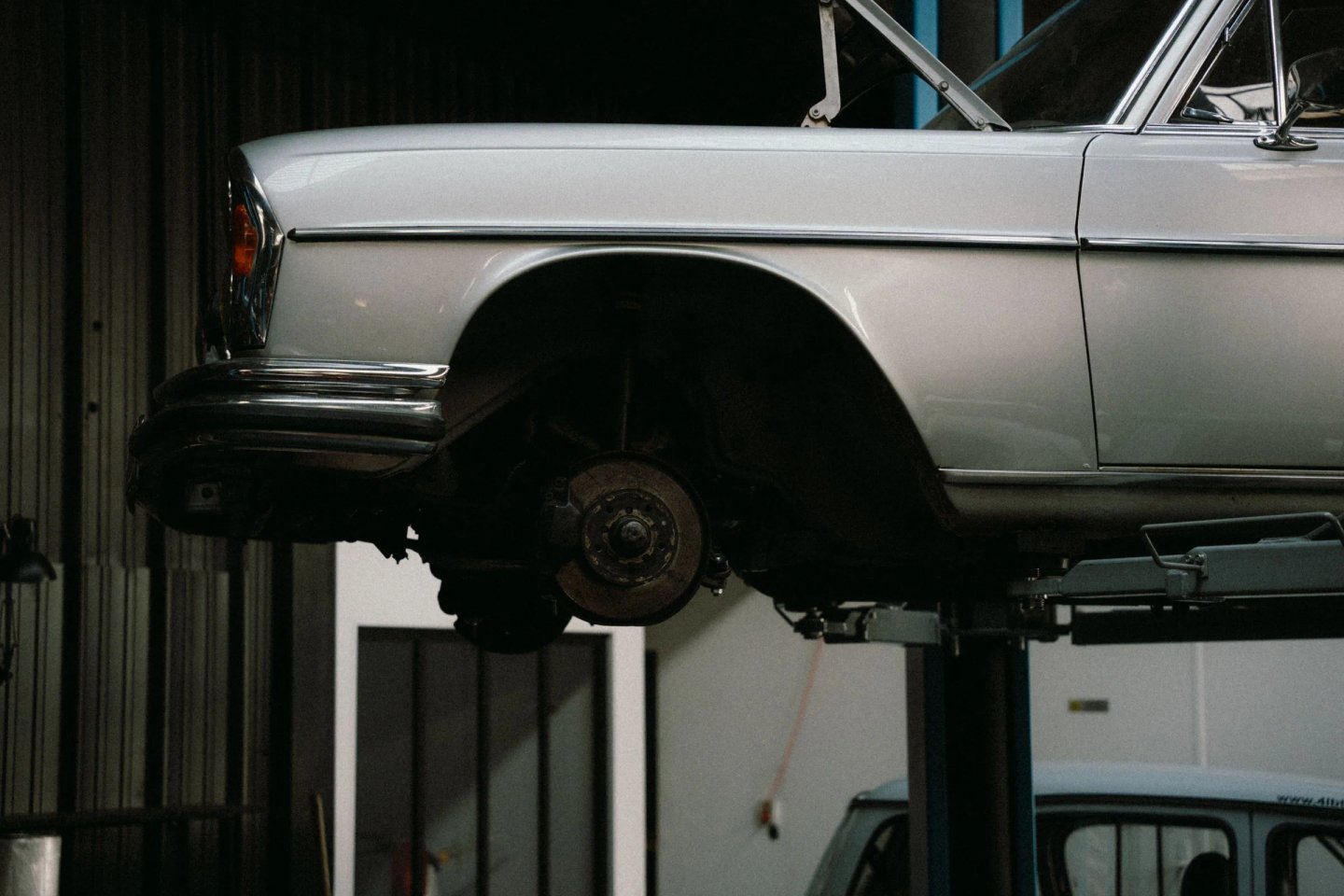
Around 2006, one more photo on an eBay Motors listing cost 15 cents. The figure comes from a study by the economist Gregory Lewis, published in the American Economic Review in 2011. He looked at more than 40,000 listings in a market then selling about 20,000 cars a month, three quarters of them to a buyer in another US state. Those buyers bid without having seen the car. They had the page.
At 15 cents, a missing photo saves no money. Lewis points out himself that taking, choosing and uploading pictures costs time. Dealers bought software to cut it. Even so, leaving a picture out is a decision. A decision can be read.
Why silence says something
In 1981 Sanford Grossman and Paul Milgrom separately worked out what follows. Take ten listings for the same model as an example, with undersides running from clean to bad. The owner of the best underside shows it, because that costs next to nothing and earns money. Buyers now know the best underside is not among the nine without a photo, so they bid a little less on those nine. That gives the second best a reason to post a photo too. Then the third. It carries on until only the worst stays silent. Economists call this unravelling. The conclusion is harsh: whoever shows nothing should be read as the worst.
It is messier in practice. On eBay Motors, Lewis found something in between. Sellers disclosed selectively, better cars came with more information and prices rose with the number of photos and the amount of text. Nobody told everything.
How buyers cope with that was tested in a laboratory by Ginger Jin, Michael Luca and Daniel Martin, with 422 subjects (American Economic Journal: Microeconomics, 2021). Senders passed on good news and sat on bad news. Receivers did not punish that enough and rated what was missing too kindly. That was a game and not a car auction. It does resemble a bidder paging through eighty photos without counting what is absent.
What would it have cost to show?
The theory rests on two conditions: showing must be cheap and the seller must know. That gives a buyer two questions for each gap in a listing. What would it have cost? Did the seller know?
Some gaps cost nothing to close. The VIN plate. The boot floor with the mat out. The underside of the sills, photographed from your knees. A cold start on video. The driver's seat from the side, where the bolster wears on the way in. An invoice you can read. On an E46 BMW M3, buyers' guides warn that the boot floor can crack where the rear subframe mounts, even if the car otherwise looks clean. Mat out and one photo is a minute's work. That photo does not settle it, since small cracks hide under the bushes. But a seller with eighty photos and not this one either did not think of it or did. Both are worth knowing.
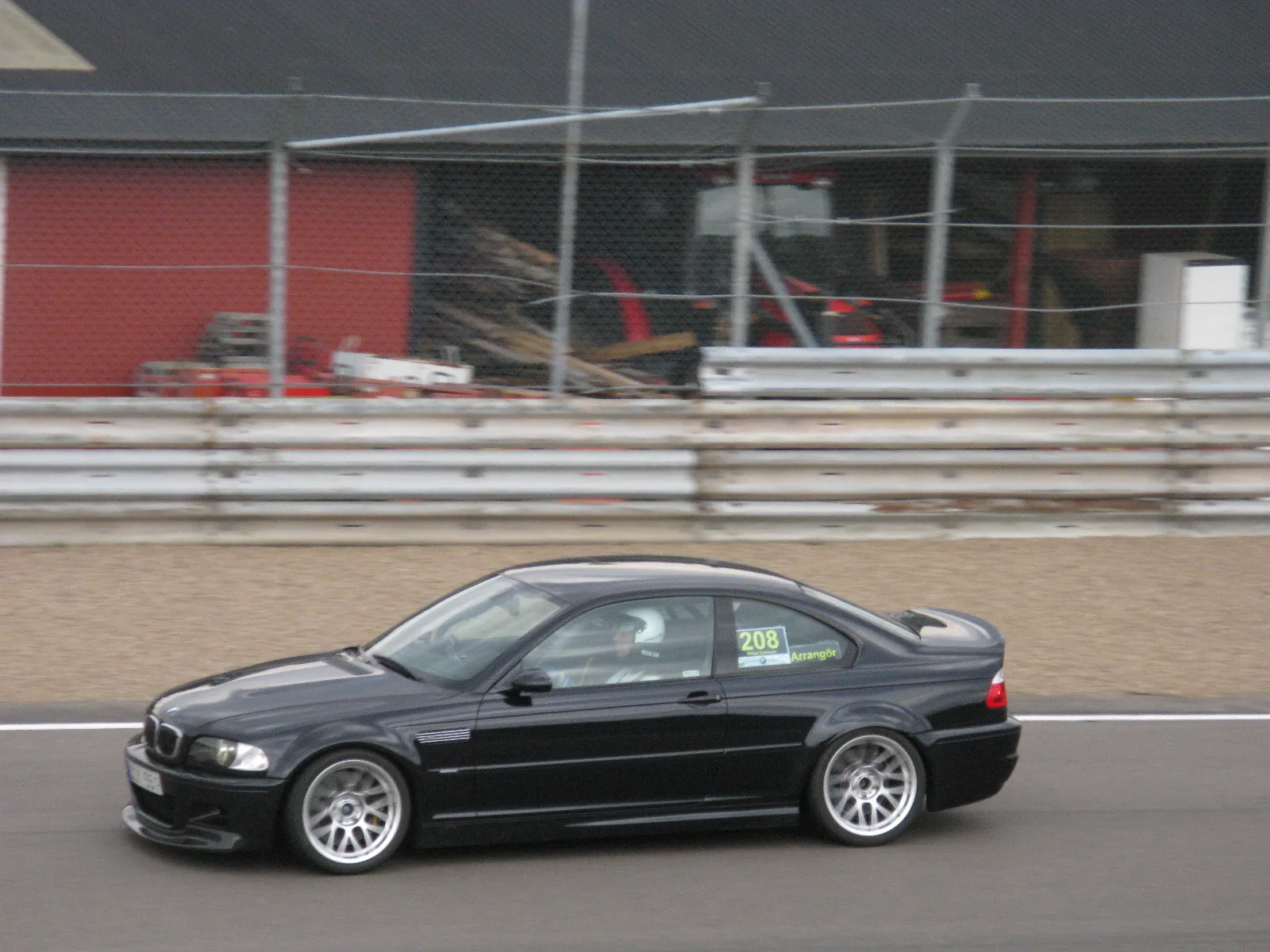
An E46 generation BMW M3 coupe on track.
Look at how the photos were taken as well. A car photographed only when wet shows no dull paint or fine scratches. A gallery with the passenger side from six angles and the driver's side from one is also a choice.
Other gaps cost real money. An underside on a lift, a paint depth reading all round, a compression test. A private seller with no lift has a genuine reason not to show those, so their absence says little. Their presence says a lot, because someone paid for them without having to.
The third group is what the seller does not know. Think of an heir selling a car from their father's garage, or a dealer who has only just bought it. Here the theory breaks, because someone who knows nothing cannot hold anything back. The buyer carries the same risk but should price it differently: as unknown, not as bad.
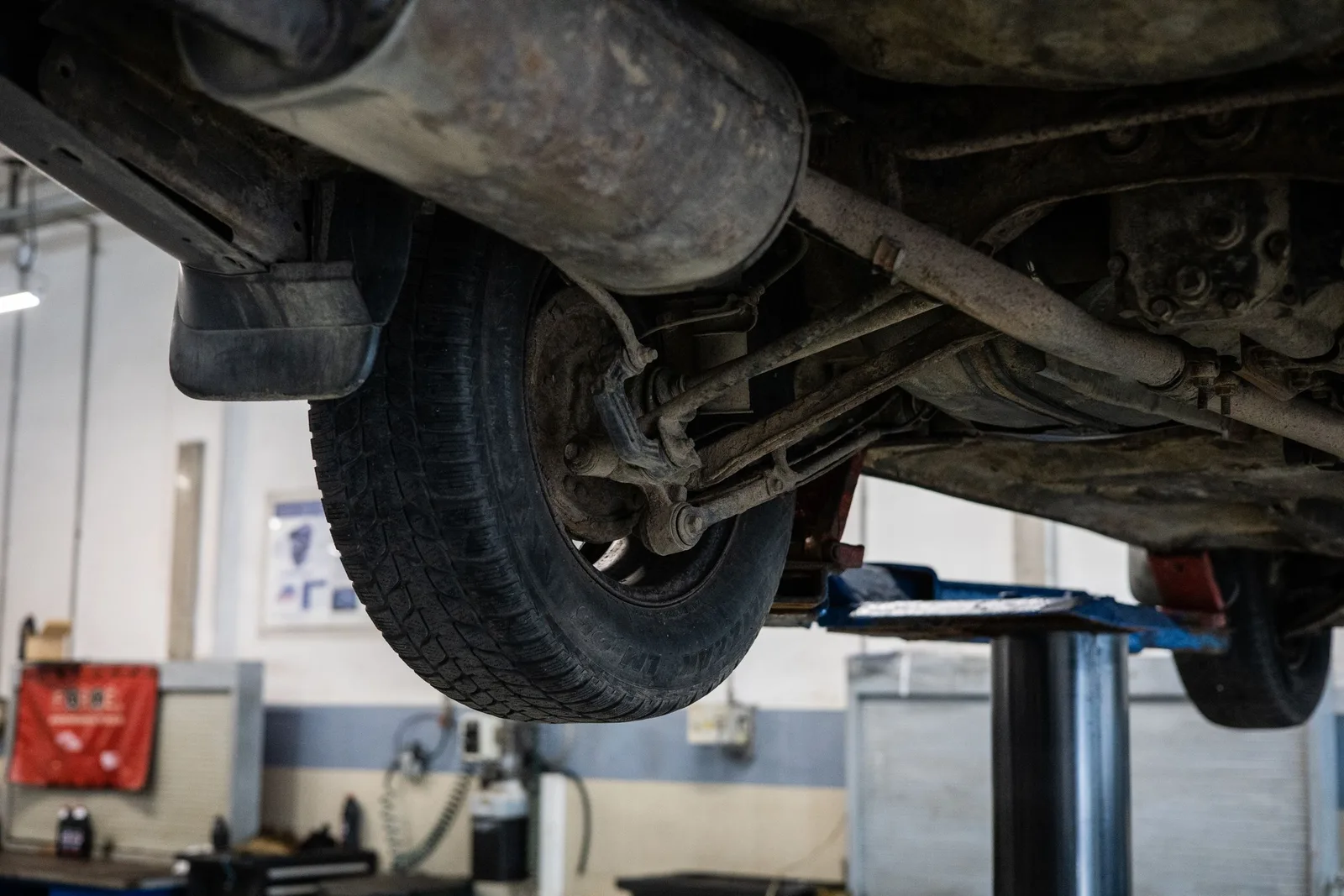
The underside of a car on a lift. For a private seller, this is the photo that costs money.
Sentences without a date
Text works the same way, and typing a date costs nothing at all. "Regularly serviced" says something different from a major service with a date, a mileage and a workshop. "Timing belt recently replaced" is, on a car whose belt goes by age, the very sentence that needs a year in it. "Dealer maintained" names no dealer. "Full history" does not say whether it runs to 2024 or stops in 2011. A photo of a stack of invoices on the kitchen table shows that paper exists. What it says stays out of frame.
Look at what is there as well. In a sample Lewis drew of about 2,000 listings, the word rust came up about 600 times, against about 1,500 for car. So sellers name faults more often than you might expect. They have a reason, since what is on the page becomes part of the deal and is hard for the buyer to complain about later. A thirty-year-old car with no fault named at all is a gap in the listing too.
None of this is a reason to write off every careless listing. Photos take time and not every seller thinks of them. A good car with a seller who could not be bothered does exist. From the page, though, it cannot be told apart from the others.
That is why each gap is also a question someone can ask. At Octane buyers can ask in public during the auction, and elsewhere there is email. A seller who then posts the boot floor photo has spent a minute. A seller who does not answer has said something again. Counting helps too. The subjects in the Jin, Luca and Martin experiment judged better once they were given figures for how often each score went undisclosed.
Take the last listing you looked at for longer than a minute. What was not in it?
Images: Photo by Mathias Reding on Pexels; BMW M3 Coupé E46 (11207042176) by nakhon100 (CC BY 2.0); Photo by Artem Podrez on Pexels. Images resized.
