
The best tip on Hagerty's 2020 Bull Market List was the Volkswagen Corrado. For anyone reading that list, this is less good news than it sounds.
Hagerty, an American classic car insurer, names a row of cars each year that it expects to rise in value. Looking back at its 2018 to 2024 lists, the company reports that the Corrado rose 349% after publication. A second figure sits next to it: anyone who took a year to find one still got another 178%.
The two say more together than they do apart. Call the value on list day 100. At the end it stands at 449. Someone who came in a year later and then gained 178% must have bought at 449 divided by 2.78, which is 161.5. So more than 60% was added in those twelve months, while the reader was still looking for a good car.
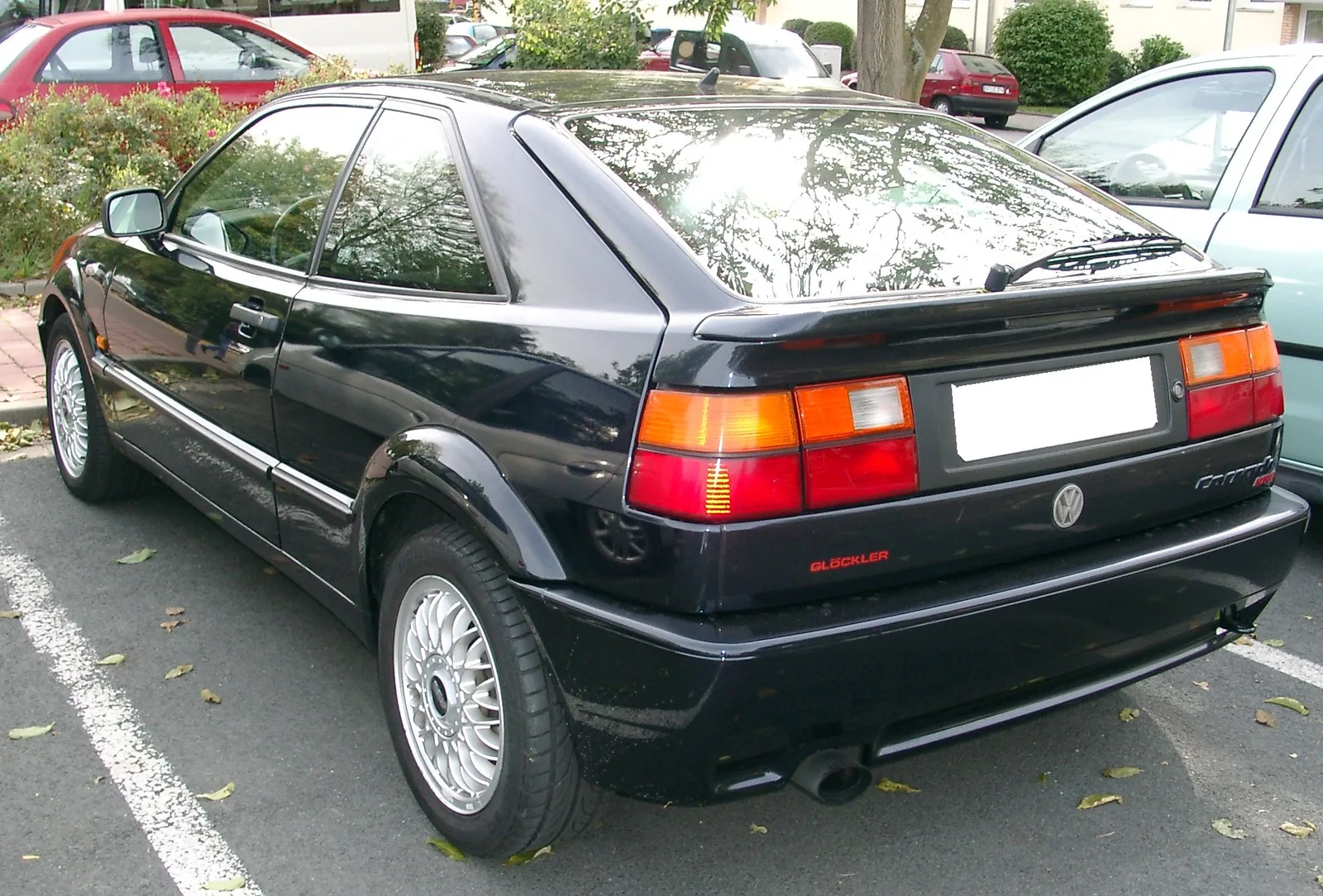
A Volkswagen Corrado. Production ended in 1995, so no more are coming.
George Soros named this in The Alchemy of Finance (1987): reflexivity. What people think about a market changes, through what they buy and sell, the market they are thinking about. A weather forecast does not change the weather. A bargain list can change the price, and the price was the only thing that made the car a bargain.
What publication does to a return
Nobody has measured this for cars. For shares, someone has. In the Journal of Finance in 2016, R. David McLean and Jeffrey Pontiff looked at 97 predictors of share returns from published research. After publication, returns were 58% lower than in the original studies. Outside the sample period but before publication they were already 26% lower, which the authors treat as the upper limit for statistical luck. The remaining 32 percentage points they put down to investors who had read the paper.
That is less dramatic than saying a tip destroys itself. A good part of the return survived. But a car differs from a share in two ways, and both make the effect stronger.
The first is depth. On 3 November 2026 the open register of the RDW, the Dutch vehicle authority, held 955 Corrados, of which 384 were insured. Say 5% of those 384 change hands each year: 19 cars. Twenty readers would double the demand. Hagerty's list is American and the twenty are an assumption, but the ratio holds for any model in those numbers. Supply cannot respond.
The second is that nobody can bet against it. If you think a share is too expensive you can short it, and your view reaches the price. If you think a Corrado is too expensive, all you can do is not buy one. The price gets set by the people who believe the list.
And the owners are reading as well. A seller can raise an asking price at no cost. Nothing has sold yet, but the reader who starts looking finds only the new asking prices.
What 349% does not measure
At first sight Hagerty refutes all this itself. The slow reader still made 178%. Elsewhere the company writes that the median annual return of its lists is typically four times the rise of its whole price guide. A list that does that is not stupid.
Look at what is being measured, though. Hagerty picks the cars and the figure comes from Hagerty's own valuations. The clock starts on publication day, when the reader does not yet own a car. Commission, transport and storage are left out. And there is no control group: nobody knows what the Corrado would have done without the list.
That last point is harder than it sounds, because the list is itself built on movement. Hagerty compiles it from its price guide, auction data and requests for insurance quotes. A quote request comes from someone already shopping. The 2026 press release was headed 'Buy It Now, Thank Us Later'. To its own insurance agents, Hagerty wrote in February 2026 that the list is not an investing strategy and that it is about identifying momentum.

An Acura Integra Type R. In Hagerty's 2024 review, this model comes last on the 2020 list.
Momentum and undervaluation are different things. An undervalued car is cheap relative to what it ought to fetch. A car with momentum is already moving, and the reader does not know where in that movement they are getting in. The Integra Type R started strongly on the 2020 list and was at the bottom by 2024, up 28% since publication. That number says nothing about anyone who bought halfway.
Whoever buys after a list buys from somebody. Sometimes that person has owned the car for twenty years, sometimes they bought it a year earlier because they saw what was coming. Either way the reader is the exit for whoever was there first. There is nothing unfair about it. It just is not what the word bargain promises.
This site does it too
This site carries a 2025 list of five cars to watch: 993 Turbo, 550 Maranello, E30 M3, Diablo VT Roadster and XJ220. It describes the 993 Turbo as a classic whose value can do little but rise. No car can do that. The sceptical shortlist for 2027 on this blog is still a list as well: it names cars, and people read it.
Nor is Octane a bystander. The buyer here pays 3% commission, up to a maximum of €3,600. Up to about €120,000, a higher price earns this platform more, so a list that excites buyers is not a neutral product for us.
If the reasoning holds, a list is worth most to someone who does not read it as buying advice. For the buyer it is a pointer to where things are already getting dearer. The owner of a car on the list has nothing to find and nothing to pay, and now knows when the buyers will come looking. That is an awkward result for an article on a site that earns when cars change hands.
Images: Techno-Classica 2025, Essen (P1045919) by Matti Blume (CC BY-SA 4.0); VW Corrado rear 20070920 by Rudolf Stricker (CC BY-SA 3.0); Acura INTEGRA TYPE R (DC2) front by Tokumeigakarinoaoshima (CC0). Images resized.


