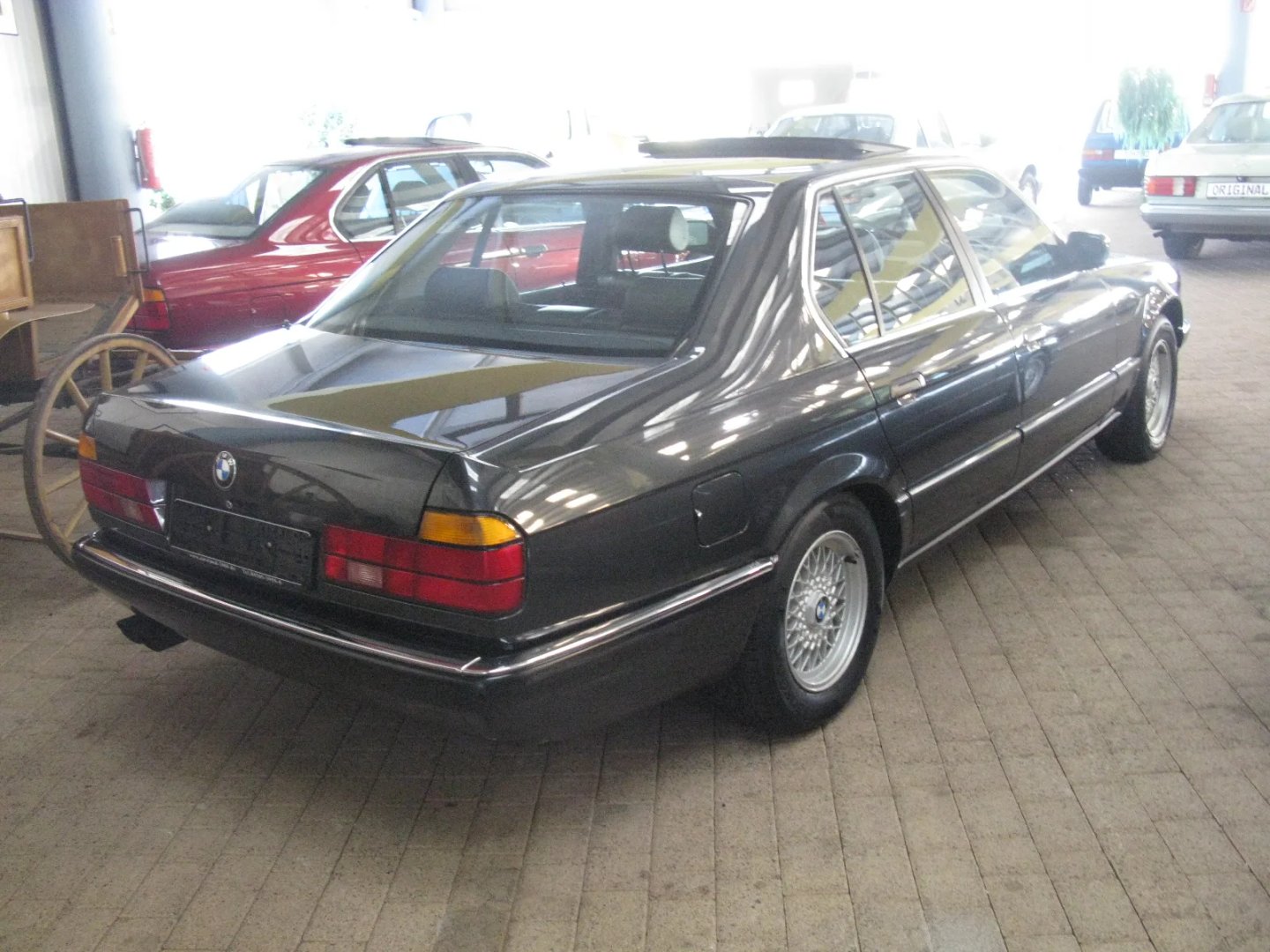
In 1987 BMW launched the 750i: a 5.0-litre V12 with 300 PS and a top speed of 250 km/h (155 mph). Without the limiter it would have done about 270, Germany's Autohaus wrote at the car's thirtieth anniversary, but there were no suitable tyres for that. Two years later the Japanese makers agreed something similar with a different number: 280 PS (276 bhp) and no more.
A gentlemen's agreement is a deal between competitors that sits in no law and that nobody enforces. Companies do not sign these out of courtesy. In both countries something worse was on the table.
Cheaper than a law
In West Germany in those years, the car was under political pressure over the environment. Wards wrote in 2006 of an agreement with the German government, and the European Rubber Journal in 2005 that BMW brought in the limit to head off a speed limit on the Autobahn. In Japan, the transport ministry asked the makers' association to end the power race, with road deaths rising fast. It never became a formal regulation.
Compare what was at stake. A speed limit applies to every car on every kilometre, and politicians can lower it next year. A limiter applies only to the fastest cars in your own range, and you keep the wording.
Then look at where the line was drawn. The 750i gave up about 20 km/h it could not use on the tyres of the day anyway. The 560 SEL, the strongest Mercedes of that moment, appears at 250 km/h in the brand's own data. In Japan, 280 PS was the output of the 1989 Nissan Fairlady Z (Z32). The ministry had approved that car, so it became the ceiling. In both cases the line sat where the strongest car already stood. On the day of the deal, hardly anyone had to give anything up. A ceiling only starts to cost once engines grow.
What happened under 280 PS
They did, of course. Anyone barred from competing on one number competes on the next. American airlines did it before 1978, when fares were fixed: they fought on aircraft size, flight frequency and even piano bars.
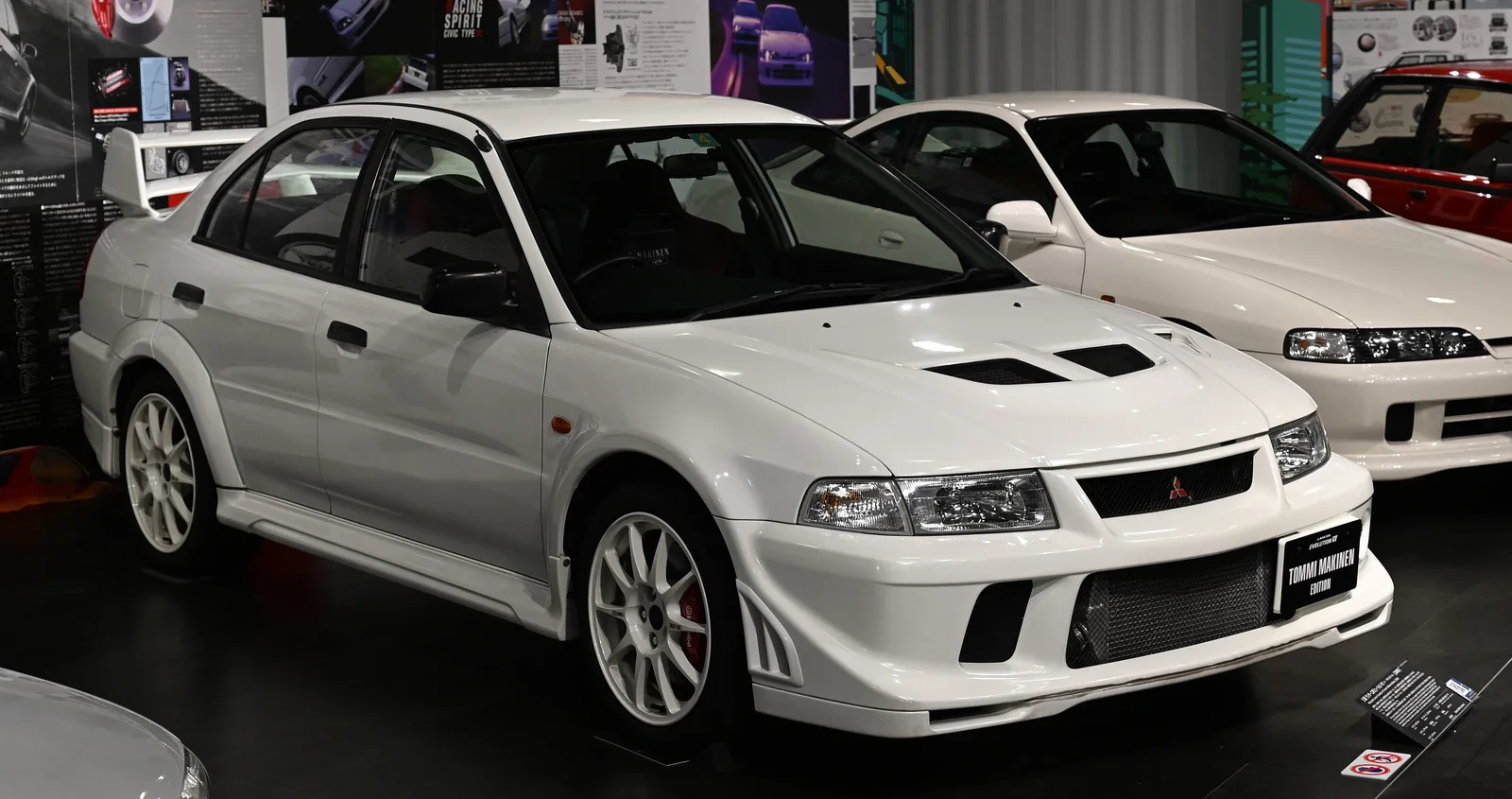
A 2000 Lancer Evolution VI Tommi Mäkinen Edition. Output in the Japanese brochure: 280 PS.
The Mitsubishi Lancer Evolution shows how that looked in print. The Evo IV had 280 PS and 353 Nm. The VI had 280 PS and 373 Nm. The VII: 280 PS and 383 Nm. The VIII MR: 280 PS and 400 Nm. The Japanese IX: still 280 PS on paper and 400 Nm. Torque rose 13% while the power column stood still, and the Japanese IX reportedly made about 320 PS. In Britain the importer sold the VIII as the FQ-400, with 411 PS.
What was really under the bonnet is harder to say, because measurements mostly exist one car at a time. In 2015 Doug DeMuro put his own R32 Skyline GT-R on a four-wheel-drive dyno: 281 hp at the wheels, roughly 320 at the crank by his reckoning, with a different exhaust as the only known change. One car on one day. But it fits what Japan's Best Car says about export versions going past 300 hp for extra money. Anyone looking at a Japanese car of those years today reads an agreement in the power figure, and not a measurement.
The ending is less spectacular than the story. In 2004 the industry decided the limit was no longer needed: imported cars above 280 PS were on sale in Japan and a power race no longer seemed likely. The first car to go over, in October 2004, was not a sports car. It was the Honda Legend, a four-door saloon with 300 PS. The GT-R, the Supra and the RX-7 had already stopped in August 2002, under new emissions rules and poor sales.
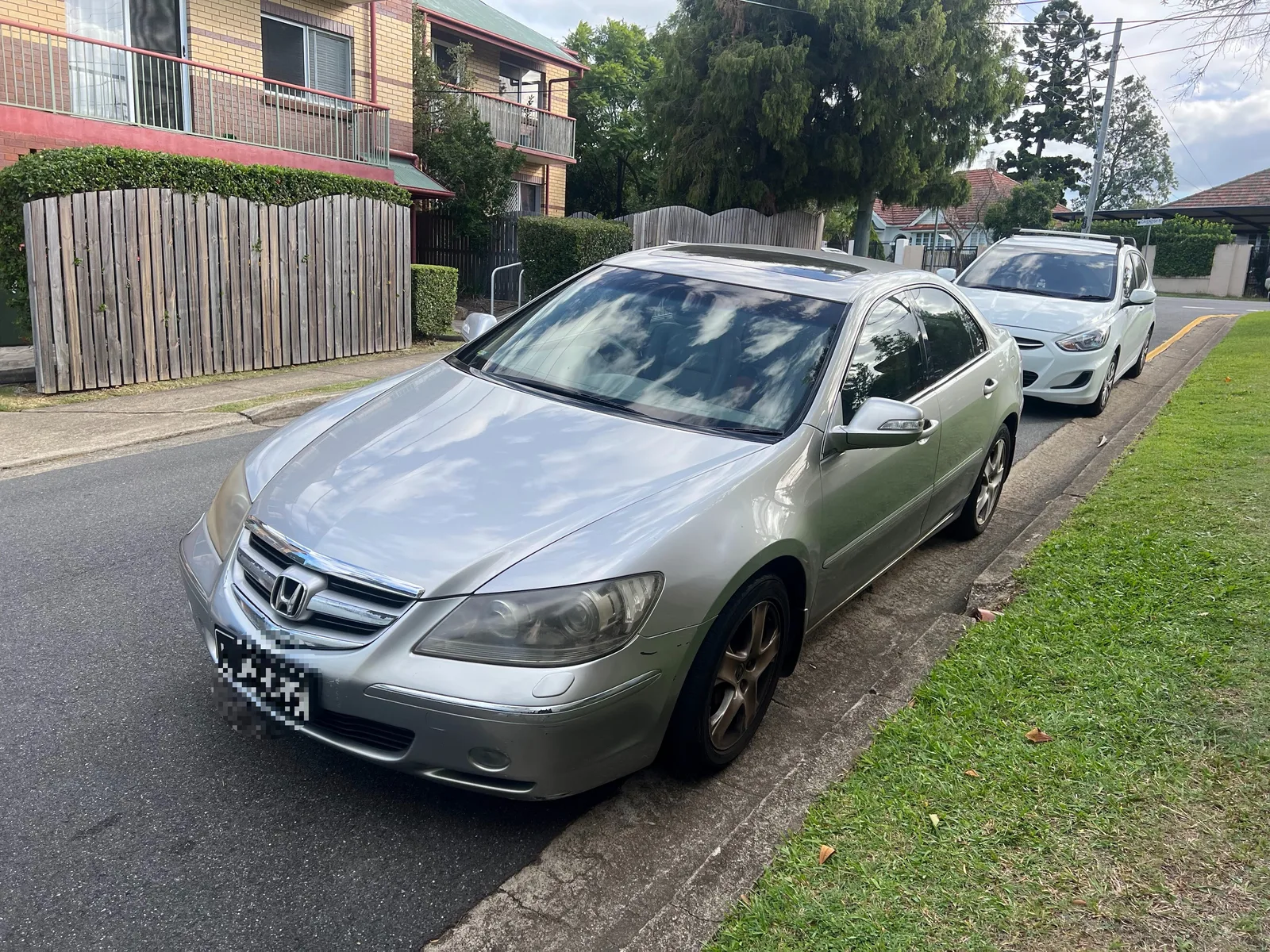
A fourth-generation Honda Legend, the first new Japanese car above the old limit.
The limit that stayed
The German deal leaked from the start: Porsche never joined. In 2005 the European Rubber Journal wrote that an ungoverned Boxster at 256 km/h could pass a far dearer limited car on the Autobahn, which one German executive called unacceptable. An analyst noted that by then the limit existed mainly on paper, since many buyers had the chip replaced.
Then came something that never happened in Japan. The makers did not abolish the limit. They started selling it. In 2006 European buyers of a BMW M5 or M6 could have the limiter switched off for about €2,500, including different tyres and a driving course. In 2014 the M Driver's Package on an M3 cost €2,450 in Germany for 280 km/h. In 2024 the same package on the new M5 cost €2,450 for 305 km/h, on a €144,000 car. In eighteen years the price in euros has barely moved.
Mercedes-AMG offered something similar in the US from the summer of 2005, as part of a package costing $6,900 to about $14,000 with chassis and tyre changes. By mid-December, 600 customers had chosen it. AMG's product manager pointed out in Wards that 176 or 186 mph is just as illegal in the US as 155. On public roads, that customer was paying for a number.
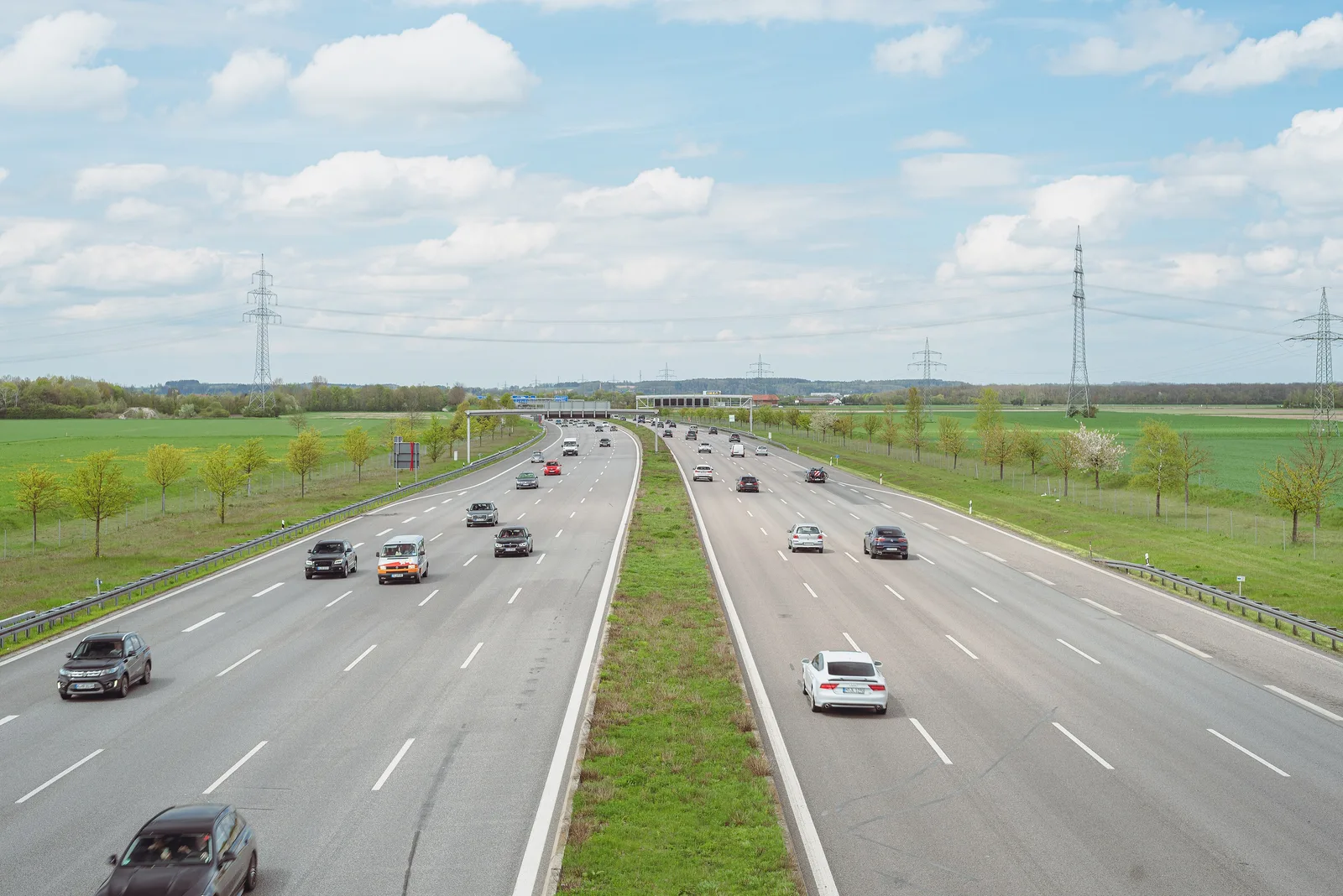
The A9 near Eching, seen from a road bridge, in April 2023.
For a Dutch buyer it is an odd purchase. Dutch motorways allow 100 km/h by day almost everywhere and 130 at most in the evening, so those extra 55 km/h are bought for another country. The price list does show what became of the deal. The Japanese limit vanished when it no longer paid anyone. The German one brings in €2,450 a car, and in November 2026 Germany still has no general limit on the Autobahn. That the limiter brought this about cannot be proved. What BMW paid and what it now receives is clear enough: in 1987 it gave away 20 km/h it could not use, and now it sells back the kilometres above that line.
Images: BMW 750i E32 (12141128753) by nakhon100 (CC BY 2.0); 2000 Mitsubishi Lancer RS Evolution VI Tommi Makinen Edition by TTTNIS (CC0); Honda Legend KB1 by Dicky0615 (CC BY-SA 4.0); 20230430 Bundesautobahn 9 02 by Flocci Nivis (CC BY 4.0). Images resized.


