
In June 1971 the Journal of Petroleum Technology ran a paper by three men at Atlantic Richfield: Ed Capen, Robert Clapp and William Campbell. They wanted to know why oil companies that won American offshore drilling rights at auction earned less than they had calculated, year after year. Their own employer knew the problem. At an earlier sale Arco had won every tract it bid on, and it was short of money for a couple of years afterwards. Their explanation got the name it still has: the winner's curse.
The reasoning fits in a paragraph. Ten companies estimate how much oil is in the ground. Nobody knows, and on average they are not far off. But the auction does not pick the average. It picks the highest estimate, which is usually the biggest overestimate. So winning is news. Everyone else who did the sums came out lower.
Two kinds of value in one car
Economists draw a line here that almost nobody draws at a car auction. A common value is the same for everyone, though nobody knows it exactly, like the oil in the ground. A private value is what something is worth to you personally. The curse only touches the first.
A car has both. What it fetches in two years is common value: you can be wrong about it and the next buyer will let you know. What a Sunday drive in it is worth to you is private value. Someone who pays €5,000 over the market for the colour combination they have been looking for over twenty years is buying what they want and knows the price. Someone who pays the same €5,000 expecting to get it back later is making an estimate, and the 1971 rule applies. In the last minutes of an auction those two get mixed up easily.
Why a crowd makes the correction bigger
Say a car is worth €60,000 and bidders estimate that correctly on average, with a usual error of €6,000 either way. Those figures are invented. The proportions are the point. In an open auction the winner pays roughly what the second-highest bidder was still willing to give. With a normal distribution, that averages out as follows:
- 2 bidders: about €56,600
- 5 bidders: about €63,000
- 10 bidders: about €66,000
- 30 bidders: about €69,700
The car is worth the same in all four cases. With two bidders you get a bargain. With thirty you overpay by 16% on average, and nobody has done anything stupid.
A busy auction feels like confirmation, and partly it is. John Kagel and Dan Levin, who tested this in the lab for years, found that open auctions shrink the curse because you can see when others drop out. But you only see those who bid. Whoever read the listing, landed on €50,000 and did nothing is not in the bid history. From the same research: subjects who had learned to avoid the curse with four bidders ran into it again with seven. Experienced industry executives did no better than students.
What happens with actual cars
Hagerty looked at cars sold twice within twelve months. Those bought on Bring a Trailer and resold elsewhere fetched an average of 15% to 32% less, depending on the year, between 2016 and 2021. Going the other way, bought elsewhere and sold on Bring a Trailer, brought 24% more in 2021 and 1% to 9% more in the years before.
That is not clean evidence. People who sell within a year are not typical owners, and the gaps also reflect the site's reach and which cars end up where. It does fit the list above. Many bidders make a higher price, and whoever leaves that group does not take the price along. The seller's premium and the buyer's curse are one number seen from two sides.
The Porsche 911 R shows what that looks like on one model. Porsche unveiled it at Geneva in March 2016. Within months, used examples were on offer at up to seven times the new price, and one seller asked €950,000 on eBay. Asking prices are not sale prices, but according to a 2023 look-back, market prices stood above €650,000 by the end of 2016.
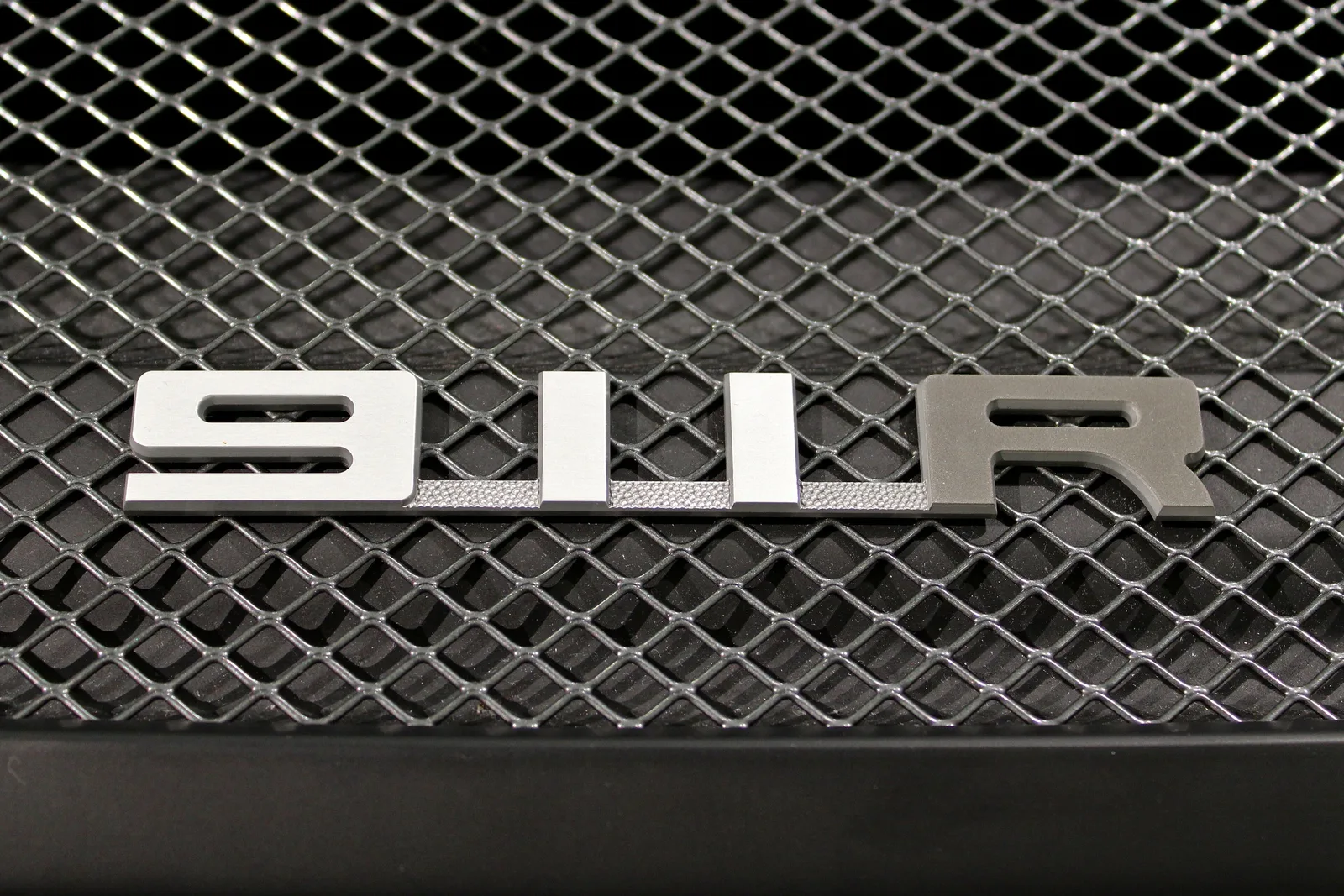
The badge of a 911 R in the Porsche Museum, photographed in 2018.
In 2017 Porsche brought out the 911 GT3 Touring, also with a manual gearbox and no big wing. The Drive called it an answer to the speculators. In April 2018 the Dutch site Autoblog reported a white 911 R selling for $300,000 at RM Sotheby's in Fort Lauderdale. One in RM Sotheby's Munich sale of November 2026 carried an estimate of €400,000 to €500,000.
So anyone who paid €650,000 at the end of 2016 was still under water ten years later, on the same car. All the bidders back then knew what the R was and that Porsche could launch new models. The winner was whoever rated that risk lowest.
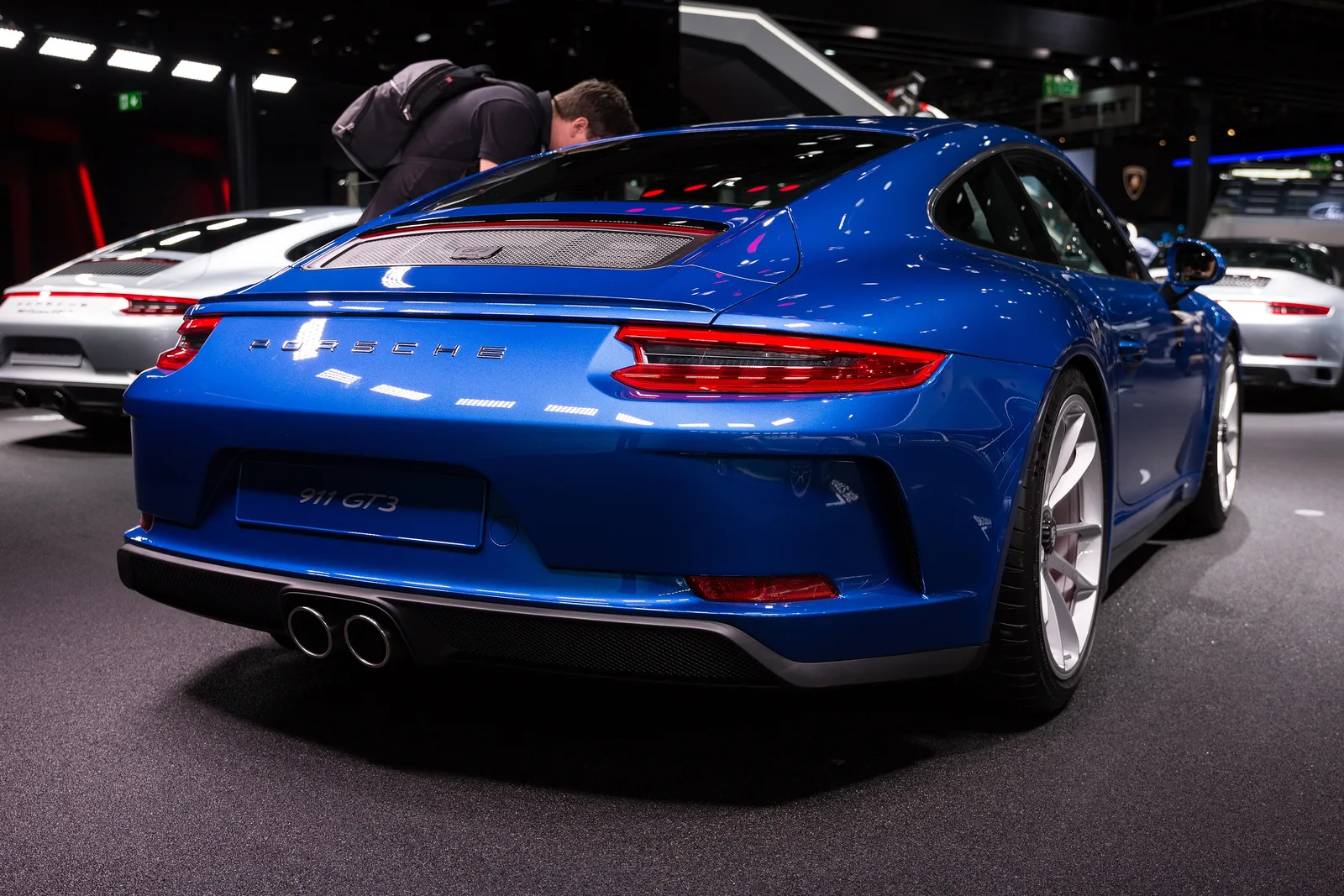
The 911 GT3 Touring at the 2017 Frankfurt motor show, without the fixed wing of the ordinary GT3.
How to set the number
A figure written down in advance protects against one thing: paying more at the end than you had intended. That risk is real. On Octane, the clock restarts at five minutes after any late bid, so that stage can last a while. But a written number can also simply be too high. So it has to be arrived at properly.
- Find out what comparable cars actually fetched. Sale prices, not asking prices.
- Take something off for the 1971 question: if I win, what do I then know? The more popular the car, the more you take off.
- Add, as a separate sum, what the car is worth to you personally, knowing you will not see that part again.
- Take off the commission. At Octane the buyer pays 3%, so anyone wanting to spend €60,000 in total bids up to €58,252.
Stick to this and you lose most of the auctions you enter. You win only when everyone else lands below your corrected figure, which does not happen often, so you will regularly watch a car you wanted go to someone else. If you cannot stand that, raise the figure at step three. The difference is then money spent on something you want, and you need not pretend it comes back when you sell.
Images: BHP-Shenzi deepwater offshore production platform (51115227966) by Bureau of Safety and Environmental Enforcement BSEE (public domain); Porsche 911 R IMG 0831 by Alexander Migl (CC BY-SA 4.0); Porsche 911 GT3 Touring, IAA 2017, Frankfurt (1Y7A2770) by Matti Blume (CC BY-SA 4.0). Images resized.


