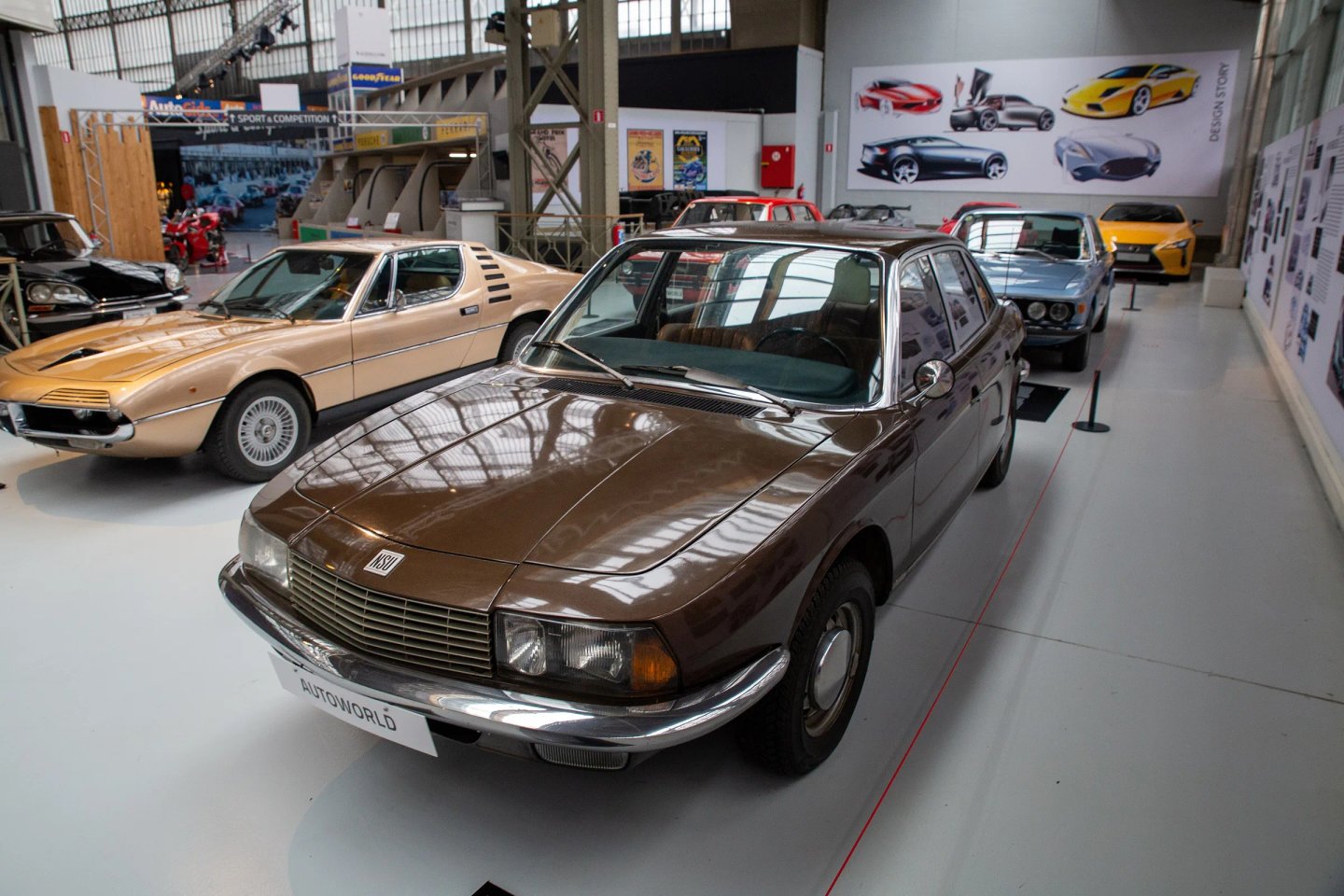
The Wankel was not a bad idea that finished NSU. In the early 1970s Walter Fröde, an engineer at NSU, said the Ro 80 with its new seals needed a replacement engine about as often as the piston-engined cars of its German rivals. He was no neutral witness, and he added that it was still more often than NSU wanted. But if he was anywhere near right, the engine was largely fixed by then. By then NSU had also stopped being an independent company.
The trouble was the order of events. NSU sold the engine before it was finished, because the company could not wait.
Learning on the test bench or with the customer
Every new type of engine makes mistakes. That can happen on the test bench, at the expense of the development department. It can also happen with the customer, and then each mistake costs an engine, a workshop visit and a story that gets around.
NSU had little choice. It had stopped making motorcycles and put nearly everything into the Ro 80 and a piston-engined car, the Typ 70. Selling licences for the Wankel was its main source of development money. The test engineer Ewald Praxl wanted more pre-production running, according to one detailed history of the car, but there was no money for it. The boss, Gerd Stieler von Heydekampf, admitted that NSU was betting everything on the Ro 80. Series production started in October 1967. NSU's small cars sold more than 100,000 that year. In 1968, 5,986 Ro 80s were built.
The apex seals came in three pieces of the same material. The centre piece wore faster on cold starts, the outer pieces began to move and combustion gas got past. Some cars needed another engine before 50,000 km, and the first problems came at about 24,000. NSU usually replaced the whole engine, sometimes more than once, under warranty and sometimes beyond it. We found no total anywhere. The company had already overreached by then, and the warranty bill made that worse.
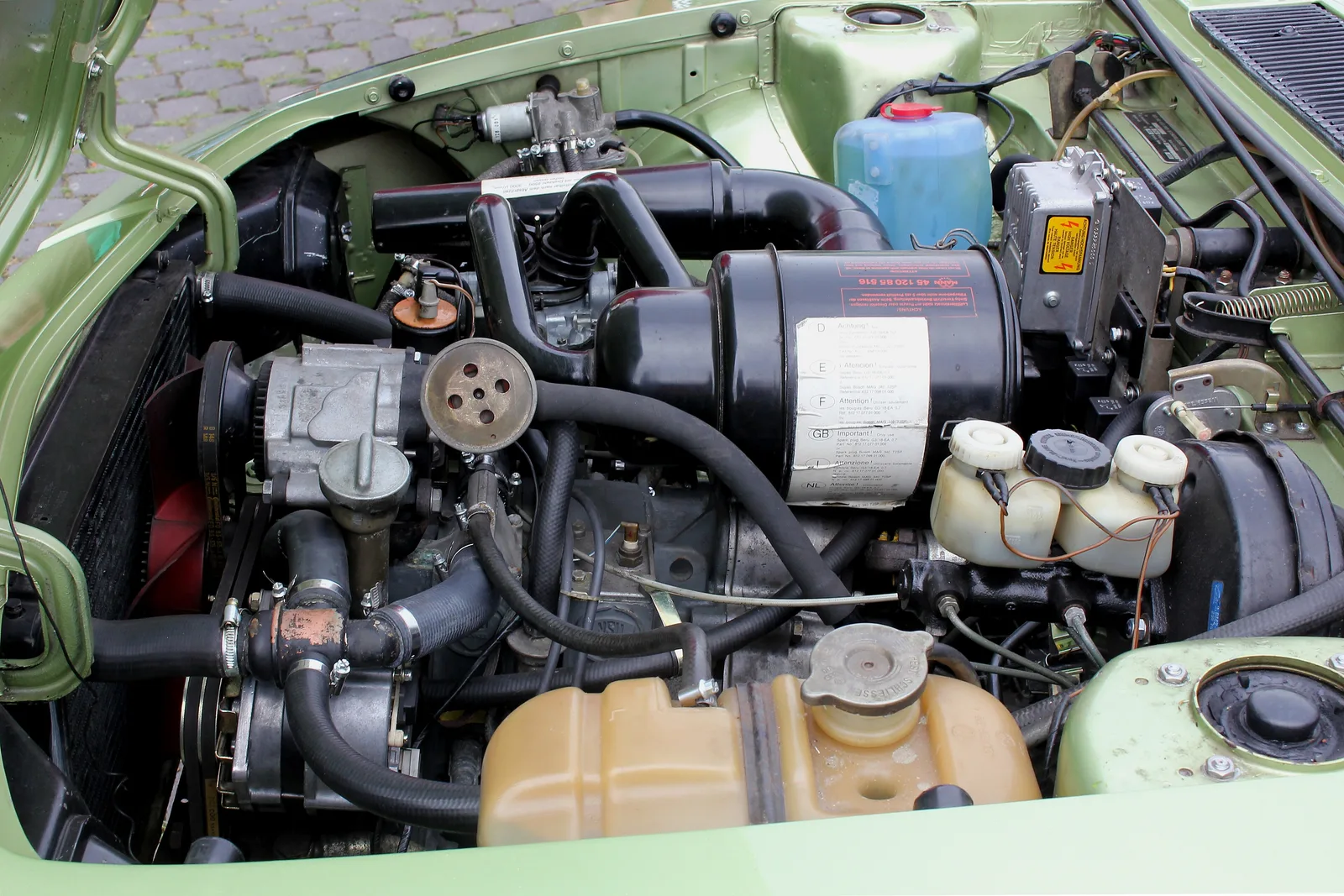
The engine bay of a 1976 Ro 80. By then the seal problem had been solved for years.
By early 1969 the position was untenable. In March came the announcement of a merger with Auto Union, which had been under Volkswagen since 1964. The seal with a centre piece in another material came after that: from the 1970 model year most of the reliability problems were gone. Production peaked in 1969 at 7,811 cars and ended in April 1977 at 37,398.
VW launched the Typ 70 as the K70 in the autumn of 1970 and built about 211,000 by May 1975, more than five times the Ro 80's ten-year total. Whether that car could have saved NSU, nobody knows. It was in NSU's drawer, though.
The paper did better than the car
With the licences the sum turns strange. Minority shareholders extracted profit certificates at the merger: a share of Wankel income for ten years, first 40% and later almost 70%. VW had to pay licence fees if it wanted to use the engine. Felix Wankel sold his share of the royalties to Britain's Lonrho in 1971 for 50 million marks. GM, Nissan, Toyota and Ford were still buying licences in 1970 and 1971. What largely failed to arrive was the income from rivals putting the engine into series production: only four carmakers ever sold Wankel cars. We found no figures for the whole.
Citroën bet as well. With NSU it set up Comotor and built a factory at Altforweiler to supply Wankel engines to other makers. Those customers never came. The GS Birotor was shown in October 1973, the month the oil crisis began. It cost about 70% more than an ordinary GS, which made it dearer than the DS. It returned about 18 mpg. They built 847.
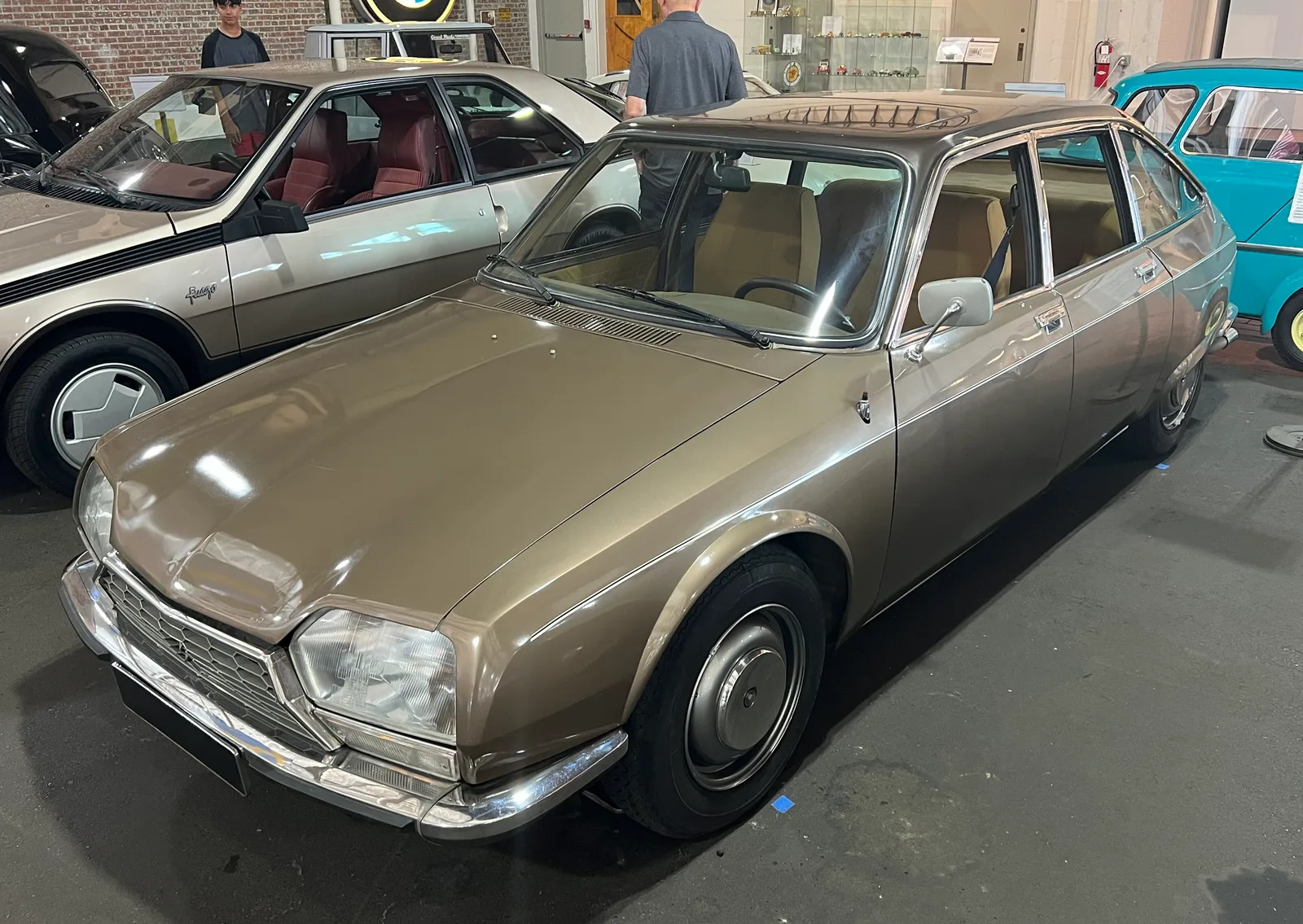
A 1975 GS Birotor in the Lane Motor Museum. Estimates of how many survive run from a few dozen to 200.
Citroën then offered to buy the cars back and withdrew the type approval, so as not to carry warranty and parts for such a small group. Not everyone accepted. In investor's terms Citroën closed a position at a loss, because the running cost of keeping it was worse.
Mazda could not afford it either
The usual ending says that only Mazda could afford the tuition. That is wrong.
Mazda took a licence in February 1961 and needed six years to reach the Cosmo Sport of May 1967. Its engineers fought marks on the rotor housing wall that they called the nail marks of the Devil, and ended up with seals of carbon infused with aluminium. The difference from NSU lay in the scale of the trial. The Cosmo sold about 30 a month. In 1968 nearly 500 Ro 80s a month were leaving the factory.
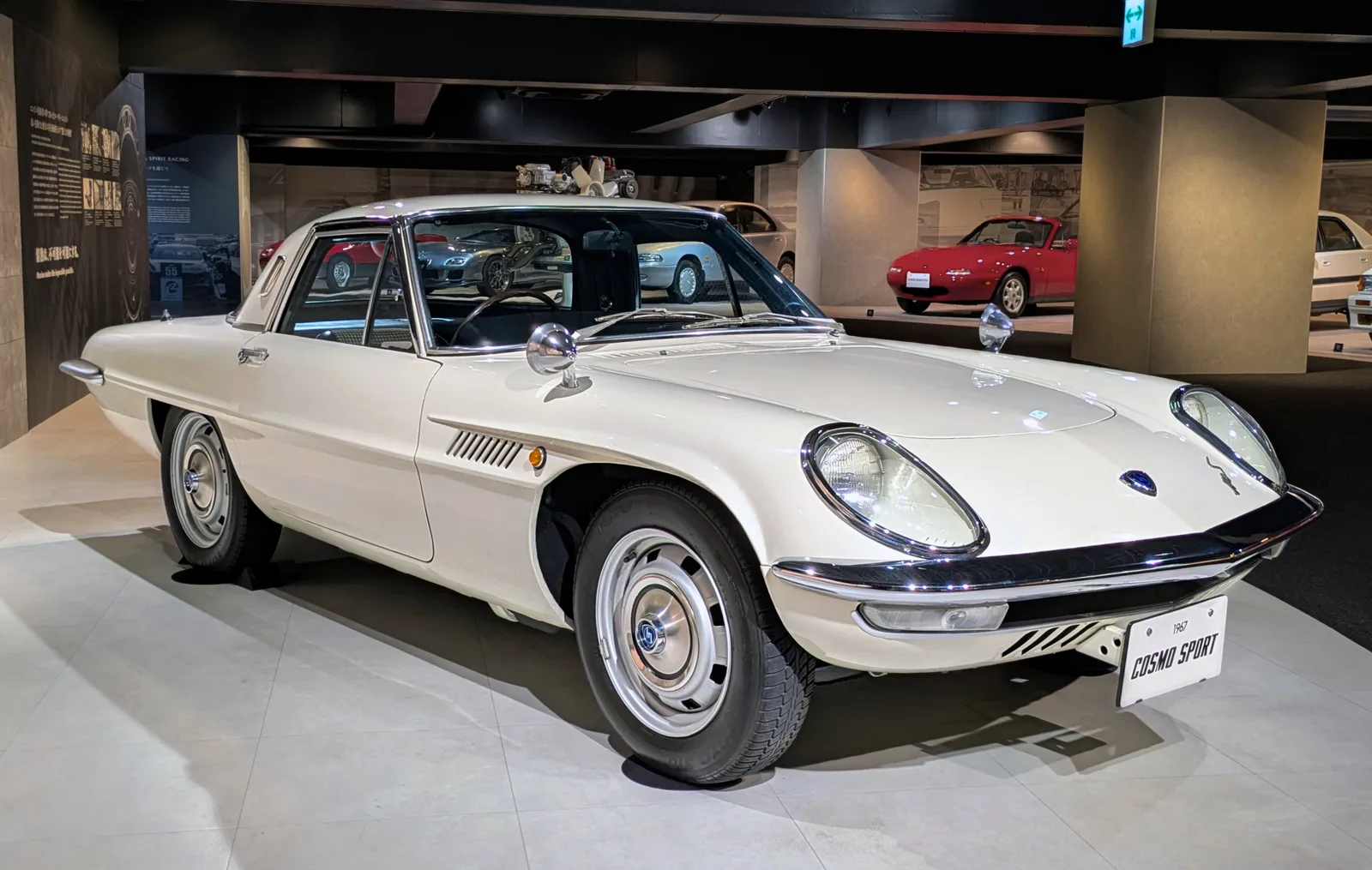
A Cosmo Sport in the Mazda Museum in Hiroshima.
Mazda then made the same mistake on a larger scale. By 1973 one Mazda in three had a rotary engine, and four in five in the United States. After the oil crisis and an EPA report on consumption, American sales halved in three years. The 1974-75 financial year brought an operating loss of 17.3 billion yen, and debt reached nearly 280 billion yen. Sumitomo Bank called in the 62 lenders, promised to stand behind the company and put its own people on the board. Mazda accounted, directly and indirectly, for about one job in four in Hiroshima. So the tuition was advanced by a bank, with a whole city at stake.
According to WardsAuto, Kenichi Yamamoto roughly doubled the engine's fuel economy in three years. The RX-7 came in 1978. Critics inside the company wanted rid of the engine. Yamamoto held that the mistake had been putting it in every car. By 1982 the rotary accounted for 6% of sales.
Set that 6% beside the rest. NSU bet everything and Mazda bet one car in three, and both ended up in somebody else's care. The engine survived only when it no longer had to carry a company. At 6% of sales an engine can use a lot of fuel and take years to improve. The idea was not too big for NSU. The stake was.
Images: NSU Ro 80 (52575616397) by Clemens Vasters from Viersen, Germany, Germany (CC BY 2.0); NSU Ro 80, Bj. 76, Motor (Sp) by Lothar Spurzem (CC BY-SA 2.0 de); 1975 Citroen GS Birotor Lane Motor Museum by TaurusEmerald (CC BY-SA 4.0); Mazda Cosmo Sport (front three-quarter view) at Mazda Museum by Aos.1905 (CC BY 4.0). Images resized.


