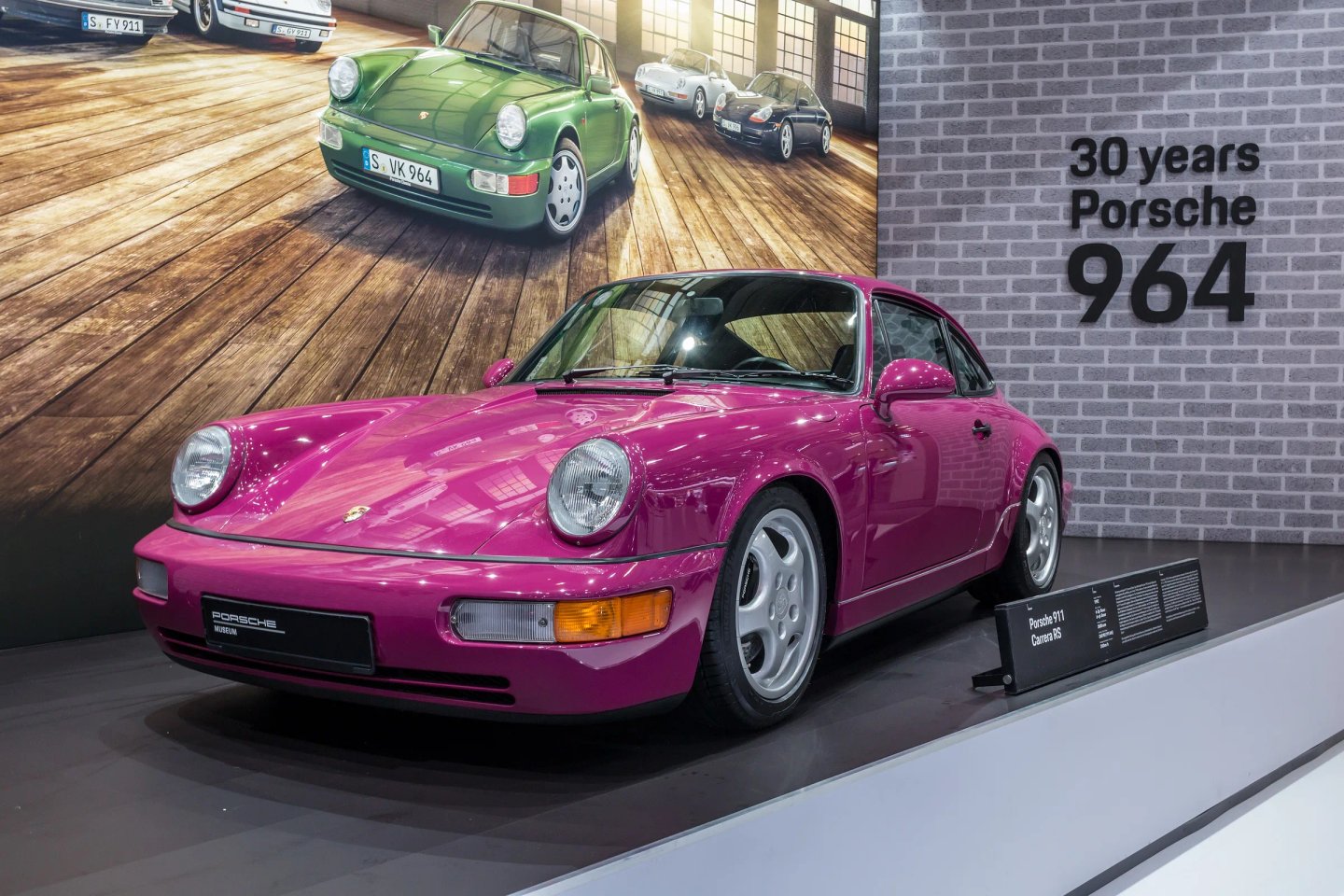
At $192,964 the owner would not sell their Porsche 964. That was the high bid on Bring a Trailer at the end of January 2025, according to the newsletter The Daily Vroom. The reserve had not been met. On 7 February the same car closed at $224,964 on PCarMarket. That buyer failed to complete. On 20 March it stood at $322,964 on the same site after 76 bids, marked as sold.
The car is a 1992 964 Carrera 2, rebuilt by Olsen Motorsports as a backdate. It has a 4.0-litre flat-six and one-off purple paint. In June 2022 it made $355,000 on PCarMarket. In May 2023 it made $275,000.
The art trade has a word for a lot that comes back from auction unsold: burned. The idea is that it is worth less from then on. This 964 seems to contradict that. That verdict comes too quickly, but the car does show that the art figure cannot simply be laid over a car.
What is known about art
In 2008 Alan Beggs and Kathryn Graddy tested the trade's claim against a dataset they built themselves. Paintings that failed at auction returned significantly less when eventually sold. The comparison was with paintings not offered at auction between two sales. A Korean study by Hwang, Ryu and Hong from 2025, covering 2,077 repeat sales between 1998 and 2024, puts the return on works that first went unsold about 14.4% lower. Over an average holding period of seven years, that is about 1.94% a year.
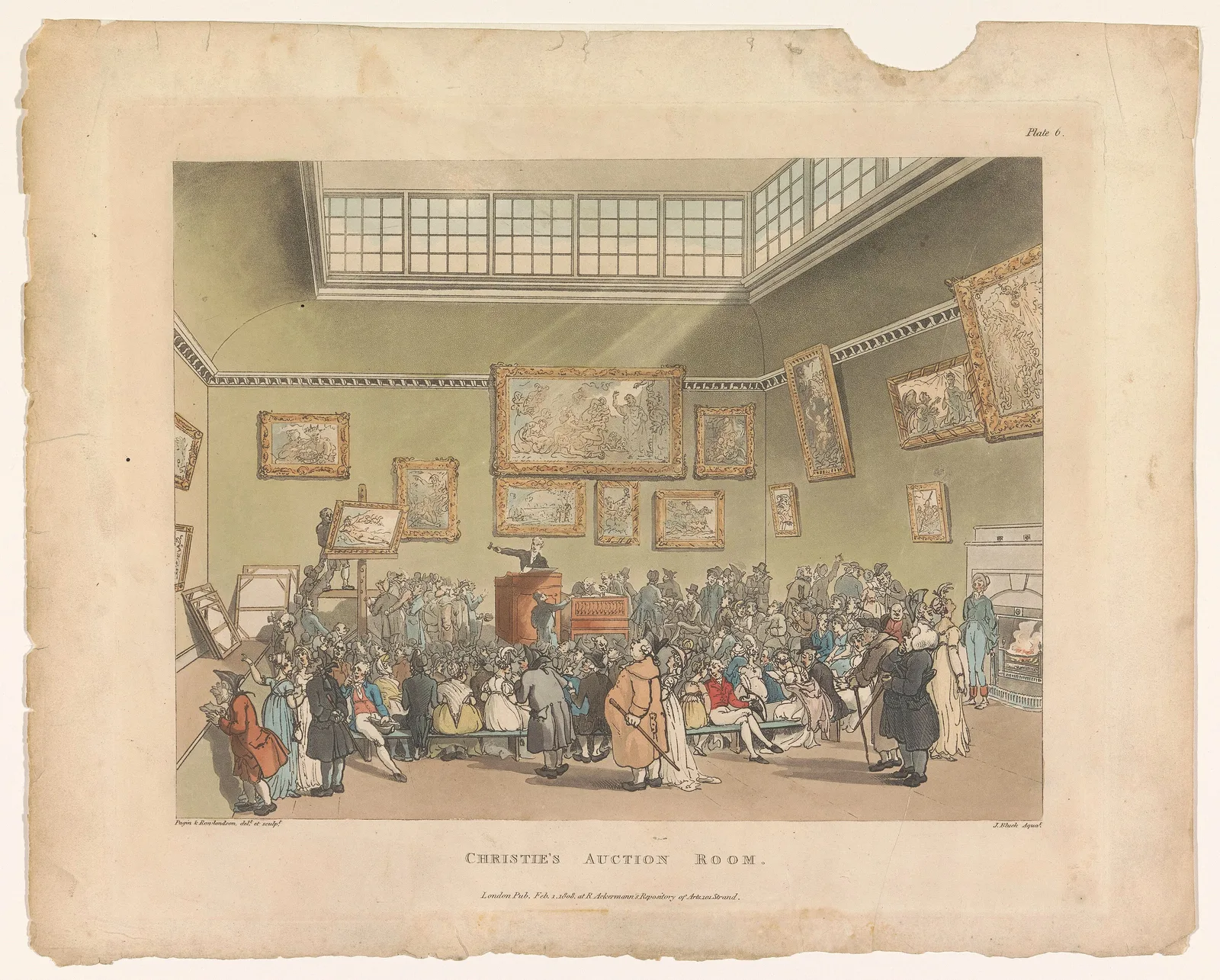
A picture sale at Christie's in London, in a print from 1808.
Beggs and Graddy offer three possible causes. Bidders may learn from the failure: if others did not bid, the work may be worth less. Taste may have moved for its own reasons. Or the seller may have changed the reserve. Only the first is the stain the trade means. With the second the work would have fallen without any auction, and the third is the seller's own decision.
What carries over to cars
We found no comparable study of cars. What exists points the other way. Hagerty looked at online auctions where a car failed to sell and was relisted by the same user within 300 days. Of the cars that came back within 30 days at no reserve, 79% drew a higher high bid than the first time. That share falls the longer the seller waits. Hagerty gives no sample size, and the figure is its own.
Both results can be right, because they measure different things. Beggs and Graddy compare a painting with paintings that did not fail. Hagerty compares a car with its own first bid, and that first bid is a weak yardstick. A bidder who suspects the reserve is far away often stops early. The bid will get them nothing. Take the reserve off and the same bidder joins in. It is also mostly sellers who think the first bid was too low who come back without a reserve.
Cars differ in other ways too. A painting often returns years later. A car can be on another site within a week, in front of partly different bidders. The reason for a failure can often be read in the comments. Sometimes an invoice fixes it. And a car costs money for as long as it waits.
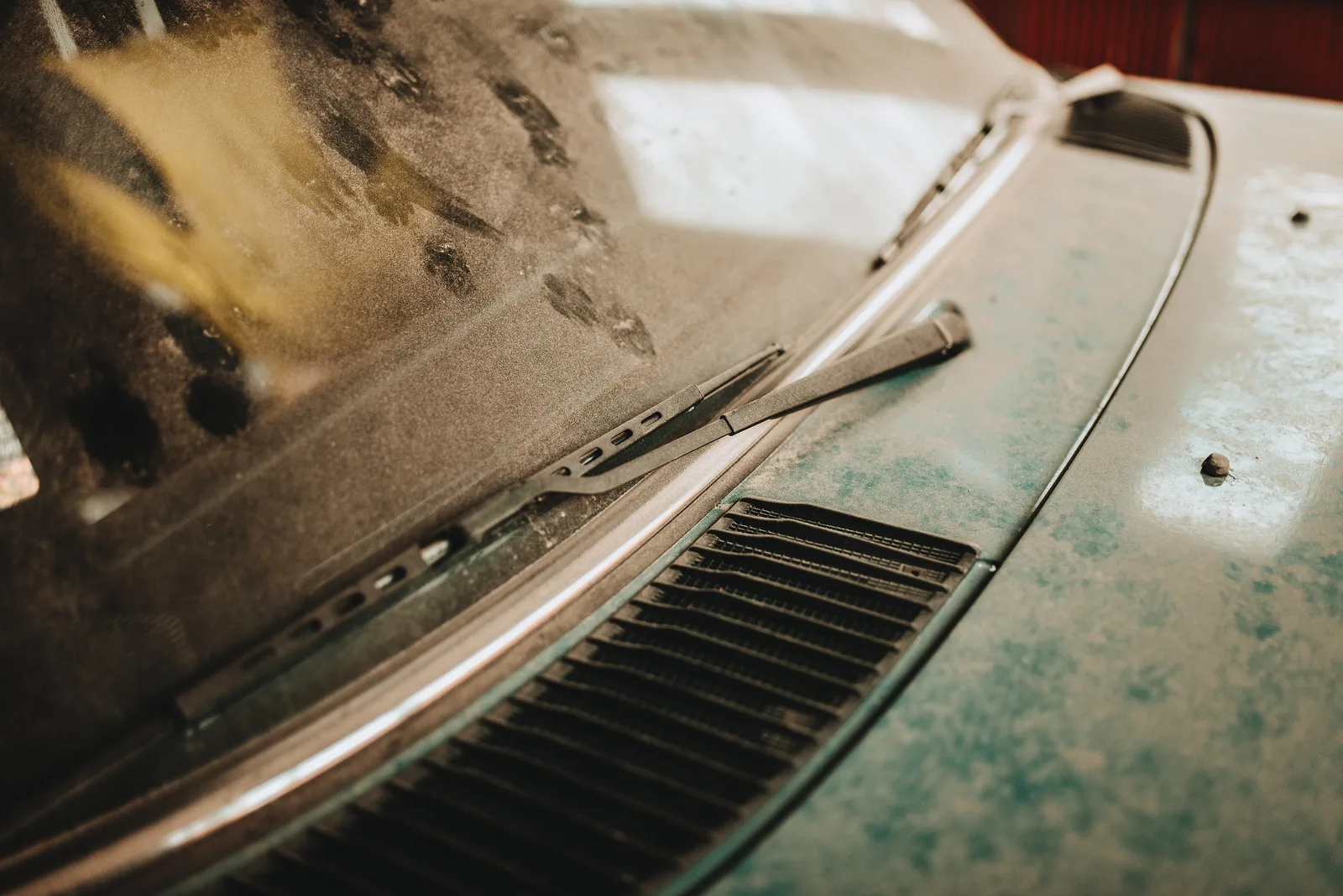
Dust on the windscreen of an old car in a garage. Every week until the next attempt costs storage and insurance.
What always stays behind
Every failed auction leaves a number. That $192,964 sat online next to the $275,000 from twenty months earlier, and anyone bidding on the 964 afterwards could look it up. A number like that does two things. It tells people the seller refused that amount, and so roughly where the reserve begins. And it gives the next bidder a lower starting point than the market may justify. On PCarMarket the car stood at $125,250 with four days to go.
On paper the owner was proved right: turning down $192,964 brought $130,000 more seven weeks later. Whether that $322,964 was ever paid is not stated. The round before it collapsed on a buyer. This is also a one-off car in one colour. It has a handful of possible buyers, and two of them can be $100,000 apart. On an ordinary 911 that spread is narrower, and so is the case for letting a bid go.
A low sale leaves a mark as well. The $275,000 from 2023 was just as visible, $80,000 below the price a year earlier. The Korean researchers found that a price fall between sales weighs more heavily than going unsold. Beggs and Graddy did not find that effect. So dropping the reserve is no free exit either.
The bill for a high reserve
The cost of a high reserve therefore arrives after the auction: a second listing, weeks of storage and insurance, a public bid below the market and sometimes a buyer who walks away. Say a seller is offered €85,000 against a reserve of €95,000. Refusing only pays if they expect to clear more than that next time, after all those costs. On Hagerty's figures, anyone who refuses and relists should not wait long. At Octane the reserve is confidential and agreed in advance, which changes nothing in this sum.
And the pages stay up. Search this 964's chassis number and you find four auctions on PCarMarket, with the bid counts alongside. Search further and there is one on Bring a Trailer. Whoever considers this car ten years from now will read all of it before bidding. They will ask why there were three results in one winter. Every online auction adds a line like that to a car's history, next to the invoices and the mileage records. A seller who refuses a bid is also deciding what the next buyer gets to read.
Images: Porsche 964, TC18, Essen (IMG 9719) by Matti Blume (CC BY-SA 4.0); Schilderijenveiling bij Christie's Londen Christie's Auction Room (titel op object), RP-P-2015-26-1701 by Rijksmuseum (CC0); Old car parked in garage with dusty windshield and wiper blade during the daytime by Shixart1985 (CC BY 2.0). Images resized.


