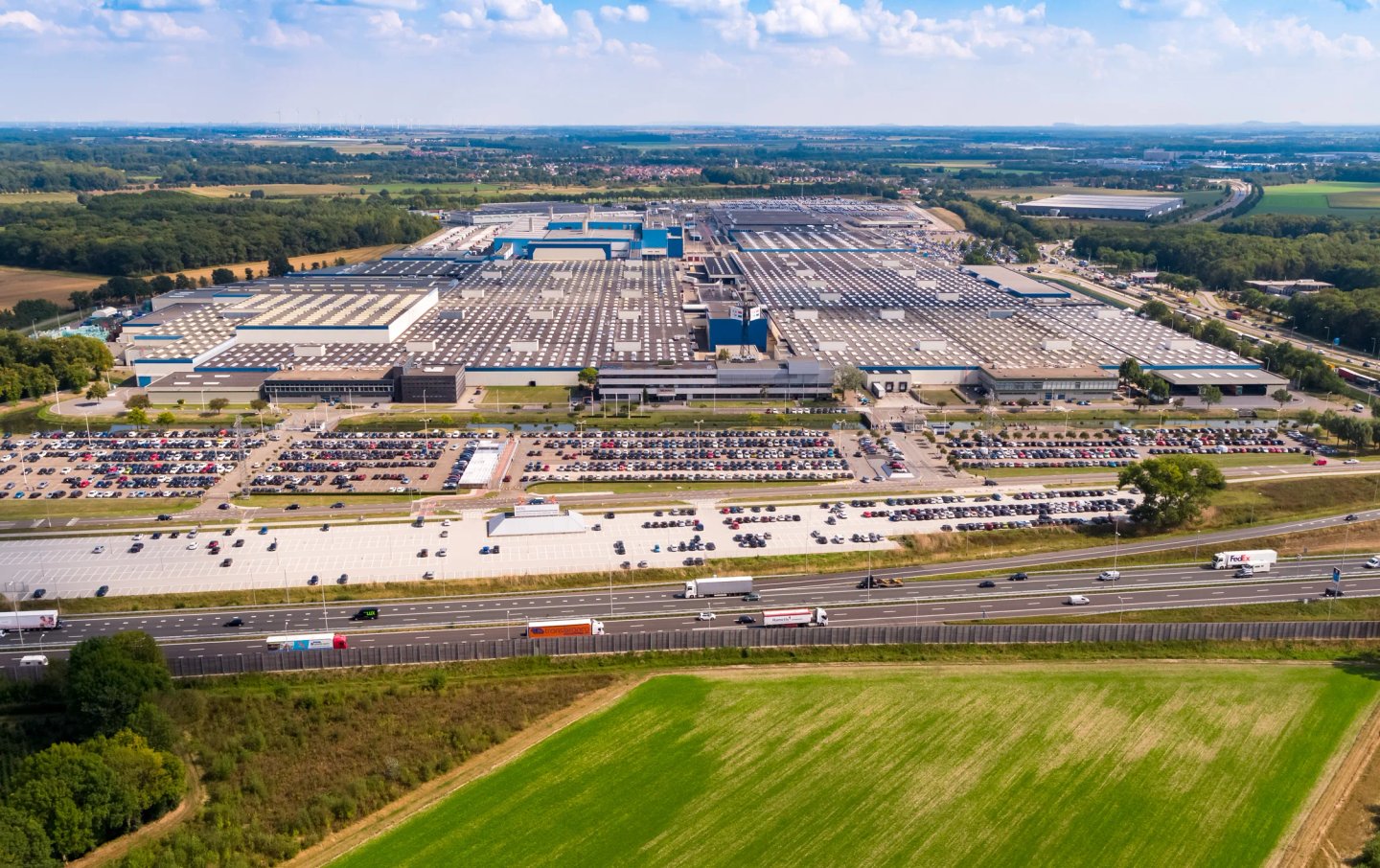
The last car out of Born, in the south of the Netherlands, was a silver-grey Mini convertible. It left the line on 16 February 2024, two weeks before the contract with BMW ran out. In 1999 the same plant built 262,196 cars, and in 2018 it still built 211,660. Anyone who says the Netherlands never had a car industry has to explain what they mean by one.
Born built cars designed elsewhere, for brands that made their decisions elsewhere. In October 2020 it emerged that no follow-up order for the Mini Countryman was coming, and nobody in Limburg could do anything about it. Building is one thing. Deciding what gets built is another. That second category is small in the Netherlands: Spyker, DAF and Donkervoort.
Those three are often told as a tale of stubborn Dutchmen who wanted to do things their own way. Stubbornness explains nothing. Germans and Italians can manage it too. There is a better explanation, and it has to do with the size of the market.
What a small home market does
In 1980 Paul Krugman published a paper on trade in industries with economies of scale. If production gets cheaper the more you make, firms settle near the largest market and export from there. This is called the home market effect. A small country mostly buys such goods in. A car plant is a clear case: Born had a capacity of 240,000 cars a year, and that number was never meant for Dutch buyers alone.
A prediction follows. A Dutch carmaker that makes its own decisions cannot win on price. It has to sell something the big manufacturers do not offer. All three did that, though they got there by different routes.
Spyker and DAF: the technology came first
Spyker built the Dutch royal Golden Coach in 1898 and its first cars a year later. For the Paris-Madrid race of 1903, Jacobus Spijker commissioned a racing car from the Belgian engineer Joseph Laviolette. That became the 60 HP. According to the Louwman Museum it was the first car in the world with a six-cylinder engine, and the first petrol car with four-wheel drive and brakes on all wheels. It was not ready in time for the race. A production car derived from it was very expensive and stayed rare. When production stopped in 1926, Spyker had built an estimated 2,000 cars at most.
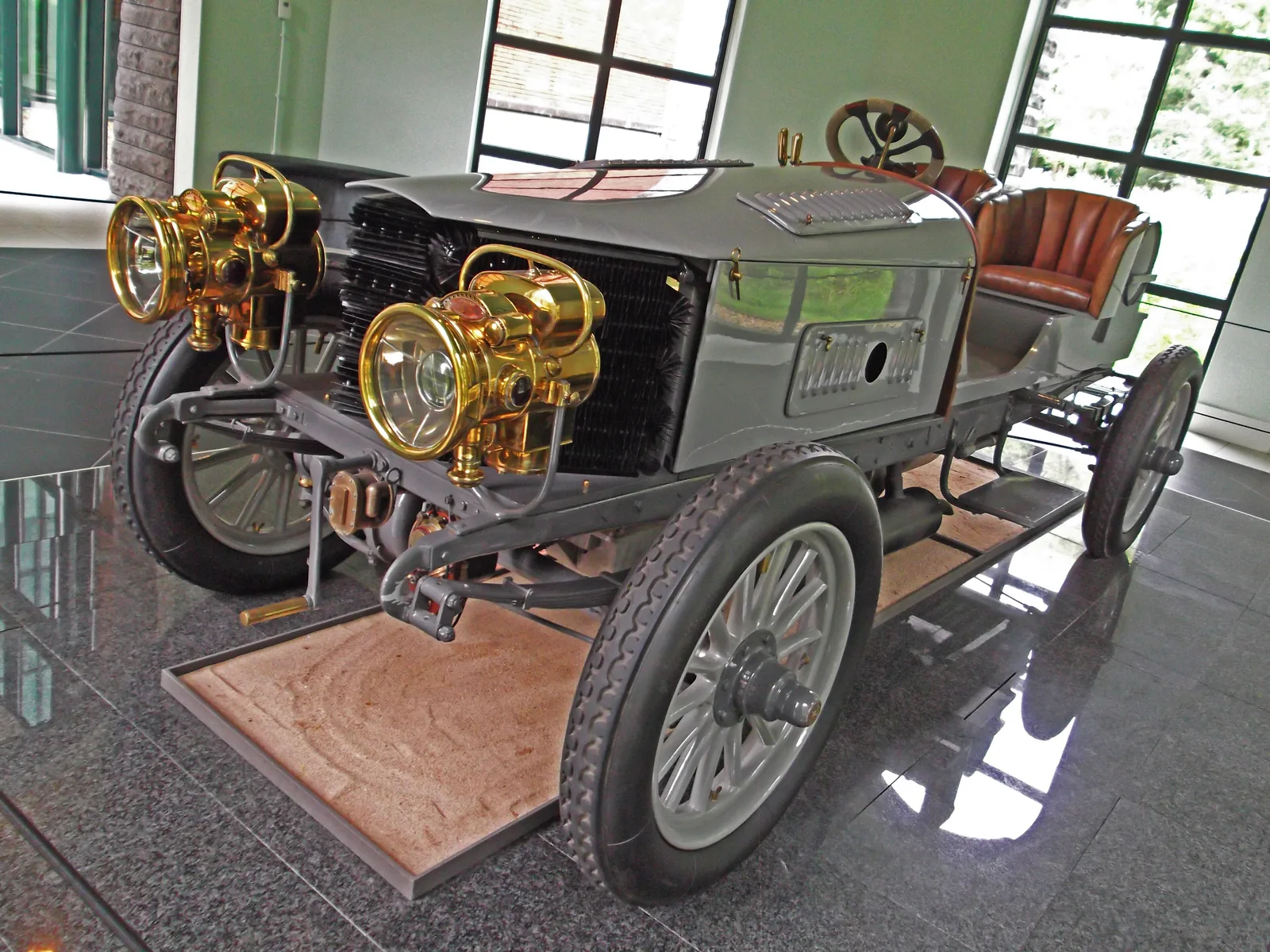
The 1903 Spyker 60 HP in the Louwman Museum in The Hague.
Being different was a feat of engineering here, and no way of making money. Nobody buying a car in 1903 was asking for four-wheel drive.
DAF went about it the other way round. According to the DAF Club, the company decided in 1953 to build passenger cars so that it could use the Variomatic. First the gearbox, then the car. Until then Hub van Doorne had built trucks. In February 1958 the 600 stood at the Amsterdam motor show, not yet ready for production, with 4,000 orders. Between 1959 and 1963 they built 30,591, with a 590 cc twin and 22 hp. Nobody bought one for the performance. It sold what no small rival had: you did not have to change gear. Nobody had put a continuously variable transmission into series production since the 1920s.
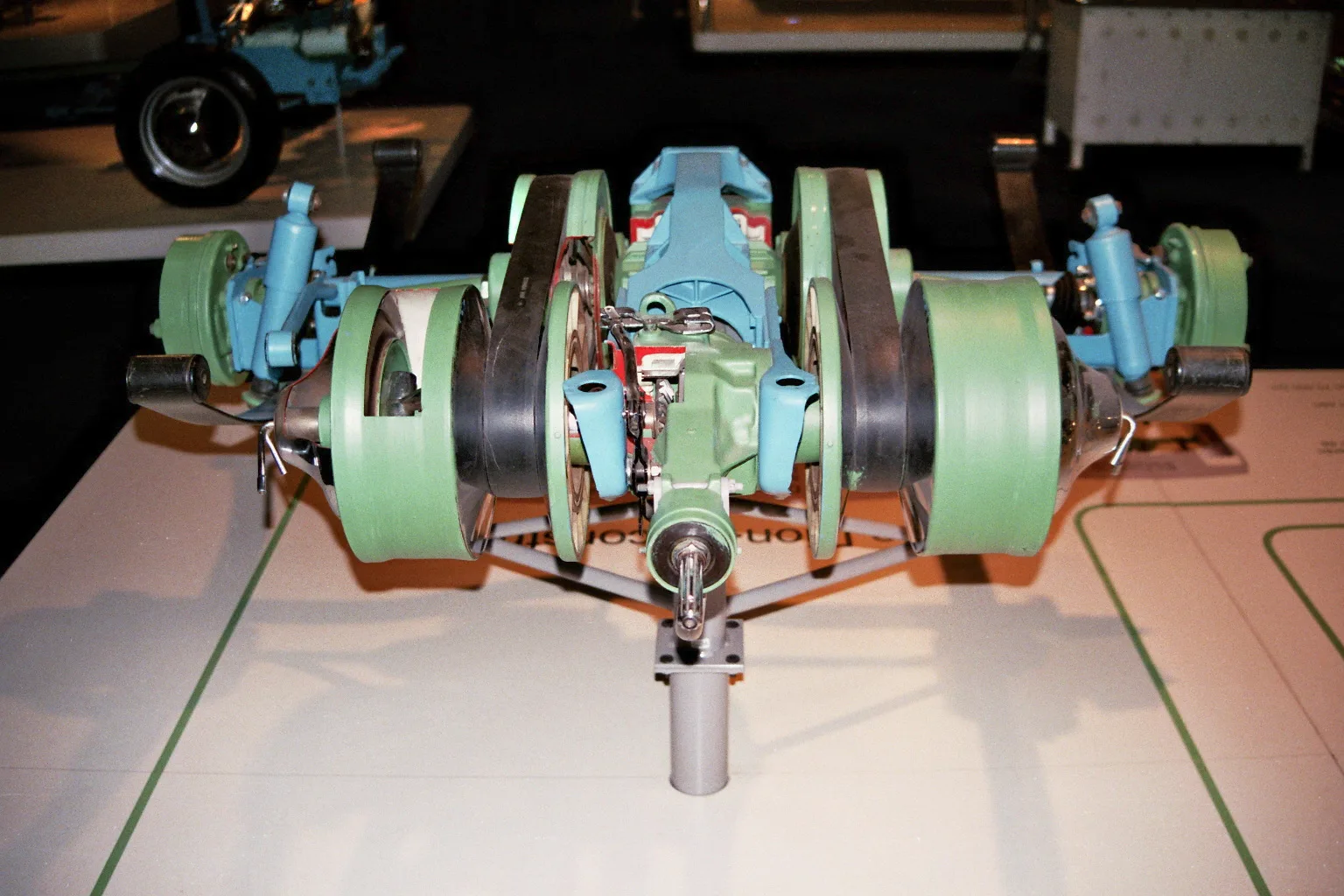
An open model of the Variomatic, with the two rubber belts between the pulleys, at a DAF museum day.
So far the prediction holds. But the theory is no law. In 1958 Sweden had 7.4 million people against 11.1 million in the Netherlands, and it built Volvo and Saab. In 1975 Volvo bought DAF's car business, because it wanted a small car and DAF could no longer carry both cars and trucks. Of the Volvo 340 and 360 that followed, 1,139,689 were built, at Born. A company from the smaller country bought the car business of the larger one.
Donkervoort: built around an inspection
The third began with a paperwork problem. In 1978 Joop Donkervoort bought the Dutch rights to the Lotus 7. It could not get Dutch type approval and was not allowed on the road. So he built his own version at Tienhoven, the S7, followed in 1980 by the S8. The Seven's other descendant, Caterham, stayed in England. Donkervoort moved to Loosdrecht in 1983 and in 2000 to Lelystad, to a plant with a capacity of 100 cars a year.
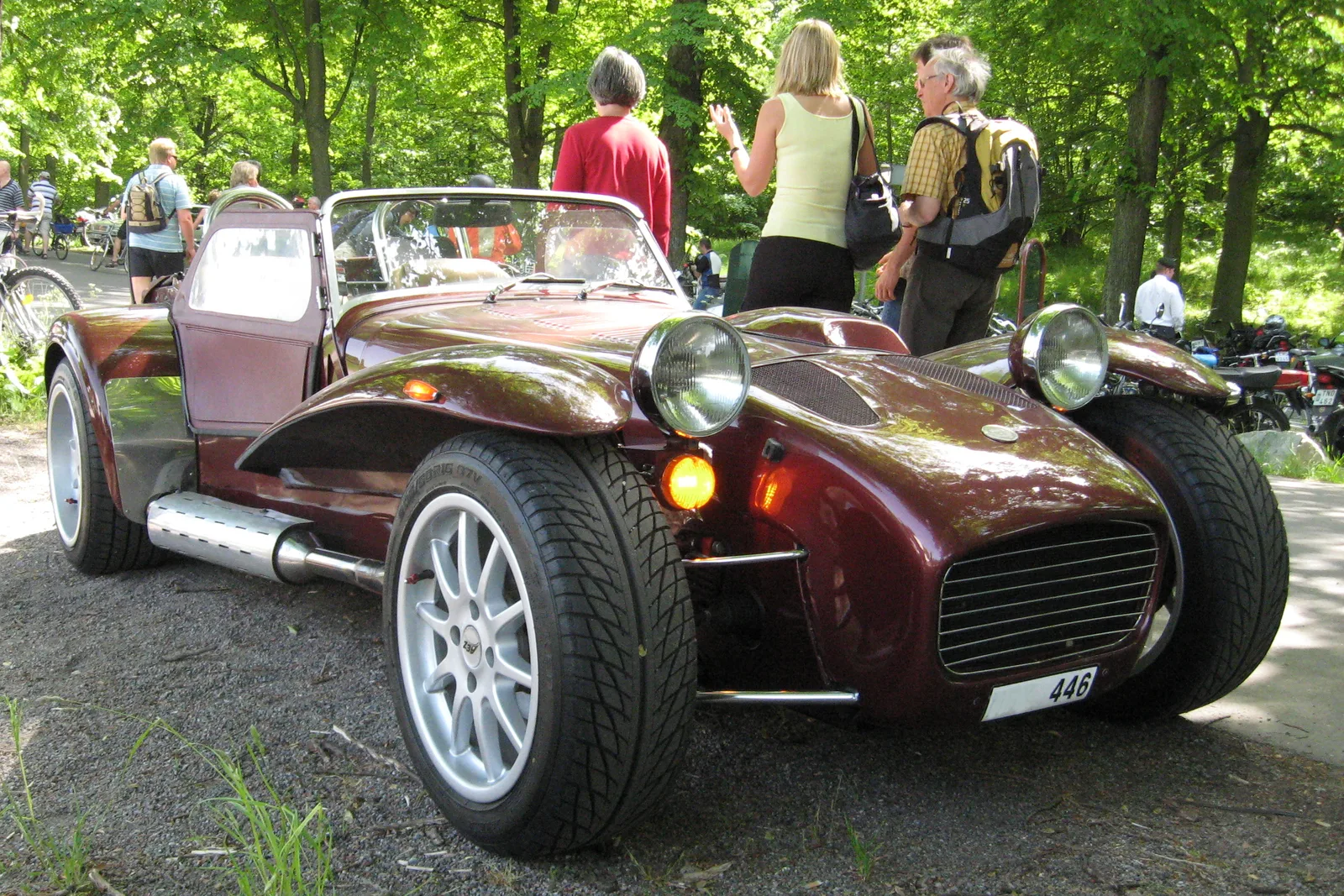
A 1986 Donkervoort Super 8 at the Prins Bertil Memorial in 2008.
At that volume the size of the home market stops being a problem. A hundred buyers can be found across Europe, and they pay for what is not there: the F22 of 2022 weighs about 750 kg with 500 hp. A big manufacturer does not build that, because there is too little in it. And the company that began because a car could not pass inspection says it was the first to meet European small-series type approval, with the D8 GTO.
What was left in Tilburg
When the car business went to Volvo, the Variomatic patents went to a separate company, Van Doorne's Transmissie in Tilburg. Bosch took it over in 1995. Production of the pushbelt had started there in 1985, a steel belt working on the same principle as the rubber belts of the 600: two pulleys whose working diameter changes. On 26 June 2024 Bosch announced the 100 millionth pushbelt from Tilburg. According to Bosch, more than 200 vehicle models with the technology were on sale in 2023.
Do the sum. 30,591 DAF 600s against 100 million pushbelts is over 3,200 belts per car. That seems to contradict the theory: a pushbelt has economies of scale too and it is made in a small country. But Krugman's effect depends on transport costs. You ship a car one at a time. A pushbelt fits in a box. Whatever is cheap to move does not have to sit near the largest market.
In one year Born built more than eight times as many cars as Spyker and the DAF 600 put together. In July 2025 the Dutch defence ministry approved turning the site into a drone factory. Tilburg has never built a car, and its technology is in more than 200 models. Which of the two was the Dutch car industry?
Images: VDL Nedcar drone by Matthijs Levens (CC BY-SA 4.0); Spyker 60-HP Four-Wheel Drive Racing Car (14907641110) by Dennis Elzinga (CC BY 2.0); Dafmuseumdag Open model van de variomatic (22358756975) by m66roepers from Nederland (CC BY 2.0); 1986DonkervoortSuper8 by Liftarn (CC BY 3.0). Images resized.


