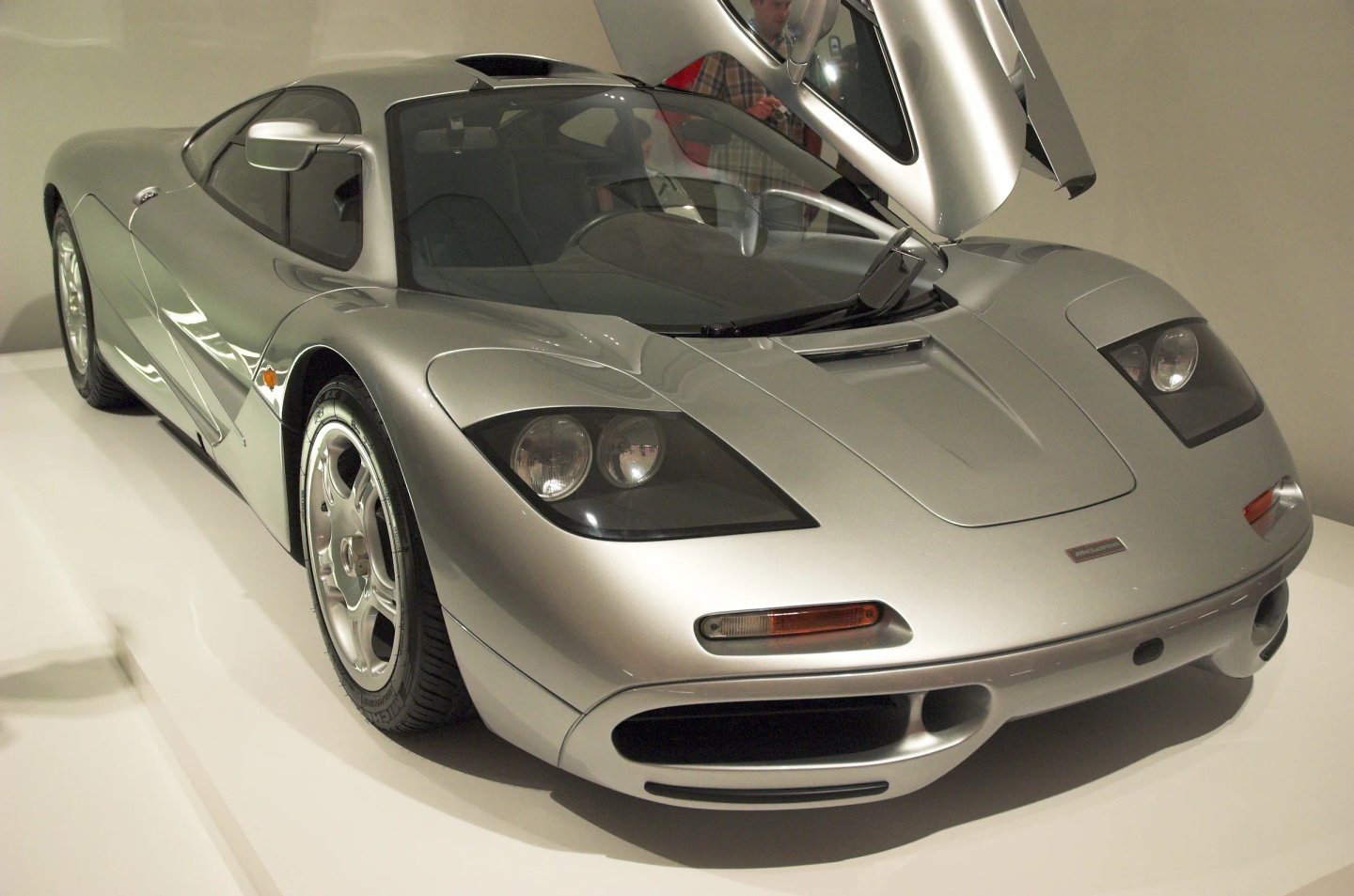
A Compaq LTE 5280 is a grey 1990s laptop running DOS. In 2016 one cost a few hundred dollars on eBay, and it was still the tool McLaren Special Operations used to read a McLaren F1. An employee explained at the time why just any Compaq would not do: only these machines took the bespoke CA card, the link between the software and the car. They were getting less reliable and harder to find.
Jalopnik's headline in April 2016 called this laptop the only key to the most valuable supercars on the planet. The story has been going round ever since, and it is out of date. The same employee said an interface for modern laptops was on the way. McLaren Philadelphia became the first approved F1 workshop outside Britain in 2017, and its technician Kevin Hines told Hagerty he used a normal Windows laptop with that same software. McLaren had paid someone to write an emulator. The software reads fault codes and the status of systems, and according to Hagerty does less than a modern OBD reader.
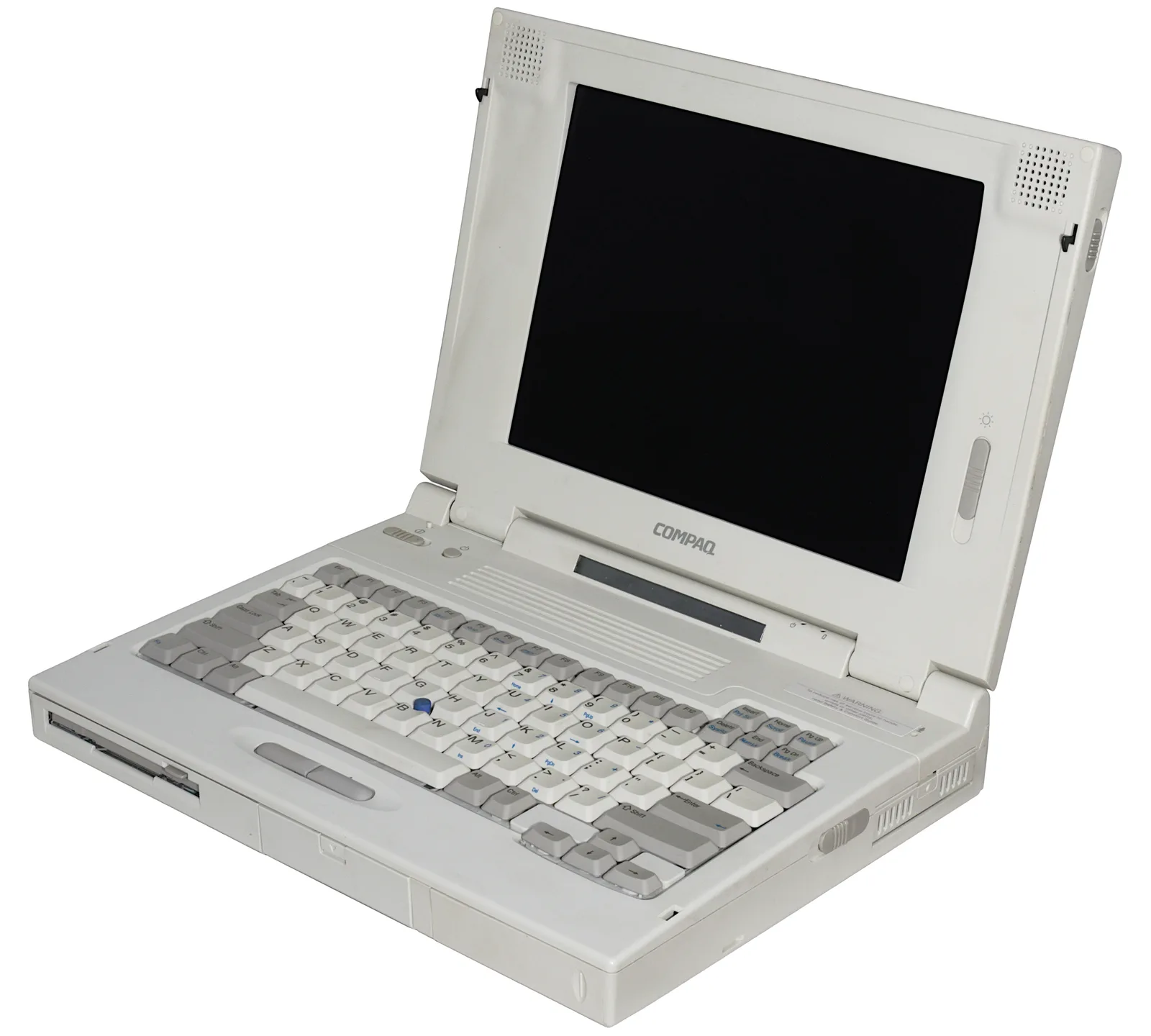
A Compaq LTE 5100, from the same model range as the 5280 used to read the F1.
For the F1, that settles it.
McLaren built 106, and in December 2025 chassis 014 made $25,317,500 at RM Sotheby's in Abu Dhabi. At those sums an emulator is a small line in the budget. The question is what happens to the cars that came after the F1, with more computers on board and a fraction of that value.
Why metal is easier
A panel beater asked to copy a cracked bracket has the specification in their hand. They measure the broken bracket and, if that is gone, the one on the other side or the one on another owner's car. A control unit does not work like that. What a diagnostic laptop and an engine computer say to each other is written nowhere on the car. There may be a description at the maker or a supplier, if someone kept it.
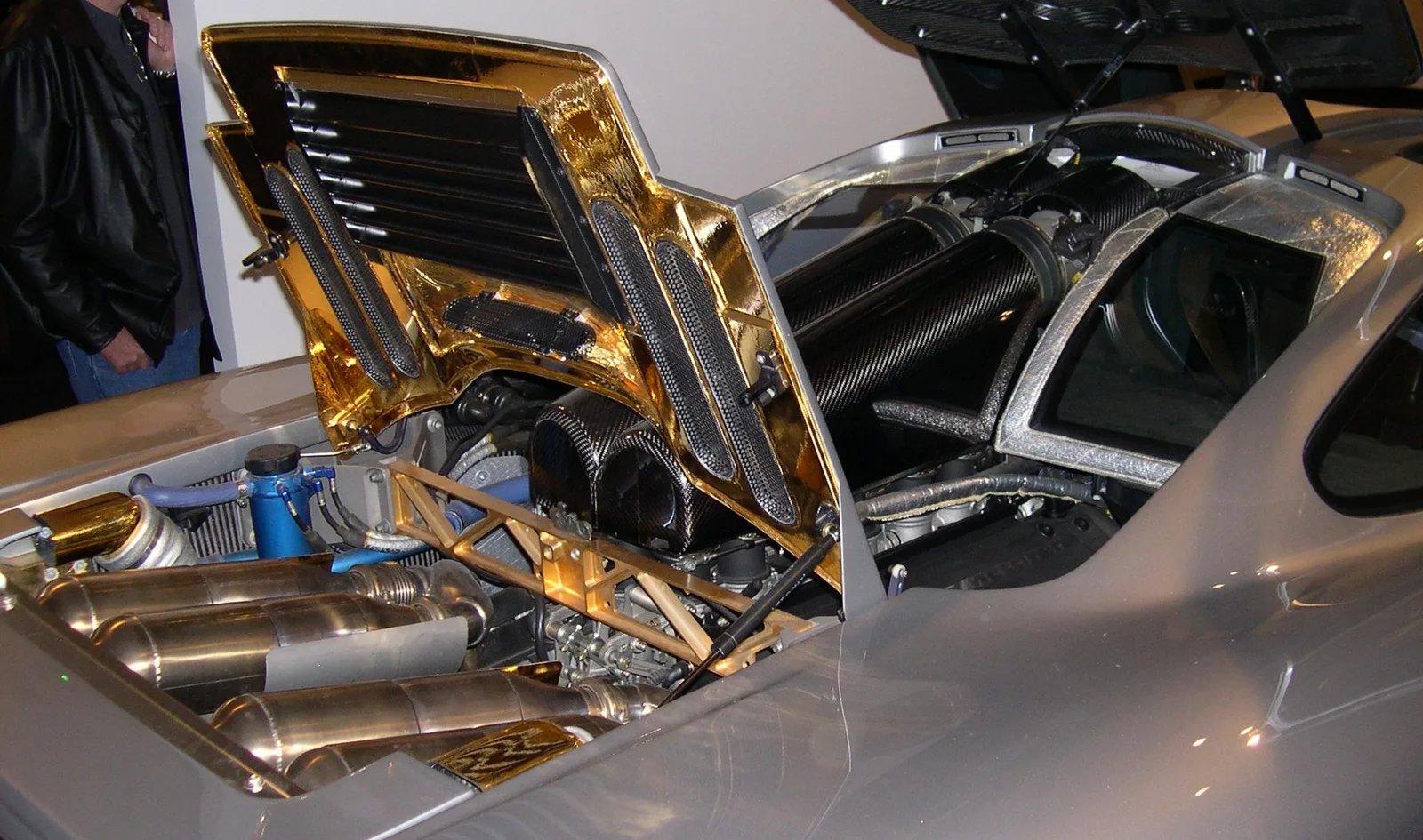
The engine bay of a 1996 McLaren F1, at the Museum of Fine Arts in Boston.
Software can be remade. The emulator proves it.
But anyone doing it from outside needs a working original: a laptop that boots, a card that works, a car to listen to. McLaren could do it because that set still existed. That is the deadline. A rusty bracket is still a pattern. A dead tester tells you nothing.
Those originals age even when nobody uses them. Stephan Joest, a consultant in vehicle electronics, said in April 2016, in a warning from the historic vehicle federation FIVA, that about half of ECUs of 40 years or more are dead on arrival, and that there was still a window to secure stocks and source codes. How firm that figure is, he does not say. Fritz Cirener of Bosch Automotive Tradition said in the same piece that coming generations of classics will be harder to keep running than past ones.
Who holds the archive
This knowledge currently lives in three places. The first is the maker, where it is a business decision. A hundred cars worth twenty million each is a good reason. For a €40,000 model the dealer has not seen in years, the sum comes out differently.
The second is the specialist with the old equipment. The British firm SB Race Engineering says it is one of very few with the full set of Ferrari testers: SD1, SD2 and SD3. Its list runs from the 348 to the Portofino, with the F50 and Enzo in between. On the FerrariChat forum, owners of an F355 write that for some jobs there is little else besides an SD1. This goes beyond clearing a fault code: according to the same forum these tools are needed to set up, among other things, the Spider's roof mechanism and the clutch of the F1 gearbox. An archive like that sits in a cupboard belonging to someone who will retire one day.
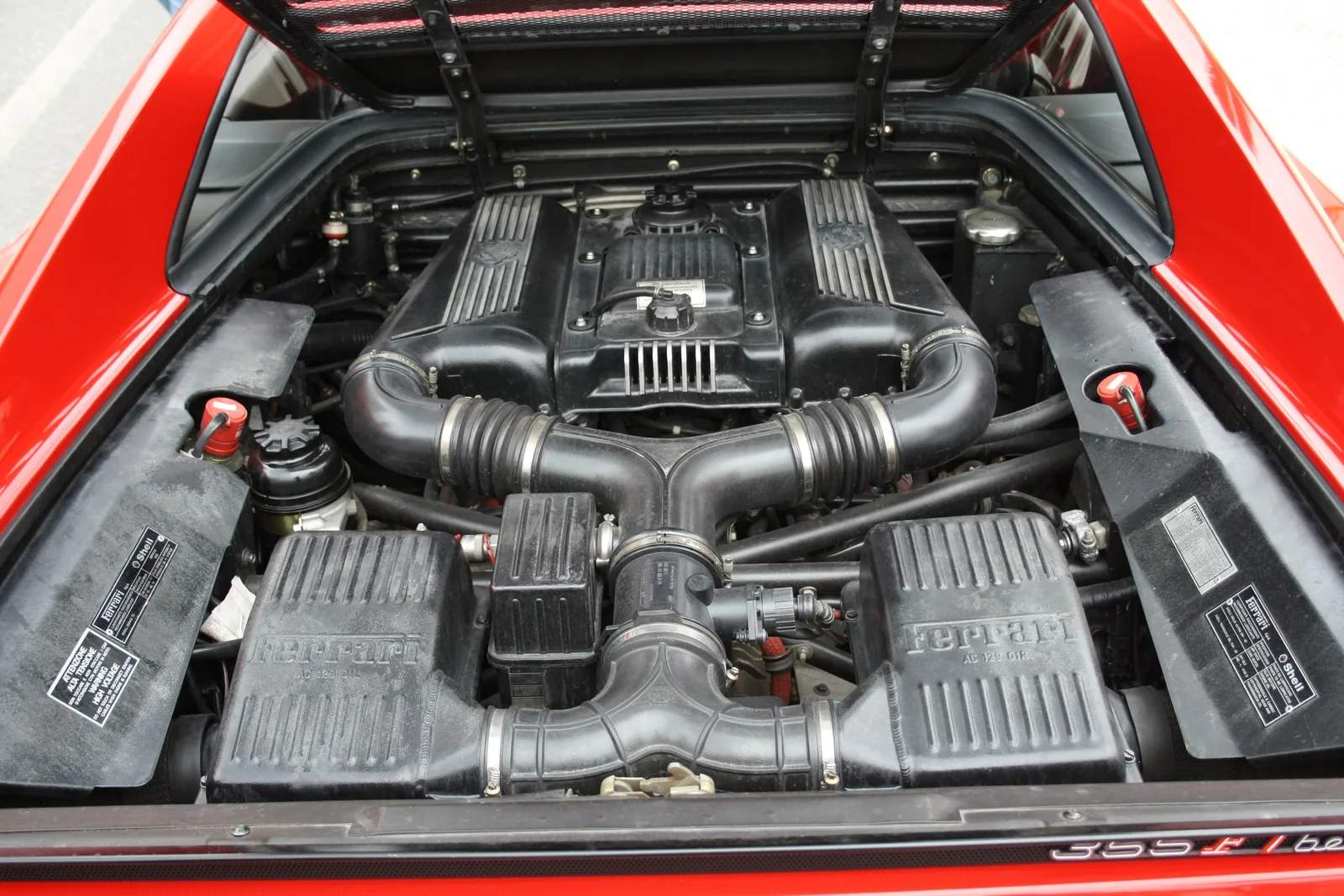
The engine bay of a Ferrari F355 F1 Berlinetta.
The third is the hobbyist. The same forum has an open-source project rebuilding SD2 software, using a cheap cable in place of the original hardware. In the EU that is allowed on conditions: article 6 of the software directive permits decompiling where it is indispensable to make an independently written program work with another, and the information is not otherwise available. Whether that holds for every car is a question for a lawyer. The rule only protects those who copy. Nobody is obliged to keep anything.
Hardware is the smallest part of the problem. Hagerty wrote about UpFix in the US: pull the module, post it and, the company says, have it back in a week. A repaired ECU still needs someone who can read it.
What a licence changes
The Compaq has one advantage: it works for as long as it boots. Newer testers are rented. In a 2021 bulletin, Porsche Cars North America charges independent workshops a list price of $43,930 for the PIWIS III package in the first year and $27,864 a year after that. If a workshop does not renew, online support stops and, in the bulletin's words, the tester "will no longer function properly". Restoring it costs $2,000. For a busy specialist that is a business expense. It also means that in thirty years there is no working set in a cupboard to listen to, unless the server is still on.
The F1 is the easy case: few cars, a lot of money, a maker still in business and the original laptop on the shelf. The cars after it have more control units and less money each. Anyone buying one can ask the specialist something no pre-purchase inspection covers: what do you read this car with, how many of them do you have and what will you do when the last one breaks?
Images: Silver McLaren F1 with prototype mirrors by Joe Cheng (CC BY 2.0); Compaq LTE 5100 off-angle by DigitalIceAge (CC BY 4.0); 1996 McLaren F1 engine by No machine-readable author provided. Sfoskett~commonswiki assumed (based on copyright claims). (CC BY-SA 3.0); Ferrari F355 engine by Cirimbillo (CC BY-SA 3.0). Images resized.


