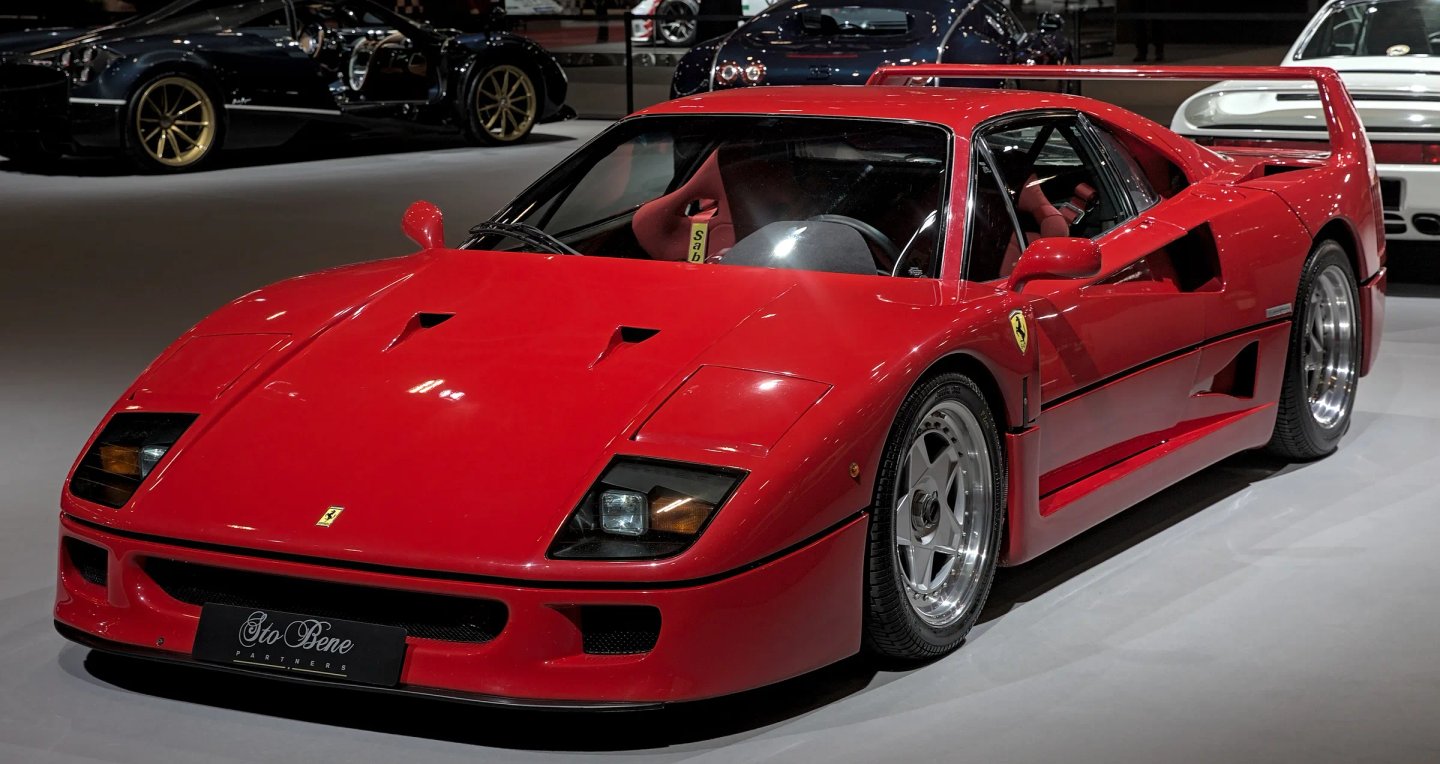
Two Ferrari F40s went to auction in 2026 with almost the same service bill. Chassis 87345, first delivered to the former Chrysler boss Lee Iacocca, had covered 320 miles in 35 years, about 515 km. Ferrari of Newport Beach gave it a $40,000 service. Chassis 88139 had covered roughly 14,800 miles, nearly 24,000 km. Its service, in January 2026, came to nearly $40,000.
RM Sotheby's sold the first in Monterey in August for $8,365,000. It estimated the second at $2.8 million to $3.2 million for its Arizona sale in January. That car sold, but the final price is not on the lot page and we could not find it elsewhere.
If the bills match, what is the buyer of the low-mileage F40 paying for?
What an odometer measures
A car wears in two ways. Use takes the clutch, the synchros, the seat bolsters and the paint on the nose. Time takes the rest: rubber dries out, fuel goes off, fluids pick up water, metal rusts from the inside. The odometer only counts the first kind.
The Iacocca bill is mostly the second kind. Draining stale fuel, $525. A battery. Spark plugs. A rusted coolant tank, $4,426. A cracked headlamp switch, $4,200. Tyres from 2010. Back in the summer of 2008, before the car had reached 300 miles, $12,600 had already gone on cam belts, fuel pumps and coolant seeping past the head gaskets. That makes $52,600 in all, more than $160 for every mile driven.
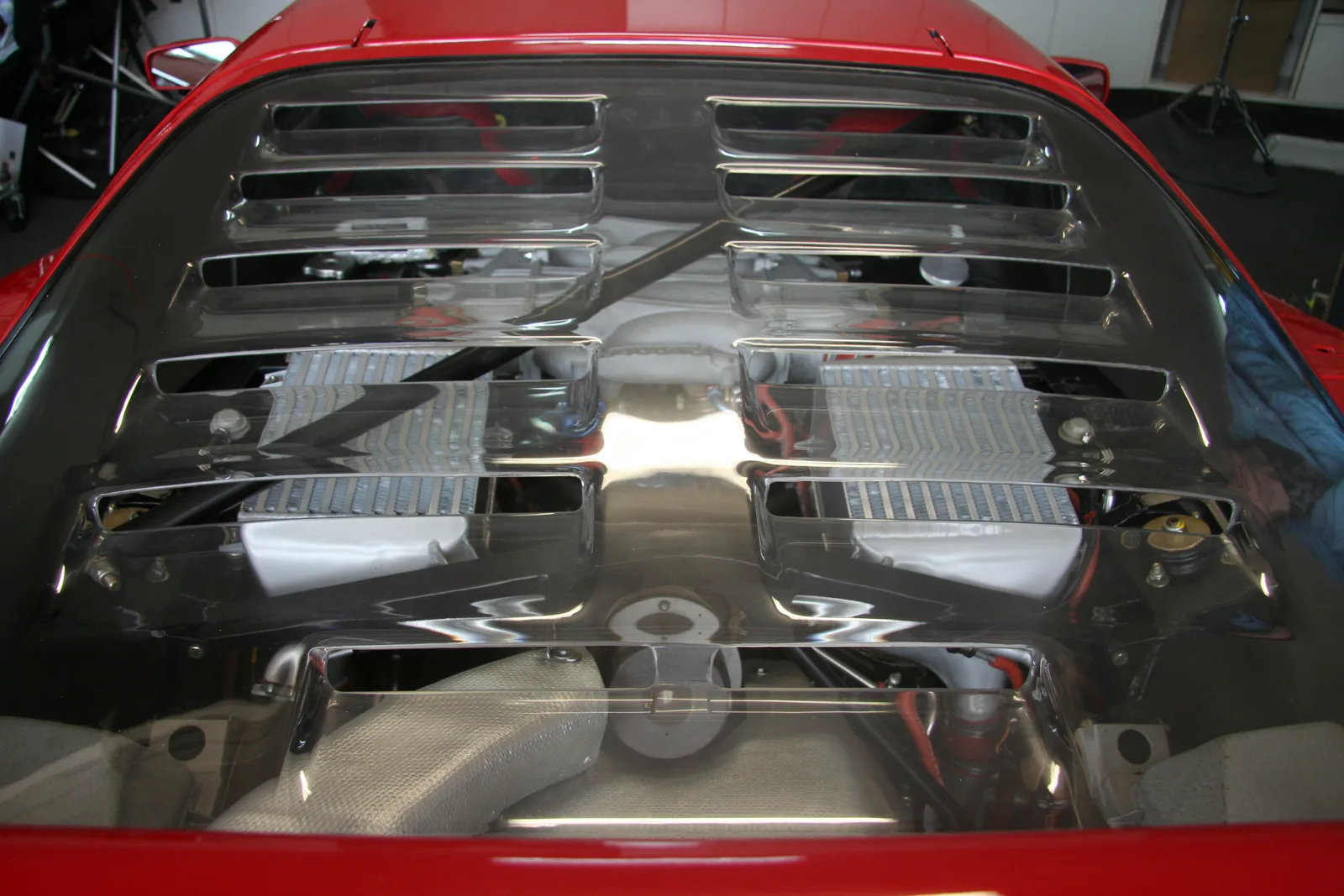
The engine of a 1990 F40, seen through the plastic rear screen.
In Monaco in 2026, a 1989 F40 made €4,336,250. It showed 1,799 km and had spent 29 years in dry storage after its lease ended in October 1992. Then it went to Michelotto for more than €165,000 of work: fuel tanks, pumps, lines, filters, engine and gearbox mounts, a clutch, rebuilt turbos and brakes. It had been kept dry and barely used, and nearly everything that can age in a car still needed doing.
What a kilometre costs
There is no clean measure of the premium, because no two F40s match. The nearest we can get is a 1992 car built for the Italian market, which made $5,230,000 in Miami in February 2026 with 882 miles. Put it next to chassis 88139 at the middle of its estimate, $3 million. That is a gap of $2.23 million across 13,900 miles, or 22,400 km. Call it $160 a mile, or $100 a kilometre.
The sum has holes. One of the prices is an estimate. The Miami car came from the end of the production run and had won an award at the Cavallino Classic. Chassis 88139 had its speedometer replaced in 1997, properly recorded but hardly a help. The price per kilometre is unlikely to run in a straight line either, since the first thousand must cost more than the twentieth. We leave the Iacocca car out because his name is in that price.
Low mileage does buy something real. Original paint without stone chips cannot be bought back. But no form of wear gets near $100 a kilometre, and on the two cars whose bills we can see, the big service cost the same.
Sardines for eating and sardines for trading
In his investing book Margin of Safety, Seth Klarman tells the story of the Monterey sardines. The fish disappeared from the bay and traders bid up the price of a tin. One buyer opened a tin to eat, fell ill and complained. The seller said the buyer had misunderstood. These sardines were for trading.
A car has the same two values: what it is worth to drive and what the next buyer will pay for it. The low-mileage premium sits entirely in the second. The moment the owner uses the car, money goes. Amsterdam to Maranello and back is about 2,300 km, so $230,000 at our rate. Whoever buys a delivery-mile car takes on a duty to leave the tin shut, along with a hope that the next buyer will do the same.
At first sight that has worked well. This same Iacocca car sold in Arizona in January 2012 for $781,000, with 283 miles. Fourteen years and 37 miles later it made $8,365,000, which is 17.6% a year before costs. Does that not prove that standing still pays?
Run the sum. Say the owner had driven 350 km a year, so 5,000 km over the fourteen years. At $100 a kilometre that costs them $500,000, out of a gain of more than $7.5 million. The gain came from the F40. Standing still protected a small part of it.
The Porsche Carrera GT shows the same thing. In 2016 RM Sotheby's sold one with 24 miles for $800,000, its delivery stickers still on the windows and its car cover still sealed in plastic. That same year, one with 1,184 miles and a new clutch went for $715,000. So those 1,160 miles were worth $85,000. In January 2026 a car with 2,147 miles made $3,085,000. It is a different car, ten years on, but the proportions are plain. Those ten years added more than $2.3 million, the low mileage $85,000.
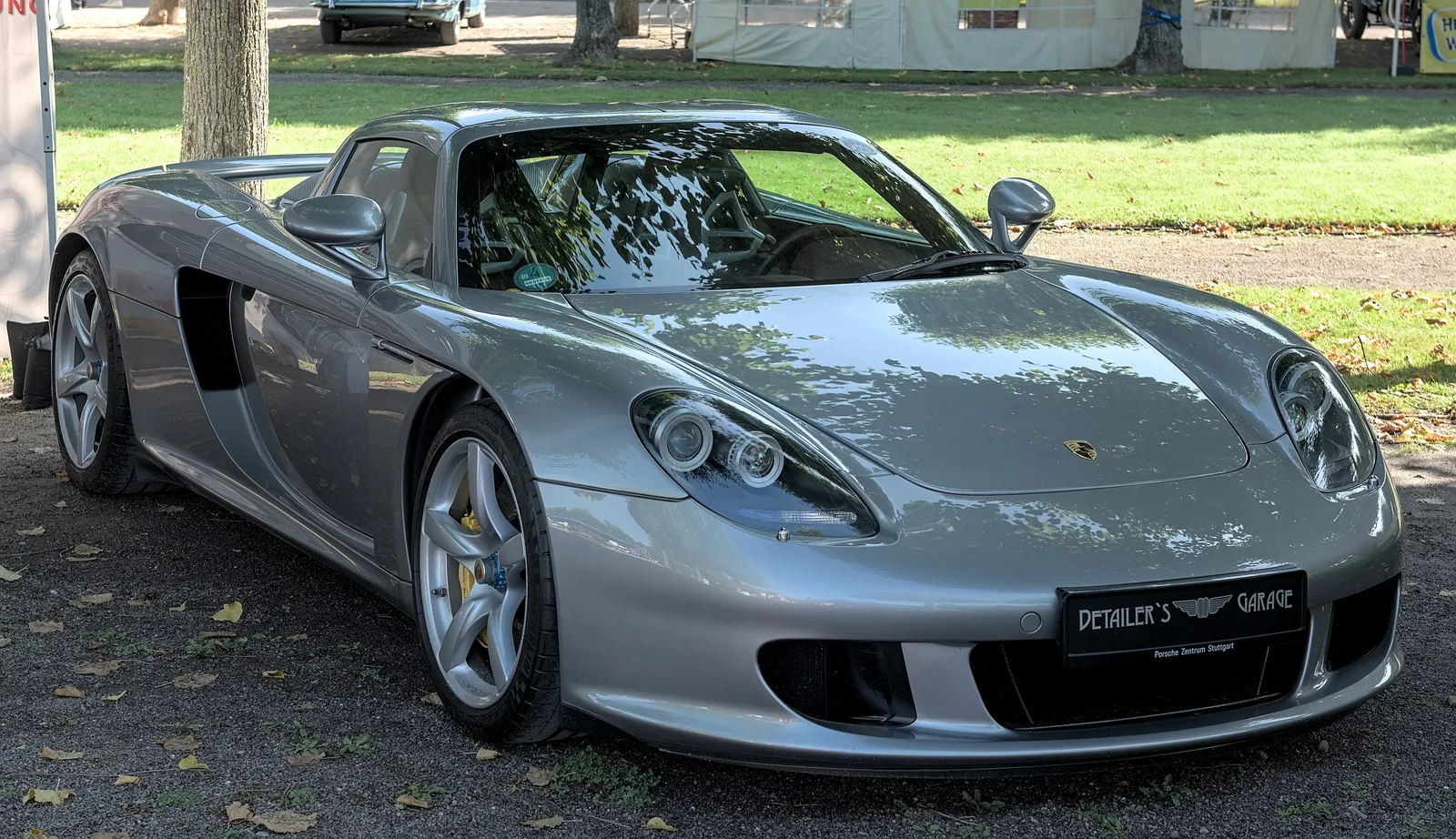
A Porsche Carrera GT at the Classic-Gala in 2025.
Who gains from it
So the premium is not a return. It is a sum one owner pays the next for something neither of them uses. That holds for as long as the next buyer does not want to drive either. This is where the risk sits, because to a buyer who does want to drive, the low figure is worth nothing extra. RM Sotheby's itself notes that many F40s went to collectors who mainly showed them in showrooms and at concours events.
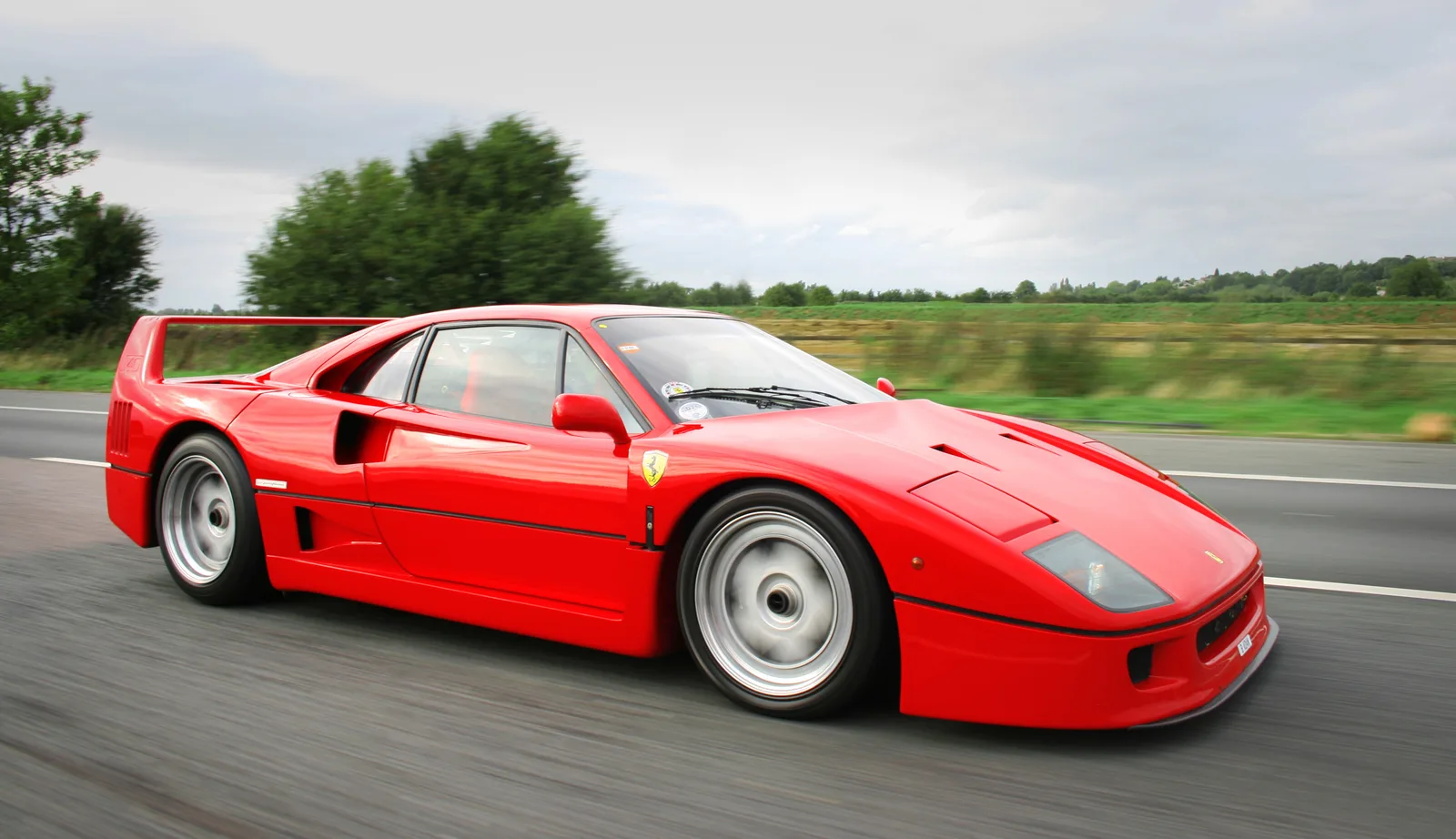
A Ferrari F40 being driven.
The reverse also holds. Every dollar a collector pays not to drive makes the driven car relatively cheaper. Chassis 88139 spent about thirty years in Britain under specialist care, with fuel tank and belt work on its record. A buyer who wants to drive gets a car known to run, for some $2 million less than the 882 miles from Miami.
The Iacocca F40 is now ready for the road. That was the point of the $40,000 service, RM Sotheby's says. Its new owner can try it out, at about $100 a kilometre if our sum is right.
Images: Ferrari F40 GIMS 2024 1X7A2271 by Alexander-93 (CC BY-SA 4.0); 1990 Ferrari F40 1 by Fishyfool (CC BY-SA 4.0); Porsche Carrera GT Classic-Gala 2025 DSC 0837 by Alexander Migl (CC BY-SA 4.0); F40 Ferrari 20090509 by Will ainsworth (CC BY-SA 3.0). Images resized.


