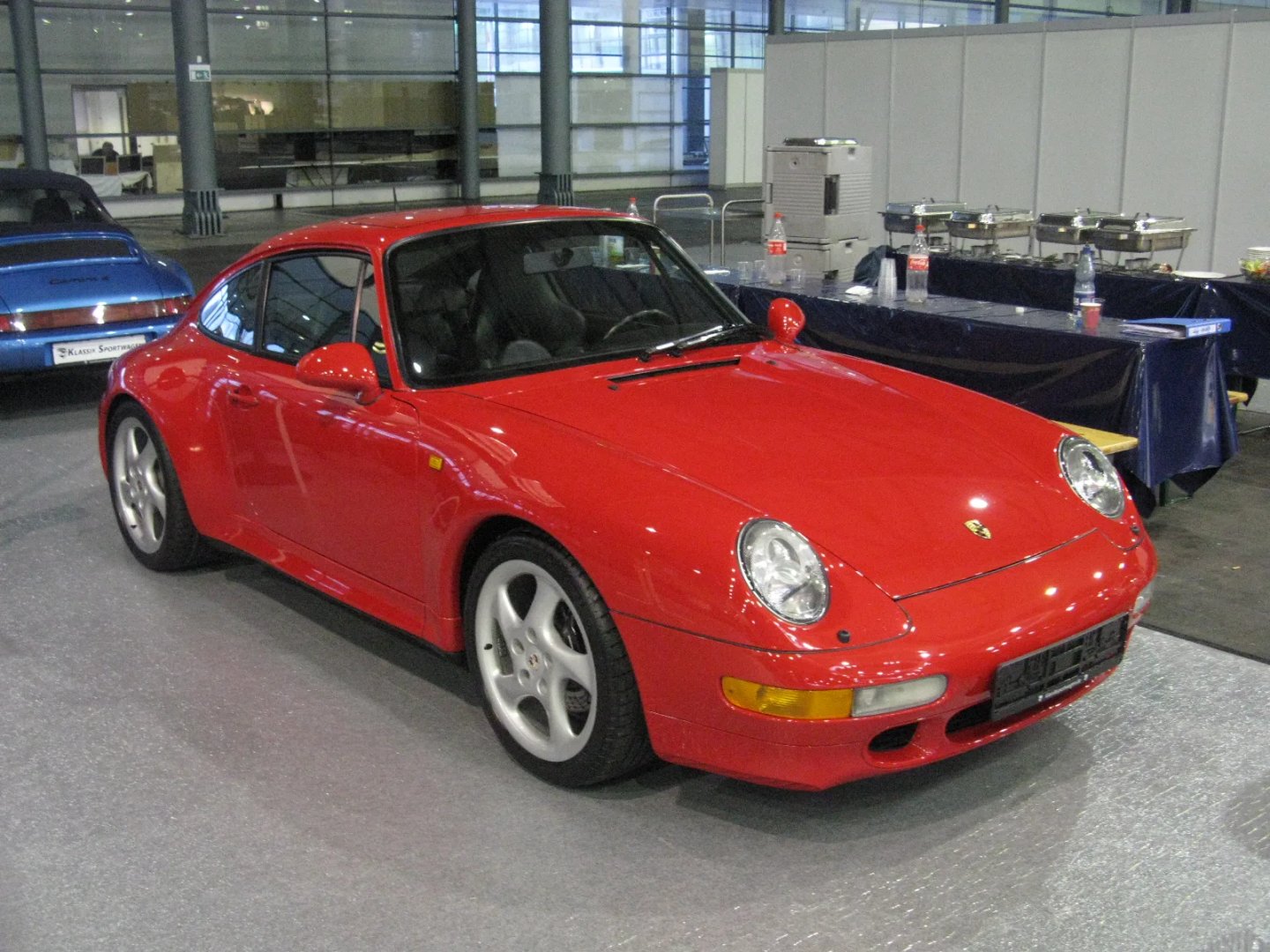
Nothing on a 1998 Porsche 993 tells you it was the last. A 2023 Dodge Challenger says so on a plaque under the bonnet, next to the driver's-side headlamp: Last Call. Those are two ways of selling an ending, and the money ends up with different people.
The premium for being last is usually discussed as one thing. There are two. One is the premium over the new price: what an owner gets back years later above what they paid. The other is the premium over the successor: how much more the market pays for the last of the old than for the first of the new. Anyone citing the 993 as proof that a final edition pays has run the two together.
What the 993's price did
Nobody had to guess about the ending. Porsche showed the water-cooled 996 at Frankfurt in 1997 and 993 production stopped in 1998. A customer taking a new one in that final year knew what they were buying.
Prices did not react for years. Air-cooled 911s only started climbing around 2012, when the people who grew up with them had money. Even then the ordinary 993 trailed its reputation. Hagerty valued an American 1995 coupe in good condition at $57,000 in September 2018 and $49,000 in May 2020. A Carrera coupe of that year cost $70,468 with options, going by the sticker of one car later offered for sale. After 25 years the valuation sat well below the new price, before any allowance for inflation.
The second premium does exist, and it is large. A US comparison from March 2026 put a 993 Carrera 2 at about $80,000 and an early 996 at about $25,000. Three times the money, for the older of the two cars.
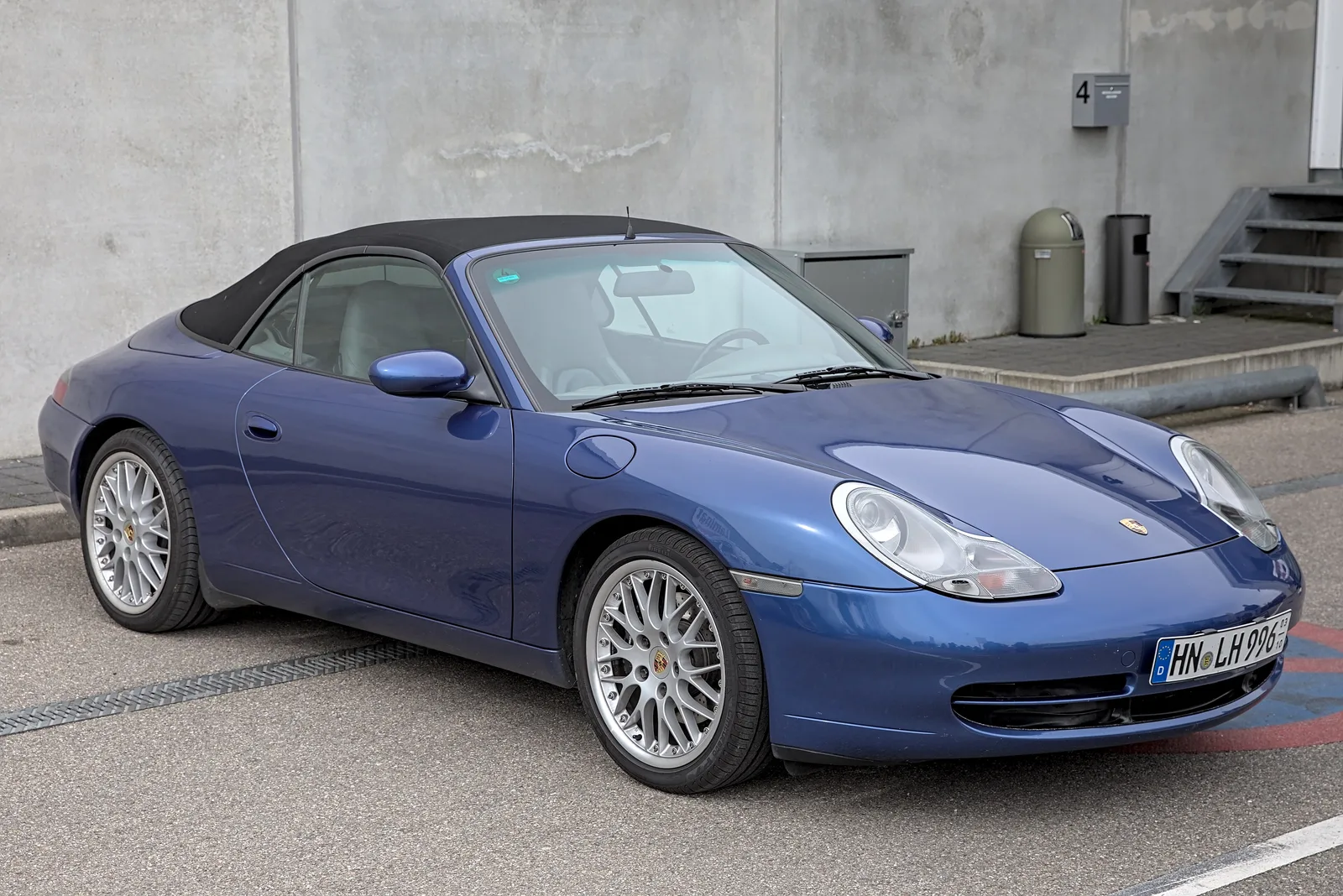
A Porsche 996 Carrera cabriolet. The low price of this generation is the bottom edge of the 993's premium.
Nobody could buy that gap in 1998, because its bottom edge did not exist yet. It opened as the 996 got cheap, thanks to its headlamps and the long argument about the IMS bearing. Much of the last car's premium was made by its successor, and the 1998 buyer had no say in that. They sat on the car for twenty years before finding out whether they owned anything special.
What Dodge sold
Dodge reversed the order. In August 2022 it announced that the Challenger and Charger in their existing form would stop in 2023. Seven special models followed, each with that plaque, going first through the best-selling dealers. The last of the seven was the Demon 170: 1,025 hp on E85, orderable from March 2023 at $96,666 and capped at 3,300 cars.
Take number 1,836. With options its list price was $134,578. An Arizona dealer added $100,000, so the first buyer paid about $234,500. In August 2025 the same car, still on delivery miles, sold on Bring a Trailer for $138,888. The first owner lost some $95,000 in two years. The new owner paid $4,310 over list.
That splits the premium into its parts. Three per cent over list is what the market would pay two years on for the plaque and the engine. The $100,000 was the price of a place near the front of the queue, and it went to the dealer. Other sales point the same way: in 2026 Hagerty valued a Demon 170 in good condition at $126,000, with recent sales between $125,475 and $143,850 depending on the mileage. List price with options on the cars we saw ran from $121,000 to $135,000.
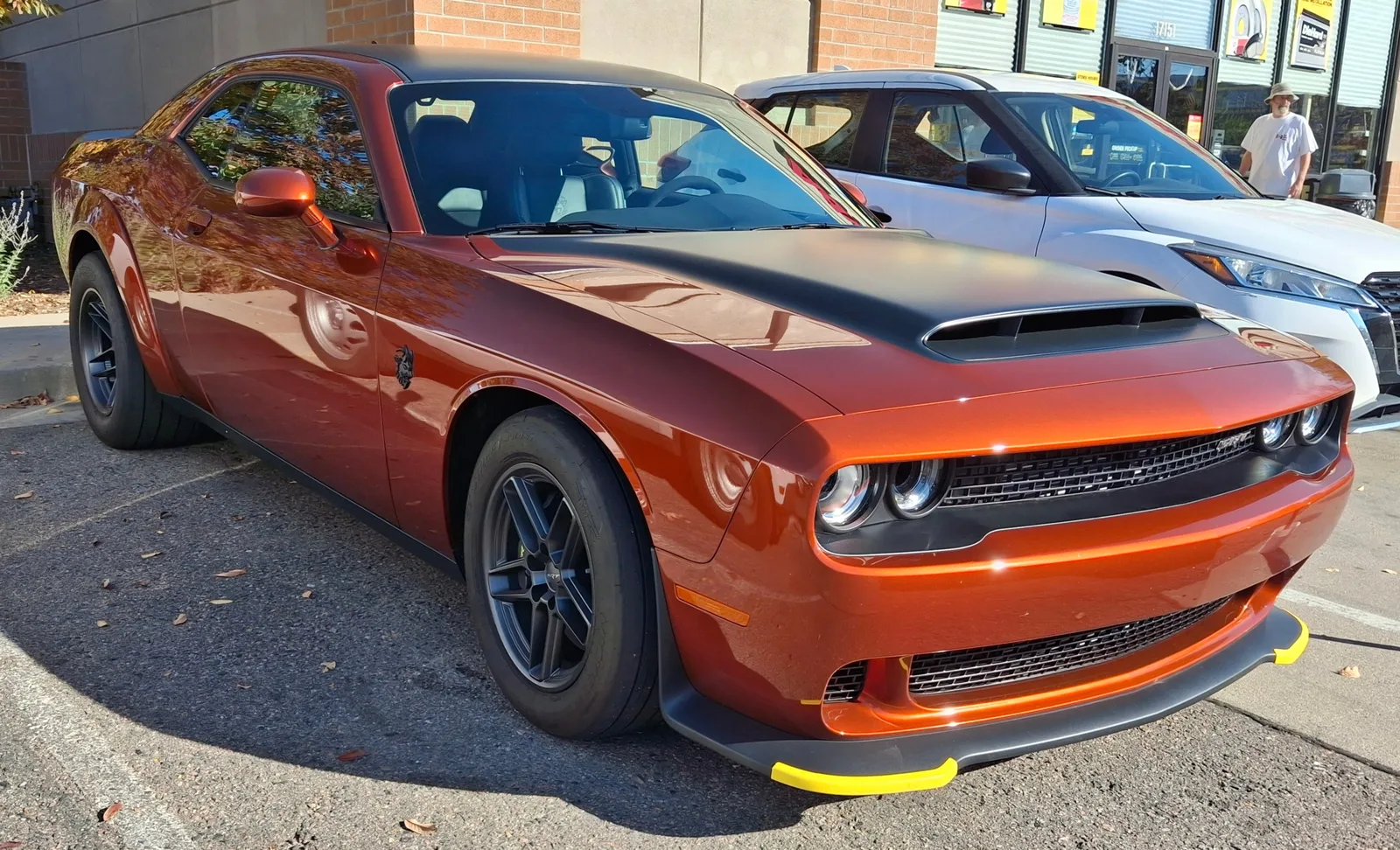
A 2023 Demon 170. Dodge planned 3,000 cars for the United States and 300 for Canada.
Why the same news paid differently
This looks inconsistent. The end of the 993 was as public as the end of the Challenger. Why did one go unpaid for years and the other get paid at once?
The 993 buyer had the fact and not the value. In 1997 the 996 could still have turned out to be the better car, and nobody knew what air cooling would fetch in twenty years. Dodge filled in that blank itself. The successor would be electric, and everyone in the dealer's queue knew what they thought about that. An announced ending is one whose value has already been estimated on the day the car goes on sale. That estimate gets paid to whoever is selling that day: the maker through the list price, the dealer through the markup. The next owner buys something with that part already taken out.
Three years prove little, mind. The 993 took fourteen. Whoever paid $138,888 in 2025 may do well, because the markup has gone. They need two things for that: that the successors disappoint and that the ending stays an ending.
An ending is a decision
The second is the weak point. A maker that calls something the last signs nothing. Asked whether a Hellcat engine would fit the new Charger, Dodge's chief executive Matt McAlear said in 2025: "Don't be surprised if it would fit." At an investor day in May 2026 its parent, Stellantis, confirmed an SRT version of the Charger without naming the engine. Automotive News, citing a planning document, reported a Charger SRT Hellcat with a 6.2-litre V8, in production from late 2027. Dodge does not comment on future models.
If that car arrives, the plaque stays factually correct: this was the last Challenger of that generation. But the $100,000 in the showroom was not paid for a model name. It was paid for the last Hemi muscle car. What 3,300 cars are worth once that sentence stops being true is something nobody has seen yet. Stellantis does not have to ask the owners.
Images: Porsche 911 (993) Carrera S (8452031852) by nakhon100 (CC BY 2.0); Porsche 996 Carrera (1997) convertibles 1X7A2528 by Alexander-93 (CC BY-SA 4.0); 2023 Dodge Challenger SRT Demon 170, orange, front right side, Golden Super Cruise 2026-10-03 by Xnatedawgx (CC BY-SA 4.0). Images resized.


