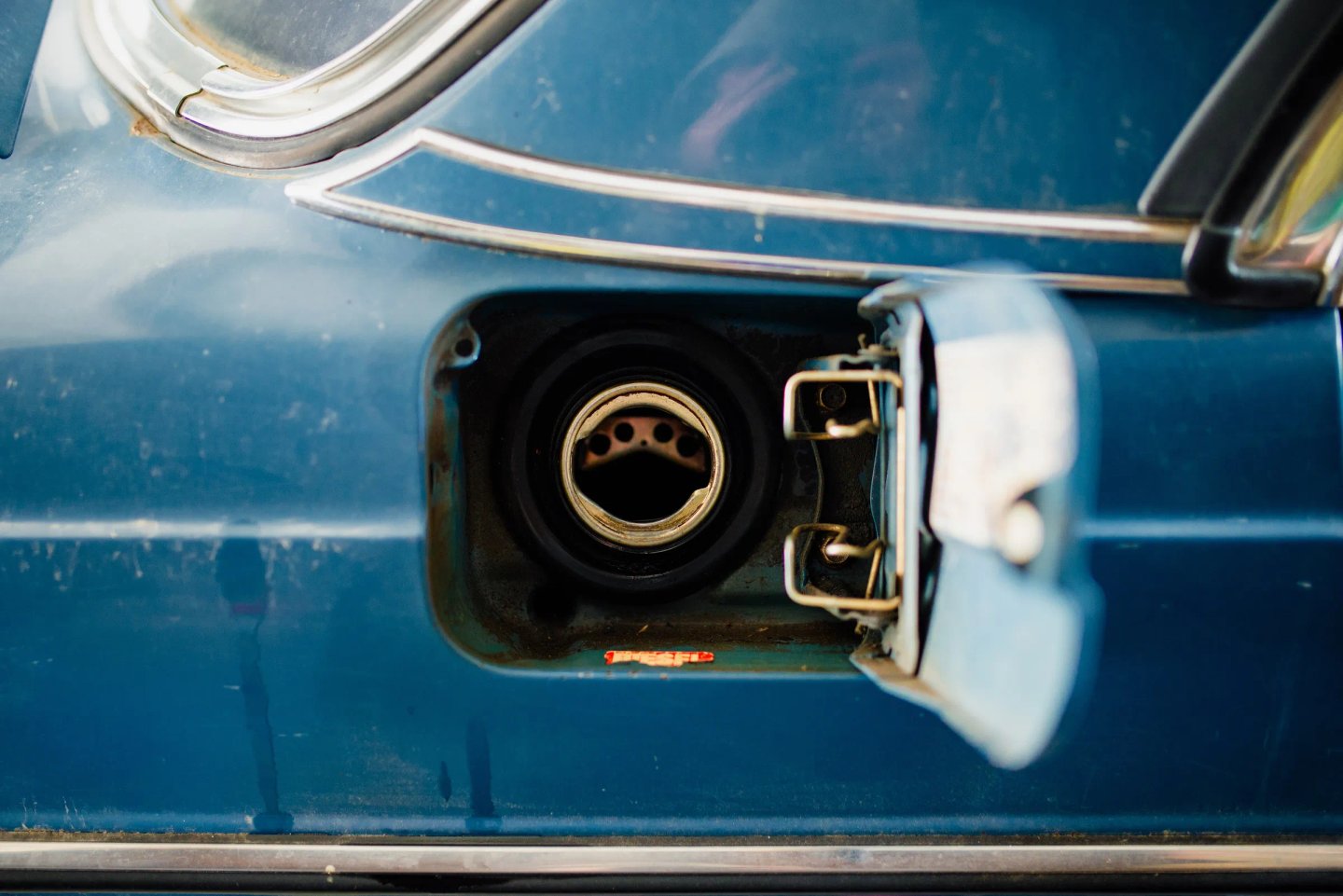
Every rule deciding what goes into a classic was written for some other car.
Lead went for health and for the catalytic converter: Directive 98/70/EC banned leaded petrol across the EU from 1 January 2000. Ethanol came for the climate, and since 1 October 2019 it has been the Dutch standard in the form of E10. Phosphorus in engine oil was capped because it poisons catalysts. Nobody had to think about an MG B while doing so.
Lead is an old story: hardened valve seats or an additive. The other two are the live ones. E10 gets the headlines and zinc gets the forum threads. They are often mentioned in one breath, but they are very different risks. The second is also smaller and more targeted than it is usually made out to be.
E10 is a parts list
Britain's Federation of British Historic Vehicle Clubs, the FBHVC, lists what ethanol attacks: some cork, shellac, epoxy resin, nylon, polyurethane and glass-fibre polyester. Rubber hoses and gaskets swell, soften and crack as they dry. The federation advises replacing those materials before using E10 and knows of no additive that fully protects them. Corrosion inhibitors do work against corrosion.
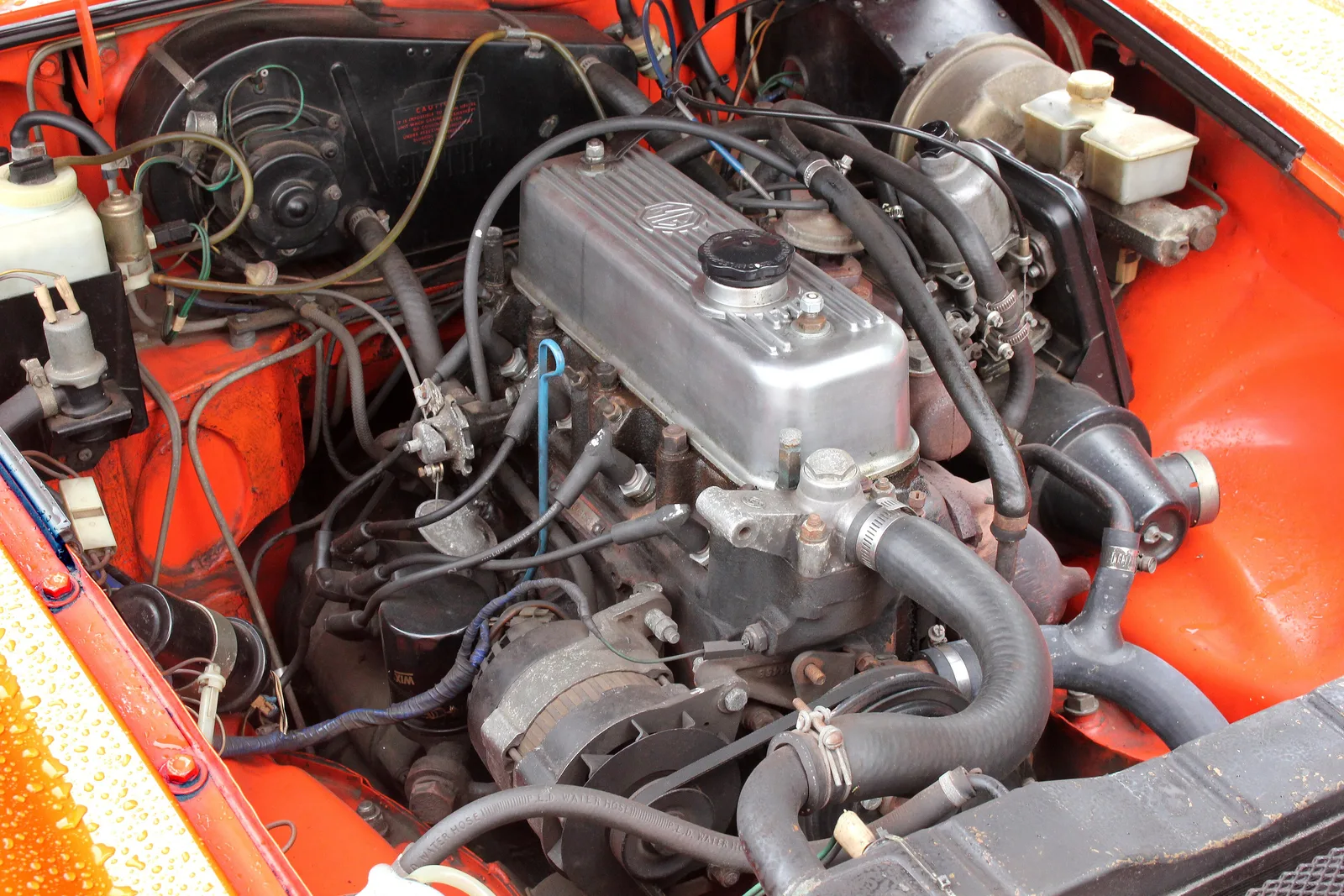
The engine of a 1979 MG B, a four-cylinder with a side camshaft. Hoses and gaskets are what ethanol reaches first.
That problem has a price, and it can be worked out. A Dutch filling station with several petrol grades must supply E10 from at least half its nozzles, so the rest can be E5. A station with one grade may choose. Say a classic does 2,000 km a year at 10 litres per 100 km and E5 costs 25 cents a litre more (both assumptions). That is 200 litres and €50 a year. Britain has a protected E5 grade, which the FBHVC advises for anything built before 2000.
E5 is not ethanol-free, it may hold up to 5%, so the hoses still need watching. But a leaking fuel hose can be seen and smelled, and replacing it is no big job.
What zinc does in oil
The additive is zinc dialkyl dithiophosphate, ZDDP. Under heat and pressure it forms a glassy film on metal. That matters most in an engine where a cam lobe slides over a flat tappet, with high pressure on a small area, as in many old engines. Modern engines mostly use rollers, where that sliding is absent.
The trouble is the phosphorus in the molecule. So the American standard came down, to 0.10% and with API SM in 2004 to 0.08%. Reading the forums, you would think oil for a classic has not existed since. Three things correct that picture.
The first is where the limit applies. Lube Report wrote in May 2004 that it covers the five energy-conserving grades: 0W-20, 0W-30, 5W-20, 5W-30 and 10W-30. Other grades got looser limits. Europe mostly works with ACEA, where C3 must hold between 0.07% and 0.09% phosphorus and A3/B4 only has to report it. So a classic serviced at a general garage may get a 5W-30 C3 out of the drum. A 20W-50 sits on another shelf. That does not say how much zinc is in it, only that this limit does not apply.
The second is the comparison. According to Mike Mavrigian in MOTOR (April 2010), oil in the 1960s held about 0.07% zinc, in the 1970s 0.09% and in the 1980s and early 1990s 0.2%. After the 2004 limit he gives 0.09%. So capped oil holds about as much zinc as the oil a 1968 MG B was designed around. What people remember as the old oil is the 1980s peak. One number is not everything, since new camshafts were phosphate-coated then and modern oil carries more detergent, which gets in the way of the zinc. But 1985 is the wrong comparison.
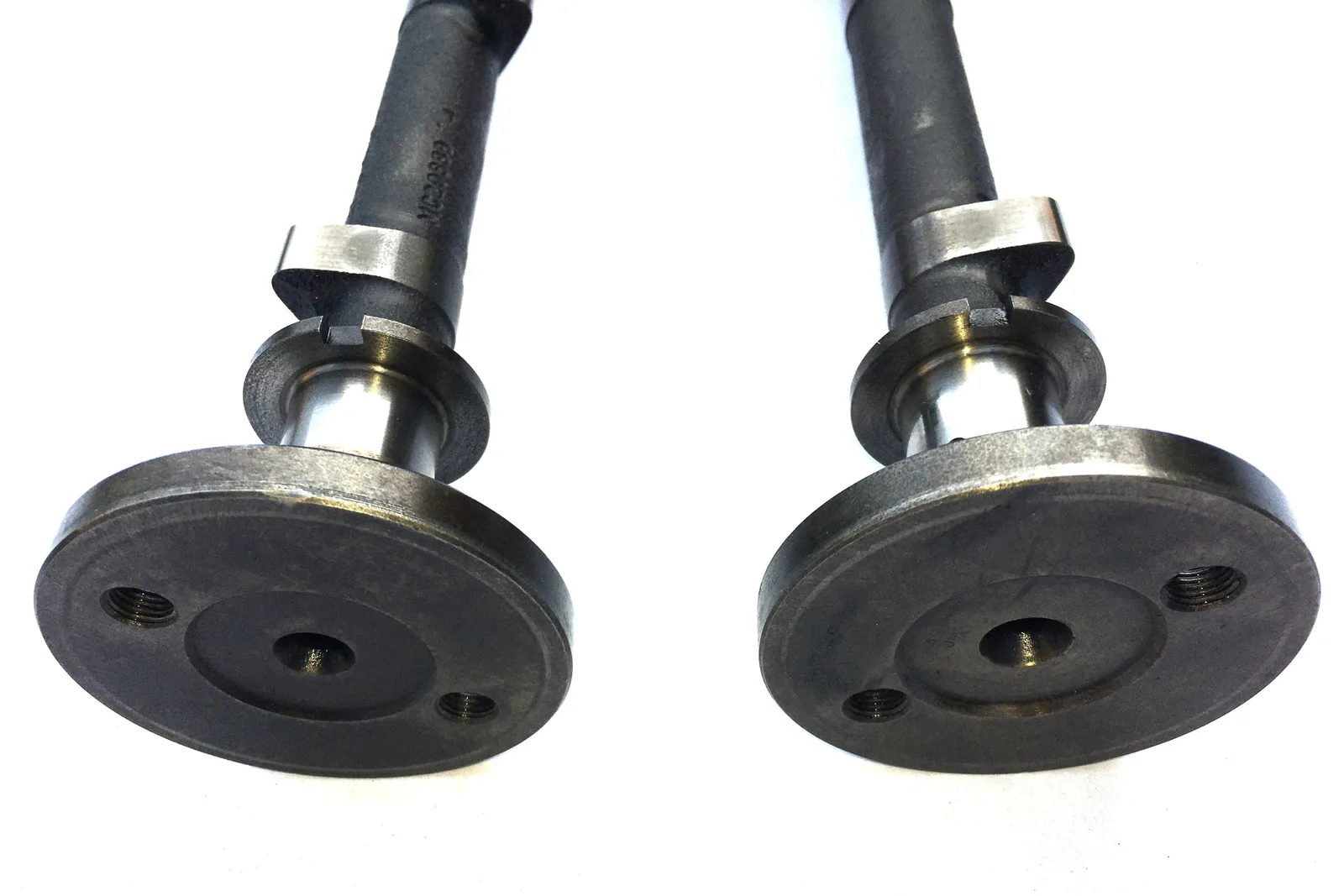
Camshafts from a Jaguar XK engine. In engines of this kind, the lobe slides over the tappet.
The third is who actually suffered. Barney Gaylord, who runs the site MGA With An Attitude, fitted a new camshaft and tappets to his MGA in late 2000 and reports 75,000 miles without oil problems, on ordinary 20W-50 in summer and 10W-40 in winter. He suspects most reported failures come from poor tappets and careless running-in. Lake Speed, a tribologist who worked on high-zinc oil at Joe Gibbs Driven, said in 2025, on the strength of earlier tests, that modern API SP and SQ oils are good enough for flat tappets, because other anti-wear additives have joined the mix. That is one owner and one specialist. We did not find an independent wear test on run-in old engines.
Where the risk does sit
All these sources agree on one point: running in. A new camshaft on new tappets does not have that film yet. Speed said in MOTOR in 2010 that it takes a lot of zinc to form and less to keep. Gaylord calls the first run and perhaps the first oil change the critical period, and his own running-in was 20 minutes at 2,500 rpm. MOTOR writes of engine builders wiping out good camshafts at that stage.
That is the difference from E10. Ethanol works for years, slowly, on parts you can see and replace for little money. The zinc risk is packed into the first hours, inside the engine, where nobody sees it until the valve clearances stop making sense. The person who needs to know is whoever builds the engine or buys an MG with a fresh rebuild: which running-in oil, which assembly paste, which springs during running-in. For an owner changing nothing in the engine, the question is a good deal smaller than the forums suggest.
The letters on the bottle do not help much. They say which tests the oil has passed and not how much zinc is in it. The wear test behind API SL, SM and SN is called Sequence IVA. According to Southwest Research Institute it runs for 100 hours, in cycles that simulate extended idling, on a 1994 Nissan KA24E, after which the wear on the 12 cam lobes is measured.
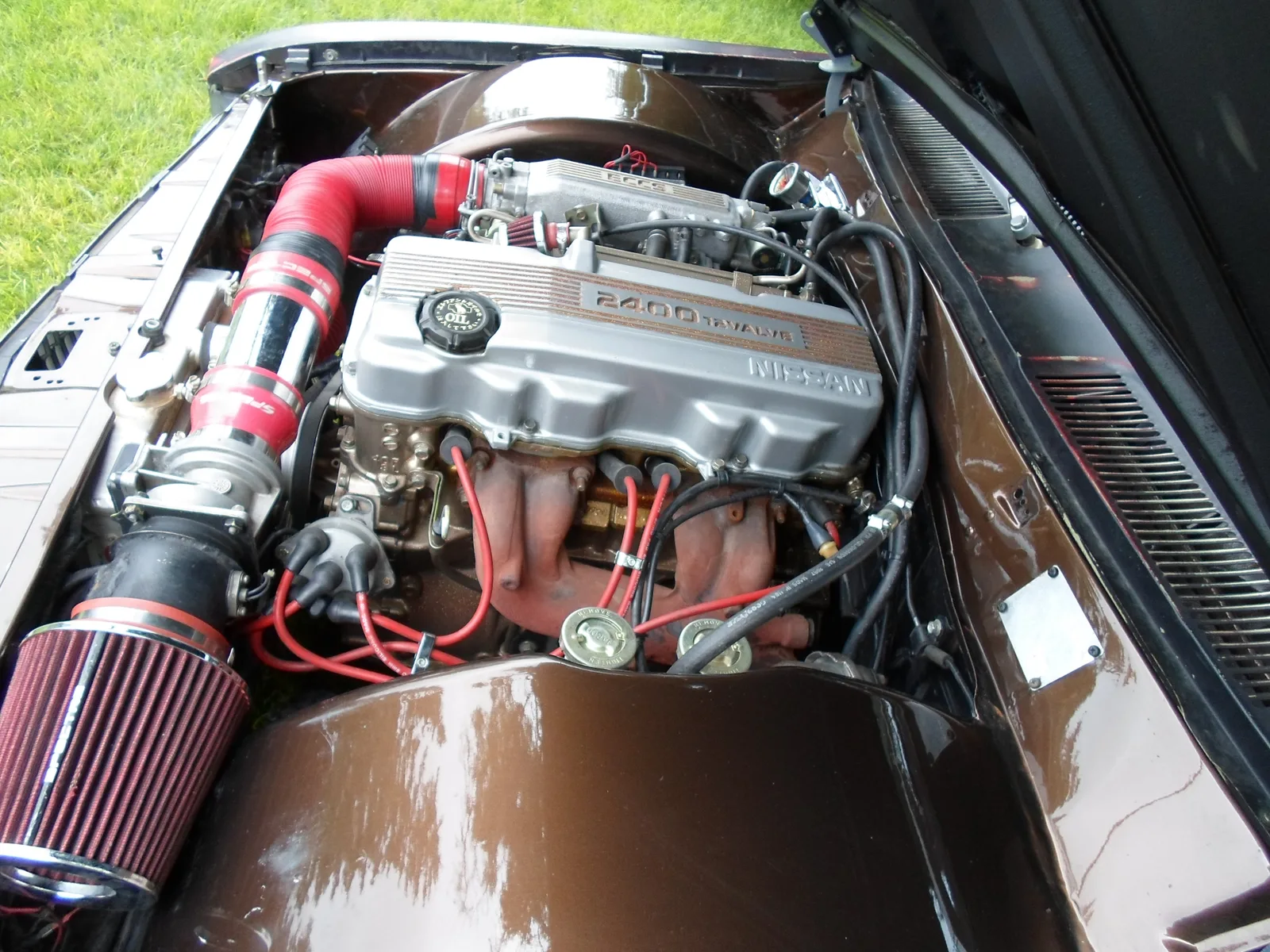
A Nissan KA24E, here fitted to a 1973 Datsun 620. This type of engine runs the Sequence IVA.
That engine has sliding followers, so the test is no nonsense. Wear is measured at seven points on each lobe and added up, and under GF-4 and GF-5 the average may not exceed 90 micrometres. An oil that manages this has proved something about a four-cylinder with an overhead camshaft ticking over gently for a hundred hours. About the first twenty minutes of a new lobe on a new tappet, under the pushrods of a 1968 engine, that letter on the bottle says nothing.
Images: Open Fuel Tank on Vintage Car (54583225412) by Nenad Stojkovic (CC BY 2.0); MG B, Bj. 1979, Motor, rechte Seite (2017-07-01 Sp) by Lothar Spurzem (CC BY-SA 2.0 de); XK engine camshafts-2826 by HReuter (CC BY-SA 4.0); 1973 Datsun 620 - KA24E engine (7589850680) by dave_7 from Lethbridge, Canada (CC BY 2.0). Images resized.


