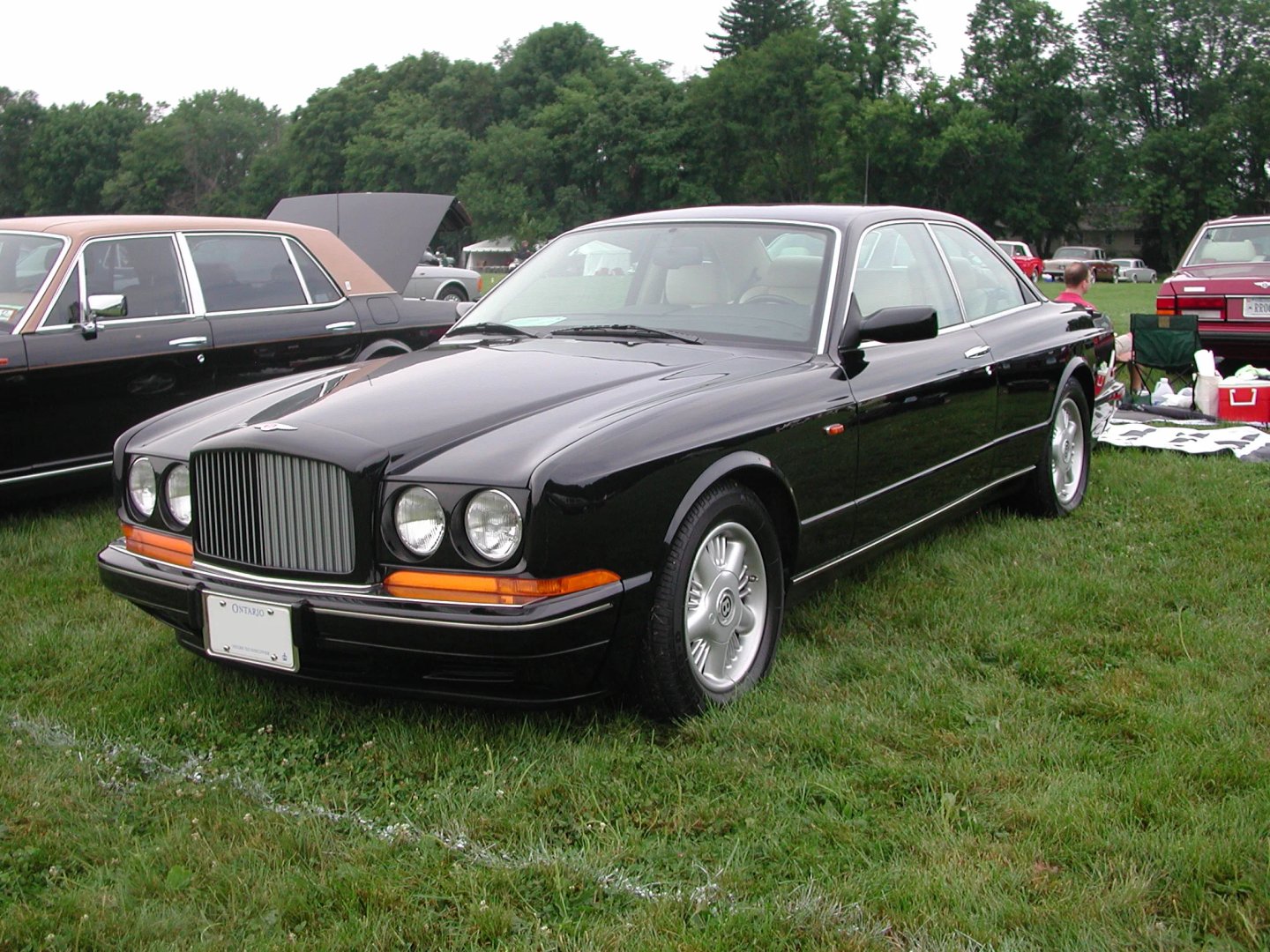
1,722. That is how many cars Rolls-Royce Motors sold in 1991, after 3,333 the year before. The company went from a £30 million trading profit to a £30 million trading loss, about £17,000 on every car sold, and cut 40% of its workforce. Its owner, Vickers, was looking discreetly for a buyer. In those same years one family in Brunei became Crewe's most important customer.
The story that has gone round ever since is that this family kept the company alive. In many versions it bought half of all Rolls-Royces and Bentleys. Sources are scarce. One sum can be done, though. It shows why the story is half true.
What half would mean
Vickers sold 1,556 cars in 1995 and 1,744 in 1996. Allow roughly 17,000 for the whole decade, with the 3,333 of 1990 included. Half is 8,500 cars. The highest count we found is from Richard Feast, whose book on the sale of Crewe gives more than 650 Bentleys for two members of the family. Guinness in 2011 recorded more than 500 Rolls-Royces, probably with older cars included. Together that is about 1,150 cars, under 7%. In units, half does not stand up.
Money looks different. The estimate most often repeated is £480 million on Rolls-Royces and Bentleys during the 1990s. No invoices come with it, so an estimate is what it stays. The car business had revenue of about £310 million in 1997 ($507.8 million, according to CNN). Use that for all ten years, which is generous because Crewe sold far fewer cars in the early 1990s, and £480 million out of £3.1 billion is about 15%.
There is a term for this: customer concentration. Accounting rules take it seriously. Under IFRS 8 a listed company has to disclose when one customer brings 10% or more of revenue, because investors then carry a different risk from the one they assume. Vickers was not under that rule at the time, but it is a useful yardstick. If the estimate holds, Crewe was well past it.
Revenue also understates it. A factory running half empty after 1990 still has to pay its fixed costs. Say, purely as an illustration, a 30% margin on £48 million a year. That is over £14 million, in a company that made about £27 million before interest in 1997, a good year. That may be the half people mean. We do not know, and the margin is our assumption.
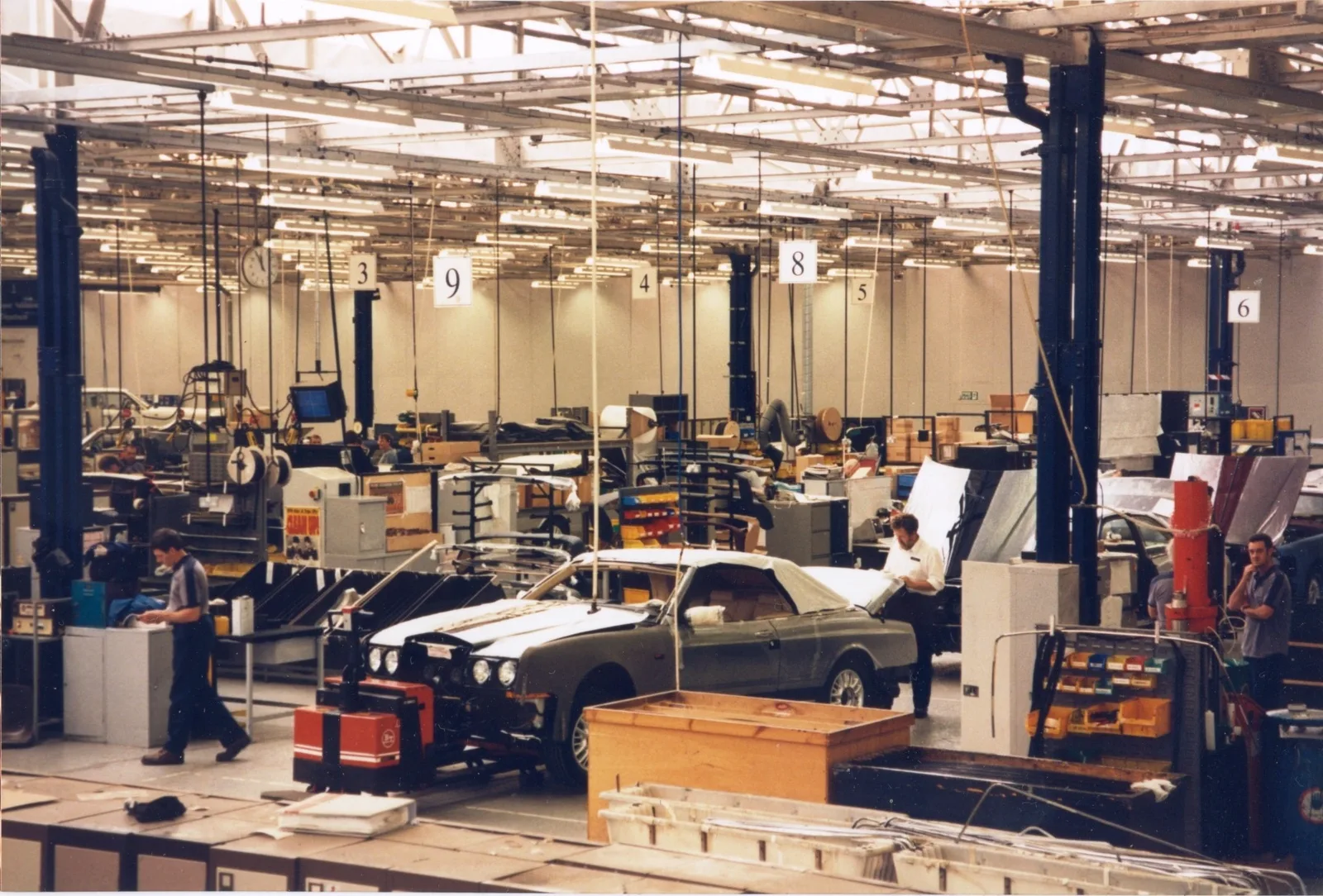
A Bentley Continental being finished at Pyms Lane in Crewe, June 1997.
What one order does
A single order makes it clearer. The Bentley Dominator was an SUV on Range Rover parts: six cars, shipped to Brunei in 1996. The price was never confirmed, and the press put it at about £3 million each. If that is right, it comes to £18 million, for 0.3% of that year's cars and about 6% of a year's revenue. Feast says Mulliner Park Ward set up a separate team for this work. That is the side no revenue figure shows. An ordinary customer buys what is in the catalogue. This one also decided what the engineers worked on, and people working on six SUVs are not working on anything else.
The tempting sequel is that the Dominator foretold the Bentayga, which came nineteen years later. We found no evidence that anyone at Crewe or Wolfsburg saw it that way.
Much of the rest went to Italy, where Pininfarina and Coggiola built on Bentley chassis: 13 of the B2, 12 of the B3. At Ferrari the proportions were different. Pininfarina built seven 456 GT Venice estates, reportedly at about $1.5 million each, while Ferrari made 3,289 cars of the 456 family. Seven cars are 0.2% of that. To Maranello this customer was noise. The Carrozzieri Italiani archive does list 53 cars for the family. To the department doing that work it will have looked different. How dependent a company is depends on where you stand in it. The brand's figures do not show that.
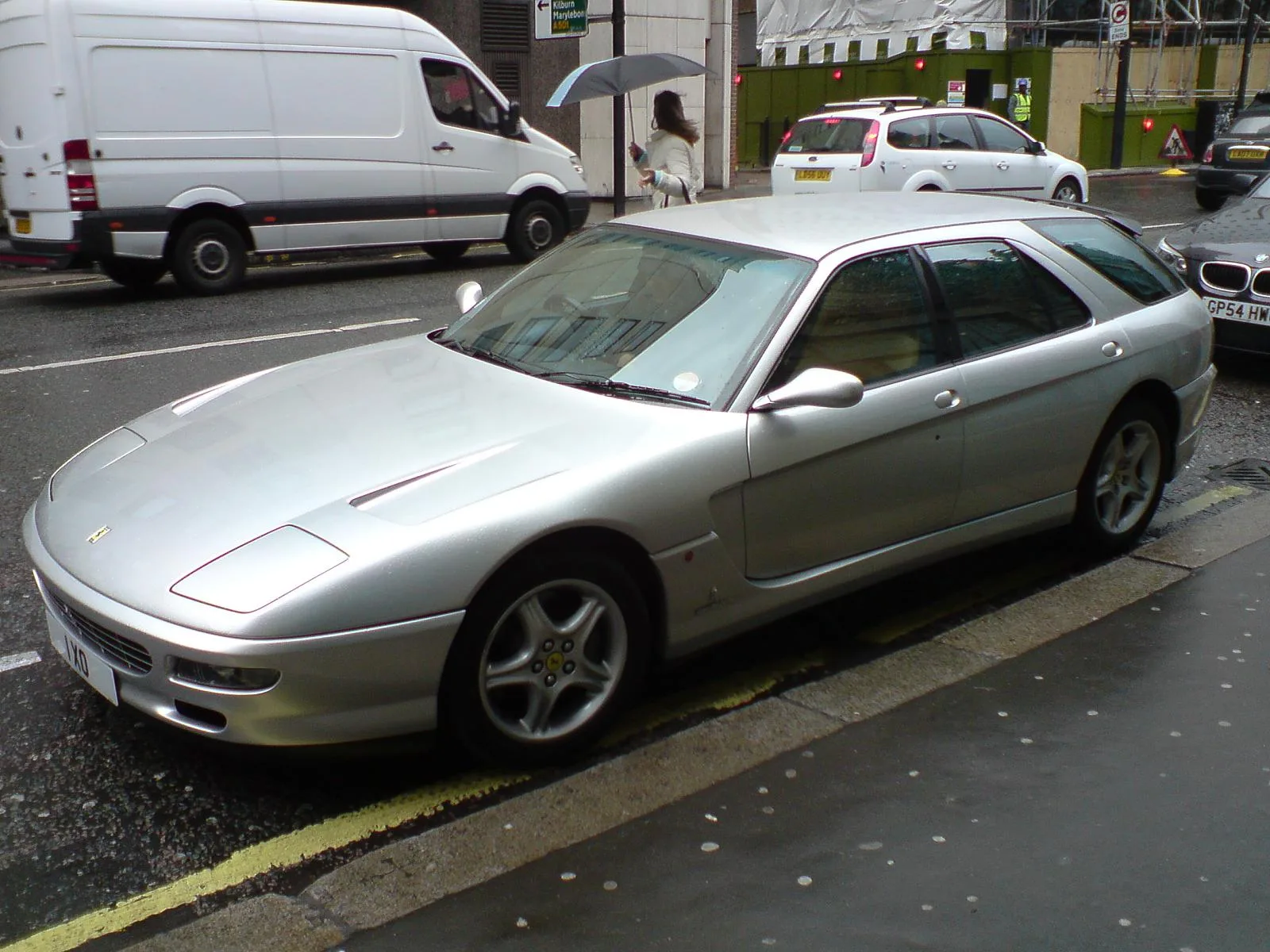
A Ferrari 456 GT Venice. Pininfarina built seven in this five-door form.
When the orders stop
Around 1998 it ended. The reason lay in Brunei and does not belong in this article. The builders saw it in the order book. Carrozzieri Italiani, the archive that follows this work most closely, gives a picture. Of the Argento Vivo, four cars on the Mercedes SL 73 AMG, two were delivered and two stayed unfinished. The F50 Bolide, six converted F50s plus six track versions, never happened. One Ferrari FX was cancelled and later sold to someone else. The same archive says Pininfarina's reliance on this client left it in serious trouble, selling parts of its private collection to get by. That is one source and we could not check it.
At Crewe the end coincided with the sale to Volkswagen in 1998, which does not mean one caused the other. What Volkswagen did with Bentley was the textbook answer to customer concentration: more customers. In 2003, the year of the Continental GT, Bentley sold 1,017 cars. In 2007 it sold 10,014. At that volume no family is 15% of anything.
The bespoke work stayed, divided differently. In 2020 Mulliner showed the Bacalar: twelve cars at about £1.5 million, all sold before most buyers had seen one, half of them to people new to the brand. Twelve times £1.5 million is £18 million, the same as the six Dominators. Lose one buyer and Mulliner misses a twelfth. With the Dominator one buyer was the whole order.
Images: Continental R by en.wikipedia.org User Jagvar (public domain); 199706 Crewe details assembly by Erremm (CC BY-SA 4.0); Ferrari 456 GT Venice (2613855644) by Gerard McGovern from London, United Kingdom (CC BY 2.0). Images resized.


