In 2018 The 1100 Club in England took a phone call. The original BMC tooling for the front wings of the 1100 and 1300 was for sale, and the club could have first refusal. The tooling had passed through Earlpart to Longbridge Motor Spares. The club bought it and the members funded production. By 2020 there were new wings: £295 each for non-members, less for members.
No Saturday meet could have done that. A car park has no bank account.
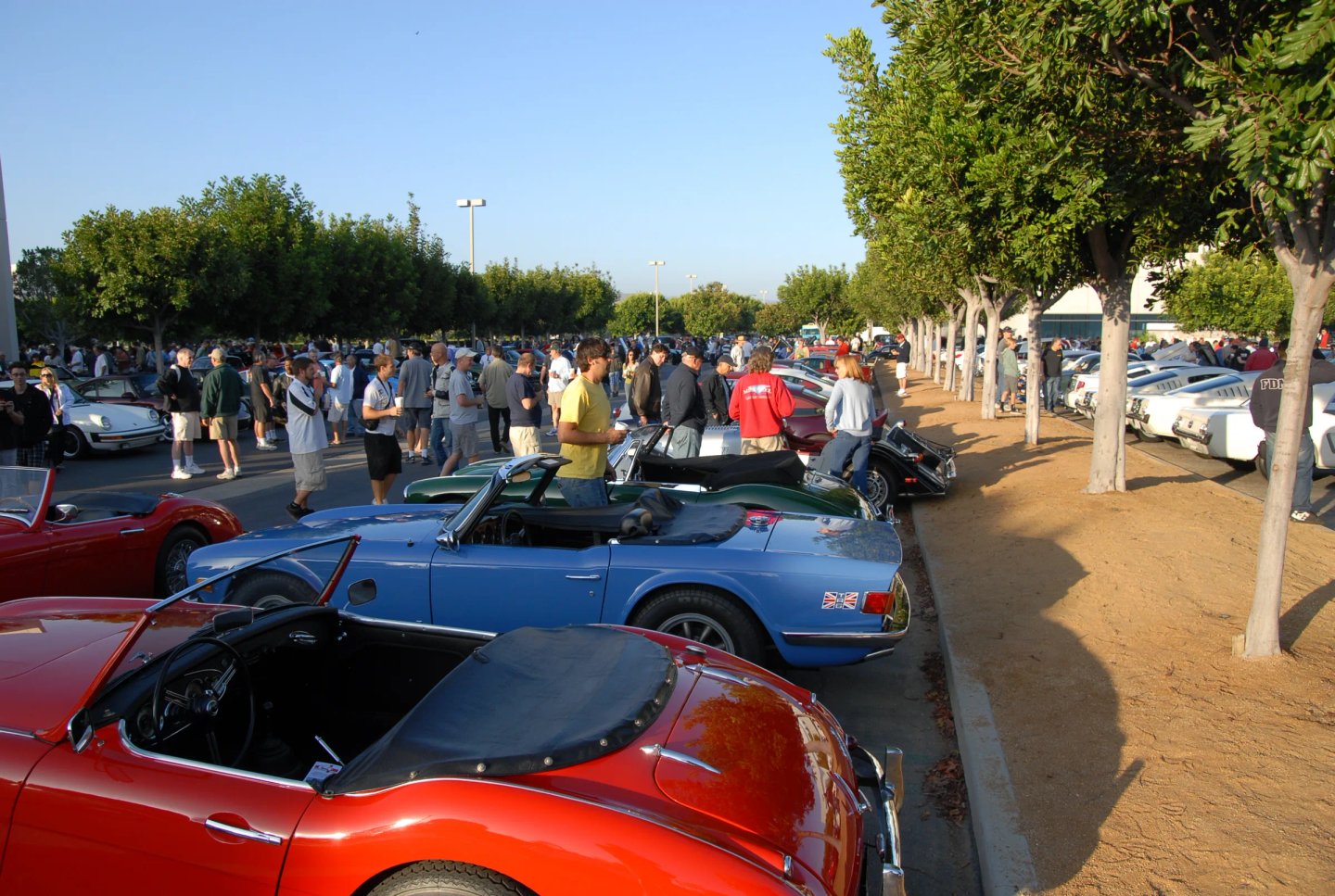
The car park is often described as the successor to the one-make club. Cars and coffee began in Southern California, at Crystal Cove and then on the Ford and Mazda site in Irvine. No membership, no subscription, no committee, every car welcome. The organisers at Irvine spent that whole year asking visitors to keep their revs low, and police stood outside to discourage burnouts. A club can throw a member out. In a car park you can only ask. In December 2014 it ended there, with rumours of noise complaints from a new development next door. The event had moved before. It costs nothing to start something like that and little to lose it, which is why you can find one anywhere. What it cannot do is keep anything.
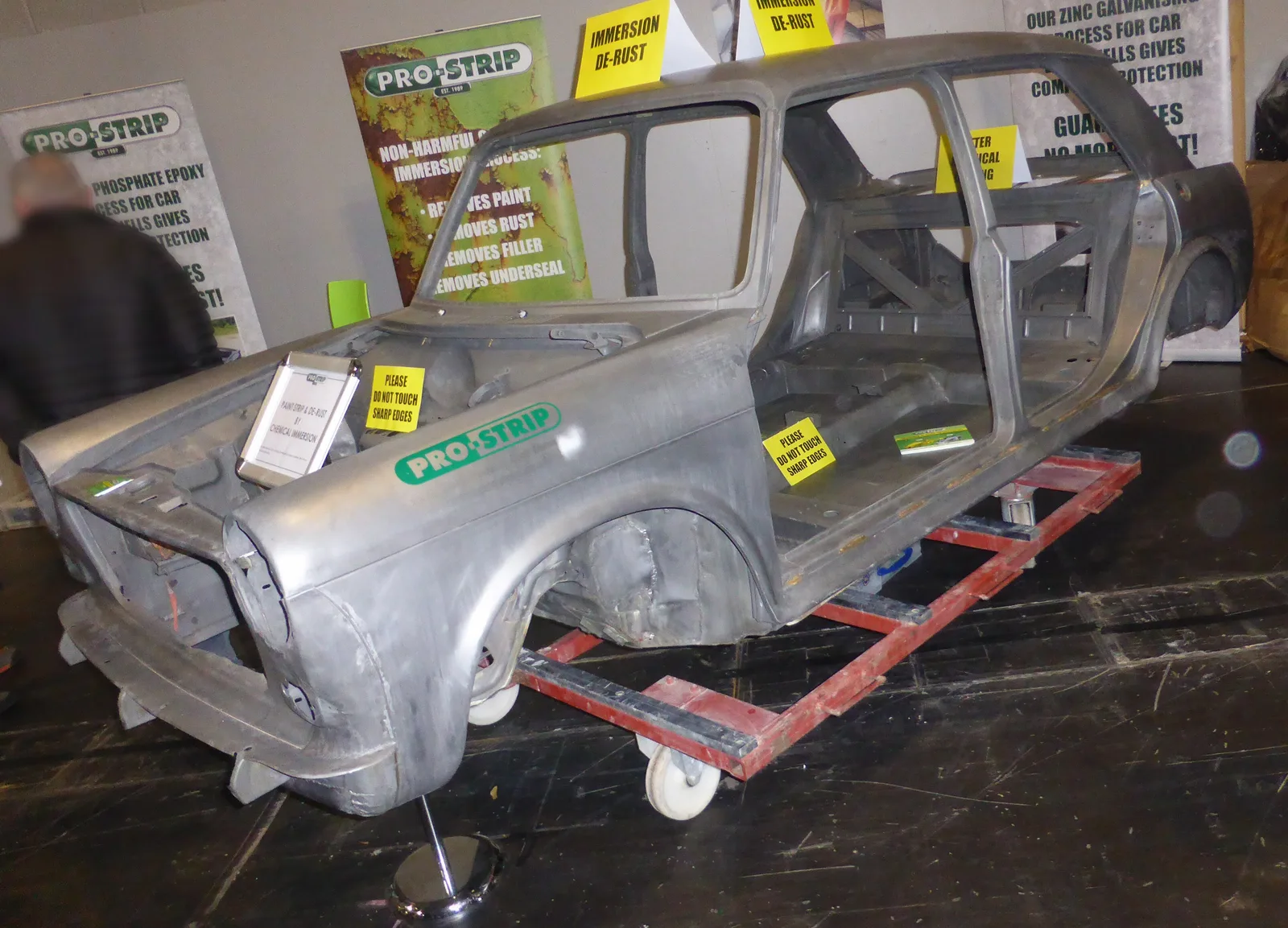
A bare body of a 1300, type ADO16, at a show in Birmingham in 2018.
What a club actually sells
In 1965 the economist Mancur Olson described why large groups rarely achieve what they all want. Everyone benefits, so everyone waits for someone else. Organisations that manage it anyway use selective incentives: something only members get. For a conservation charity that is free entry to a reserve. For a car club it is the magazine, the technical helpline, the runs and the discount on parts.
Those things bring in the subscriptions. With that money the club then does what nobody else does. The Standard Motor Club pays for its spares scheme entirely from subscriptions, using volunteers and old stock bought up over the years. The 1100 Club also sells its wings to non-members. They benefit from something members paid for, at a higher price.
Do the sum. Say a batch of 50 wings costs £10,000 to make. The club gives no figure, so this is an assumption. With 500 members that is £20 each, less than the £25 that British clubs charged on average in 2020, according to the federation FBHVC. In a car park, someone first has to find fifty people who will need a wing in a few years and are willing to pay now.
Forums do sometimes organise a group buy like that. It solves the paying. It does not solve who keeps the tooling for the next twenty years, or who will know where it is. The 1100's tooling went through three sets of hands before the club bought it.
The same goes for knowledge nobody happens to be looking for. The TR Register and the Triumph 2000 Register have the job in their names: a list of what was built and where it went. A forum answers the question somebody asks today. A register has to be kept up for cars nobody has asked about in years, and that work pays nothing until the day a buyer wants to check a chassis number.
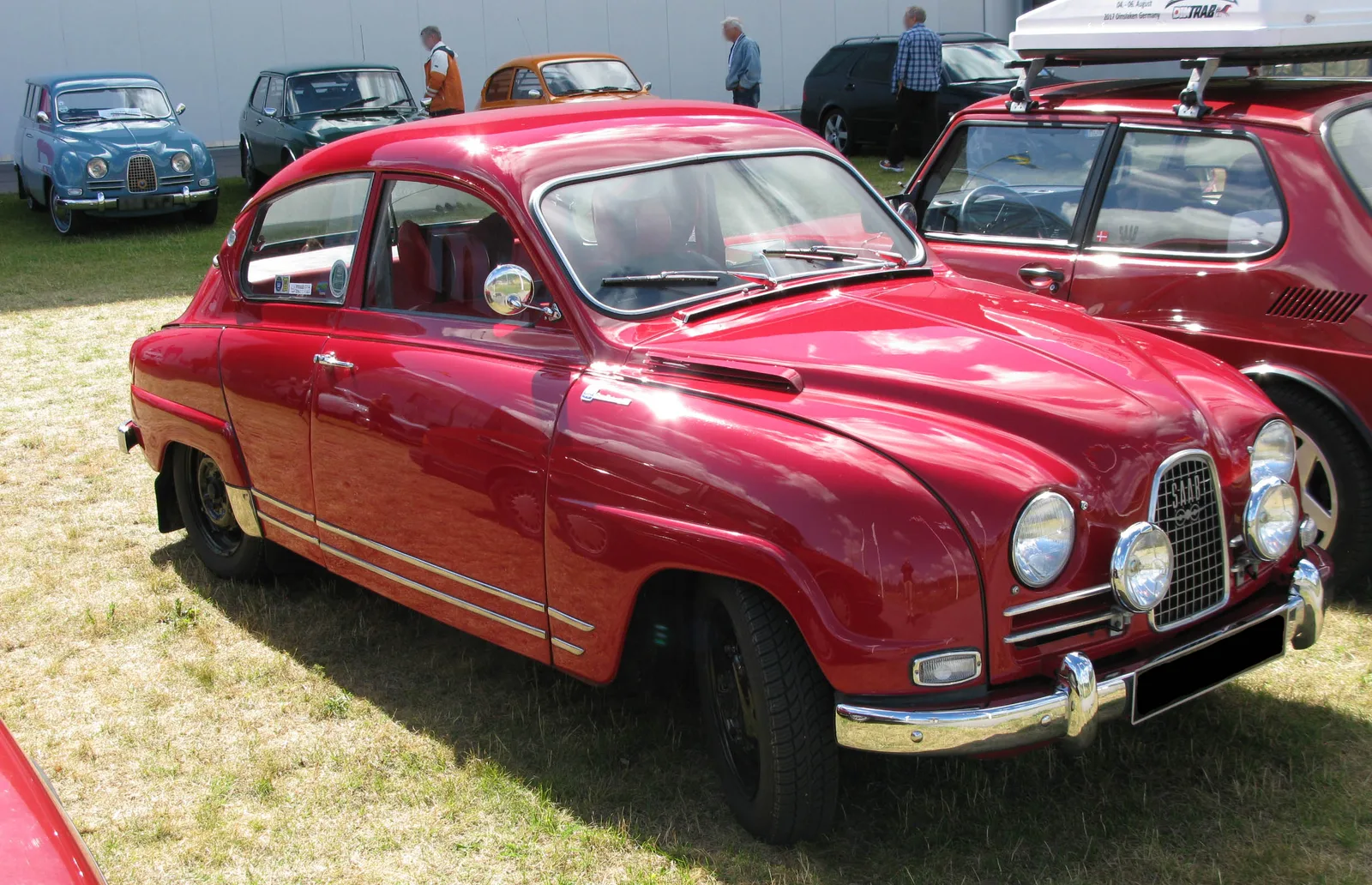
A Saab GT850 at the International Saab Meeting of 2016, a gathering around one make.
What the car park did take
To say the meet has pushed out the club is too simple. In the British survey of 2020, 87% of historic vehicle owners belonged to a club, against 90% in 2016. That is barely a fall. Among enthusiasts with no classic of their own it went from 56% to 50%. So owners stay, and the decline is among people who do not have one yet.
One caveat. These are answers to a survey that clubs urged their own members to fill in, so the true percentages are probably lower. Big makes also have less of this problem. The Porsche Club of America had more than 145,000 members in 2025, according to Porsche. The risk lies with small clubs for makes that no longer exist. That is where parts are hardest to get.
Those are the people who used to walk into a club to find someone who knew about these cars. Now they can go to a free meet on Saturday and ask their questions on a forum. That removes two of the selective incentives: the getting together and much of the knowledge. This is our reasoning, because nobody counts meets. We found no study that measures the switch either.
The meet has not left the hobby worse off. According to the FBHVC, interest was growing fastest in 2025 among adults under 35. It just does not reach a club by itself. Club members averaged 64 in 2020, enthusiasts outside a club 59. Of the clubs, 43% expected their average age to rise within five years and 32% expected fewer members. The average owner was 66 in 2025.
In the Netherlands the federation FEHAC represents 233 associations and foundations with more than 56,000 owners, according to the Louwman Museum. We have found no comparable age figures for those clubs. For anyone selling a classic car, this is also about money. A buyer of a BMC 1100 wants to know where the next wing will come from, and the answer is a club with members.
In a car park everyone is welcome and nobody has to do anything. There is nothing wrong with that. Which of the people walking around there on Saturday will, ten years from now, pay £25 a year for the tooling of a car they do not own yet?
Images: Cars and Coffee Irvine (6109482670) by Dennis Rex (CC BY 2.0); 1300 (ADO16) Shell by andreboeni (CC BY 2.0); Intsaab2016 13 - Saab GT850 by Herranderssvensson (CC BY-SA 3.0). Images resized.


