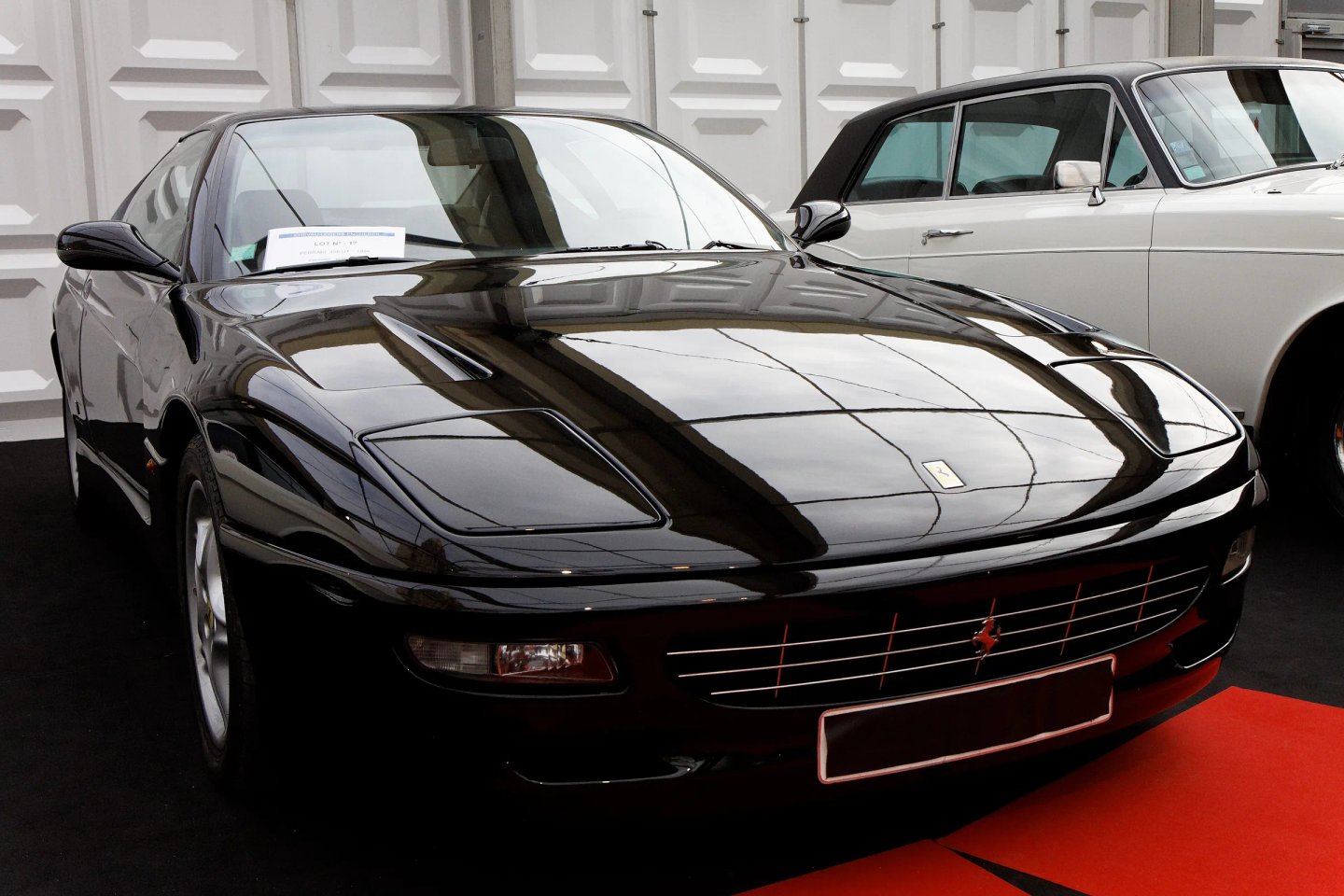
Next to the bid button on most online auctions there is a box. The button bids the minimum. The box takes any higher figure. On paper the box is pointless, because a buyer wants to pay as little as possible and the button sees to that. Yet every so often someone types €46,000 when €41,500 would have done.
Economists call that a jump bid. It is not a habit of enthusiasts getting carried away. When the US regulator, the FCC, auctioned radio spectrum in the 1990s to telecoms firms with advisers and models, Peter Cramton counted 49% of new bids in one auction as jump bids. Those firms thought the extra money was buying something. The question is what.
What a jump costs
Say a car stands at €41,000 and the minimum raise is €500. Bidder A is prepared to go to €52,000 and types €46,000. What that costs depends on bidder B, and A does not know which B they have met.
- B was already finished. A could have had the car for €41,500 and overpays by €4,500.
- B would have gone to €44,000. Without the jump A pays €44,500. The jump costs €1,500.
- B will go to €50,000 and keeps bidding. A pays €50,500 with or without the jump.
- B will go to €50,000 but gives up on seeing €46,000. A pays €46,000 and saves €4,500.
Only the last case earns anything. The jump pays when a rival with room left walks away from that room. That is odd behaviour. A bid that gets topped costs nothing, so B can carry on to their own limit. Why would they not?
Why someone with room gives up
Cost, to begin with. Bidding seriously on a car is not free. There is an inspection, a transport quote, an evening with the invoices, a conversation at home. Someone who thinks they will lose anyway does not start on that. Easley and Tenorio saw this in 236 internet auctions: jumps come mostly early, and early jumps keep later bidders out.
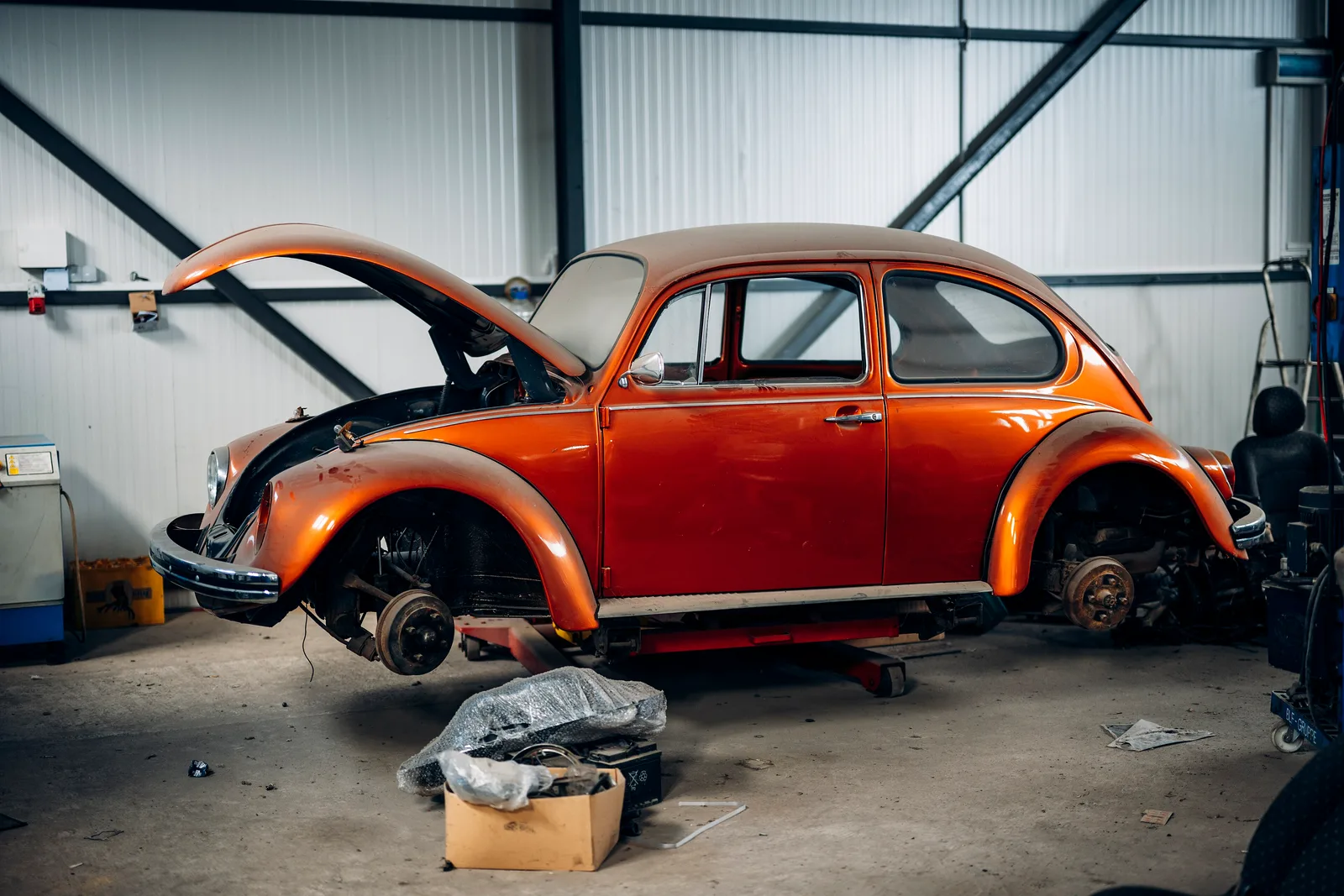
A classic Beetle on a lift. Someone who thinks they will lose anyway leaves that bill to somebody else.
The best-known example comes from takeovers. In 1988 Ross Johnson offered $75 a share for his own company, RJR Nabisco, then trading at $55. KKR jumped to $90 and won after a few more rounds at $106. George Roberts of KKR later admitted his firm would not have competed had Johnson opened at $90 or more. The jump that might have worked was a bigger one, according to the man it was meant to scare.
Christopher Avery came up with a subtler explanation in 1998. Part of what a car is worth is the same for everybody: what is wrong with it, what it will fetch later. So whoever wins had the highest estimate, which is bad news in itself. Against someone who has shown they will press on, it gets worse. You only win if they stop, and if a bidder like that stops, they must have seen or thought of something. So the rival bids more cautiously and the jumper pays less. In Avery's model both bidders are better off. The seller foots the bill.
And there may be no message at all. Isaac, Salmon and Zillante put it down largely to impatience: people who want to be done in fewer rounds jump. Lim and Xiong found in their experiments that risk-averse bidders jump to pay a fixed price instead of an uncertain one. That is insurance. The premium goes to the seller, and in their laboratory revenue did rise when jumps were allowed, against the older theory.
On the screen all three look the same: €46,000.
What BMW did
The car world has a jump big enough to trace. In 1998 Vickers sold Rolls-Royce Motors, the Crewe factory that built Rolls-Royces and Bentleys. BMW, already its engine supplier, had a deal at £340 million in April. Volkswagen came in at £430 million: £90 million more, or 26%. BMW said it had no plans for a second offer, and in June the Vickers shareholders voted for Volkswagen.
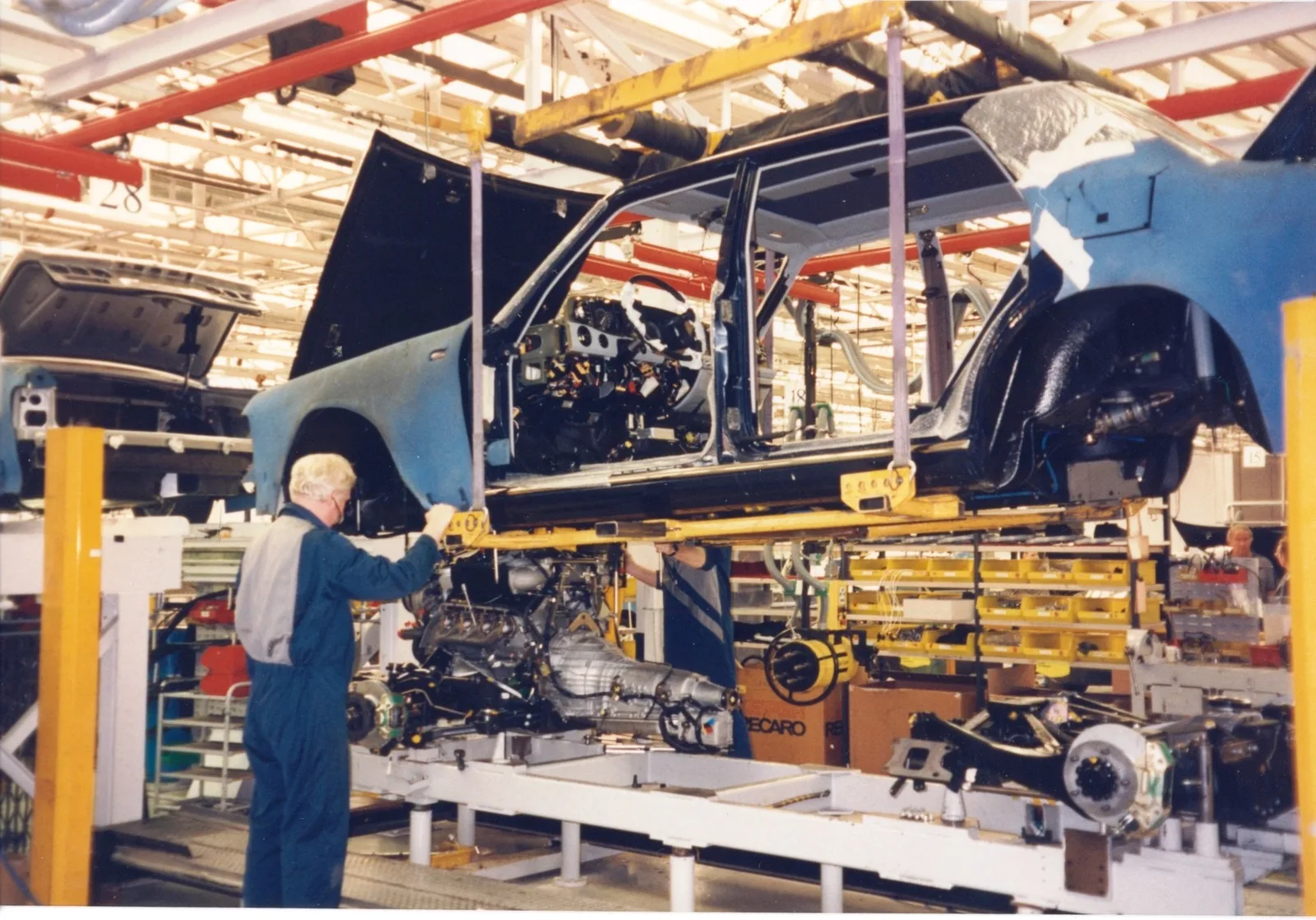
The Pyms Lane factory in Crewe, June 1997. A year later it was the prize in the bidding.
As a jump it worked. Except that the Rolls-Royce name was not in the sale. It belonged to the aero-engine maker Rolls-Royce plc, and at the end of July BMW bought the rights from there for £40 million, to take effect in 2003. Volkswagen kept Bentley and the factory. "I would have preferred to keep both brands," said Ferdinand Piëch. BMW had stopped bidding. It had not stopped buying.
A rival who stops is therefore not necessarily a rival who got scared. They may have another route. With a car the other route is usually dull: there will be another one next month, certainly if the car is nothing special.
What a rival does with the information
The cleanest test we found is by Delnoij, Rezaei and Van de Rijt, published in 2023. On a large online auction platform they placed early bids themselves, sometimes the minimum and sometimes a jump of varying size, at random. The final price did not change. That is one platform, early in the auction and at low prices, so it does not refute Avery. It does show the message often fails to arrive.
A jump to €46,000 proves one thing: that bidder's limit is €46,000 or higher. It does not say how much higher. If your limit is lower, you were finished anyway. If it is higher, replying costs one raise. You pay that only if nobody comes back over you. They risked €4,500 to send the message. Checking it is free. And if the jump says anything about the car, it says someone values it more than you thought, which is no reason to lower your limit.
The moment to pay attention comes later. Suppose you reply and they stop at once. Someone who risked €4,500 to get rid of you and quits after one counter-bid was either bluffing or has seen something. This is where Avery gets his due: whoever beats an aggressive bidder has beaten someone who changed their mind. That they stopped says more about the car than that they jumped.
Images: Festival automobile international 2011 - Vente aux enchères - Ferrari 456 GT - 1994 by Thesupermat (CC BY-SA 3.0); Classic car restoration project taking place in a garage with focus on an orange Beetle car by Shixart1985 (CC BY 2.0); 199706 Crewe powertrain marriage by Erremm (CC BY-SA 4.0). Images resized.


