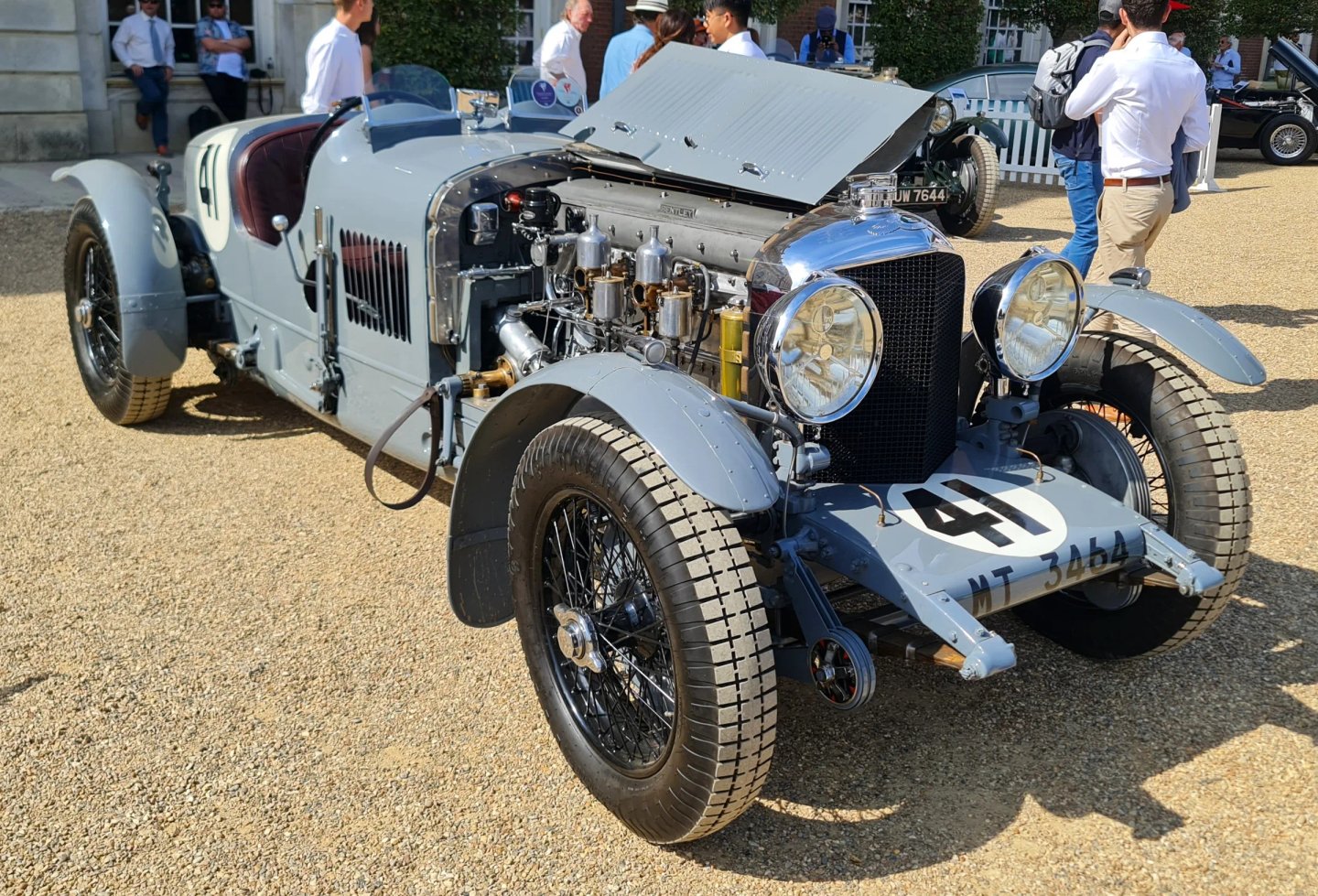
On 7 April 1990 the collector Edward Hubbard signed a contract with Middlebridge Scimitar over a Bentley the agreement called Old Number One: the Speed Six in which Woolf Barnato won Le Mans in 1929 and 1930. The deal put the car at £10 million. Soon afterwards Middlebridge decided that this car did not exist. What Hubbard had, it said, was another Bentley, worth £250,000.
The £9.75 million difference was not in the metal, which stayed the same whichever side won. It was in the question of whether this was the same car.
That question is old. Plutarch says the Athenians kept the ship of Theseus and replaced rotten planks with new timber. Philosophers then argued over whether it was still the same ship. In 1655 Thomas Hobbes made it harder. Suppose someone keeps the old planks and builds a second ship from them. Which is the original? In 1990 an English judge had to answer a question of that kind, with a figure attached.
What was left of the car
The Bentley historian Michael Hay gave evidence for Hubbard over three days, and his account did not make things easier. Before Le Mans in 1930 the chassis, front axle, gearbox and differential had already been replaced. Possibly the steering column and crankcase too. Between October 1931 and Easter 1932 Walter Hassan rebuilt the car for Barnato, who thought it too slow. It received an 8-litre engine and a hybrid chassis, with the gearbox, cross members, steering column, radiator, bulkhead and wings from the 1930 frame. In that form Clive Dunfee was killed in it at Brooklands, in the 1932 500 Miles.
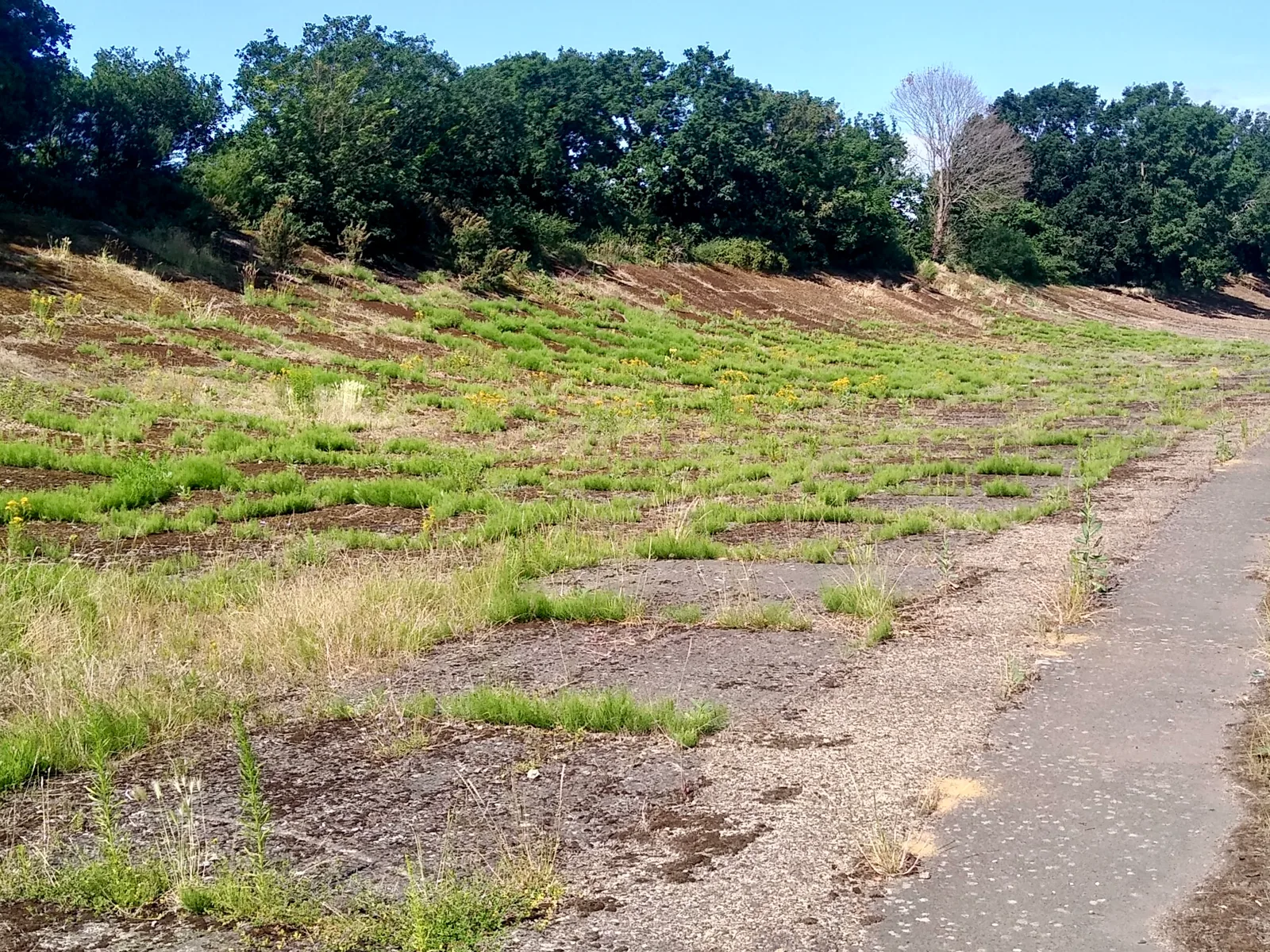
The Byfleet Banking at Brooklands in June 2025, now overgrown. Dunfee was killed on this same circuit.
After that came a coupe body, later a two-seater and a spell in America. Hubbard bought the car from the dealer Stanley Mann and restored it to its 1932 form. Little remained of what won in 1929. Middlebridge had a point.
What the judge decided
Mr Justice Otton thought Middlebridge was asking the wrong question. "Degrees of originality have no meaning in the context of this car," he wrote. In his view the changes of 1930 came from the demands of going fast and winning. They belonged to the car's development. In 1930, 1931 and 1932 it had been rebuilt from parts. It had still stayed one continuous thing, with no break in its racing history. No other Bentley could claim the name.
His evidence was paper and habit: Bentley Motors' service records up to the war, the logbook, registration MT 3464, chassis number LB 2332 on the front cross member, a motoring weekly that simply called the car Old Number One after the 1932 crash. Barnato's daughter said her father treated it like a dog and gave it a pat as he went by.
The reasoning is stronger than it sounds. A racing car has no fixed set of parts to lose. Gearboxes, axles, even a chassis: replacing them was what the team did, because it wanted to win. Anyone demanding the parts of 1929 must also say that Barnato won in 1930 in a different car from 1929. No results sheet says that.
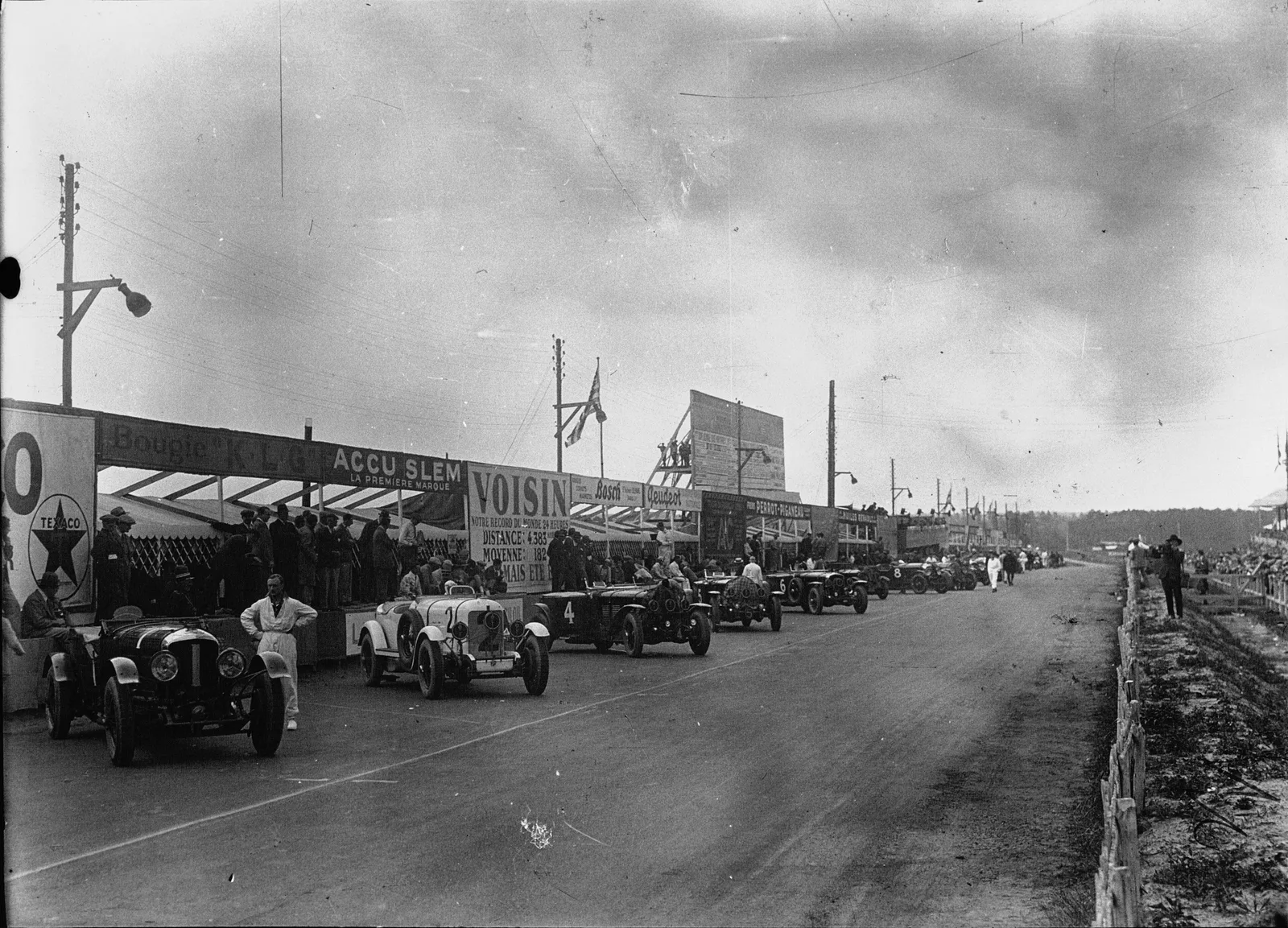
The grid for the 1929 24 Hours of Le Mans, the first of this Speed Six's two wins.
Identity then lies in the car's life, in what was done with it and who kept track. That also shows what a restorer lacks. They replace panels on a car with nothing left to win. Otton did accept the return to 1932 form, but on his reasoning that return borrows its right from the record before it. New panels on a car without such a record cannot do the same. Hobbes's second ship was missing here as well: nobody had built a rival from the old planks.
Not everyone was convinced. Bill Boddy wrote in Motor Sport in September 1990 that he could not see how two cars, one from 1929 and one from 1932, could merge into one. He said he would buy this one as a Brooklands replica and not as a Le Mans car. Hassan, who had built it, wrote in his own book about a new car for Barnato. And of the book Hay later wrote, the reviewer Andrew Frankel said parts of it read as campaign literature.
What a court cannot settle
Twenty years later the question came back, this time about a description in a sale contract. In 2007 Stanley Mann sold a 1930 Bentley Speed Six, chassis SB 2770, for £425,000. Its original engine had been out since 1936, the present one came from a standard 6½ Litre of 1927 and the body was a replica. The High Court sided with the buyer in 2010. In March 2012 the Court of Appeal reversed that: for this description the chassis with its number was enough, even if only the front part were original. You can sell a 1990 Volvo without promising a 1990 engine. The law, said the judges, should not set itself against how the market understands such a word. Some points went back for retrial.
Both rulings concern a contract between two parties. Neither says what the next buyer will pay. The philosopher Graeme Forbes lectures on the case. He says Middlebridge went bankrupt and that the publicity left the car unsaleable at anything near £10 million. He also reads Otton's text as hinting that different facts could have brought a different decision.
Anyone buying a heavily rebuilt racing car still carries that risk. Otton reasoned from a racing record with no gap in it, set down in cards that happened to survive. How much paper the next judge will ask for has not been tested, as far as we could establish. Nor has a car with two lost decades. Doubt in the press was already enough to hurt the price in 1990, and that doubt is now one search away.
Images: 1929 Bentley Speed Six Old Number One HCC23 by MrWalkr (CC BY-SA 4.0); Byfleet Banking, Brooklands Circuit, Weybridge, Surrey - June 2025 - 01 by Mertbiol (CC0); Grid at the 1929 24 Hours of Le Mans by Agence de presse Meurisse (public domain). Images resized.


