Anyone offering a car without a reserve is making a trade. They give up the floor, the sum below which the car does not change hands. In return they hope for more bidders, because everyone knows the car is going regardless. What a reserve is and how to set one is in our reserve price guide. This piece is about the trade, and which cars it pays for.
Bidders follow bidders
The hope for more bidders has something behind it. In Management Science in 2008, Uri Simonsohn and Dan Ariely studied 8,333 eBay auctions of DVDs from October 2002. On the results page a bidder saw the current price but not the starting price. So two auctions could both stand at $10, one with a string of bids because it started at $1, the other with none because it started at $10. Bidders chose the first. They read the bids as a sign of something good, when mostly those bids said it had once been cheap. Someone bidding the same amount won a low-start auction less often and paid more when they did.
That looks like a free gift to the seller, and it was not. Auctions starting at $1 ended at $9.61 on average, those starting at $10 at $9.71. After the cost of relisting, since a $10 start goes unsold more often, sellers kept $9.260 and $9.265. Half a cent apart. The low start brought more prices above $10 and also more below it, and the two cancelled out.
A DVD seller can live with that. The typical seller in the data listed around a hundred DVDs a year, and collects the average simply by selling often enough. These were also bestsellers: 22.1% of auctions began at $1 or less and just 0.2% finished there. A private owner sells one car once, often one that is no bestseller. The average is not an outcome they can get. They get one number from a wider spread.
What Elkhart does and does not prove
The strongest advert for selling without a reserve is the sale at Elkhart, Indiana, on 23 and 24 October 2020. RM Sotheby's sold the collection of the bankrupt businessman Najeeb Khan on behalf of the trustees. According to K500, 99% of the cars went without a reserve. More than 2,500 people from 53 countries bid, and 55% of them were new to RM Sotheby's. Everything sold, for $44.4 million against a pre-sale estimate of $36 million.
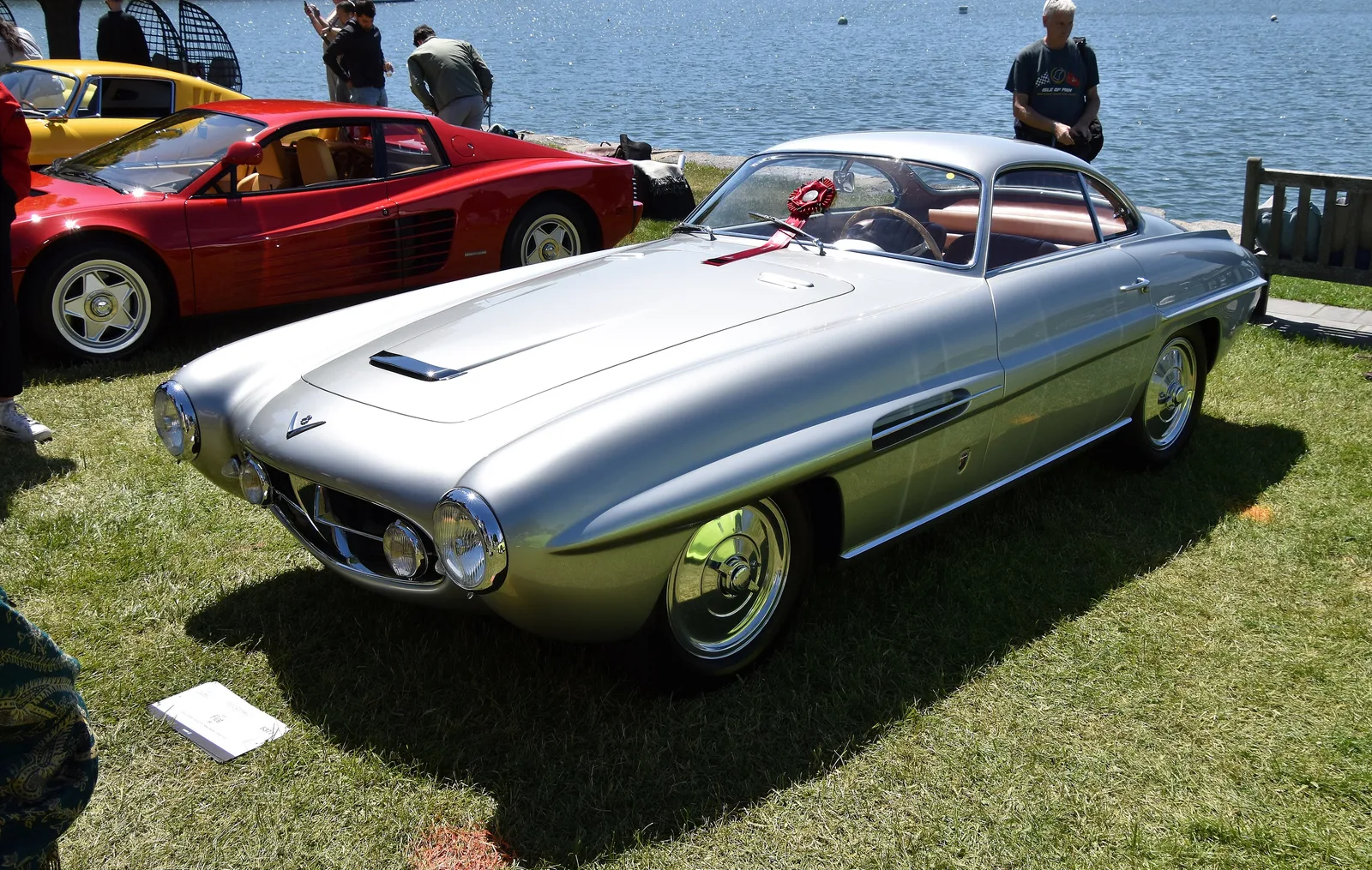
A 1953 Fiat 8V Supersonic by Ghia. This type made $2.04 million at Elkhart.
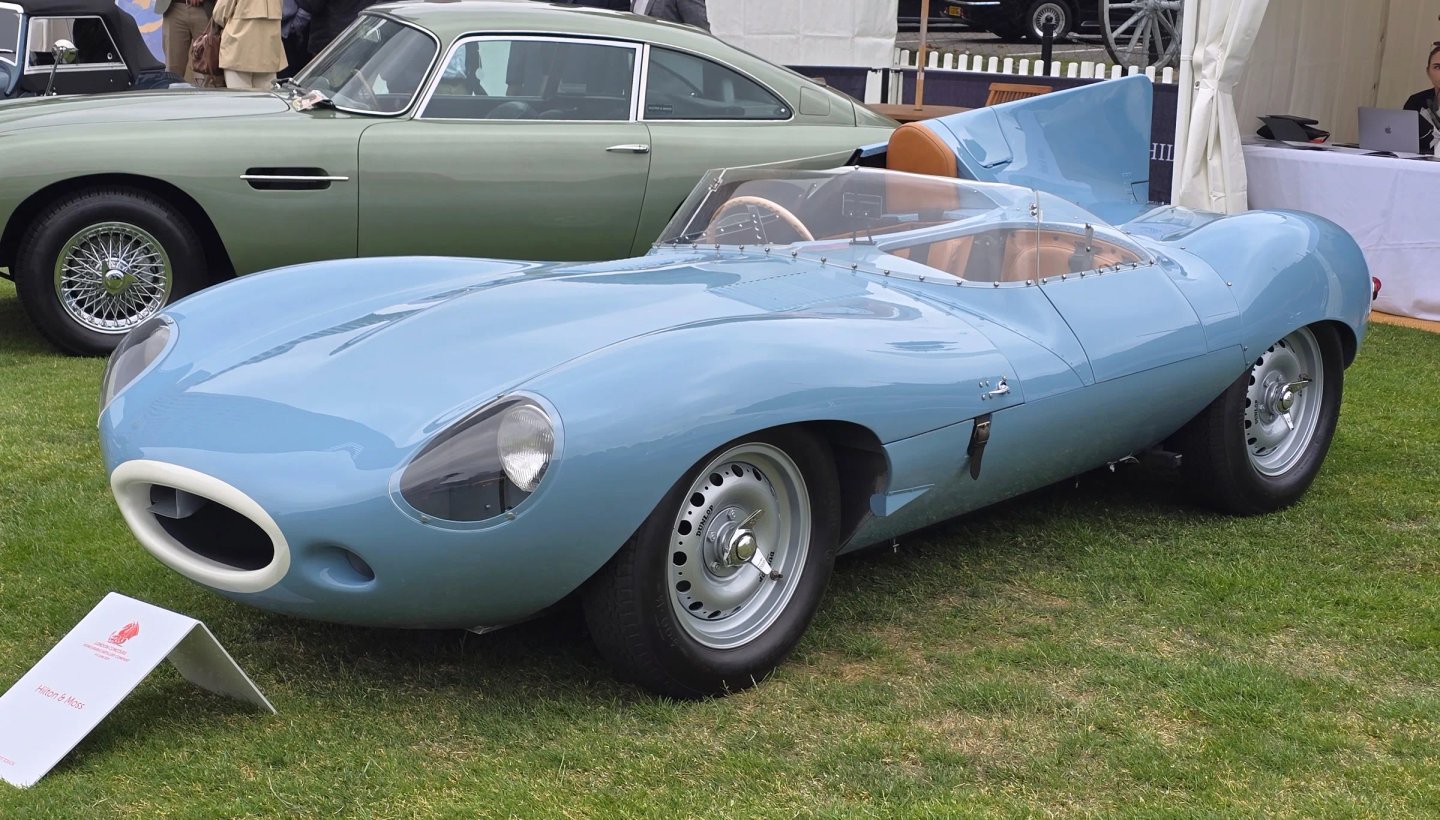
Inside that total, results went every way. K500 counted 28% of the cars below their low estimate. A restored 1950s Land Rover Series 1 made $240,800 against an estimate of $90,000 to $120,000. The Cooper-Jaguar T38 went for $1.765 million, under its low estimate. A Jaguar D-type continuation car went for $1.325 million, when K500 puts the factory price of such a car at $1.85 million or more.
The trustee can sleep through that. They sell more than 240 cars and count the total. They are the DVD seller. An owner with one D-type could not have set that result against a Land Rover.
And the bidders came for the collection: more than 240 cars and a bankruptcy, all in one place. Someone there for the Fiat 8V saw the Land Rover too. A car standing alone on a website has to bring its own bidders.
Why the awkward car carries the most risk
How much one bidder more or less matters depends on where you are. Suppose the people who want a car think it is worth between €30,000 and €60,000, evenly spread. That is invented. The winner of an auction pays about the last bid of the runner-up, which gives an expected price of:
- Ten bidders: €54,500
- Five bidders: €50,000
- Three bidders: €45,000
- Two bidders: €40,000
- One bidder: the opening bid
Going from ten bidders to five costs the seller €4,500. Going from two to one costs nearly everything. With enough bidders a reserve gets met anyway and does nothing. It only does anything at the bottom of this list.
That puts the temptation in the wrong place. Going without a reserve appeals most for the car that is hard to price and needs attention. A Porsche 911 does not need the label to be noticed. The car that does is the one with three interested people in all of Europe, and that one sits at the bottom.
Monterey showed it in August 2026. The analyst Jason Meshnick bid $30,000 on a 1962 Morgan +4 Super Sports, a rare factory lightweight. That was less than half the low estimate, and he nearly won it: it went for just over $35,000. Whether it had a reserve, Meshnick does not say. If it did, it was low.
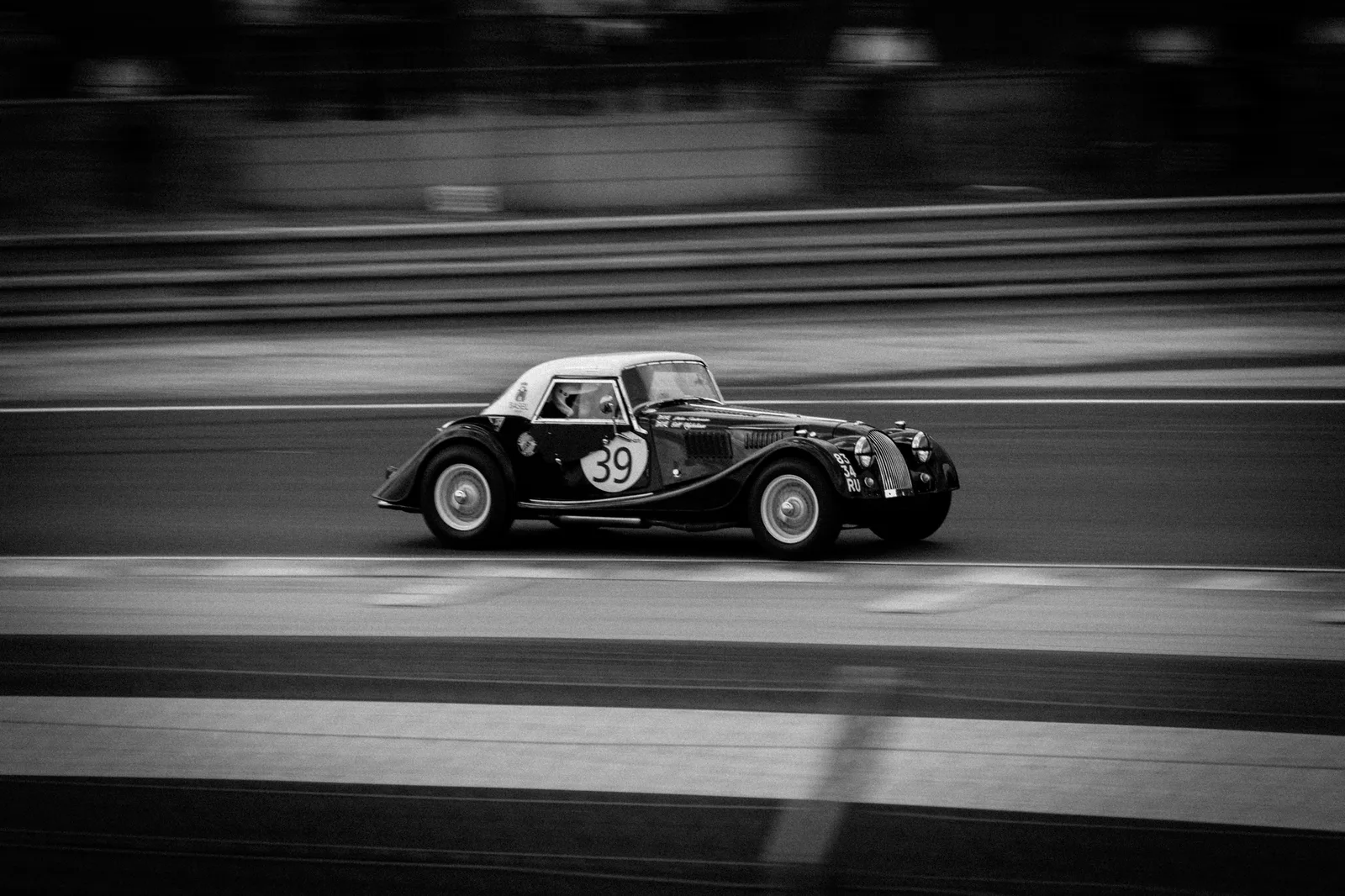
A 1961 Morgan Plus 4 Super Sports at Le Mans Legend 2015. Not the Monterey car, but the same type.
The same week, a 1959 Bocar Stiletto with a six-figure estimate stalled at $50,000, below its reserve. That owner kept the car, along with a bid anyone can look up. A reserve does not create demand. Someone who really wants rid of an awkward car is choosing between a low price and no sale. No reserve can then be the right call, provided the seller knows that is the choice.
A reserve has a price of its own as well. Around 2000, Rama Katkar and David Lucking-Reiley auctioned fifty pairs of matching Pokémon cards on eBay, one with a public minimum bid and the other with the same sum as a secret reserve. About 70% sold with the public minimum and 46% with the secret reserve, and fewer serious bidders turned up. A card is not a car, but the bidder has the same question: does my bid count? At Octane the reserve is confidential, so sellers pay that price here too. Auctions without a reserve are possible.
How to count who will come
Many online auctions show their bidding history. Find the last five sales of the car or its closest relatives and count how many different bidders got above 80% of the final price. If it is six or more each time, dropping the reserve costs little. If it is two, you are at the bottom of the list.
That count looks backwards. Whether the three people who bid in the spring are still looking or have since bought one is written nowhere. In a thin market, one buyer is already a third of the audience. With a reserve, the seller pays for not knowing with a failed auction. Without one, they pay with the difference. How big that is only shows on the last evening.
Images: 2019 Jaguar D-Type Continuation LC25 by MrWalkr (CC BY-SA 4.0); Fiat 8V Supersonic by Ghia (1953) (55313145323) by Charles from Port Chester, New York (CC0); Morgan Plus 4 Super Sports (1961) (18868685171) by Kevin Decherf from Nantes, France (CC BY-SA 2.0). Images resized.


