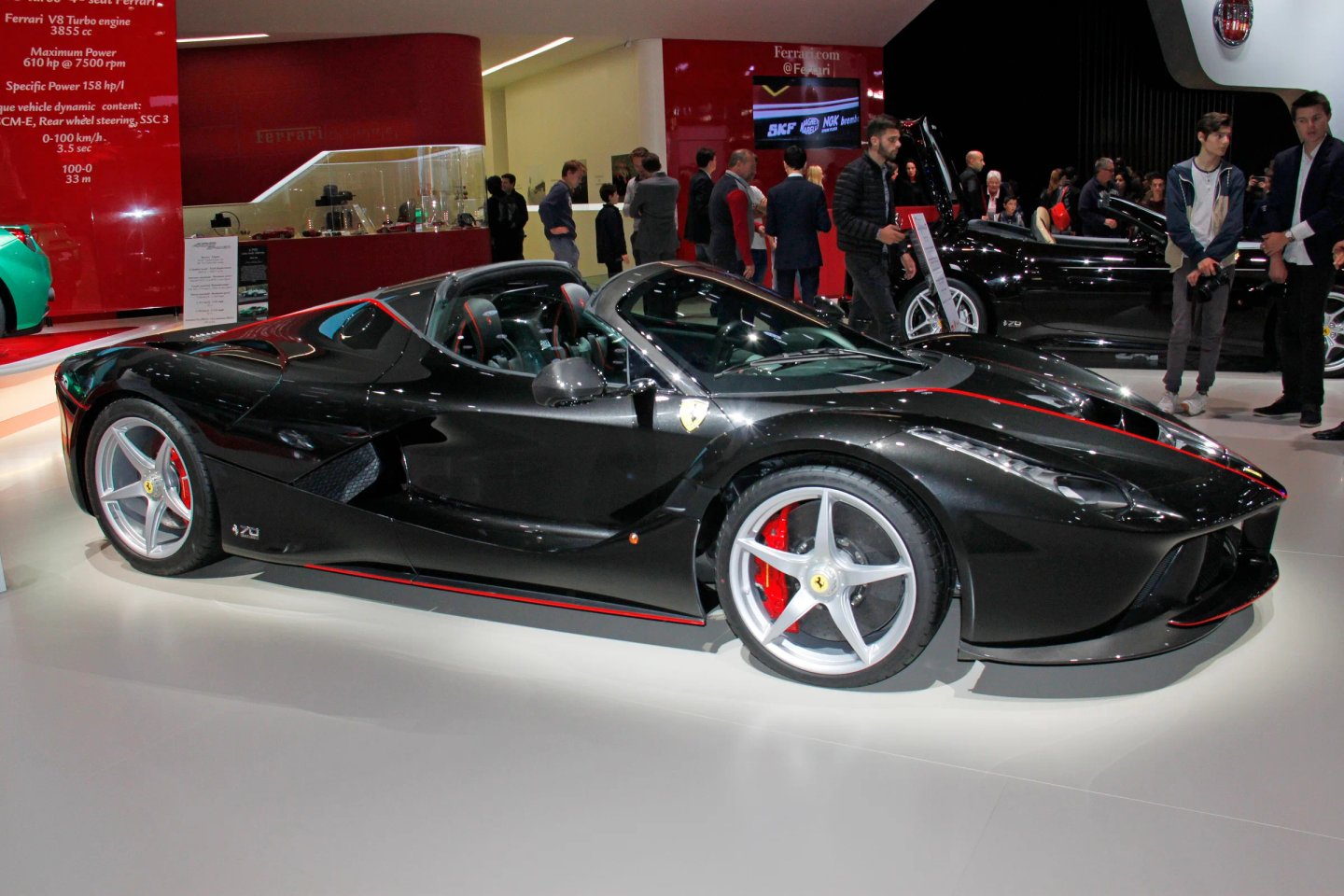
On 29 July 2016, lawyers for Preston Henn filed a complaint in Florida against Ferrari North America. Henn owned the Swap Shop in Fort Lauderdale and was known as an IMSA team owner. He had a LaFerrari, a 488 and a 458 Speciale. He wanted the open LaFerrari as well, the Aperta. He sent a $1 million cheque to a group of executives that included Sergio Marchionne. It came back with a note saying sums like that should not go through the post, and Henn was told he was "not qualified".
He sued for more than $75,000 for defamation. That figure is the floor for getting a case like this before a US federal court, so it says little about the harm. At the end of November 2016 he dropped it, because it was getting too expensive.
Henn offered the money and Ferrari sent it back. So money was not the whole price.
Two prices
A limited car has two prices. One is on the price list. The other is the purchase history that gives you the right to pay the first, and that one is not written down anywhere.
You can estimate what the right is worth from the gap between list and street. The LaFerrari listed at £1.2 million in Britain. In August 2014 the lender Oracle Finance reported buyers paying £1 million on top. On paper, anyone holding an allocation was being handed most of a second car.
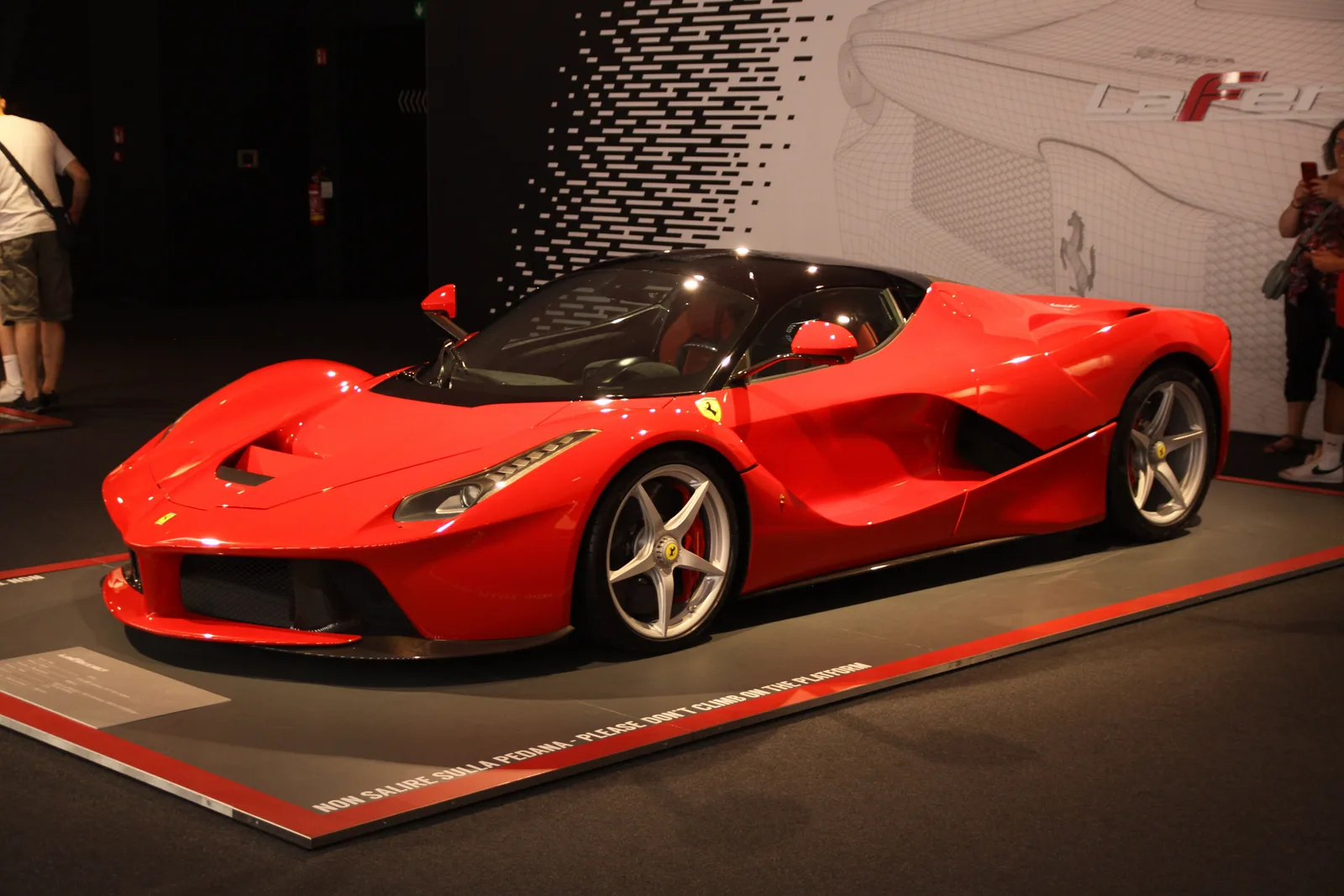
A LaFerrari in the Ferrari museum. Ferrari built 499 of them.
Ferrari could have asked for that money itself. A clue to why it did not comes from a piece evo ran in November 2011. Ferrari planned to offer future special editions to owners of five or more Ferraris, around 300 people by its own estimate, to keep the cars away from speculators. Evo added that £40,000 spent on five bargain Mondials was unlikely to get you in.
That aside says the most. If the number of cars were all that counted, access would have been on sale for £40,000. So something else is being counted: what you have spent with the factory and the dealer over the years. The £1 million gap then stops looking like lost revenue. It is the reward for revenue already banked.
What this looks like when a regulator reads the books
In finance this mechanism has been measured once. Shares in a popular flotation often jump on the first day of trading, so an allocation is worth money, much like a LaFerrari. Between April 1999 and June 2000, Credit Suisse First Boston allocated such shares to more than 100 customers. According to the US regulator, the SEC, those customers sent back 33 to 65% of their profits, through commissions of up to $3.15 a share on unrelated trades where $0.06 was normal. The bank settled for $100 million without admitting wrongdoing.
Nobody demands the books at a car dealer, so no such percentage exists for cars. The shape can still be worked through. Say a buyer needs five new Ferraris to qualify, and each costs them €70,000 in depreciation. That is €350,000, against a gap of roughly €1 million on the car they hope to get: 35%. The figures are invented.
There is an objection. Someone who wanted those five cars anyway has paid nothing extra. True, and for that buyer the second price is zero and the allocation is a gift. But the factory cannot tell from outside who that buyer is, which is why Ferrari looks at the past and asks the dealer.
What a resale clause is for
Ford did something similar with an application form. Between 13 April and 12 May 2016 it received 6,506 applications for the first 500 of the new GT. By its own account it favoured previous GT owners and people who could give the brand some visibility. Every buyer signed an agreement not to resell the car for 24 months.
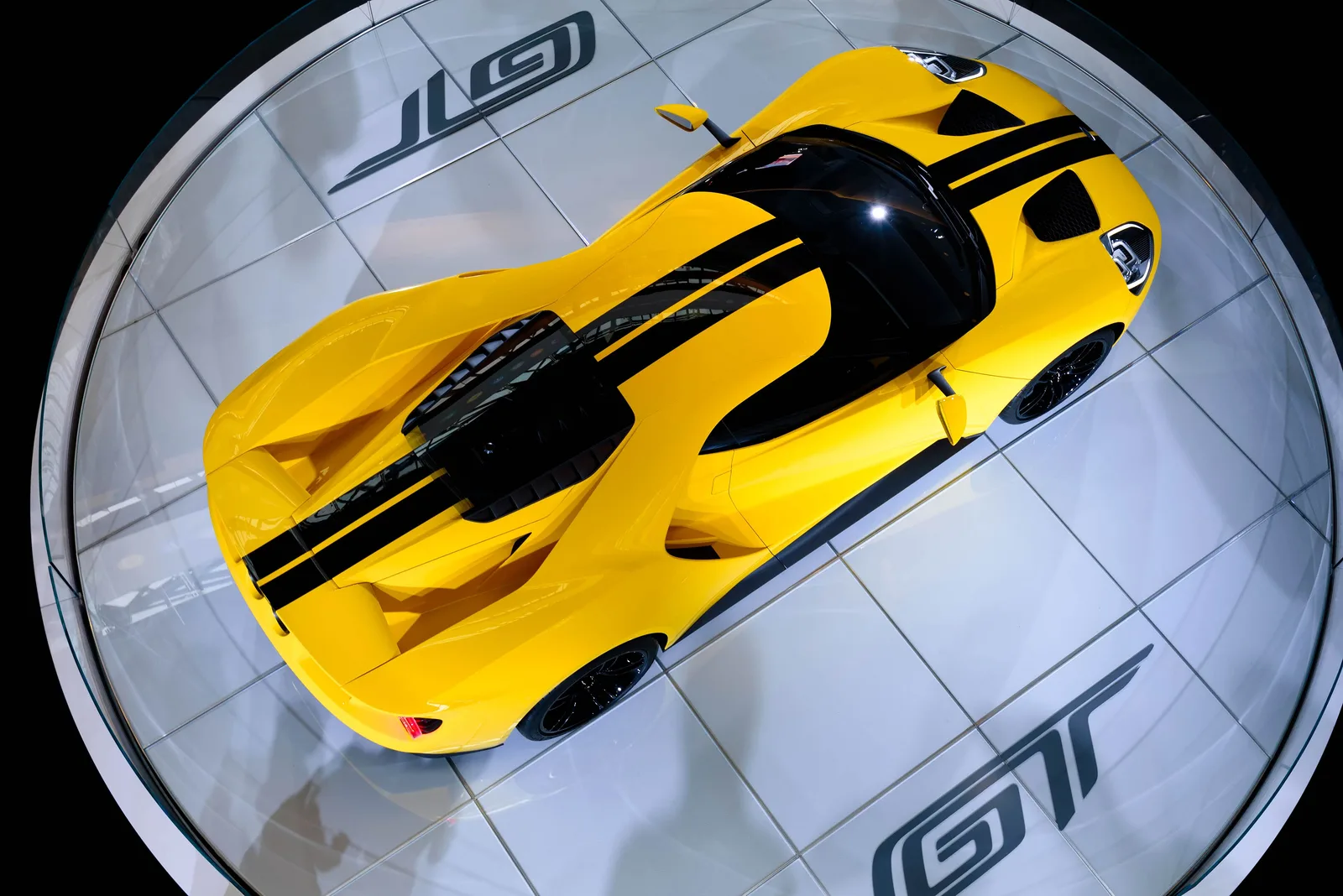
The Ford GT at the 2016 Toronto auto show, the year of the application round.
John Cena sold his within weeks to a dealer in California. Ford sued for the profit, the right to buy the car back and more than that same $75,000. Cena argued that the clause was missing from the dealer's final paperwork. In June 2018 they settled for an undisclosed sum, which Ford said it would give to charity.
So Ford did not want to keep the money. Who does the clause protect, then? Not the next buyer: in May 2018 a GT with seven miles on it made $1.8 million at Mecum, against about $450,000 new, and that bidder knew what they were buying. Not Ford's revenue, which was already in. Not the first buyer, who is the one being restricted. What is left is the allocation itself. If it can be turned into $1.35 million of cash straight after delivery, the next round fills up with people who want the cash. The factory can then no longer reward the people it means to reward.
Ferrari needs fewer judges for this. Ford had one GT programme and had to rely on a contract. Ferrari always has a next car, and the sanction is that you do not get it.
A balance held with one company
The second price works like a credit balance, on worse terms than a savings account. You pay up front and get no statement of what you have built up. The balance is good at one company, and that company decides how large it is. You cannot transfer it. Someone selling a 488 is selling a car, and at auction nobody bids on the place in the queue the last owner hoped to earn with it. The buyer of a used LaFerrari pays the full gap and has still built up nothing with the factory.
The consequence for a buyer is simple to state. Anyone buying a new car in order to qualify for the next is best off working out the purchase as if the next one never comes. If the sum fails on those terms, the difference is money in an account whose balance the factory keeps, and the factory can take it to zero with two words. Henn had a LaFerrari in his garage when he got those two words.
Images: Ferrari LaFerrari Aperta (24) by El monty (CC BY-SA 4.0); Ferrari LaFerrari at the Ferrari museum by Matyáš Solařík (CC BY-SA 4.0); Ford GT (24577793623) by Joe deSousa (CC0). Images resized.


