A rusty car is a sum. If the welding costs more than the car is still worth, it goes to the breaker. In spring 1980 Lancia did that sum itself in Britain. The company bought back Betas with rotten subframes, including six-year-old cars on their second or third owners. By 10 April the count stood at 504 according to the Glasgow Herald, and they were crushed in Somerset. It cost about £1 million, and even the manufacturer did not repair them.
That is an extreme case, but the sum applied to everyone. J.S. Cramer calculated in 1966 that a car in the Netherlands lasted 11 years on average, against 8 before the war. By 2003, according to the Dutch recycling body ARN, it was about 15 years. In 2008 it was 16.6. Around 2025 it is roughly 20.
Nobody collects an eleven-year-old car. A car becomes interesting at twenty or twenty-five, and by then most had gone. That is what rust did for prices. The supply of a classic had been thinned out before anyone wanted one, without any owner having to do anything about it.
What zinc changed
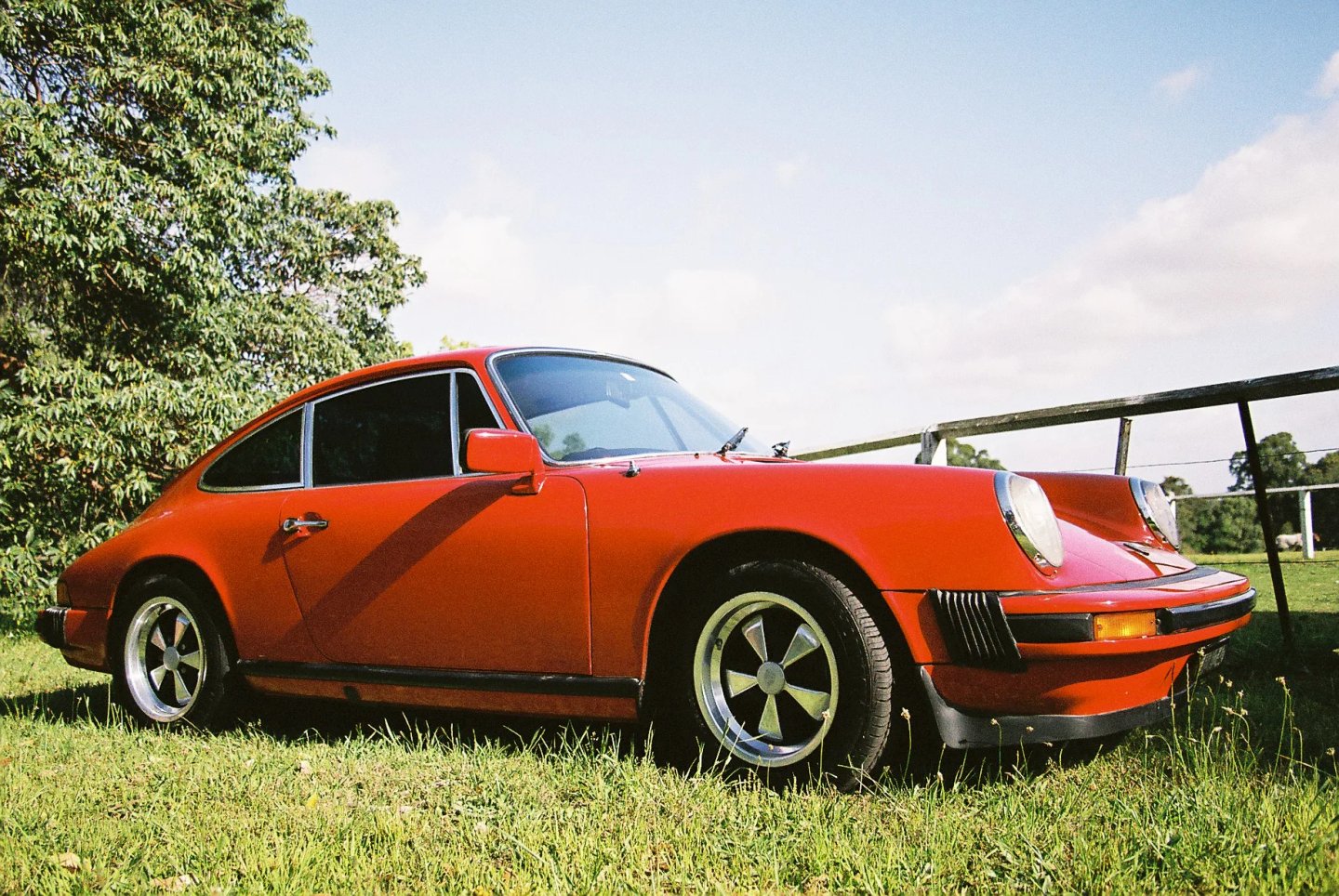
From autumn 1975 every Porsche had hot-dipped galvanised body panels, with a six-year warranty against rust through the floor. Audi followed with a much cheaper car: from September 1985 the body of every Audi 100 was fully galvanised. That largely removed the bill that used to arrive at around ten years old.
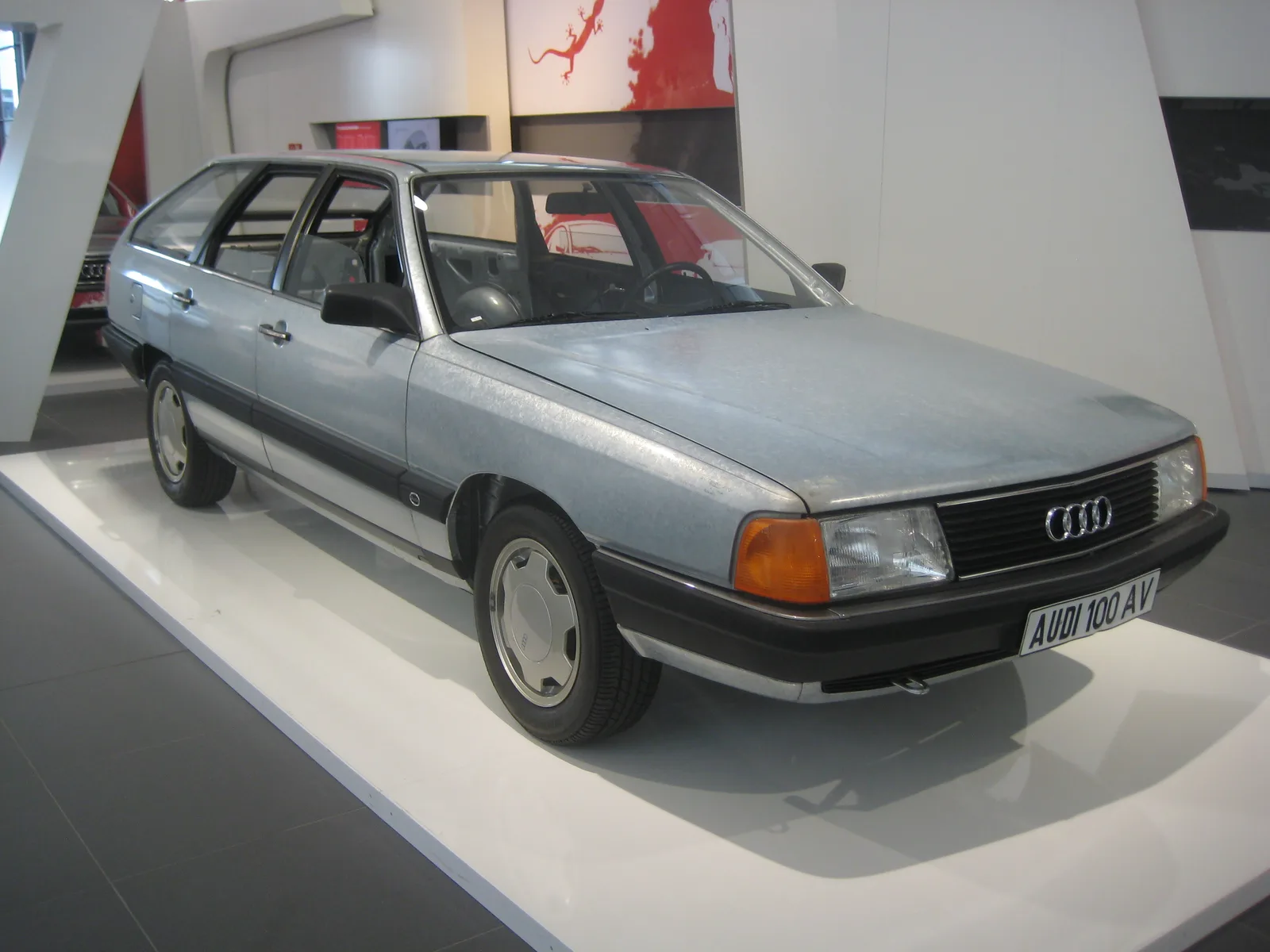
A 1986 Audi 100 Avant without paint, a demonstration model for the galvanised body, at the Audi Forum in Neckarsulm.
The Dutch count is big enough to see the effect. On 1 January 2000 there were 52,114 cars aged 20 to 25 on the road, built roughly between 1975 and 1979. That was about 1 car in 120. In 2005 there were 60,607. In 2010, when cars from the second half of the 1980s had reached that age, there were 127,294. In 2022 there were 491,831, about 1 in 18.
Nobody can say how much of that is due to zinc. Engines lasted longer, new cars got dearer and BPM, the Dutch registration tax, kept people in old ones. The timing fits, and no more than that. The result on the street is clear enough: a 22-year-old car was something special in 2000 and is now simply an old car.
Rust did not hit everyone
If rust was the filter, it should show in cars without zinc. On 3 November 2026 these are the numbers on Dutch plates, imports included, per thousand built:
- Porsche 911 up to 1973: 10.3
- Alfa Romeo Alfasud: 0.27
- Audi 100 C2, 1977 to 1982: 0.14
None of the three has zinc, and the 911 turns up about 75 times as often as the Audi. An old 911 got welded because it was worth it. The Audi did not. Rust only removed the cars nobody would pay the welder for.
In the Audi itself the zinc is harder to find than you might think. Of the C3 up to August 1985, not yet fully galvanised, 271 are on Dutch plates, about 100 per build year. Of the fully galvanised cars from September 1985 there are 484, about 90 per build year, even though they are younger. Build year 1986 alone supplies 220, which probably owes more to the Dutch road tax exemption at 40 years than to metal. The big jump comes earlier, at the change of model: there are 116 C2s, fewer than 20 per build year.
More than half of those C3s were also registered in the Netherlands only later in life. A car that no longer rusts through does not have to stay, either. In 2008, 468,702 cars came off the Dutch register, and 259,275 of those went abroad. The Russian magazine Za Rulem told buyers in the former Soviet Union in 1997 that rust was no worry on this Audi.
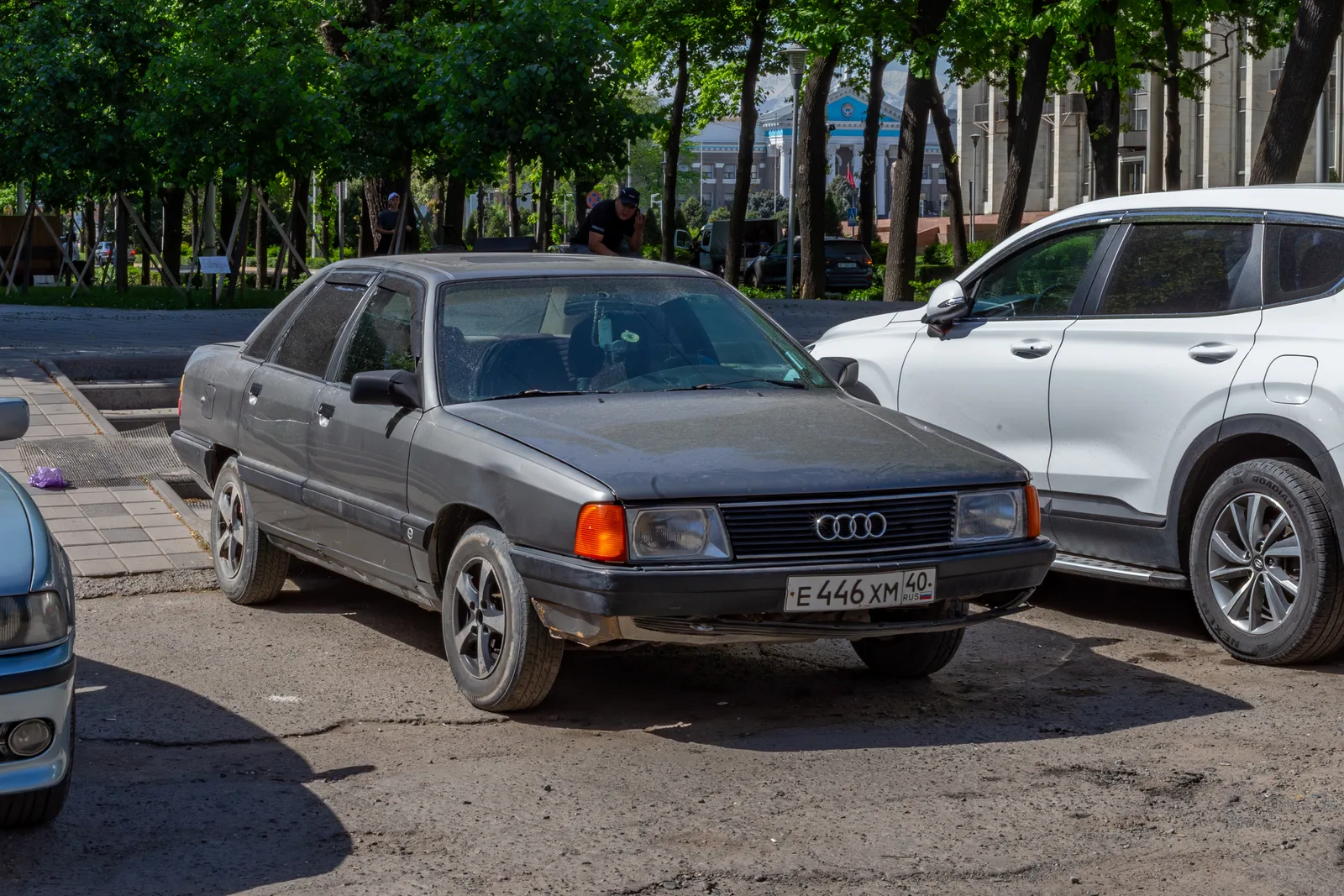
An Audi 100 at the corner of Ryskulov and Manas streets in Bishkek, Kyrgyzstan.
The cull has moved
That is also what the figures by build year show. These are the active cars in the Netherlands on 1 January 2019 and on 1 January 2026:
- Built 1975 to 1979: 32,494 and 33,130
- Built 1985 to 1989: 47,453 and 40,698
- Built 1990 to 1994: 79,506 and 43,998
- Built 1995 to 1999: 460,141 and 118,834
The oldest years have stopped shrinking, partly because imports make up the losses. The younger ones are still going. Of the 1975 to 1979 cars still around in 2000, nearly two thirds remain on paper. Of the 1990 to 1994 cars still around in 2015, a quarter. The two tables from CBS, the Dutch statistics office, count slightly differently, but the gap is too wide to be down to that. The cull that used to happen between ten and twenty years now runs on past thirty.
That affects the comparison many price stories rest on. A coupe from the 1970s was scarce at twenty-five because the cull lay behind it. A youngtimer from 1998 is still easy to find at that age, so scarcity is not yet holding it up. Anyone deriving its price from what the older car did at the same age is comparing two different supply positions.
The reverse is also true. Plenty does not mean permanent. Cars built from 1995 to 1999 lost 14% between January 2025 and January 2026. Earlier years settle at between 33,000 and 44,000 cars per five build years. If this group gets anywhere near that, another two thirds must go, some time in the 2030s. The 1990s will then have what the 1970s already had around 2000: a supply that no longer shrinks by itself, with only the cars someone wanted to keep. It will just happen at 35 or 40 years old instead of 25.
Images: 1976 Porsche 911 2.7 by Khutuck (public domain); Audi 100 Avant C3 Vollverzinkung by DerSporti (CC BY-SA 4.0); Бишкек, Audi 100 на Рыскулова-Манаса by Nikolai Bulykin (CC BY-SA 4.0). Images resized.


