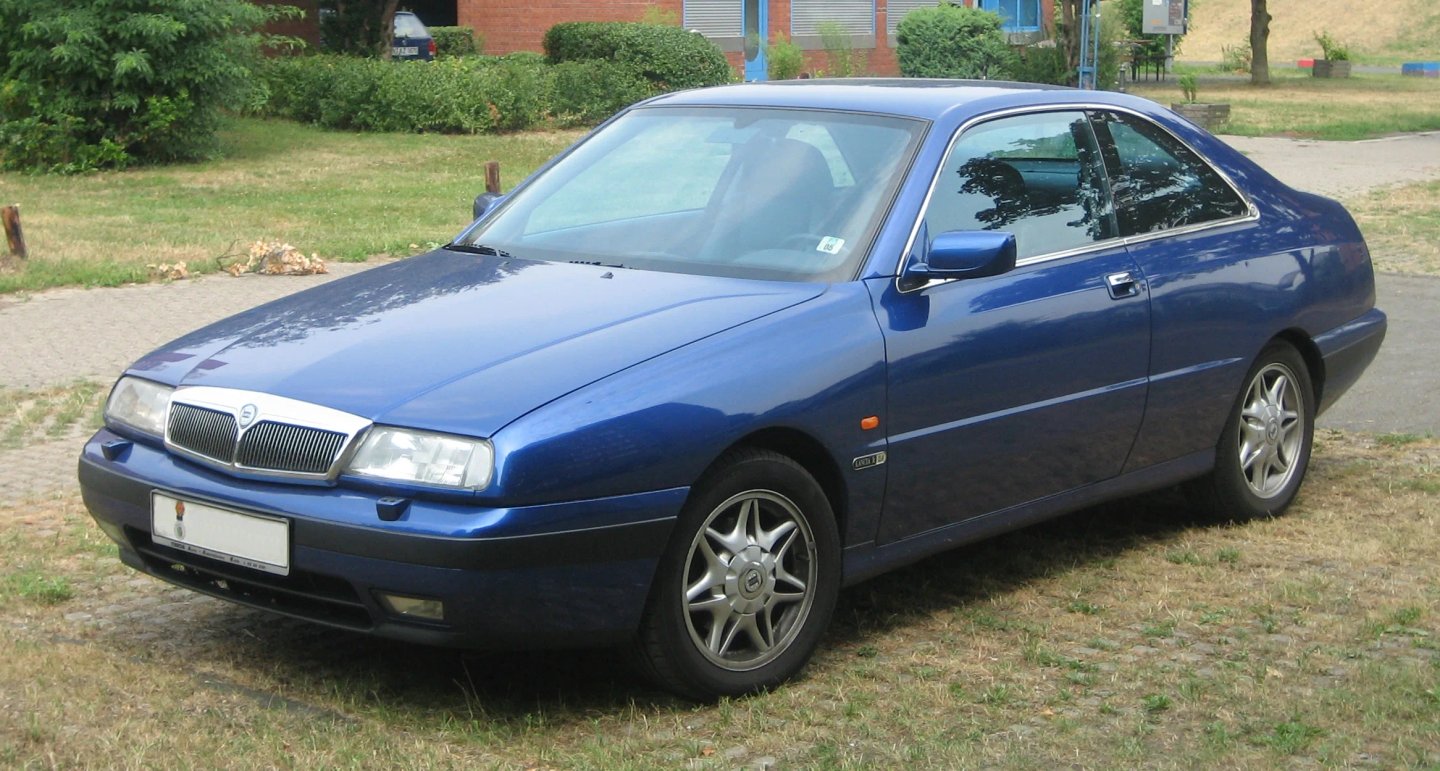
A car with 3,263 examples built costs about the same as one with over a million. On 3 November 2026 Classic Trader listed a 1999 Lancia Kappa Coupé at €11,450 with a Dutch dealer and another, with 175,000 km, at €14,900 in Italy. The same site puts good Mazda MX-5s of the first two generations between €10,000 and €18,000. Those are asking prices from a handful of listings and not a valuation. Even so, Mazda made more than three hundred times as many MX-5s: the count passed a million on 22 April 2016.
The usual reasoning says this cannot happen: the fewer there are, the more each is worth. That may hold for a postage stamp. A postage stamp does not need a clutch.
Two kinds of scarcity
A production figure does not say why it is low. The Ferrari F40 stopped at 1,311, and around 1990 buyers in Europe paid several times list price to get one. There were more buyers than cars. The Kappa Coupé stopped at 3,263 because of the small capacity at the coachbuilder Maggiora and a high price. We know of no waiting list. In a catalogue the two numbers look alike. One is a surplus of buyers and the other is probably a shortage.
What one more car adds
A network effect means a product gains value as more of it exists. With telephones that is obvious. In 1985 Michael Katz and Carl Shapiro described a version in the American Economic Review that is about cars: the quality and availability of service depend on the size of the service network, and that depends on how many have been sold. Their example was foreign makers, whose early sales were slowed by buyers who knew the network behind them was thin.
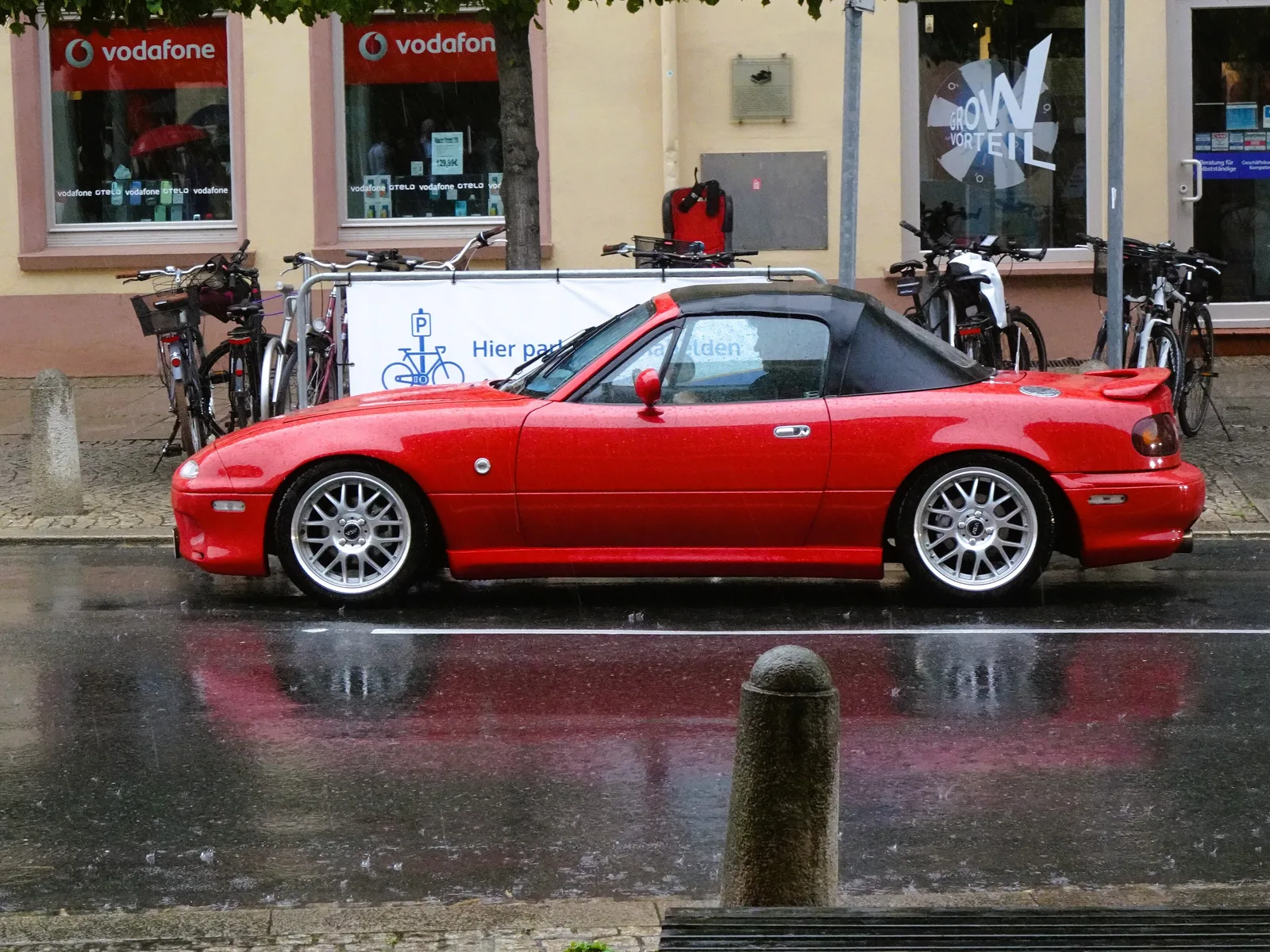
A first-generation Mazda MX-5 from 1993.
With an MX-5, each extra car is another customer for the tyre shop and the rust specialist, another voice on a forum about sills, another reason to remake a soft top. In 2017 Mazda started a restoration service for the first generation in Hiroshima and, with the original suppliers, had parts made again: Bridgestone SF325 tyres, the Nardi steering wheel, the soft top. By 2019 its own technical journal counted 170 types of part. A manufacturer does that because there are customers. The Porsche 911 shows the same at a larger scale. Porsche built the millionth on 11 May 2017 and says over 70% of all 911s are still fit to drive, which is more than 700,000 cars.
The Dutch vehicle register, published as open data by the RDW, shows what this looks like in one country. On 3 November 2026 it holds over 13,500 MX-5s and over 21,000 911s on Dutch plates, leaving out cars flagged as exported. Lancia Kappas from the 1990s: four, this time counting exports, one of them registered as a coupé. That one carries the export flag. (A fifth Kappa in the register is a 35 HP from 1920.)
Then there is what the Coupé shares with other cars. Its engines come from the Kappa range, of which 117,216 were built. But it has a wheelbase 120 mm shorter, a wider rear track and frameless doors. Only the front as far as the windscreen is shared with the other Kappas, and the rear lights come from the Delta. Anyone looking for a door or a side window is shopping in a market of at most 3,263 cars.
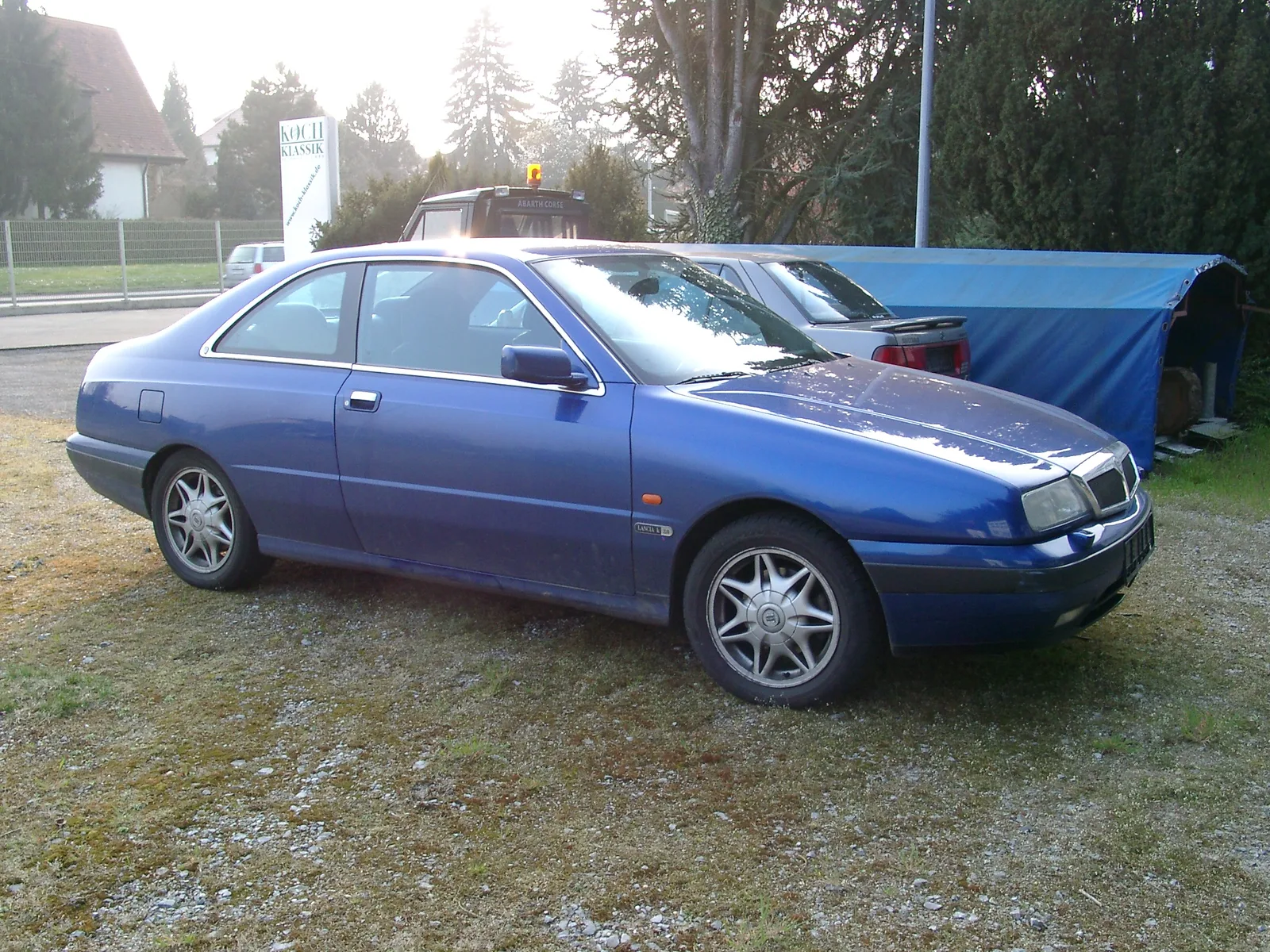
A Lancia Kappa Coupé. The frameless doors and short wheelbase belong to this model alone.
The sum a production figure leaves out
The number of cars is half of it. The other half is what their owners spend each year, because that is what keeps the specialist, the parts trade and the maker's classic department going. A rough sum, on assumptions we chose ourselves:
- MX-5: 500,000 cars still running, €800 a year, together €400 million
- F40: 1,200 cars, €40,000 a year, together €48 million
- Kappa Coupé: 1,500 cars, €1,500 a year, together €2.25 million
These are assumptions. Double them all and the proportions stay. An F40 is rarer than a Kappa Coupé and still has a market over twenty times the size, because each owner spends a lot. The MX-5 gets there on numbers. The Kappa has neither. That is the worst corner to be in: few customers who each spend little, and so little reason for anyone to remake a door.
The objection is obvious: perhaps the Kappa Coupé is simply less wanted, and numbers have nothing to do with it. That is partly true. But the two feed each other. A buyer who knows a door means a search in Italy bids less. A lower price makes a restoration harder to earn back. Fewer good cars survive, and for those that do there is even less reason to remake anything. With an MX-5 the same reasoning runs the other way.
More is not always better either. A million cars also set a ceiling: there are always another hundred MX-5s for sale, and no buyer has to hurry. The highest sums go to scarcity on top of a network. With 991 built, the 911 R of 2016 is rarer than a Kappa Coupé. It also has a brand and a million cars behind it. It was $214,170 new in the US and one with 742 miles made $467,000 at RM Sotheby's at Amelia Island in 2023. That is one low-mileage car and proves nothing about the series. It does show what a buyer pays for: rare enough for the premium, ordinary enough for the specialist.
The production figure in a listing tells you what the factory did. An owner needs the answer to a different question, and no listing gives it: if the door, the control unit or the soft top on this car fails tomorrow, how many other people are looking for the same part?
Images: Lancia Kappa Coupe by User:Bravada (public domain); Mazda MX-5 (1993) (53465078340) by Charles from Port Chester, New York (CC BY 2.0); Lancia Kappa Coupe Side by Rudolf Stricker (public domain). Images resized.


