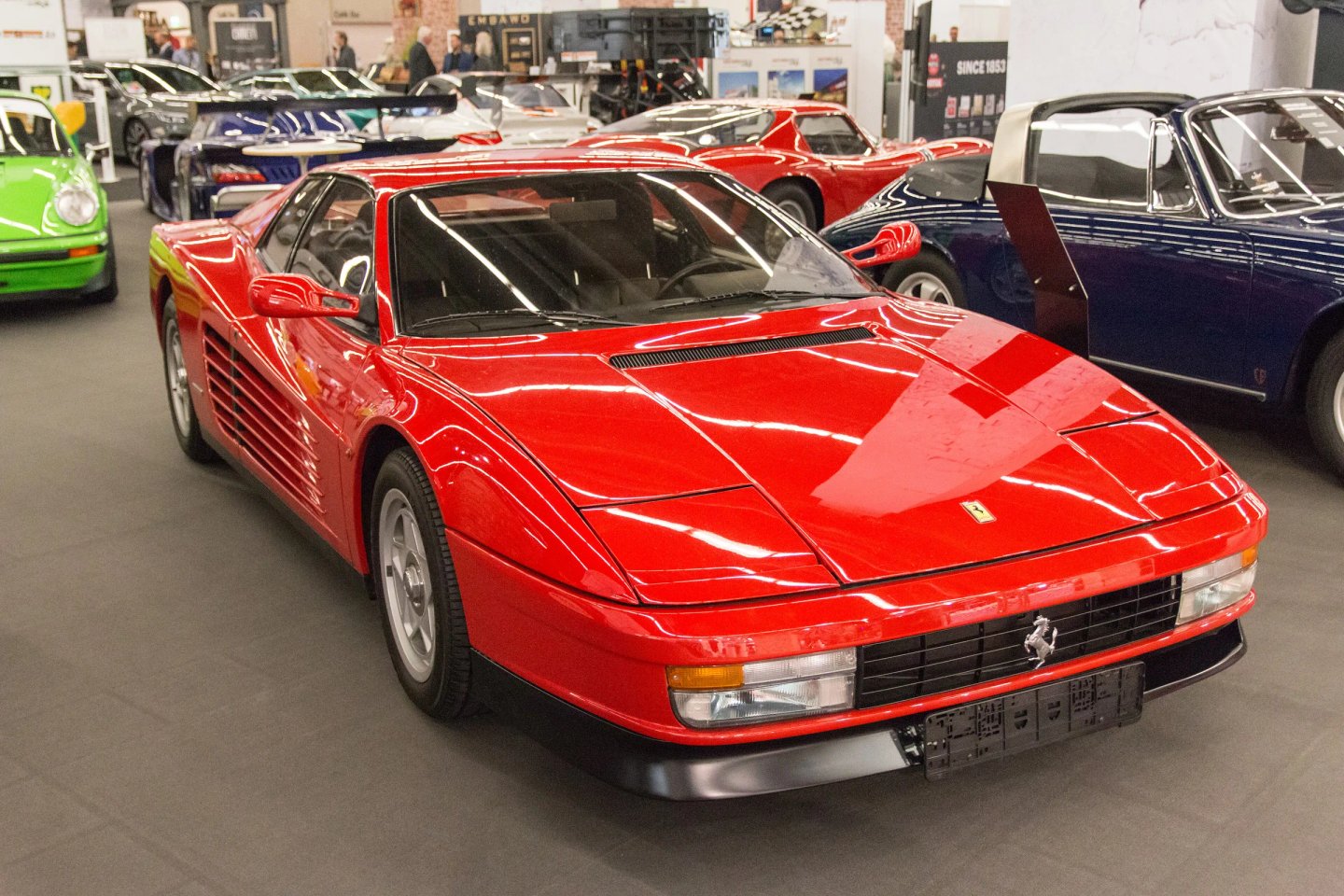
Anyone who was twelve when Ferrari showed the Testarossa at the 1984 Paris motor show turns 55 in 2027. They could not have bought one then, and their parents probably could not either. The odds have improved.
That is the poster car theory: people buy, late in life, the car they wanted when it was out of reach. It usually gets told as an anecdote. It gets more interesting if you take it seriously. Interest rates, fashion and share prices are hard to forecast. Birth years are fixed. Everyone who will be 55 in 2040 has already been born.
What the theory actually claims
It concerns two ages: the one at which the wanting starts and the one at which the money arrives.
The first has been studied, though mostly not with cars. The marketing researchers Morris Holbrook and Robert Schindler had people of different ages rate music, films and clothes from different years, then looked at how old each person was when their favourites came out. For pop music the peak was at 23.5 years, for films 26, for film stars 14 and for fashion 33. Their 2003 paper is cited as a sign that something similar holds for cars. So twelve is a convenient number and not a measured one. The poster goes up at twelve, but taste keeps forming well into the twenties.
For the sums that barely matters, because what counts is the distance to the money. Assume someone is twelve when the car appears, can pay at 55 and starts selling at 75. Those ages are our assumptions.
- Mercedes 300 SL (1954): born 1942, buys from 1997, sells from 2017
- Lamborghini Countach LP400 (1974): born 1962, buys from 2017, sells from 2037
- Ferrari Testarossa (1984): born 1972, buys from 2027, sells from 2047
That list is too tidy. People also buy at 40 or 65, and not every twelve-year-old was looking at the same car. It does give a direction, though. The Testarossa should have twenty more years of buyers arriving and the 300 SL should be losing them.
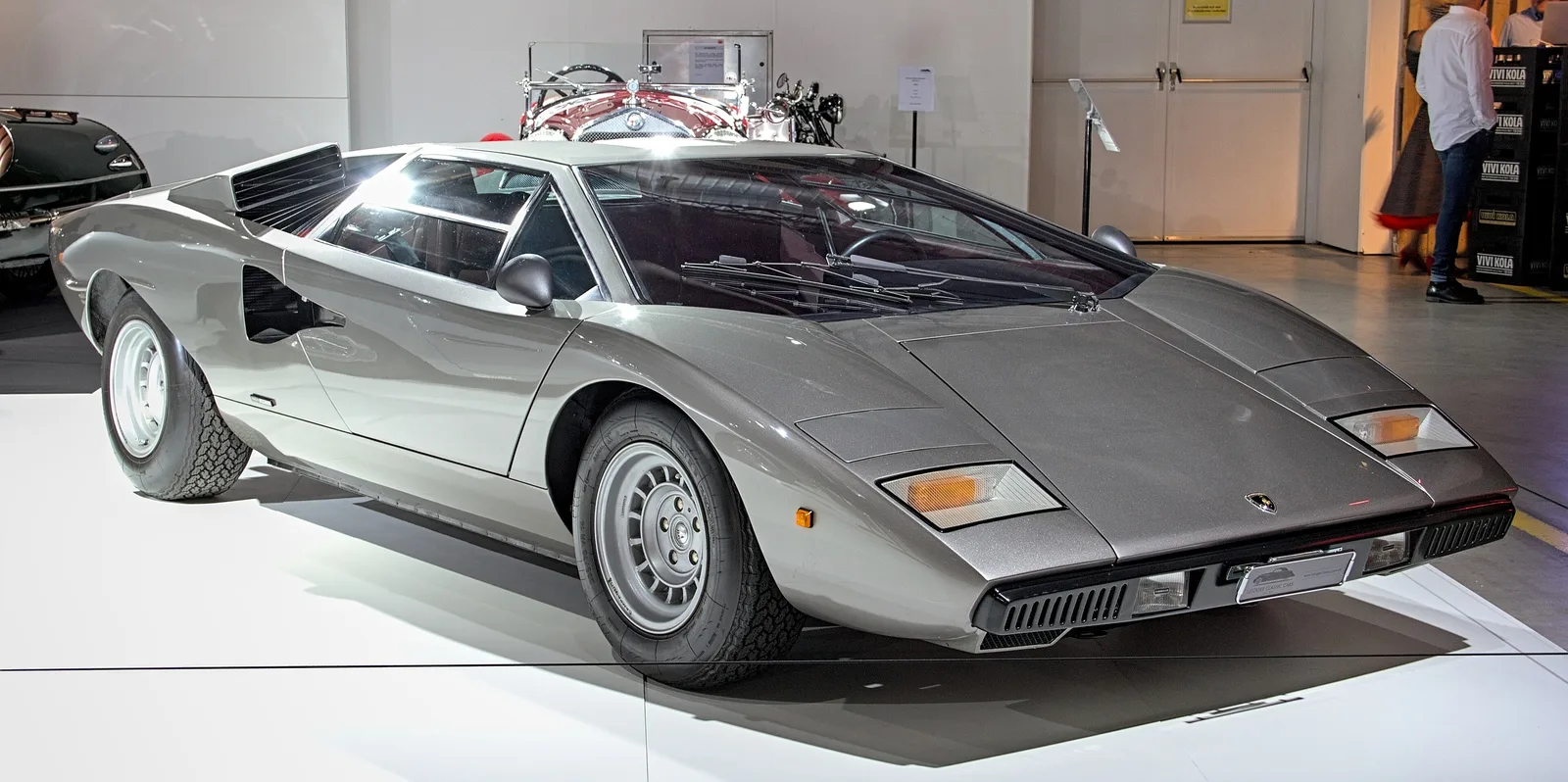
A 1976 Countach LP400 at Auto Zürich in 2021. Lamborghini built 157 of them.
What the numbers show
In August 2024 CNBC put two Hagerty indices side by side. The Supercar Index, sports cars from the 1980s to the 2000s, was more than 60% above its 2019 level. The Blue Chip Index, classics from the 1950s and 1960s, was 3% below. At Monterey that month, 72% of all cars offered found a buyer. For pre-1981 cars priced at a million dollars or more, it was 52%.
Five years is short, and those years also held a pandemic, a jump in interest rates and the rise of online auctions. So this is not proof, though it fits the calendar.
Age is easiest to see with pre-war cars. Of the people worldwide who insured a pre-war car with Hagerty, 83% were born before 1966 as of January 2022, against 65% across all vehicles. Millennials held 0.2% of those cars. Hagerty UK wrote a hopeful piece about it, because the number of Millennials with such a car grew by 65% between 2019 and 2021. As a percentage that is correct. In cars it is about one per thousand.
The car that ignores the calendar
By the list above, the 300 SL should have been losing buyers from 2017. That only half happened. John Mayhead of Hagerty UK wrote in December 2024 that the Roadster is indeed flattening while the Gullwing keeps rising. In January that year a steel-bodied example made $3,410,000 at Barrett-Jackson, a record for a car without the alloy body.

A 300 SL Gullwing at Techno-Classica in 2024. Mercedes built 1,400.
Monterey had an even clearer case in 2024. The second most expensive car of the week was a 1938 Alfa Romeo 8C 2900B Lungo Spider, at $14,030,000.
Someone who was twelve in 1938 would have been 98.
So the theory fails here, or it describes only one kind of demand. There are at least two. The buyer of a Testarossa often wants the car they once wanted. The buyer of a Gullwing in 2024 mostly cannot have that memory. They are buying something other collectors recognise and know the price of. Call it rank. That kind of demand has no birth year.
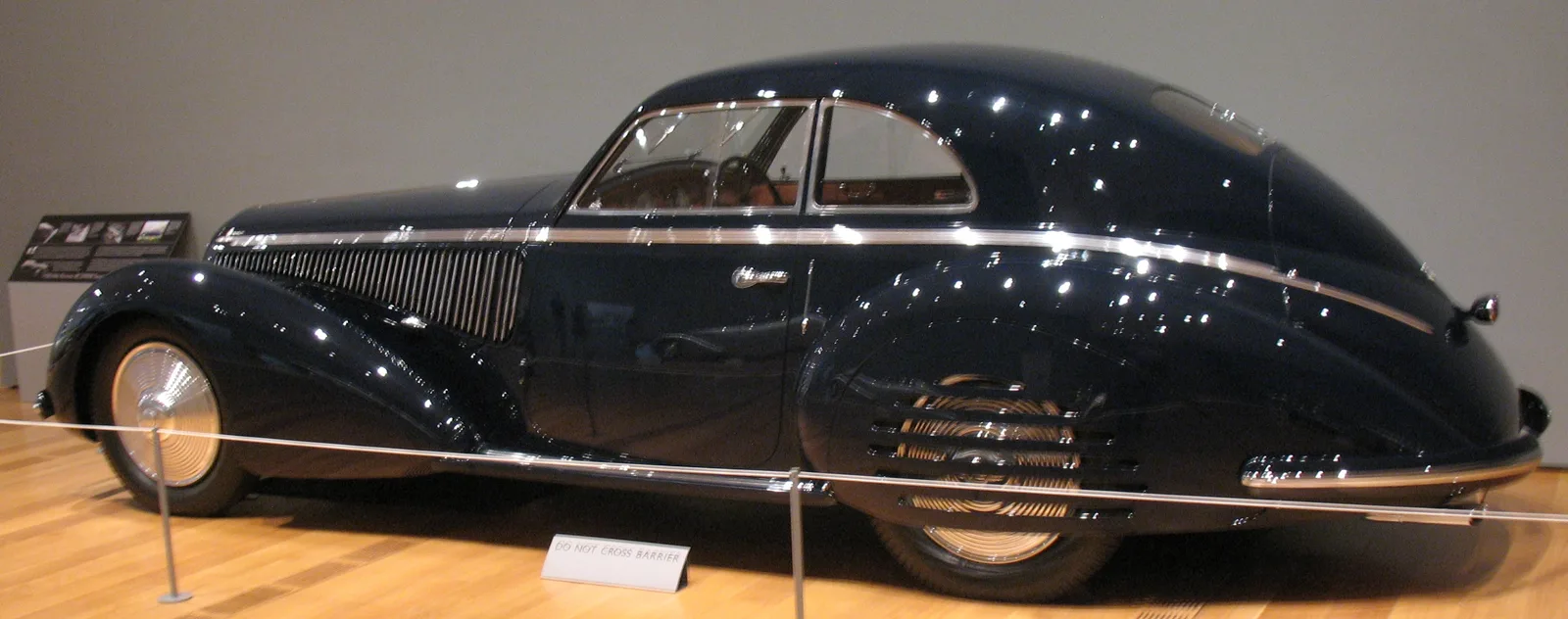
A 1938 Alfa Romeo 8C 2900B, here the Touring Lungo Berlinetta. The Monterey car was a Lungo Spider.
How many cars make that crossing is what an investor would want to know, and it looks like few. A record counts one buyer. A sell-through rate counts all of them. In the week that Alfa made over $14 million, nearly half of the expensive old cars went unsold. Mayhead sees something similar within the Gullwing: cars that change hands often sell below the Hagerty guide price, and those long held by one owner sell above it. Rank also works better with few cars. There were 1,400 Gullwings and 7,177 Testarossas.
Why the calendar is not free money
The obvious objection: if birth years are this predictable, everyone knows and it is already in the price. Largely true. The French auction house Aguttes says the Testarossa market has been booming for years, and nobody needs to wait for 2027 to see that. The calendar says something about the direction of demand. It does not say whether a car is too dear or too cheap today.
What it is good for is a question rarely asked of a blue chip: who buys this car in twenty years, and why? A car that leans mainly on memory has a date on which the people holding that memory start to sell. The next buyer then needs another reason. For the Testarossa, on the list above, that begins around 2047. With 7,177 built, rank is not an obvious answer.
The twelve-year-old of 1998 did not need a poster. Gran Turismo reached Europe in May that year and went on to sell more than 10 million copies, with the Nissan Skyline GT-R and Toyota Supra among its cars. That child was born in 1986 and turns 55 in 2041. They have already driven those cars, on a screen, which is a different thing from looking at a Countach on a wall. What that does to their willingness to pay cannot be measured yet.
Images: Ferrari Testarossa IAA 2019 JM 0399 by Johannes Maximilian (CC BY-SA 4.0); Lamborghini Countach LP400 Periscopio (1976) Auto Zuerich 2021 IMG 0460 by Alexander Migl (CC BY-SA 4.0); Mercedes-Benz 300 SL, TC 24, Essen (TCE42870-RR) by Matti Blume (CC BY-SA 4.0); Alfa Romeo 8C 2900B Lungo Berlinetta Touring 1938 412035 (Shirley) at The Allure of Automobile 2010 (2) by hoyasmeg (CC BY 2.0). Images resized.


