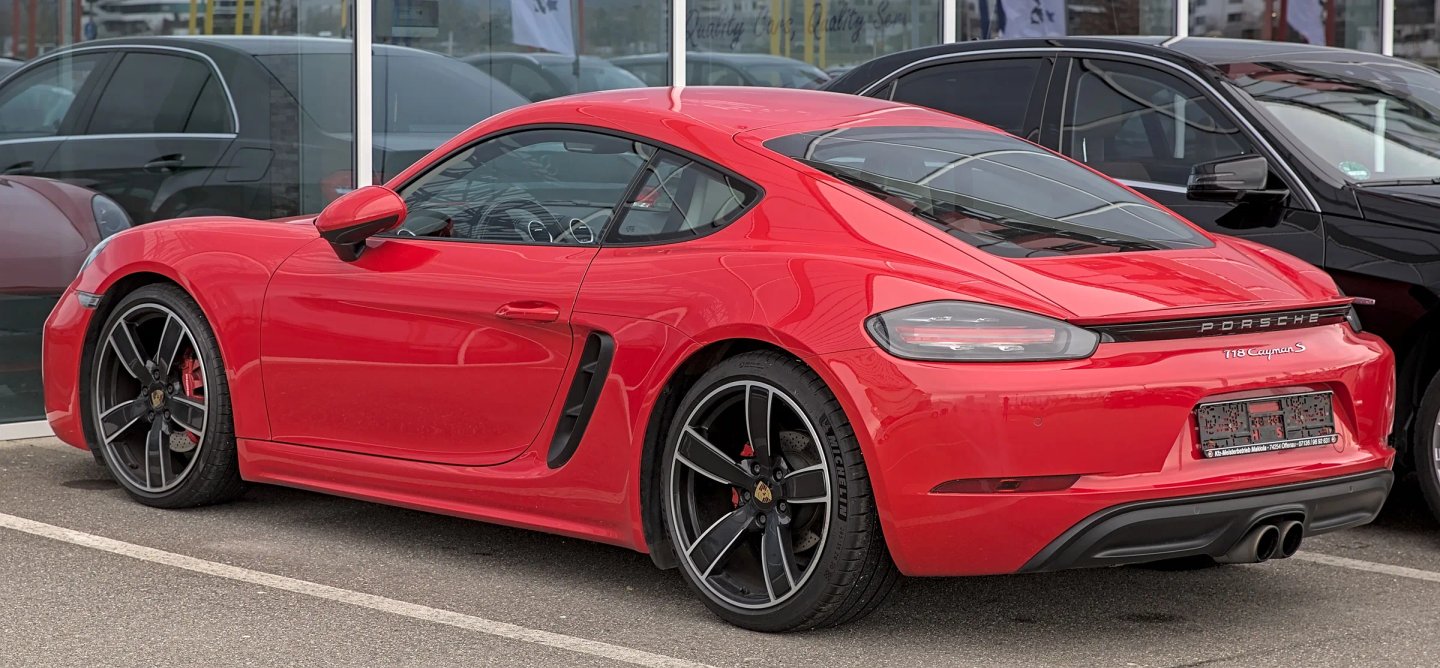
Euro 7 would not have reached the Porsche 718 for years: that exhaust standard applies to all new passenger cars in the EU from 29 November 2027. A rule about hackers got there more than three years earlier. From July 2024 the 718 Boxster and Cayman could no longer be newly registered in the EU.
UN Regulation R155 was adopted in 2020 by the UNECE (the UN's economic commission for Europe) and reached the EU through the General Safety Regulation. New vehicle types had to comply from July 2022, all new cars from July 2024. The maker must run a cybersecurity management system and show that the car is protected against a list of about 70 vulnerabilities, from development to after production. Its sister rule, R156, deals with software updates. For a car already registered, nothing changes.
A fixed sum over few cars
The 718's problem was its electrical architecture, which did not meet the rules. According to Motor1, Porsche estimated that fixing it would cost about half the budget of an entirely new model. Volkswagen said something similar about the Up and the Transporter T6.1. Its brand chief spoke of a completely new electronic architecture.
A sum like that is a fixed cost. It is the same whether you go on to sell a thousand cars or a hundred thousand. On a new platform it disappears into the development budget and years of sales. On a platform nearly at the end of its life, it has to come back out of whatever is left.
How much was left for the 718? The petrol car stayed in production outside the EU until October 2025, so EU sales lost fifteen months. In 2024 Porsche delivered 23,670 Boxsters and Caymans worldwide. Porsche has given no EU share for the 718. For the Macan it spoke of about a third, and we borrow that here as an assumption. That makes about 9,900 cars. Every €100 million of changes then comes to just over €10,000 a car. Porsche names no figure. Use €300 million (another assumption) and it becomes €30,000 a car.
The car itself was still selling. In 2025 Porsche delivered 18,612 Boxsters and Caymans worldwide, even without the EU. So the 718 was not banned. The rule asked for an investment, and on these volumes it would probably not have come back.
Why the GT4 RS could stay
The 718 Cayman GT4 RS and the Boxster Spyder RS did not have to go. Porsche gave their very low production numbers as the reason. So the 718 that stayed started at about €155,000, and the cheaper ones disappeared.
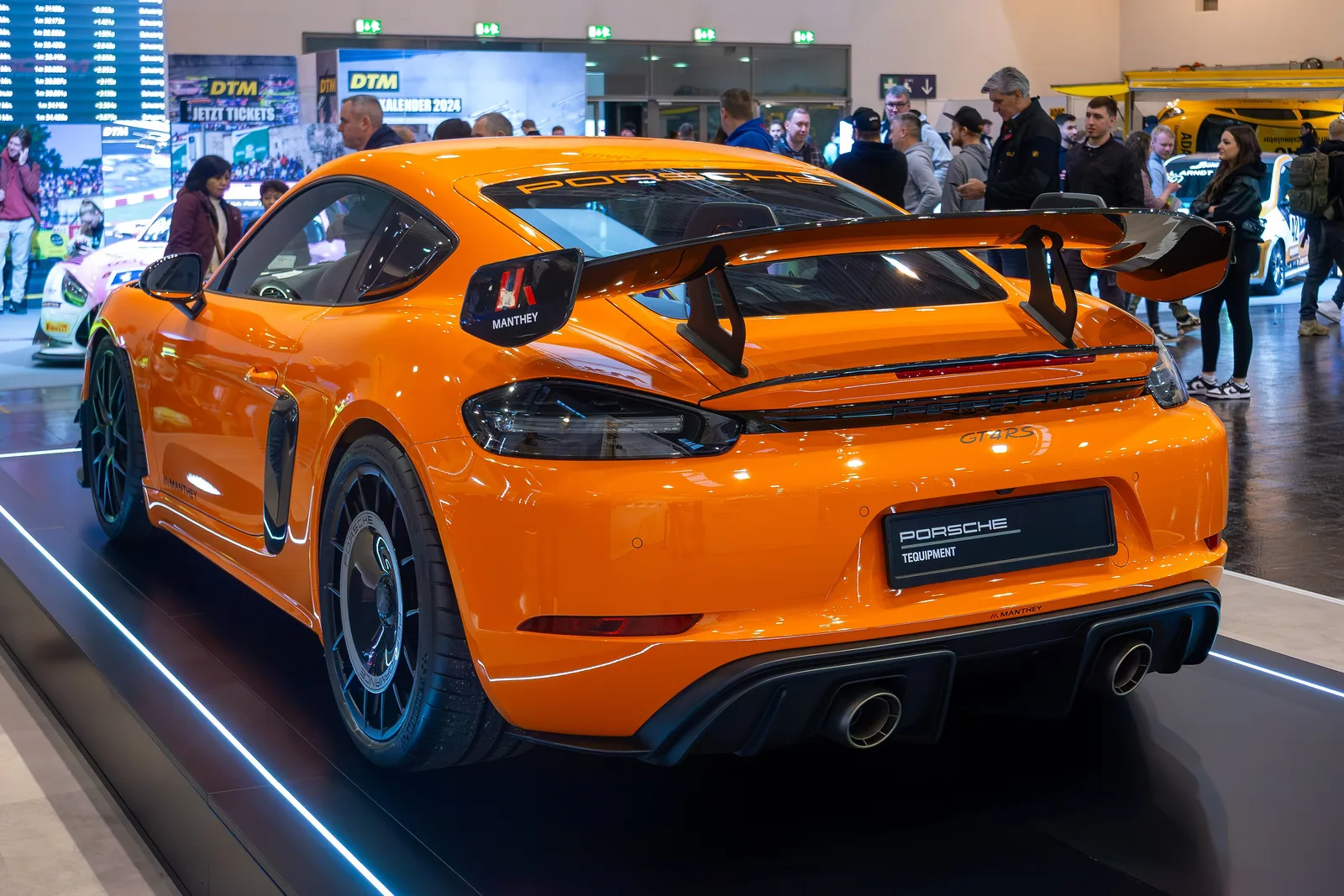
A 718 Cayman GT4 RS with Manthey parts at the Essen Motor Show in 2023.
That shows who suffers most from a rule like this. A car small enough stays outside it. A car big enough can share the cost. In between sits a middle group: too many cars for the exemption and too few for the bill, often on a platform already years old. Sports cars tend to sit in that group.
The Toyota GR86 is the clearest example, though it fell under another part of the General Safety Regulation. Toyota said as early as December 2021 that the car would only be on sale in Europe for two years. Meeting the rules, the brand said, would have meant a complete re-engineering. Subaru stopped the BRZ too. In Europe, then, the GR86 had an end date on the day it arrived.
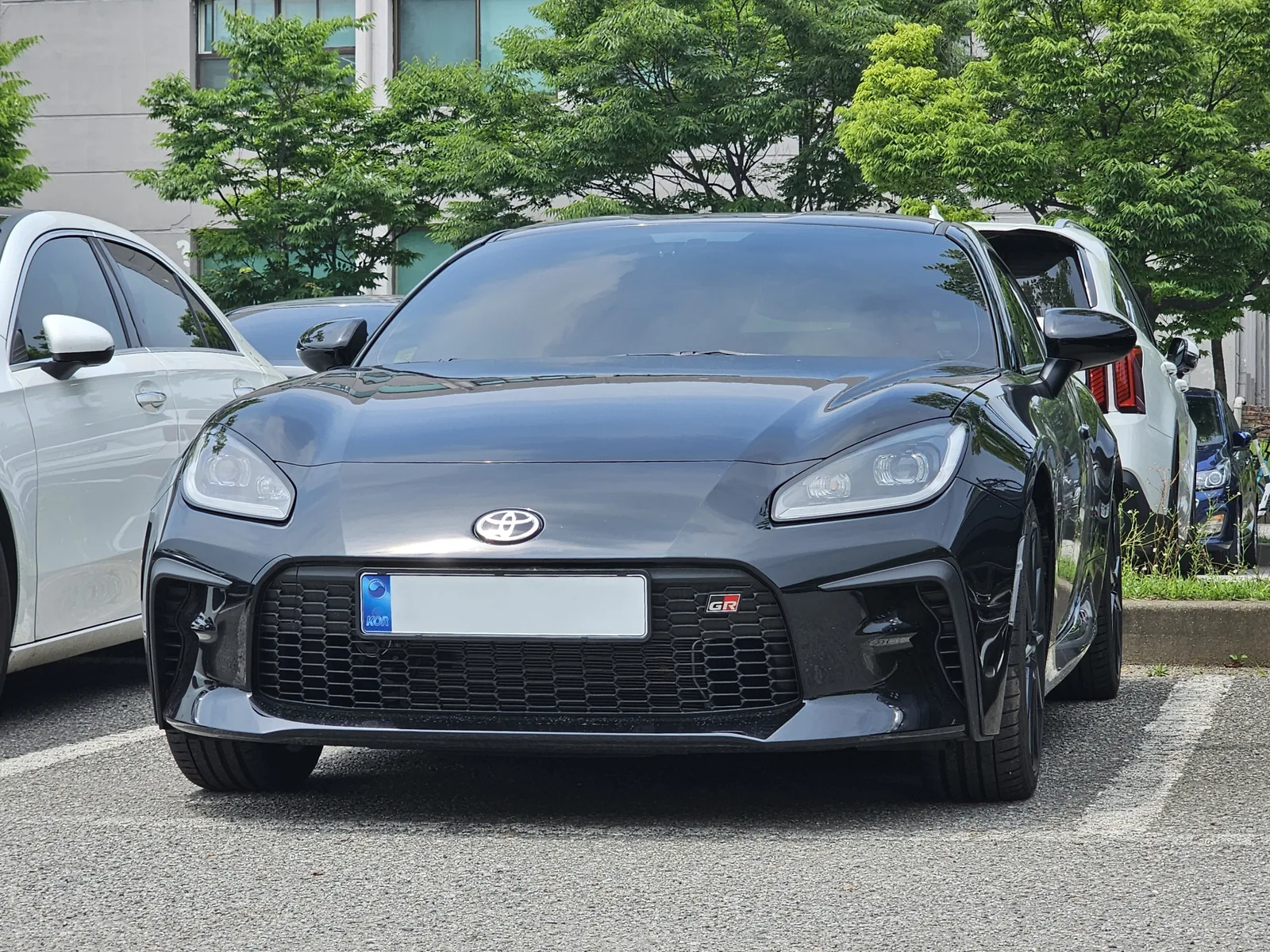
A Toyota GR86 (ZN8). In Europe it was planned from the start as a two-year car.
This changes something in the economics of an old platform. For a long time new rules applied first to new types, and existing types carried on. The English word is grandfathering. A platform earns most in its final years, once the development is paid for. That arrangement protected those years. With R155 there were two years between new types and all cars. After that, an old platform gets a bill that belongs to a new one.
Was the rule the cause?
Killed is a big word for fifteen months. The Dutch lawyer Arnoud Engelfriet pointed out in May 2024 that R155 has a transitional clause. For types approved before 1 July 2024 that could not be developed under the new system, the maker has to show that cybersecurity was adequately considered during development. His conclusion: VW and Porsche decided these models were no longer worth the investment. That is different from being unable to comply.
There was more going on as well. Porsche had already announced an electric successor to the 718 for 2025, since moved back to production in 2027. And the sum works less well for the Macan. In 2024 Porsche still delivered 64,517 with combustion engines, mostly outside the EU. If the EU is a third of the whole, that means over 30,000 cars a year, and €300 million over two years is about €4,700 a car. Originally the petrol Macan was to stay in the EU beside the electric one, and every electric Macan helped with the CO2 target. How much that weighed is not known. The rule set a date by which the sum had to be done. The answer also came from other plans.
For anyone who owns a 718, nothing changes: the rule concerns new registrations. The open question is about cars still on sale new. The General Safety Regulation took another step in July 2026. Autocar reports that the Land Rover Discovery Sport stops at the end of 2026, and other outlets tie that to the same step. Euro 7 follows on 29 November 2027. Carmakers do these sums internally and do not publish them. A buyer of a manual sports car on an older platform only sees the result when the model drops out of the configurator, and nothing says how many models that will hit before that November day.
Images: Porsche 718 Cayman S 1X7A1629 by Alexander-93 (CC BY-SA 4.0); Manthey Porsche GT4 RS, EMS 23, Essen (P1160647-RR) by Matti Blume (CC BY-SA 4.0); Toyota GR86 2.4 6MT Premium ZN8 Crystal Black Silica (15) by Damian B Oh (CC BY-SA 4.0). Images resized.


