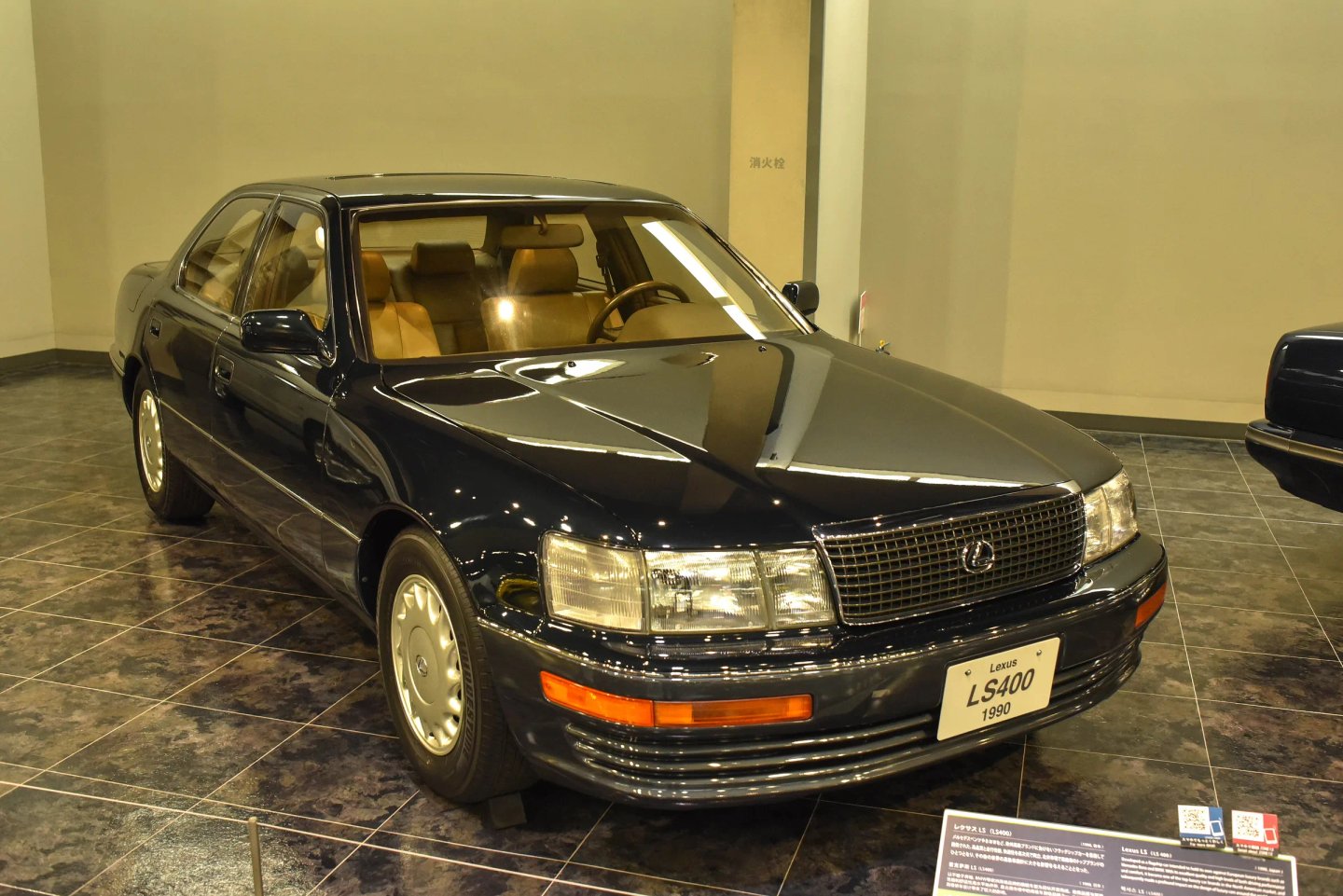
In September 1989 Toyota launched Lexus in the United States. The LS400 cost about $35,000. A six-cylinder Mercedes 300 SE was $53,200 according to Consumer Guide, and a 560 SEL $74,050. The Lexus had a V8 and undercut even the six-cylinder car from Mercedes' mid-size range.
Six years later, on 1 June 1995, the trade magazine Ward's wrote about the new E-Class, the W210. It was 20% cheaper to build than its predecessor, despite more equipment. Auto Motor und Sport reported the Mercedes board going further, with 30%. Ward's added that the engineers had always believed they had to build the best cars in the world, "no matter what".
Between those two moments lies the usual story: Lexus arrived, Mercedes began to cut costs and the W124 was the last real one. Part of that is true.
Costs first or price first
There are two ways of arriving at the price of a car. With cost-plus you add up what the car costs and put your margin on top. The engineer decides what the car will be and the customer pays for it. Target costing starts from the other end. What will the market pay and what has to be earned? What remains is what the car may cost. That figure goes to the engineer. The Japanese version of the method came out of the 1960s car industry, Toyota included.
Cost-plus only works as long as customers have no cheaper alternative they take seriously. Economists call this a price umbrella: while the biggest sellers price high, they can all shelter under that price and nobody has to count too hard. In America, BMW and Mercedes held up such an umbrella together in the 1980s. The surplus in a Mercedes of the time was not a matter of character. It existed because someone was paying for it.
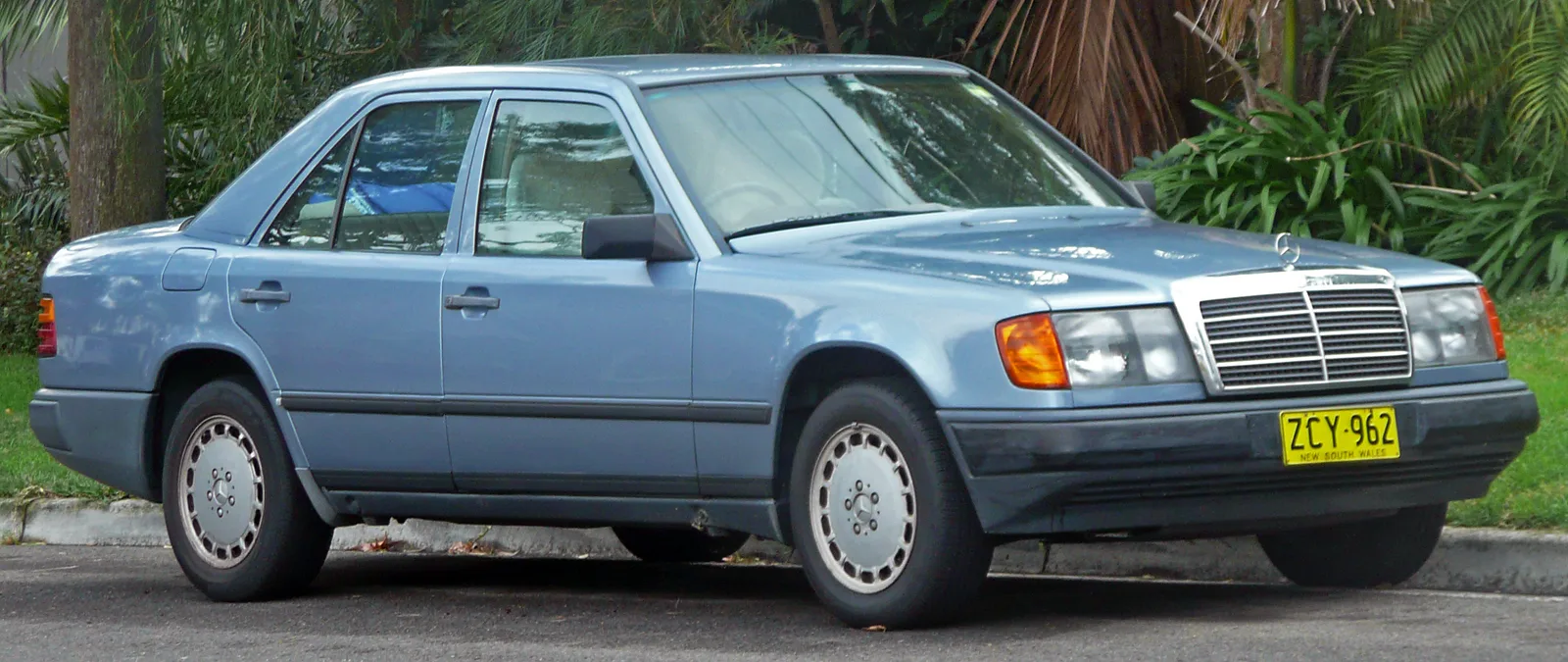
An early Mercedes 300 E of the W124 series, at the roadside in Australia.
What the LS400 did and did not prove
The idea that Lexus simply made the same quality for less is too simple. Toyota spent six years on it, from 1984. The design was approved in May 1987 after eight earlier proposals. Toyota's own history counts about 450 prototypes and more than 3.5 million test kilometres. Development cost over $1 billion. BMW promptly accused Lexus of selling below cost.
Nor was the car better across the board. In an Auto Motor und Sport comparison with the BMW 735iL and the Mercedes 420 SEL the Lexus came last: the best powertrain, but behind on bodywork, road holding and comfort. It made little difference. A rival does not have to win the test to set the price. It only has to be good enough for a buyer who sees nearly $18,000 between it and a 300 SE. Once that buyer exists, customers can say no. Then cost-plus is over.
Lexus was not the only cause either. Development of the W210 began in 1988, before the LS400 was on sale. In December 1992 the Christian Science Monitor reported that Mercedes would cut 27,000 jobs by the end of 1994 and was selling 30,000 fewer cars that year than expected. An analyst called the new S-Class a failure and too big for European streets. A spokesman for the German industry named the problem as productivity and high costs. German wages and a recession made cuts necessary. Lexus removed the excuse that the customer would pay anyway. Ward's named Lexus as a competitor in 1995 and wrote that this had been the most important discussion inside the company for two years.
The W210 and the rust
The W210 arrived in May 1995. The advertising came down to more car for less money. Auto Motor und Sport later worked out that Mercedes claimed a price advantage of 4.2 to 6.7% over the W124, after raising W124 prices by about 1.6% shortly before. A total of 1,653,437 were built.
From around 2000 the rust came. Mercedes resprayed whole roofs under goodwill and strut mounts rotted away at the welds. Goodwill generally ran up to the eighth year, and for some parts the tenth.
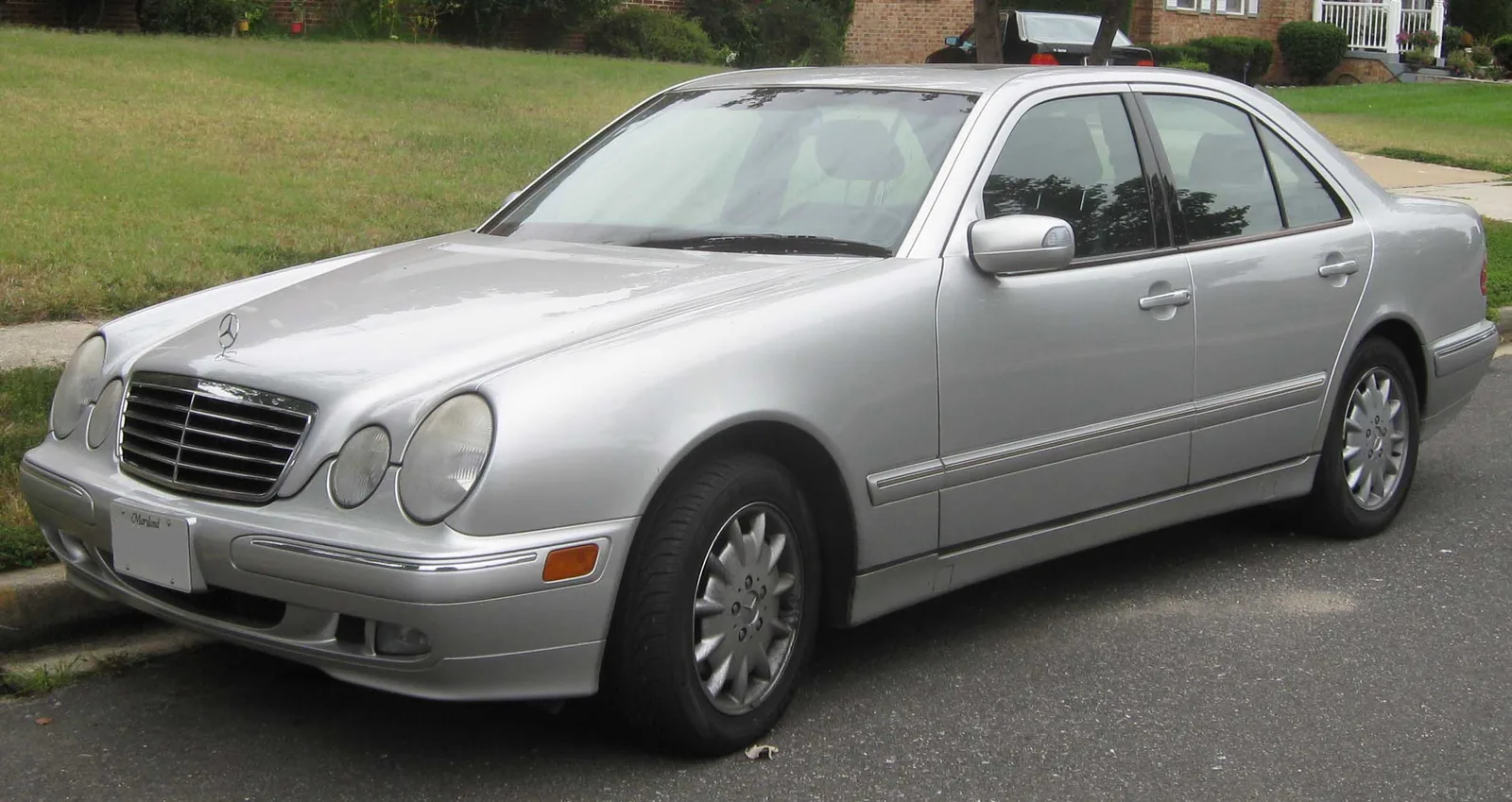
A W210 in Fort Washington, Maryland.
It is tempting to read that rust as the bill for the savings. That is only partly right. Auto Motor und Sport lists poor cavity protection, inferior sheet steel and blunt stamping tools. Those are decisions with money in them. It also lists water-based paint, which exists to reduce solvent emissions. A 2000 doctoral thesis by Ina Katrin Gühring at the University of Stuttgart linked the problem to bacteria in the dip-paint bath. A bacterium is not a saving. How much of the rust belongs on which bill cannot be worked out from outside.
What the W124 was at the time
The W124 is now seen as the last true Mercedes, the same magazine writes, before reminding readers of its serious quality problems after the 1984 launch. Around 1990 it was an expensive and well-built car with its own weak spots. Its name came from what followed it.
The price that set all this off did not stay put either. According to Cars.com, an LS400 already cost $44,300 in 1992, $51,200 in 1994 and $52,000 in 1995. That is nearly 50% above the launch price, in dollars of the time. The rise is put down to customer demand and exchange rates. Whether Toyota planned it that way we do not know. In the year Mercedes could build its W210 for 20 to 30% less, Lexus was asking about what a 300 SE had cost five years earlier. The $35,000 that made the W124 a legend was an introductory price.
Images: 1990 Lexus LS400 Sedan by Coolalabright (CC BY 4.0); 1986-1989 Mercedes-Benz 300 E (W124) sedan 01 by OSX (public domain); Mercedes-Benz E-Class W210 by IFCAR (public domain). Images resized.


