A bid in an online auction does two things. It raises the price and it tells the other bidders something. On day two of a seven-day auction the first does nothing for the bidder. The second can cost the bidder money.
That is why the standing on day five says so little about the result. In a 2005 interview the Harvard economist Alvin Roth called early bids a poor predictor of the final price. It looks as if buyers only wake up at the last moment. The measurements point somewhere else.
What a bid gives away
Economists separate two kinds of value. Private value is what the car is worth to you: you have always wanted this colour, or your father had one. Common value is what it is worth to anyone, roughly what it would fetch when sold on. Nobody knows that second number exactly, so bidders partly work it out from each other.
A car is both. Say a well-known Porsche specialist bids on a 964 on day two. They have just told everyone that they read the listing, studied the photos and saw nothing that put them off. That conclusion cost them time and they are giving it away. Anyone bidding after the specialist gets the assessment for free, with six days left to use it.
What the eBay and Amazon numbers showed
The best-known measurement comes from Roth and Axel Ockenfels, in the American Economic Review in 2002. They took 480 auctions from October 1999 to January 2000, half from eBay and half from Amazon, in two categories: computers and antiques. Computers have a known shop price. With antiques the value is unclear and an expert has an advantage. An enthusiast car belongs in the second group.
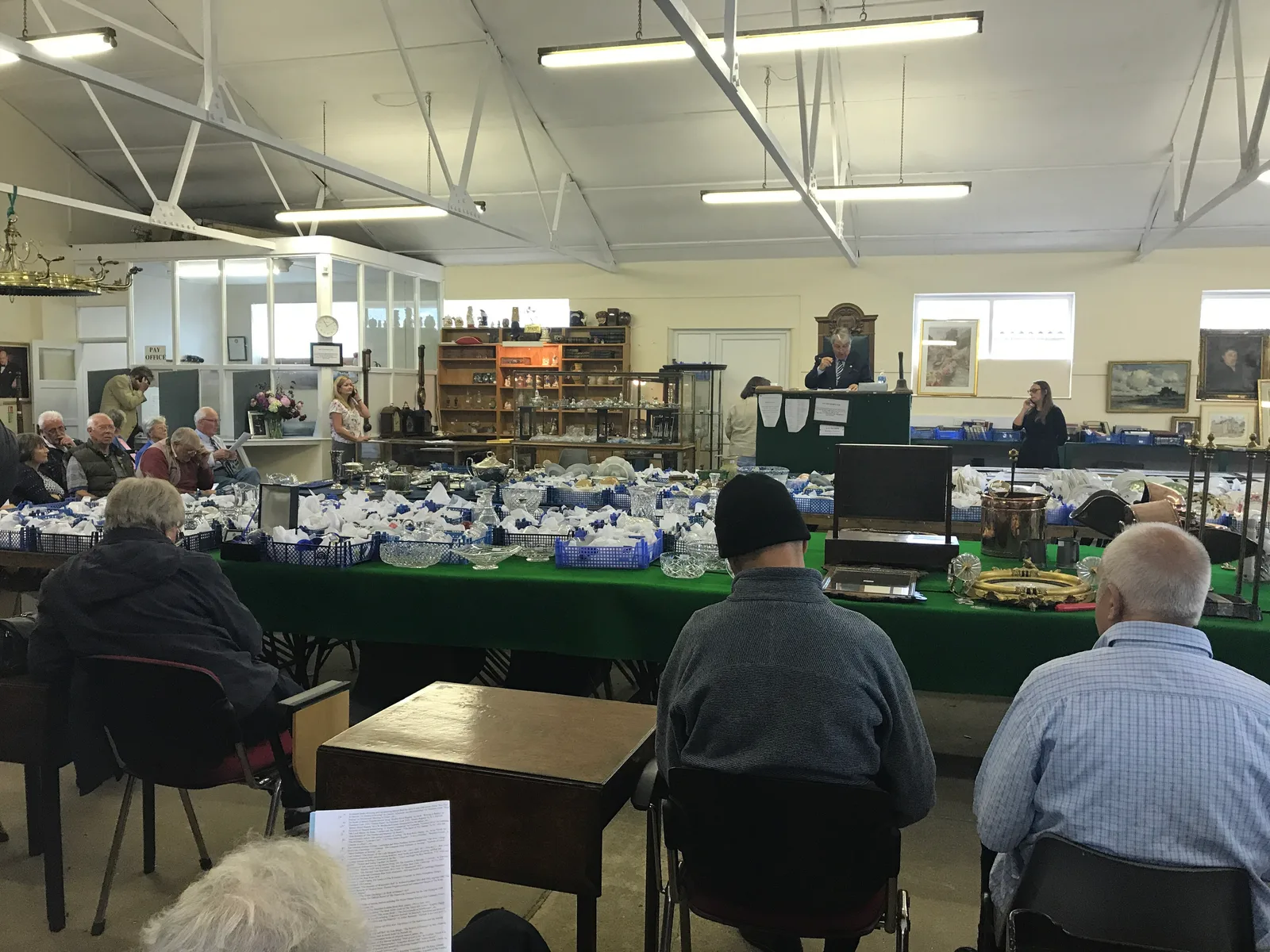
An antiques sale at the Clifford Cross Auction Hall in Wisbech, England.
eBay had a fixed end time. There, 9% of bidders on computers and 16% of bidders on antiques placed their bid in the last five minutes. In 59% of the antiques auctions the final bid fell inside those five minutes. And the more experience a bidder had, the later they bid.
They then sent a questionnaire to 368 eBay bidders who had bid in the final minute. One in five replied. Of those, 88% said they knew early in the auction what they were willing to pay. Most waited to avoid a bidding war or to keep the price down. About one in ten, mainly experienced antiques bidders, said they did not want to give away what they knew.
This is eBay around 2000, not a car auction. We did not find a comparable measurement on car platforms.
What an extension does and does not change
Amazon was the control in the same study. An auction there kept running as long as bids came in during the final ten minutes, the rule car platforms call a soft close. The effect was large. On eBay, 89 of 240 auctions had a bid in the final minute. On Amazon one bid arrived in the final minute, across 240 auctions. Experience also worked the other way: seasoned bidders bid earlier.
So an extension works, against one thing: denying a rival the time to respond. The other reason to wait is still there. An early bid gives away as much under a soft close as under a hard end time. In 2019, Cao and colleagues compared eBay with Overstock, which does extend. They found plenty of late bidding on Overstock too. It clustered just before the point where the extension applies. Bidders moved with the rule.
On Octane, a bid in the last five minutes puts the clock back to five minutes. On Bring a Trailer it is two minutes, according to guides to that platform. An auction like this has no last hour you can point to in advance. It ends once nobody adds anything within that time, and the bidders decide when that is. If you can no longer surprise an opponent with the clock, you need another way to make them give up.
A jump of $199,000
Auction theory calls that other way jump bidding. Christopher Avery described it in 1998: a bidder goes far above the minimum to show the others there is no point carrying on.
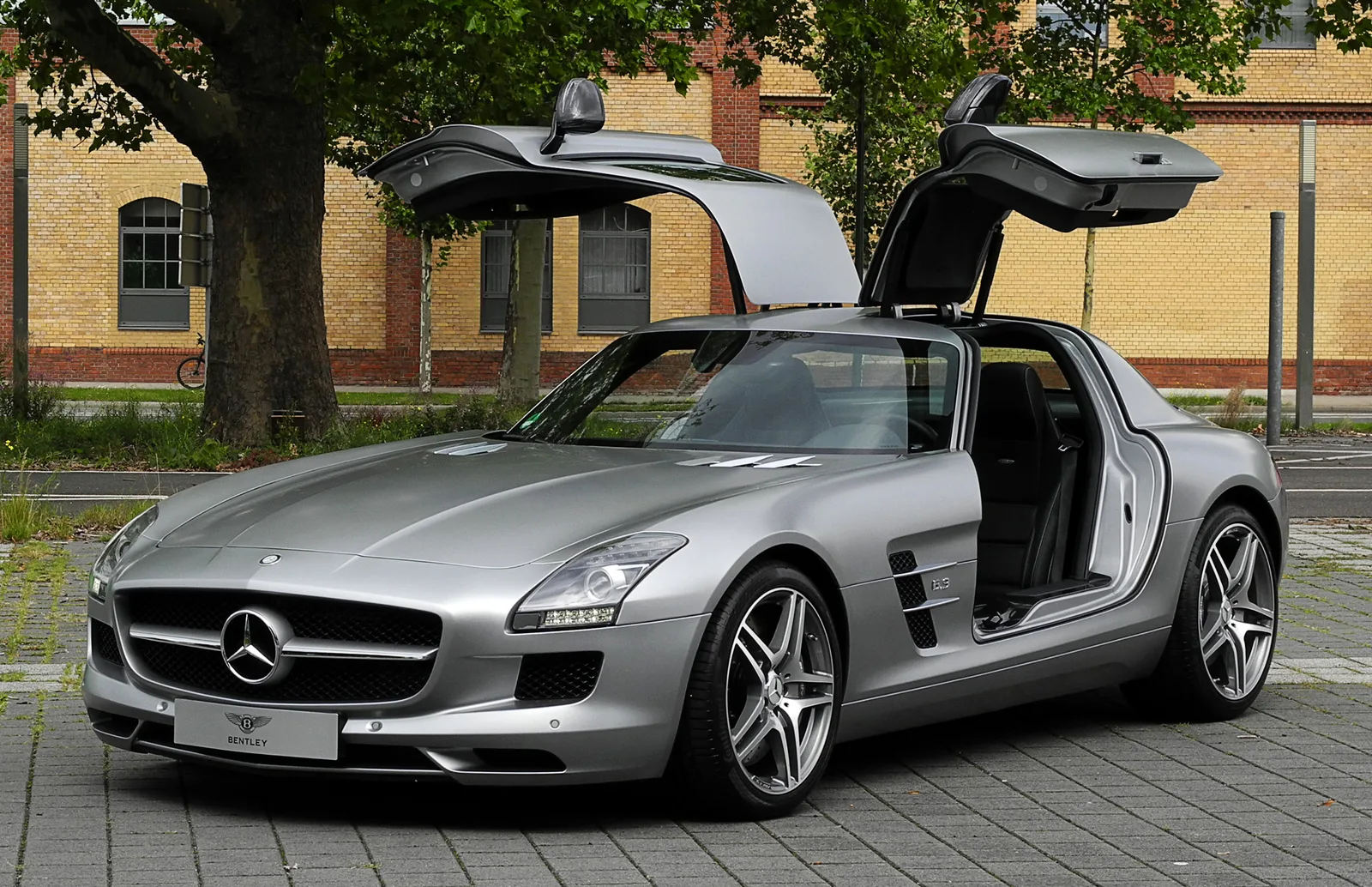
A Mercedes-Benz SLS AMG in Düsseldorf in 2011. The car in the auction was a 2012 with 251 miles.
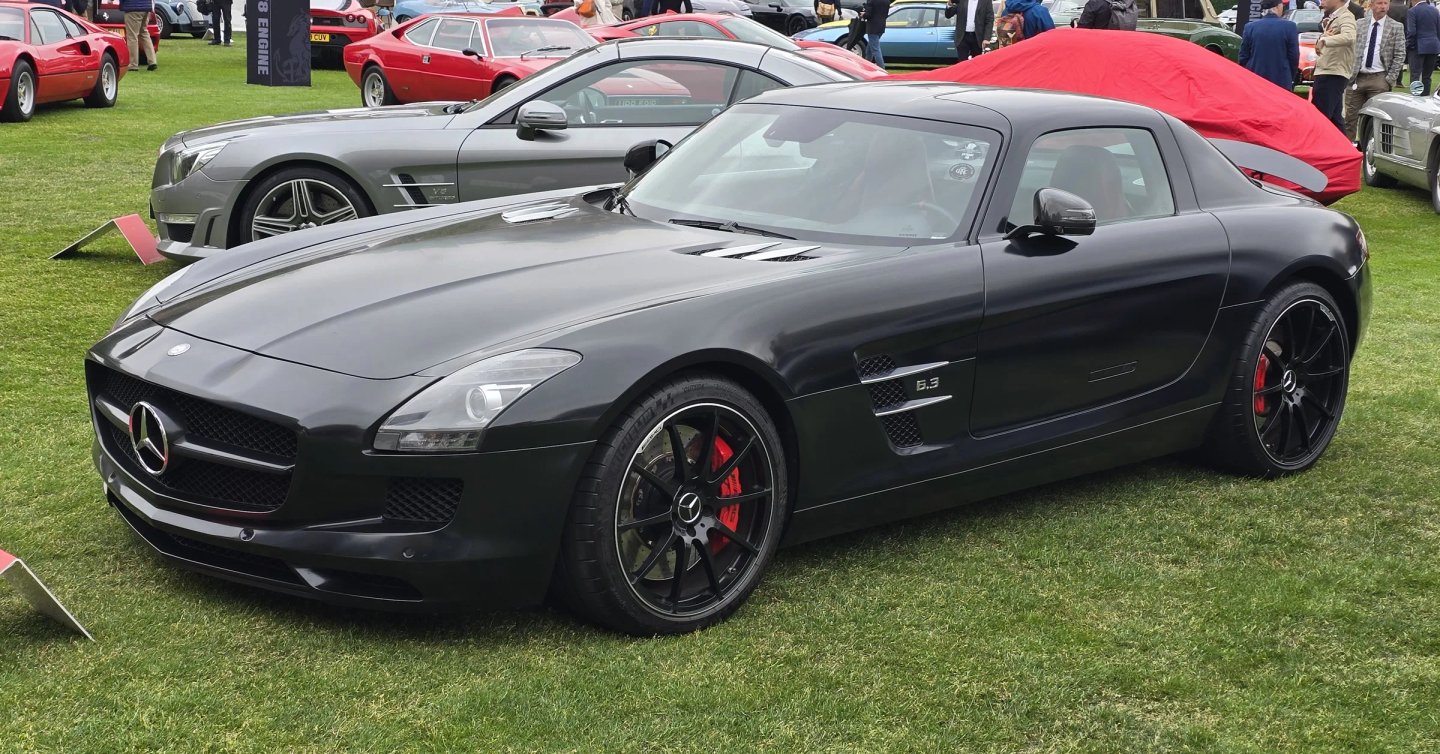
In July 2026 Carscoops reported on a 2012 Mercedes SLS AMG with 251 miles, on Bring a Trailer. The bidding stood at $576,000 after a $1,000 step. Shortly after, a newly registered account bid $775,000. That was $199,000 above the previous bid and $20,000 above the highest SLS result on the platform, a Black Series at $755,000 in 2022. The dearest ordinary SLS had made $401,000. Commenters suspected a typing error, with the bidder meaning $577,000. Bring a Trailer said the amount had been entered by hand and confirmed on a second screen. The selling dealer reported the money had arrived. Dave Kinney, publisher of the Hagerty Price Guide, said he had seen proof of payment and called the sale real, but an outlier.
We do not know why that bidder did it. The article does not say at what point in the auction it happened either. What you can see is the cost of the move. Suppose the rival would have stopped at $580,000: then the jump cost $195,000. Waiting is cheap and gives nothing away. Jumping ends the bidding war and shows everyone at once what you were prepared to spend.
For a seller looking at the auction on day five, the standing mostly shows who has already bid. About who is still waiting it says little. That is no guarantee. An auction with no interest looks exactly the same on day five, and a reserve set too high will not bring anyone in during the last hour either.
Roth and Ockenfels add something else in a footnote. They laid the timing of last bids side by side at different scales. Without the time axis you could not tell whether a graph showed the last hour or the last twelve.
Images: 2012 Mercedes-Benz SLS AMG LC25 by MrWalkr (CC BY-SA 4.0); Antiques sale at Clifford Cross Auction Hall, Wisbech - geograph.org.uk - 5450708 by Antiques sale at Clifford Cross Auction Hall, Wisbech by Richard Humphrey (CC BY-SA 2.0); Mercedes-Benz SLS AMG (C 197) – Frontansicht geöffnet, 10. August 2011, Düsseldorf by M 93 (CC BY-SA 3.0 de). Images resized.


