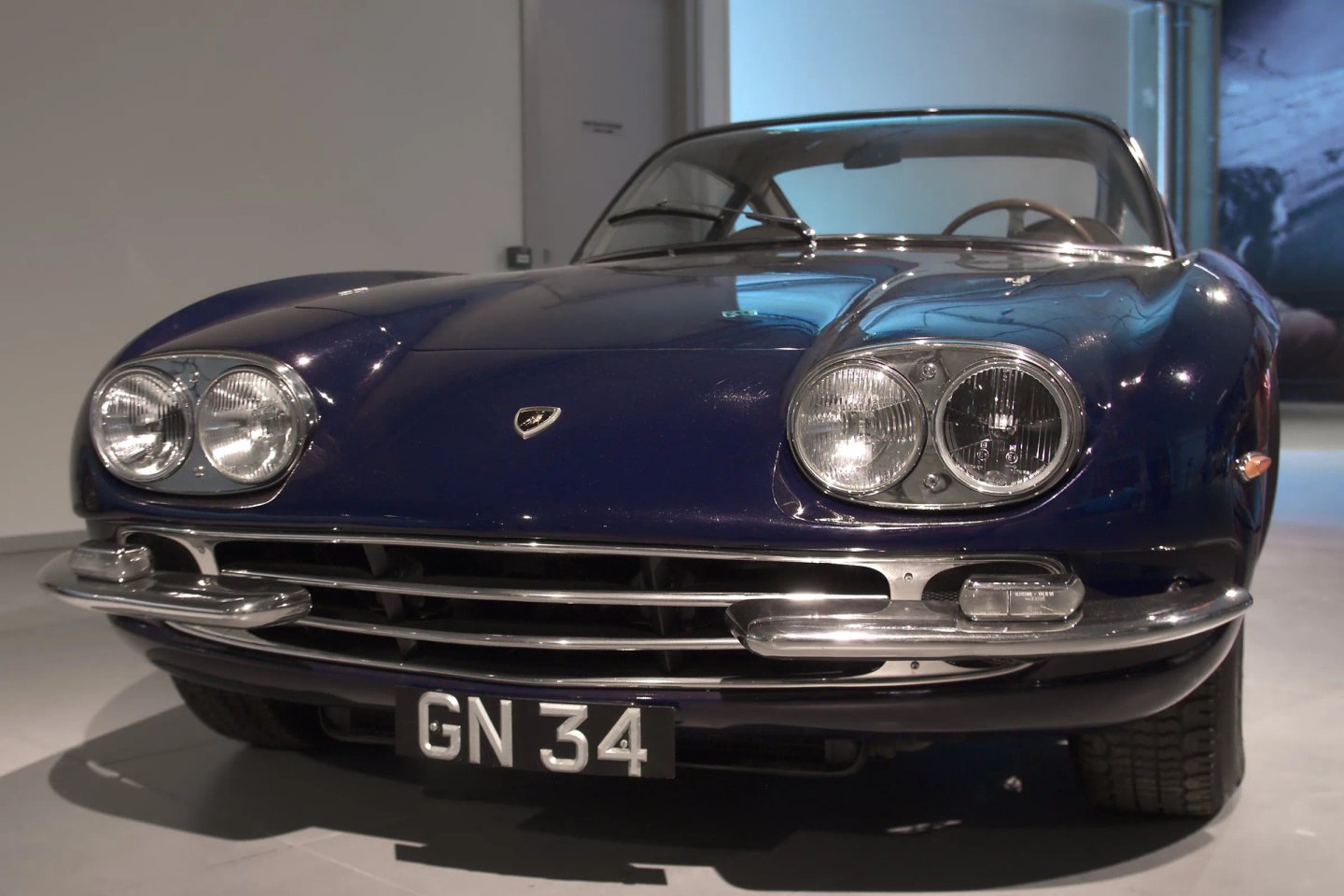
"Ferrari, your cars are rubbish!" That is how Ferruccio Lamborghini told it himself in January 1991, in an interview with Thoroughbred & Classic Cars. Enzo Ferrari is supposed to have answered that he might be able to drive a tractor, but would never handle a Ferrari properly. According to Ferruccio, that was when he decided to build a perfect car. By then Enzo had been dead for two years and five months. Ferruccio died two years later.
Is it true? That is too blunt a question, because three claims are packed inside it. His Ferrari had a bad clutch. Enzo insulted him. And that is why he started building cars. Each has different evidence behind it, and they are not equally strong.
The clutch: probably yes
The first claim is the smallest and the best supported. His own Ferrari 250 GTE still stands in the museum bearing his name. The test driver Valentino Balboni remembers him as someone who was always burning the clutch. Balboni also says the clutch was a commercial part, fitted to Maseratis and Ferraris and to one type of Lamborghini tractor, and that Ferruccio paid 10 lire for what Ferrari charged 1,000 for. That last figure sounds rounded in the retelling. His son Tonino says his father fixed the problem with a clutch from one of his tractors. The versions differ on what happened next, not on the fault. That a small sports car maker would buy in such a part is no wild idea either.
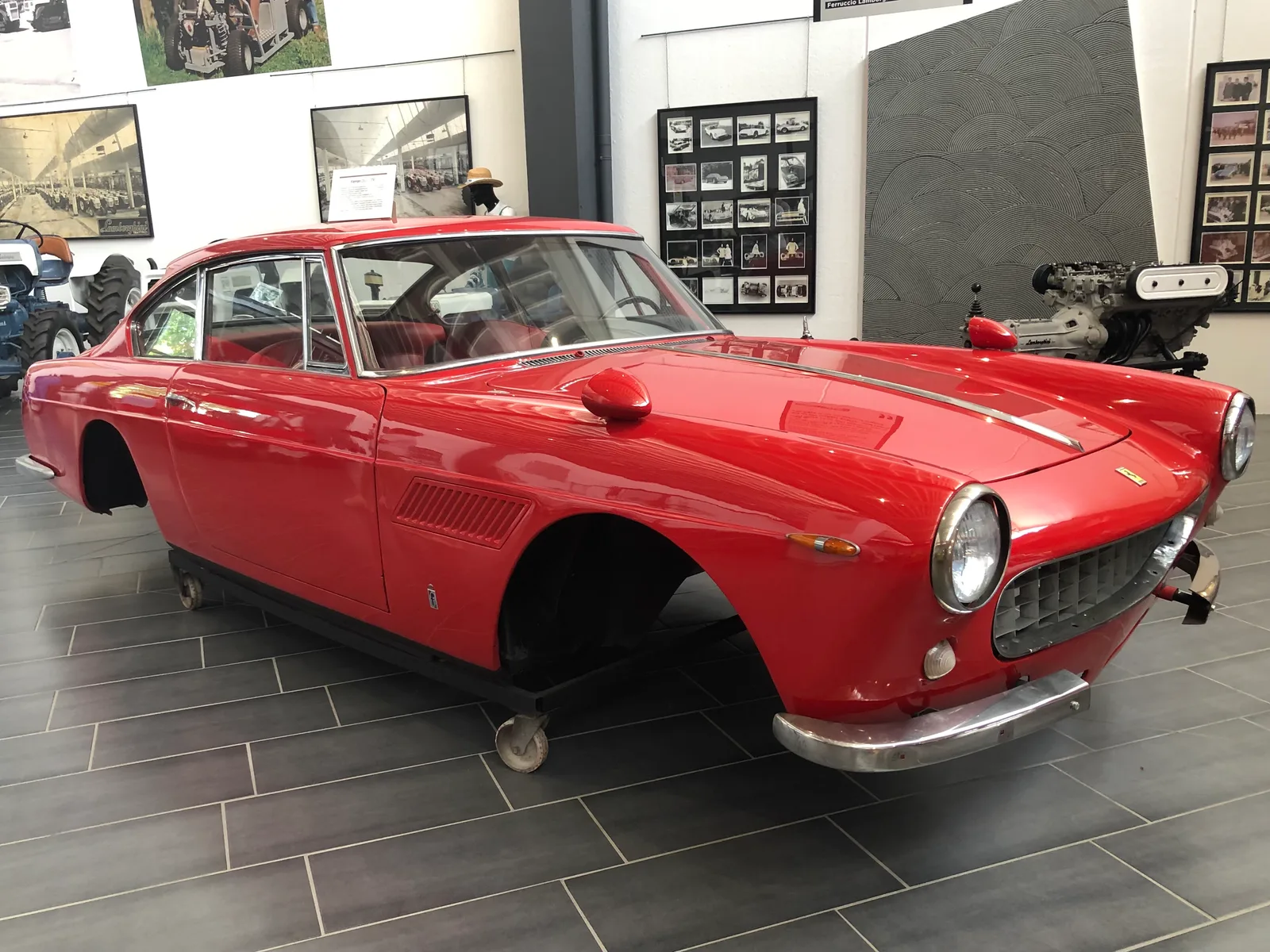
Ferruccio Lamborghini's own Ferrari 250 GTE, in the Ferruccio Lamborghini Museum.
The insult: one witness
The second claim is thinner. In Ferruccio's version, the line is about the tractor. In Balboni's, Enzo calls him a tractor driver and a farmer. In others, Enzo refuses to see him at all. Balboni also doubts that it happened in Enzo's office at Maranello, and thinks a show is more likely. The historian Massimo Delbo leaves it here: "Something was said between them, but only Enzo and Ferruccio knew what it was."
Look too at who is telling it. Ferruccio is the main character and Tonino his son. Balboni spent 40 years with the company and arrived on 21 April 1968, five years after it was founded. He heard the story and did not see it. The man who was there earlier, the test driver Bob Wallace, hired after the 1963 racing season, did not believe it, according to MotorTrend. He was saying so by November 1986, in an interview with Ken Gross in Automobile Magazine. A summary on a Ferrari forum has him dismissing "the old saw". That is the oldest trace we found: by 1986 it was already an old story. We found nothing from the 1960s themselves, and no version from Enzo.
None of that makes it false. Enzo was not known for taking criticism of his cars well. And by 1991 Ferruccio had been out of the company for seventeen years, so he had little commercial reason to embroider. He did have the interest any 74-year-old has in how his life gets retold. It remains a conversation with two participants, and we know it from one.
The motive: too simple, but not nonsense
The third claim is the one that matters. It cannot be tested. A motive has no witnesses. What can be checked is whether the decision made sense without an insult. Ferruccio had already rebuilt a Fiat Topolino for the 1948 Mille Miglia, and ended that run after about 1,100 km in a restaurant in Fano. He started making tractors in 1948, then burners and air conditioning in 1960, after a trip through the United States. Cars were the third business of a man who was good at starting businesses. In The Lamborghini Miura Bible, Joe Sackey argues that the economic motives outweighed his feelings about Ferrari. The factory points the same way: according to Jolliffe and Willard, the communist council of Sant'Agata Bolognese offered 19% interest on deposited profits and no tax on them, in exchange for a union on the shop floor.
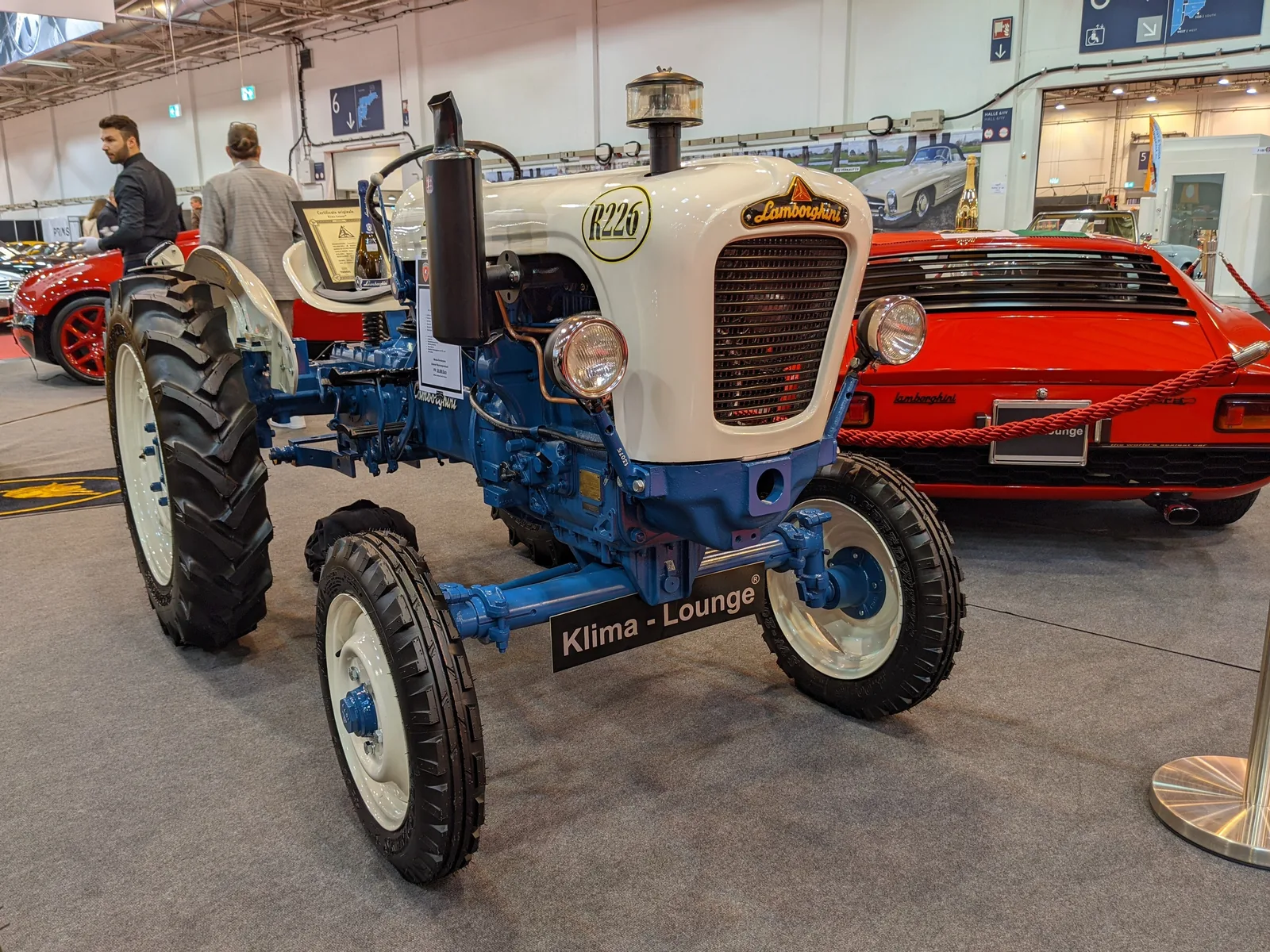
A Lamborghini R226 tractor at Techno Classica in Essen in 2024.
But the sober version does not quite work either. By the end of 1964 Lamborghini had built cars for 13 customers, each sold at a loss to stay close to Ferrari's prices. More followed, up to 120 examples of the 350 GT. The tractors helped pay, until orders from South Africa and Bolivia fell away in 1971 and he sold that business in 1972. Early losses are normal, but anyone after margin alone would pick an easier opponent than Ferrari. Something else was involved, and it may well have been a grudge. On this point the story holds up better than we expected. What we do not believe is that one sentence caused it.
Why it sticks
Ferrari has Le Mans and the Mille Miglia. Lamborghini, whose founder refused to race, had no circuit to point to. A row with the biggest name in the business fills that gap. It fits in one sentence and has a villain and an underdog. Nobody tells the version with the interest rate, the union and the burners at a car meet. In 2022 it became a film, based on Tonino's book.
That comes at a price, because the story makes Lamborghini the brand that exists as a reply to Ferrari. Every time someone tells it, Ferrari is in it as the yardstick.
The deal with Bizzarrini
There is one agreement from the time whose content is known, and it seems to prove the story right. Giotto Bizzarrini, who left Ferrari in 1961, got the job of designing the V12. According to Jolliffe and Willard and to Sackey, his fee was 4.5 million lire plus a bonus for every horsepower above the equivalent Ferrari engine. Ferrari was literally in the deal, as the measure.
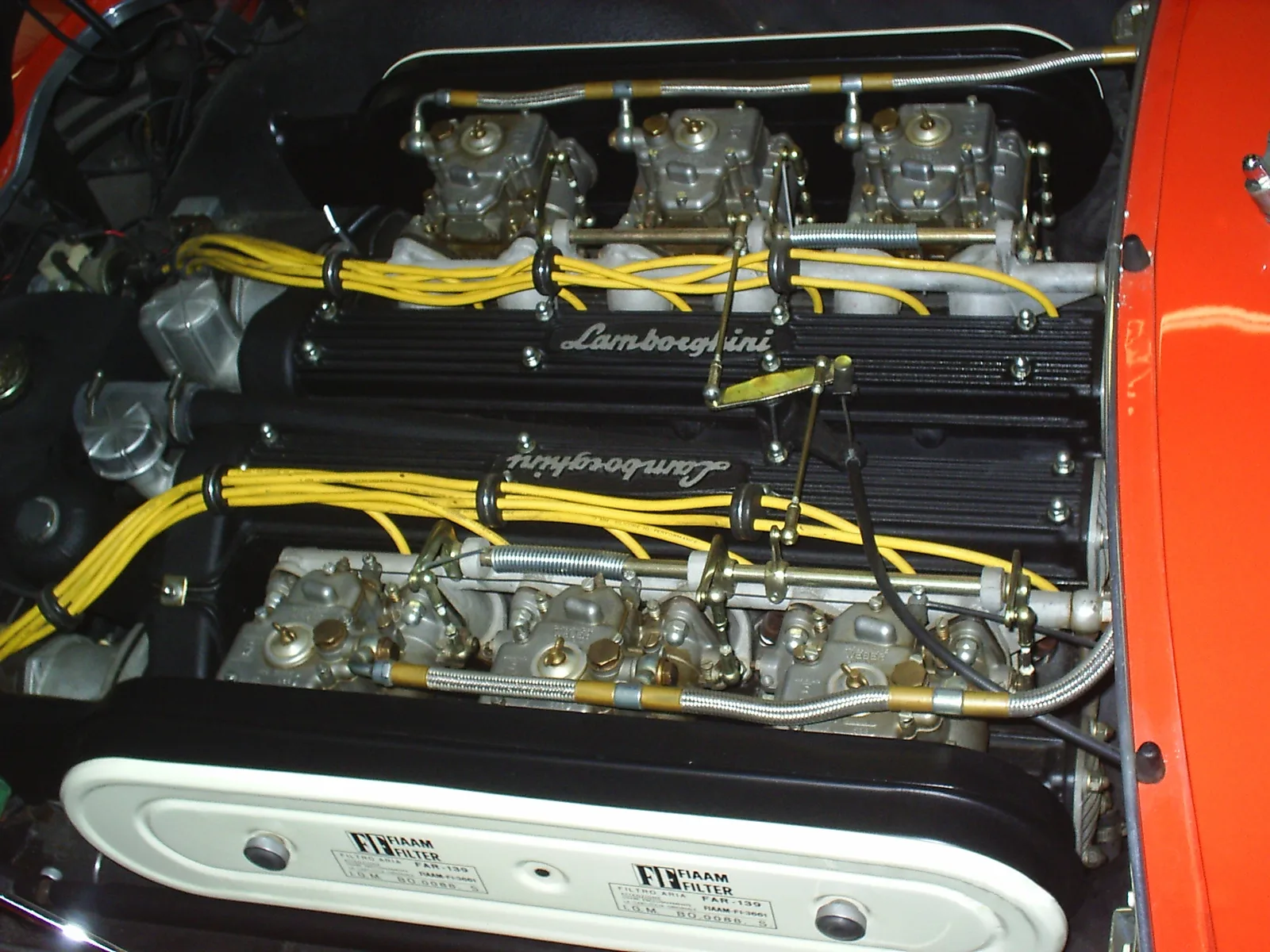
The V12 in a Lamborghini 350 GT, with six carburettors.
Bizzarrini delivered 3.5 litres and 365 PS at 9,800 rpm. Lamborghini was not happy. The engine revved too high for him and had dry-sump lubrication, the very racing practice he did not want in a road car. He asked for something more civil. Bizzarrini refused, Lamborghini did not pay and it took a court to force full payment. In the 350 GT the V12 made 284 PS. Anyone who only wanted to beat Enzo would have left those 81 horsepower where they were. Ferruccio took them out.
Images: Lamborghini 350 GT 1965 (28885465426) by Rob Oo from NL (CC BY 2.0); Ferruccio Lamborghini's own Ferrari 250 GTE in the Ferruccio Lamborghini Museum by TKOIII (CC BY 4.0); Lamborghini Trattori R226 (53647435658) by Thomas Vogt from Paderborn, Deutschland (CC BY 2.0); Lamborghini350GTV12-engine by dave_7 (CC BY 2.0). Images resized.


