
"The EU wants to ban repairs on cars older than 15 years." That line, or versions of it in every language, went round in early 2024, on X, through a French YouTube channel and on Portuguese television. In January 2024 the Belgian broadcaster VRT looked into the Dutch version. The European Commission's proposal of July 2023 contained no repair ban and no 15-year limit, and a spokesperson told the AFP news agency that nothing in the text dealt specifically with such cars.
That proposal is now law. Regulation (EU) 2026/1738 was published on 24 July 2026 and most of it applies from 1 September 2028. There is still no repair ban in it. One recital says the opposite: repairable cars must not be classed as wrecks too early. Vehicles of historical interest fall outside it altogether, along with the parts they need. So the headline question is answered, and a duller one begins: which car is historic, who decides and what happens to the rest?
What the law calls a wreck
The regulation wants to separate a wreck from a used car, partly to stop wrecks leaving the EU as second-hand vehicles. Annex I has two lists for this. The first is firm. A car is a wreck if it has been cut up or dismantled for parts, if the cabin or engine bay has burnt out, if it has been under water above the dashboard, if an insurer declares it a technical total loss or if key components can be neither repaired nor replaced.
The second list holds indications. Abandoned, no chassis number, poorly protected in storage, dismantled, doors welded shut. And this one: the cost of the repairs needed for a roadworthiness certificate plus the car's current value exceeds its market value after repair.
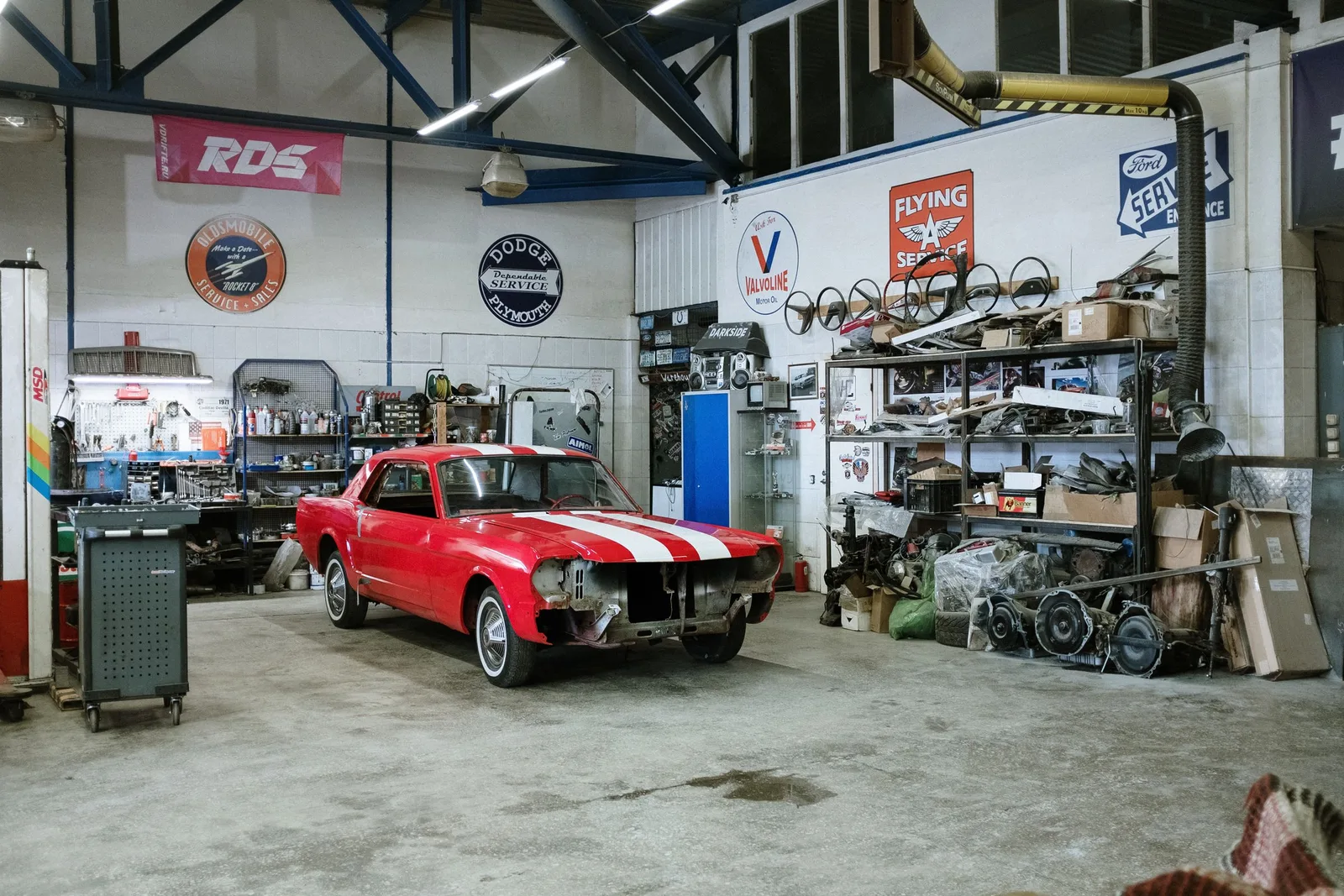
A classic in the workshop with its front off. Dismantled is on the list of indications, unless the car counts as historic.
Work that through with an invented example. A 2003 car has stood for years and is worth €6,000. With €9,000 of work it passes its test and is worth €13,000. €9,000 plus €6,000 is €15,000, more than €13,000, so the indication is met. What the formula measures is whether a repair pays for itself, and plenty of enthusiast restorations do not.
The consequences are milder than that sounds. An indication leads to an assessment by an independent expert, who sets out what the car needs for a certificate. The owner decides what to do and has five years to get one. If that fails, the car becomes a wreck after all. An authority can exempt a car under repair at the owner's request. A missing test does not in itself make a car a wreck, the German motoring club ADAC writes. And a private seller has to show something only after an economic total loss, or if the sale runs entirely online with no physical handover. An internet advert is not enough to trigger that. A dealer must always be able to show the papers, including at a trade auction or online.
So it is no ban. It is a file, for a car that today needs no file at all.
Who is not covered by the exclusion
The exclusion sets four conditions at once. The car is at least 30 years old, the type is no longer made, it is preserved in its original state with no substantial change to its main components, and the Member State of registration regards it as historic. Three groups the market treats as classics fall short.
The first is the youngtimer, the Continental word for a modern classic. A 2001 BMW M3 E46 has long been a collector's car to enthusiasts and will not be old enough for the law until 2031. The second is the altered car: the restomod, the engine swap, the 1973 911 with a later engine. These have a second route, a certificate of special cultural interest, which is reviewed on every change of owner and at least every five years. The third is the donor car. Dismantle a car for parts and it is a wreck under the firm list, and historic status can be lost along the way.
All of these get one more rule in 2031. From 1 September that year, used cars may leave the EU only if they are roadworthy. A Dutch seller with a stationary project and a buyer in England or Switzerland will run into it.

The chamber of the European Parliament in Strasbourg. Parliament adopted the final text on 18 June 2026.
The annual test that now seems unlikely
The other file going round concerns roadworthiness tests. On 24 April 2025 the Commission proposed annual tests for cars and vans over ten years old. Member States dropped that in December 2025, and in May 2026 Parliament also chose the existing intervals. Talks have been running since 2 July 2026 and, as far as we could establish, were not finished on 3 November 2026. According to the classic vehicle federation FIVA, the EU definition of a historic vehicle stays as it is and Member States keep their own rules for historic cars. A Dutch owner would barely have noticed anyway. The Dutch test (APK) is already annual for a petrol car from eight years, every two years from 30 and not required from 50. Anyone who wants their papers in order can start with an ordinary documents checklist.
The question still open
ADAC has it easy: in Germany an H plate proves the status. Cars without one may need separate proof, and a FIVA card helps. The Netherlands has no H plate. The public register file from the RDW, the Dutch vehicle authority, has 98 fields and none says a car is historic. Dutch rules do already use the European wording, for the APK exemption. There the government deliberately chose 50 years over 30, on the grounds that cars between those ages are still used a lot in daily traffic.
Member States have yet to name the experts and the bodies that decide status. On 3 November 2026 we found no Dutch arrangement. So anyone with a 1985 classic in boxes in a shed does not yet know whether it will be outside the regulation in 2028. If the Netherlands draws the same line here as for the APK, the answer is no.
Images: Berlaymont building by tpholland (CC BY 2.0); Photo by cottonbro studio on Pexels; Hemicycle of the European Parliament, Strasbourg 2023 001 by Sebastian Wallroth (CC BY 4.0). Images resized.

