
Minus 0.50%. Until 27 July 2022 that was the European Central Bank's deposit rate: banks paid for the privilege of parking money at the ECB. Less than fourteen months later, on 20 September 2023, they were being paid 4% to do the same thing.
A classic car pays nothing. No dividend, no rent, no interest. Everything it earns financially arrives on one day, the day it is sold. Finance has a name for that: a zero-coupon bond, a loan that pays nothing along the way and a single sum at the end. Of all loans with the same term, it reacts hardest to interest rates.
The sum at 4%
Say a buyer expects to sell a car in five years for €100,000. That figure is invented, and storage, insurance and servicing are left out for now. How much can they pay today without being worse off than with the money in the bank?
At a 0% rate: €100,000. At 4%: €82,200, because that sum grows to €100,000 in five years at 4%. Nothing has happened to the car. Nobody likes it less and the buyer expects the same sale price. Waiting has simply become dearer, and how much dearer depends on how long they mean to wait:
- Selling in 2 years: €92,500 today
- Selling in 5 years: €82,200
- Selling in 10 years: €67,600
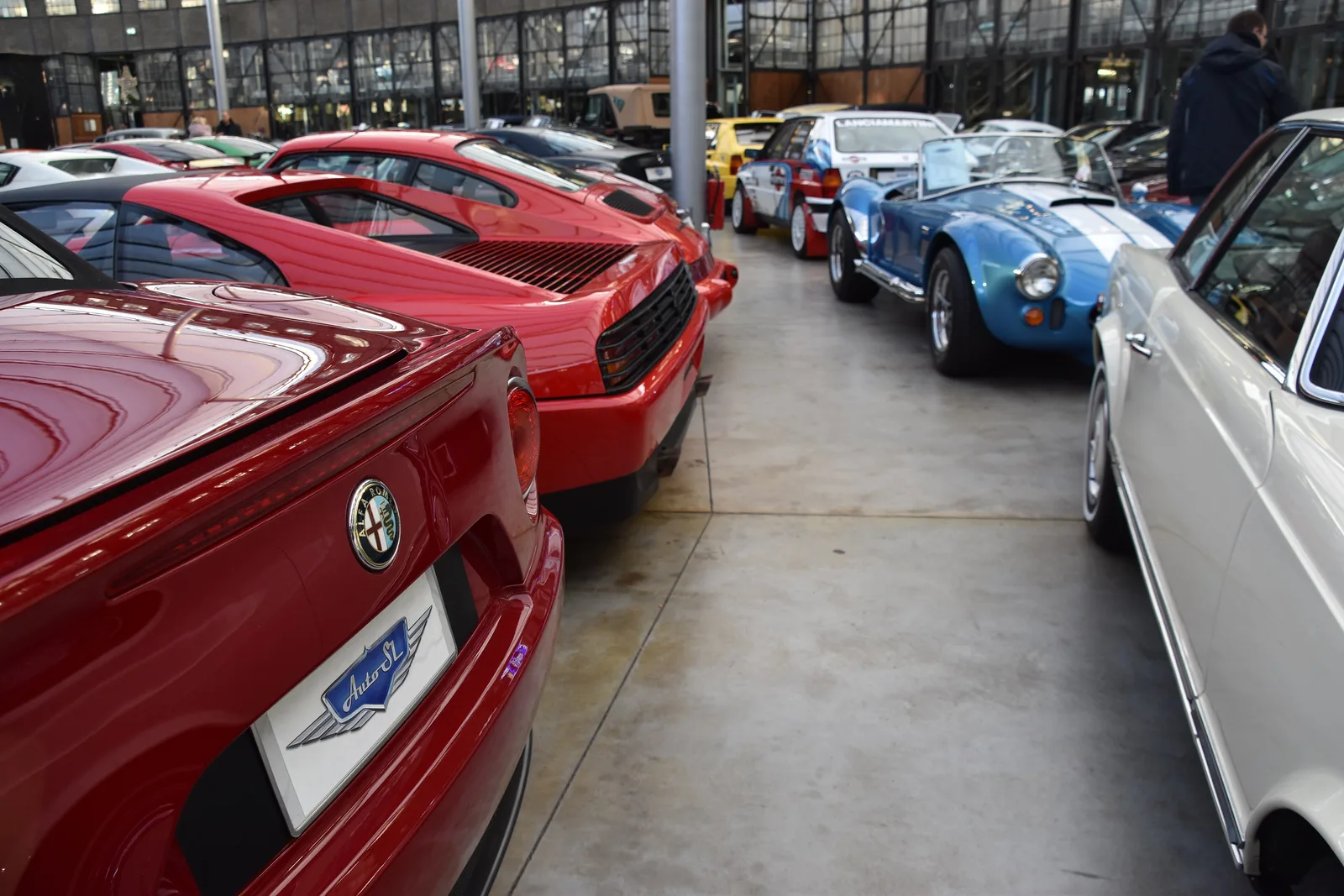
The Classic Remise in Düsseldorf, a hall where owners can store their cars.
Now the objection. Nobody with a savings account got 4%. In May 2023, with the deposit rate at 3.25%, the average Dutch savings account paid about 1.3%. Use that and the car is worth €93,700 today. The gap to €100,000 shrinks from €17,800 to €6,300.
So the rate that counts depends on what the buyer would otherwise have done with the money. Someone who could put their capital in a money market fund or in government bonds near maturity was close to the ECB rate. Someone borrowing to pay for the car was above it. And until 2022 the sum was upside down. Dutch banks such as ING and Rabobank charged 0.5% on savings above €100,000. Anyone well over that line who moved €100,000 into a car saved €500 a year.
What happened when rates rose
Hagerty tracks what share of the models in its British price guide rise in value. In 2021 it was 48% and in 2022 it was 86%. In 2023 it was 29%. The explanation given was that buyers could no longer borrow at the almost free rates they had grown used to. Knight Frank, which keeps an index of luxury goods, names higher rates as the reason the climb from 2020 to early 2022 turned into falls in 2023 and 2024.
Rates up, prices down. Look only at those years and the story closes neatly.
The three times it does not hold
The deposit rate went below zero in June 2014 and kept sinking, to minus 0.50% in September 2019. If cheap money pushes prices up, classics should have been climbing. The HAGI Top index, which follows expensive classics, stood 1% lower in the first quarter of 2018 than a year before and lost 6.69% in 2019. Money was almost free and the cars fell. Low rates make waiting cheap. They do not make anyone want the car.
It happened the other way round too. Between June 2024 and June 2025 the deposit rate dropped from 4% to 2%. According to a report on Knight Frank's annual study, classic cars fell 3.7% in 2025.
The third time is the strangest. In August 2026 the deposit rate was 2.25%, higher than a year before. Even so, the Monterey sales made $755.6 million on Hagerty's count, against $432.7 million in 2025. A 1964 Shelby Cobra Daytona Coupe made $42.9 million. In the same week, the 33 cars under $500,000 followed by the analyst Jason Meshnick averaged 19% below estimate. Both groups faced the same rate.

A Shelby Cobra Daytona Coupe at the Nürburgring, May 1965.
So the match between 2021 and 2023 proves nothing. In those years people were also stuck at home, spent less on travel and watched auctions move online. Rates may have been one of the causes. That they were the main one cannot be shown.
What is left standing
Rates do not give the market a direction. They set the cost of waiting, and with it how much a buyer who does the sum is prepared to pay. And the sum only applies to someone who really holds the car as a zero-coupon bond: buy, store, sell. An owner who drives gets something back along the way, and for them the rate weighs less.
Britain in 2023 fits that, though one year in one country is no proof. Cars with engines up to 2 litres rose on average, while those above 3 litres fell or stood still. An index of thoroughly ordinary cars beat inflation. The biggest fall for a single model was the Lamborghini 400 GT 2+2, down 19%.

A 1967 Lamborghini 400 GT at a show, behind an Aventador.
That is close to our five-year sum, but the Lamborghini was an outlier. Most models moved far less, and there is a reason. The sum says what a buyer wants to pay. The seller does not have to go along with it. An owner without debt leaves the car where it is, and then fewer cars change hands instead of cheaper ones. When selling does make sense depends on more than the ECB, which is what our guide to the best time to sell is about.
On 17 June 2026 the deposit rate rose for the first time since September 2023, to 2.25%, and on 16 September it went to 2.50%. That is still a long way from 4%. We would mostly watch the owner who does have to sell: someone who bought with cheap borrowed money in 2021 and has to refinance at a higher rate.
How many of those cars exist, we do not know. We have found no public figures on loans against classics. If that group is small, a quarter of a percent changes little. If it is large, we will only find out when they all appear in the auction listings at once.
Images: Seat of the European Central Bank and Frankfurt Skyline at dawn 20150422 1 by DXR (CC BY-SA 4.0); Classic Remise, Düsseldorf, Deutschland (52561028834) by Charles from Port Chester, New York (CC BY 2.0); 1965-05-23 21 Hatzenbach - Shelby Cobra, J. Sears-F. Gardner by Lothar Spurzem (CC BY-SA 2.0 de); Lamborghini 400 GT (1967) (52866218716) by Charles from Port Chester, New York (CC BY 2.0). Images resized.


