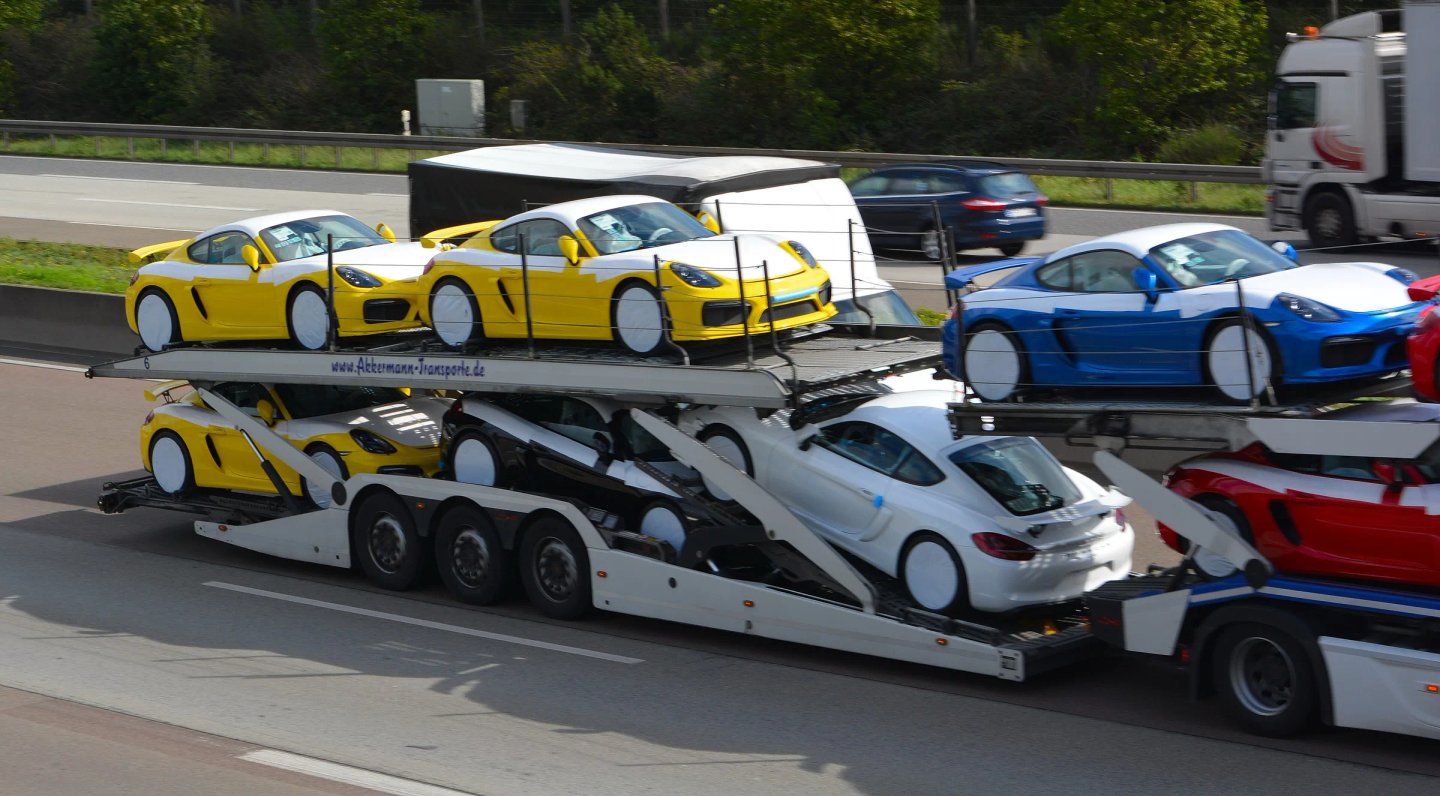
A German asking price and a Dutch asking price are prices for two different things. The Dutch one includes BPM, the registration tax the Netherlands charges on cars. The German one does not. Anyone who sees a car on mobile.de for €15,000 less than on a Dutch site is looking at a tax difference first. Whatever is left after that may or may not be an opportunity.
Economists call this the law of one price. The same good costs the same in two places, apart from the cost of moving it. If the gap is wider, someone buys here and sells there until it closes. Cars differ too much for that to work exactly, but the law asks the right question: how much of the gap is the cost of moving the car, and what is left?
How BPM works on a used car
When you import, you pay what the Dutch call rest-BPM: the gross BPM less a depreciation allowance. Gross BPM depends on CO2. You may choose the lowest tariff in force between two months before the car's first registration and its inspection by the RDW, the Dutch vehicle authority, so you usually work through a few years of tables.
You set the depreciation with the tax office's flat-rate table or with a trade price guide. A private valuation is only allowed for more than normal wear or for a car that appears in no guide. The table looks only at age: 33% after nine months, 51% after two and a half years, 81% after nine and a half. The price guide looks at lost value, the gap between the historic new price and the Dutch trade value.
That difference shows something most import stories leave out. A car that lost value quickly may do better with the price guide when young. A car that held its value gets almost nothing from the guide and takes the table. The table only counts years, even if the car still costs a lot of money after ten.
Two cars of the same age
Take two cars first registered in June 2016 and inspected by the RDW in November 2026, ten years and five months later. The table then gives about 83%. The asking prices below are assumptions. The BPM is not.
- Porsche Cayman GT4, 238 g/km. Lowest tariff: 2016, gross €43,721. Rest-BPM about €7,400 on a German asking price of €95,000.
- Ford Mustang GT 5.0 manual, 299 g/km. Lowest tariff: 2019, gross €72,708. Rest-BPM about €12,400 on a German asking price of €30,000.
Allow €1,500 for transport, RDW inspection, plates and a specialist to look at the car first, which is another assumption. The import inspection itself costs at most €220 in 2026. That puts the GT4 on Dutch plates at €103,900, 9% over the German price. The Mustang comes to €43,900, 46% over.
BPM does not look at what a car costs. The same sum takes 8% of the purchase price from one buyer and 41% from the other.
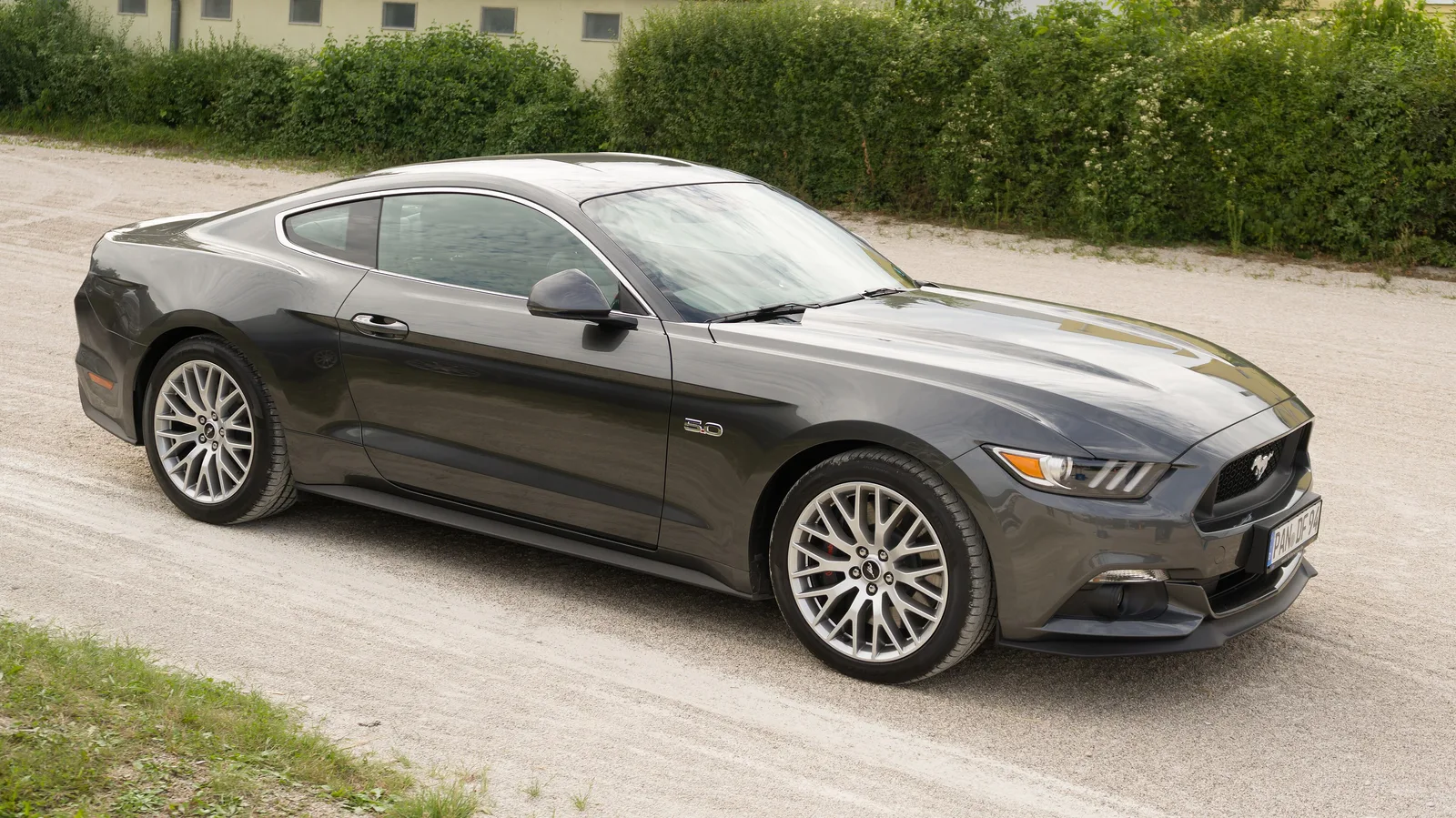
A 2015 Ford Mustang Fastback 5.0 V8, photographed at the US-Car Days in Austria.
With the Mustang the law of one price holds almost literally. On 3 November 2026 the RDW register held 228 V8 Mustangs from mid 2015 to the end of 2017. On 222 of them, the first Dutch registration came more than two months after the first registration anywhere. There is hardly such a thing as a Dutch V8 Mustang that was not imported. The Dutch price is then the foreign price plus BPM plus effort, and there is little to be made on that.
Where the sum works, and where it bites
The sum improves as a car ages. After nine and a half years the table adds 0.19 of a percentage point a month. Once the first registration is at least 17 years and 10 months back, no BPM is due under the table. A BMW M5 E60 from November 2008 has been able to go onto Dutch plates without BPM since September 2026. On a car like that the law of one price becomes a test. If an eighteen-year-old German car is €10,000 cheaper than a comparable Dutch one, tax is not the reason. Look for the reason in the car: mileage, rust, servicing.
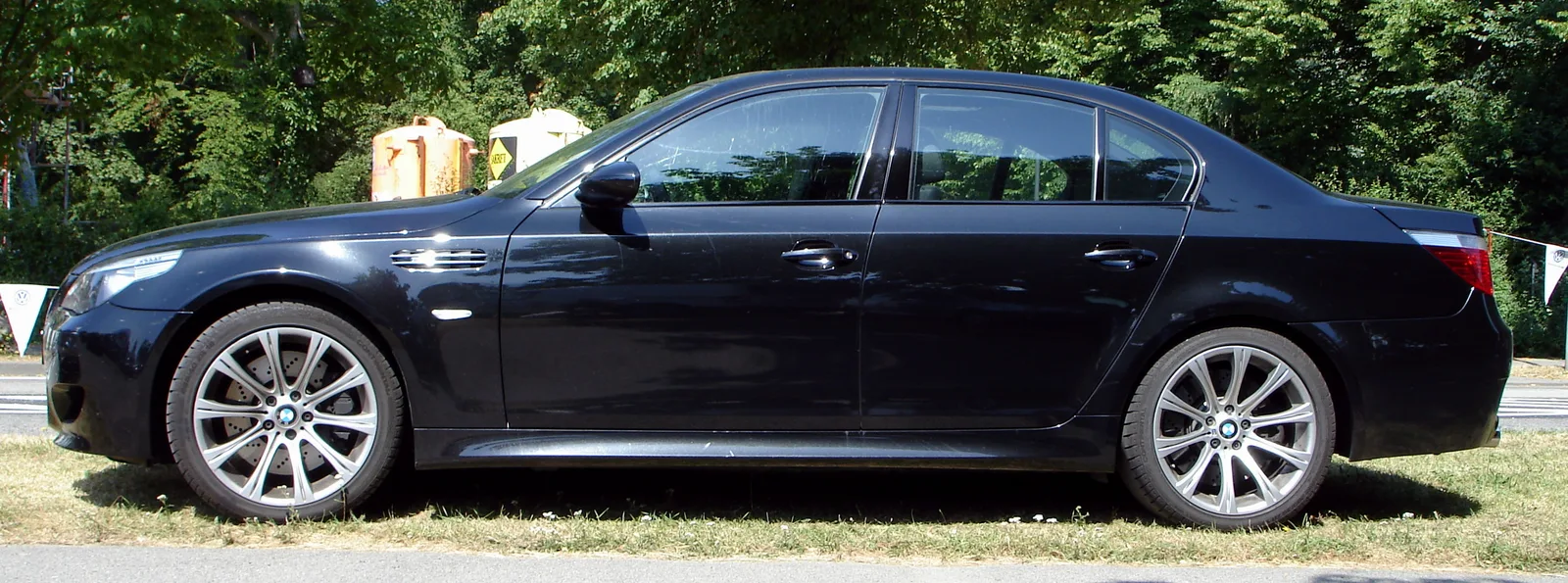
A BMW M5 E60 with the V10. A car from November 2008 reached 17 years and 10 months in September 2026.
At the other end of the odometer there is a trap. For VAT, a car counts as new if it has been in use for under six months or has covered no more than 6,000 km. That second condition has no age limit. If a private Dutch buyer gets a 2016 GT4 with 5,000 km in Germany, it is a new vehicle for VAT and 21% is due in the Netherlands. On €95,000 that is €19,950. Take that to a tax adviser before you sign.
Then the sale, years later. RDW records show the date of first registration and the date of first Dutch registration side by side, so every buyer can see the car was imported. On the GT4 that is normal: of the 58 on the register, 36 came in later. All 36 show 'Geen oordeel' (no verdict) for the odometer. Of the other 22, 20 show 'Logisch' (logical). No verdict is not a bad verdict, but the next buyer has to get the mileage from the paperwork. An import competing with cars that do say 'Logisch' may take a discount for that. How much, we could not measure.
A date for the diary
Tariffs and rules can change, so always work from the current table. As long as this one stands, every car has a fixed date on which its BPM reaches zero. A BMW M3 E92 first registered in March 2011 reaches 17 years and 10 months in January 2029. That will not change the German asking price. It should change what a Dutch buyer will pay for the same car.
Images: Porsche Cayman GT4 (981) (21875364479) by Charles from Port Chester, New York (CC BY 2.0); Ford Mustang Fastback 2015 Model by Tobias "ToMar" Maier (CC BY-SA 3.0); BMW M5 E60 side by JanST (CC BY-SA 2.5). Images resized.


