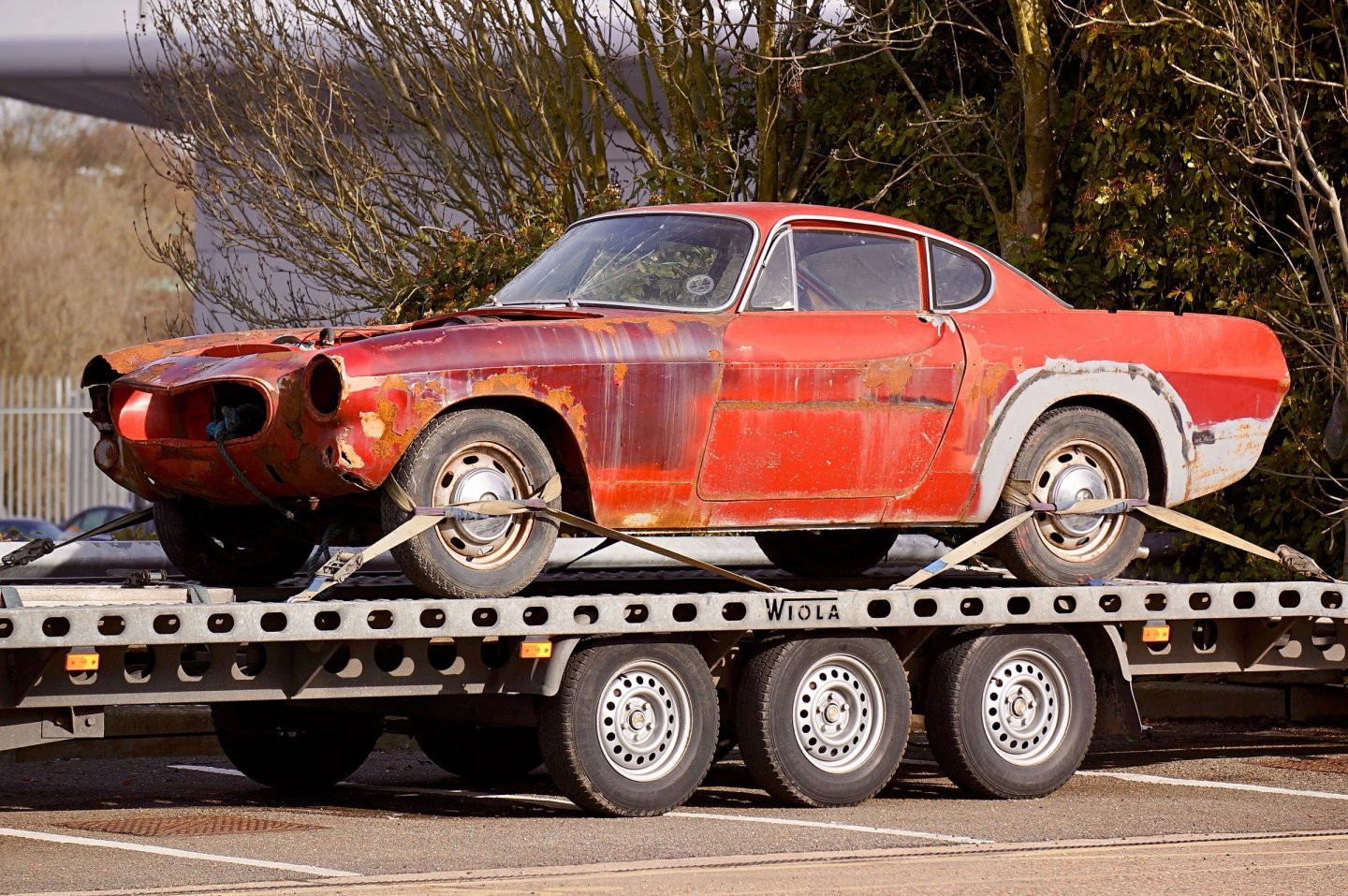
On 18 May 1999 eBay bought Kruse International, one of the world's largest collector car auction houses, based in Auburn, Indiana. It paid with 1,574,624 of its own shares. The thinking made sense. eBay had the audience and the software, Kruse had the cars and the knowledge. Between them they would take the classic car sale online.
In October 2002 eBay announced that Kruse was going. eBay Motors was growing fast, to an estimated $3 billion of sales that year, but the growth came mostly from ordinary used cars. A spokesman said eBay had underestimated how much customers would have to change before they felt comfortable buying expensive art and collectibles online.
In 2025 Bring a Trailer sold more than $1.7 billion of cars in 49,486 online auctions. The most expensive was a Ferrari LaFerrari at $4,475,000. The buyer eBay could not see coming in 2002 did exist.
Was it only timing?
The first explanation is that eBay was early. Between 2002 and 2025 came broadband, better photographs, the smartphone and a generation that buys everything online. That is true, and it explains why these auctions can exist now. It does not explain why they are not at eBay. eBay Motors had those years too. It handled $13 billion of cars and parts in 2005 and just over $14 billion in 2009. In 2012 it stopped publishing the figure. It had the software and it had the visitors.
Price does not explain it either. In 2023 Bring a Trailer charged the seller $99 and the buyer 5%, capped at $5,000, while traditional auction houses took around 10% from each side. That is cheap, but eBay was cheaper. In 2016 a seller there paid $125 at most, and only if the car sold.
Nor is it information. The economist Gregory Lewis studied more than 40,000 eBay Motors listings and reported in 2011 that what a seller showed online had a strong effect on price: sellers could show what they had and buyers paid for it. eBay had solved that part of the problem.

A Ferrari LaFerrari at Grand Basel in 2018. A car of this type was the most expensive sale on Bring a Trailer in 2025.
What was on the blog
Bring a Trailer began in 2007 as a blog by Randy Nonnenberg and Gentry Underwood. Nonnenberg worked at BMW in North America by day and hunted for unusual cars in the classifieds by night. At first he emailed them to friends. Then he put one a day on a basic WordPress site. There was no business model.
The key detail is where those cars came from: mostly eBay and Craigslist. Nonnenberg added no cars, no software and no auction mechanism. What he added was that somebody had looked and picked this one. Readers were going to a different site to look at eBay's own adverts. It is hard to think of better evidence that technology was not what was missing.
That brings out a difference that often gets lost. An advert tells you about the car in it. It does not tell you which of the thousands of adverts is worth your time. The first is information and the second is a filter. eBay could not be that filter, because an open marketplace lets everyone in by design.
In economics this is the middleman as expert. Gary Biglaiser described in 1993 why such middlemen exist: what they offer is more predictable than what a random seller offers, and judging quality only pays if you do it often. A blogger who picks one car a day puts their judgement on the table every day. After a year readers can see whether the blogger is any good. That sort of trust is slow to build and cannot be bought.
Seven years of readers before the first auction
Every new marketplace has a chicken-and-egg problem. Buyers come when there is stock, and stock comes when there are buyers. Bring a Trailer did not have that problem, because the stock already existed and cost nothing: it was on other people's sites. When it started running its own auctions in 2014, at three cars a week, it had spent seven years gathering readers who came for one person's opinion.
Those who followed point the same way. Cars & Bids started in 2020 with Doug DeMuro, who already had a large audience on YouTube. When Collecting Cars launched in 2019, its founder Edward Lovett asked the well-known motoring journalist Chris Harris to help. What they brought was mainly a name that buyers already knew. The software is the least special part. Bring a Trailer began on WordPress, and the auctions came seven years later.
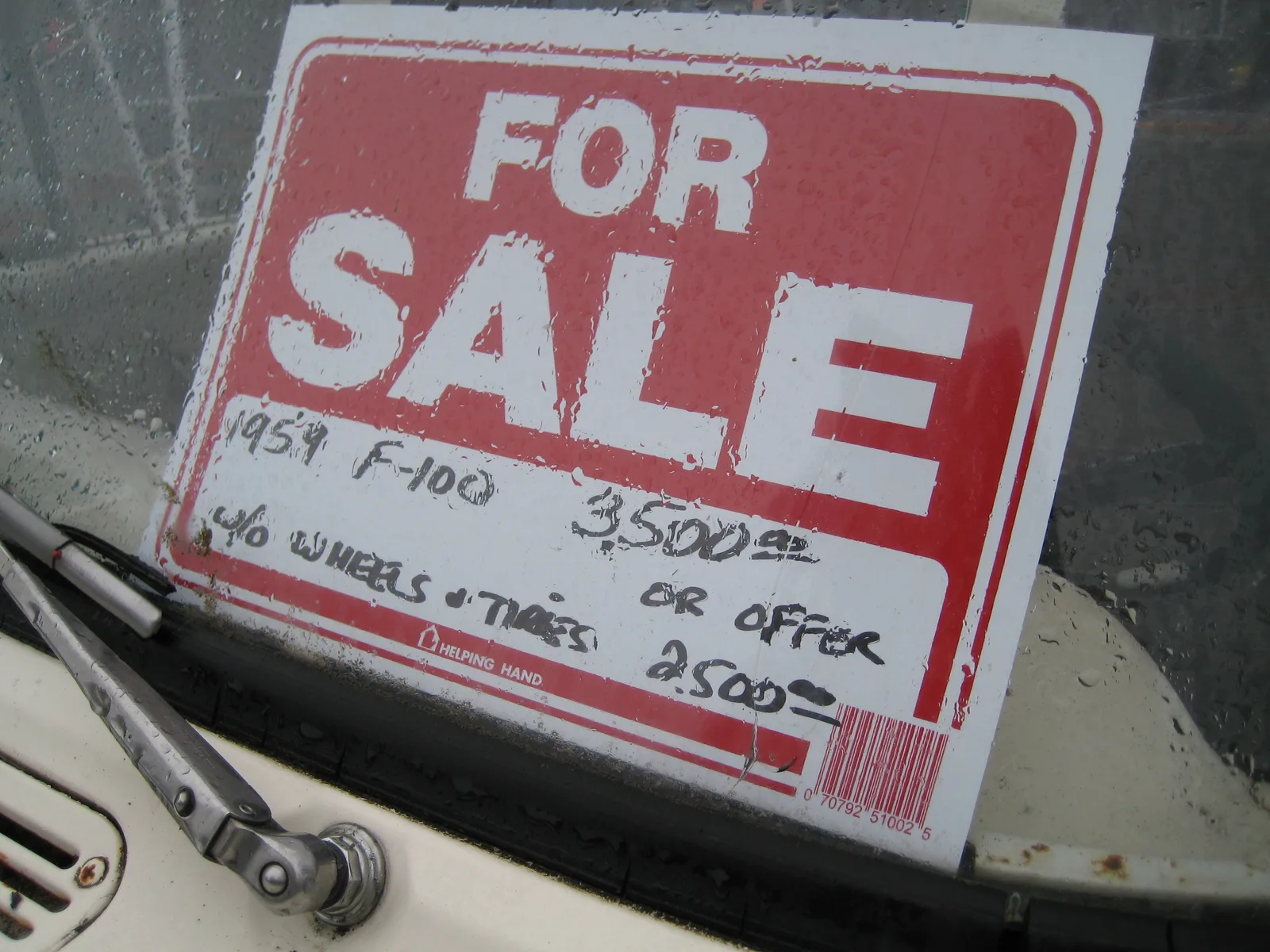
A for sale sign at a swap meet in Puyallup, Washington, in 2010. The site's name comes from adverts like this: bring a trailer.
One caveat. None of this proves that choosing was the only cause. Sales jumped from $248 million in 2019 to $859 million in 2021, in the middle of lockdowns and low interest rates. Hearst Autos bought the site in June 2020. A lot of things happened at once. Our view is only that Bring a Trailer could not have caught that wave without those seven years, and that the same wave did little for eBay.
What happens to a filter as it grows
The argument has a problem, and it sits in the winner's own numbers. Three auctions a week in 2014, 45 a day in 2019, an average of 951 a week in 2025, of which 81% sold. Howard Swig of Bring a Trailer said on a podcast from The Drive in October 2026 that he and seven colleagues read every submission. That is about 300 a day, and each gets a green, yellow or red light. Some 38 per person per day. It began with one.
Swig also said the team tries to "find ways to tell people yes, not no". That is understandable. A site that earns on every car sold gets no richer from saying no, and one that refuses too often soon has nothing to auction. But it is a different job from the one in 2007.
Nonnenberg started with cars he wanted his friends to see. Open the list of live auctions and count: how many would you forward?
Images: Photo by Mike Bird on Pexels; Ferrari LaFerrari at Grand Basel 2018 01 by Ank Kumar (CC BY-SA 4.0); For Sale (4366070075) by JOHN LLOYD from Concrete, Washington, United States (CC BY 2.0). Images resized.

