Peugeot had to build 200 cars. Ford had to build and sell 5,000, and then another 500. Those numbers were in the motorsport regulations, and they explain more about the odd and wonderful cars of the 1980s than any designer does.
Homologation is the rule that a racing car must descend from something you can buy in a showroom. The FIA laid down how many examples had to exist before a car could start. The aim was to keep out prototypes. The side effect was that ordinary buyers ended up with racing compromises on their driveways, sometimes with no use for them.
What a number does to a car
Group B asked for 200. At that volume it is cheaper to put number plates on a rally car than to make a road car fit for rallying. The Peugeot 205 Turbo 16 shows it. The engine went from the nose to behind the seats, drive went to all four wheels and the gearbox came from the Citroën SM. The 200 road cars had about 200 PS, less than half the rally version. It shared little more than a silhouette with the 205 at the dealer.
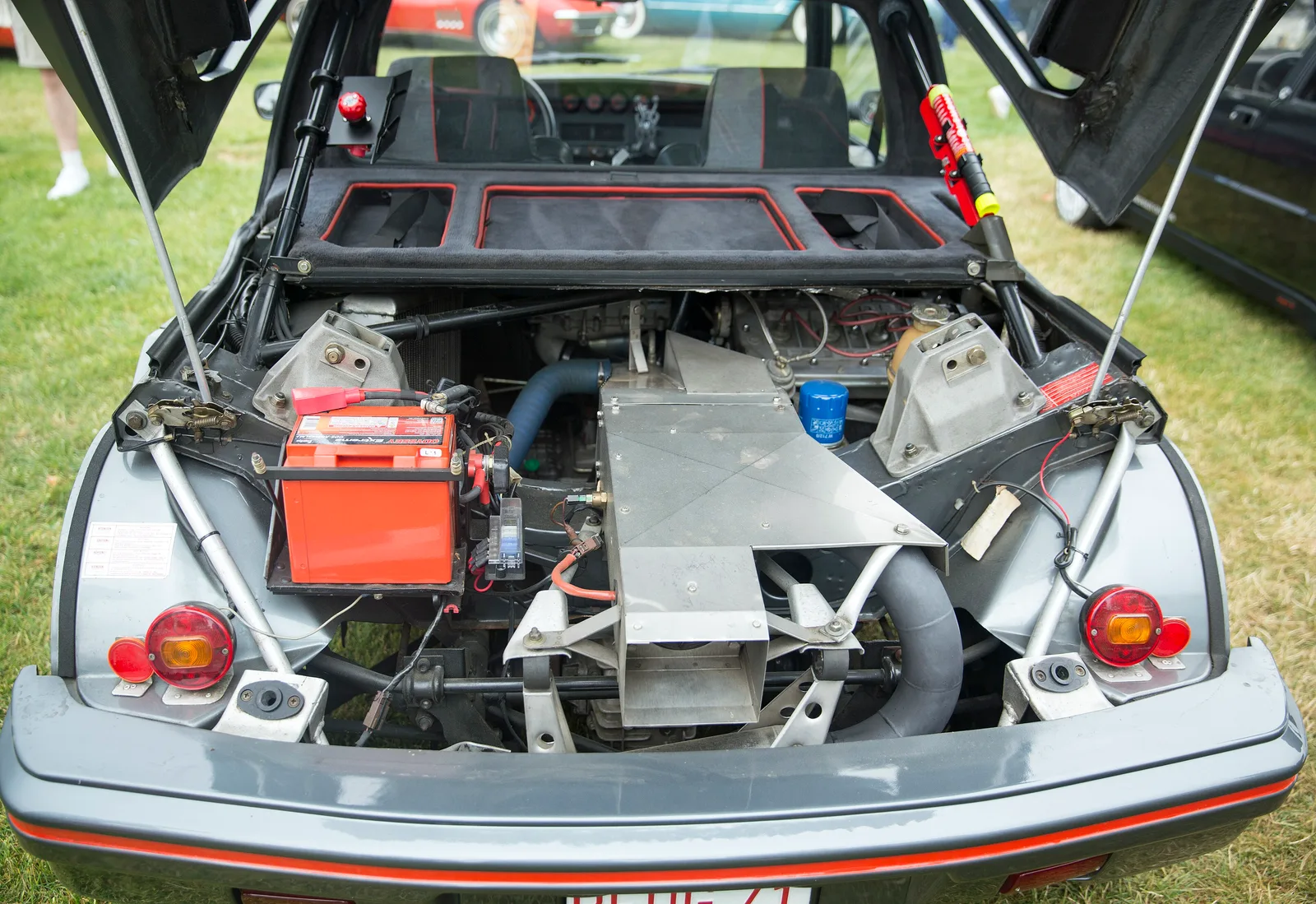
A 1985 road-going 205 Turbo 16 at Greenwich in 2023. The engine sits behind the two seats, under the plates and pipework.
Group A asked for 5,000 in twelve months, which changes the brief. You do not sell five thousand cars to a handful of rich customers. So you start with something already in production that people also want to drive: a Sierra, a 190, a 3 Series or a Delta from 1979. Whatever parts the racing car needed and could not simply add had to end up on that road car. Lancia won six rally makes' titles in a row with the Delta between 1987 and 1992, and the Integrale's arches for wider tyres came along on every road car.
Ford's 500
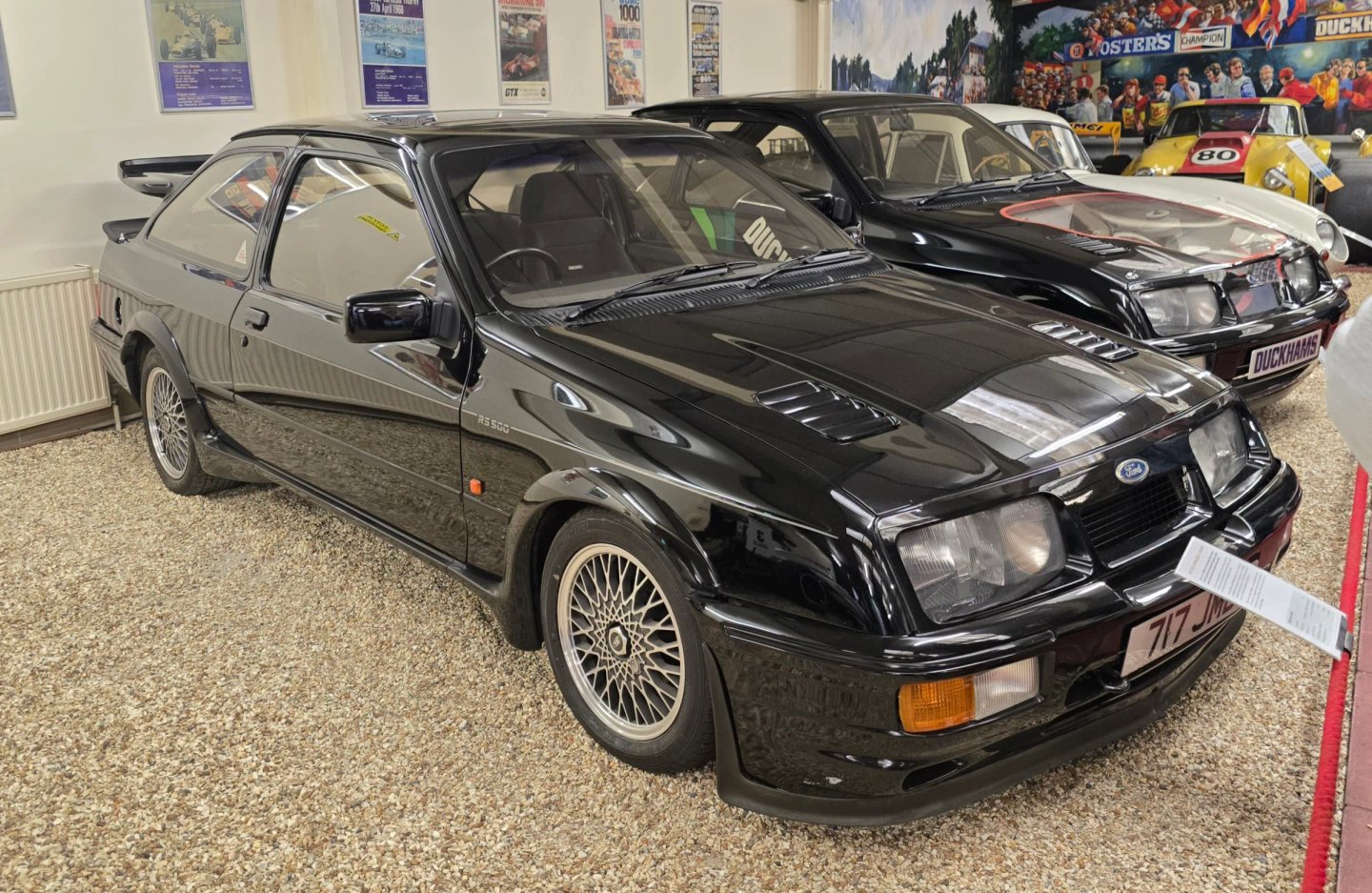
The best example lies in a side rule. Having met the 5,000, a maker could homologate an evolution by building 500 of it. Ford built 5,545 Sierra RS Cosworths at Genk. The 500 from December 1986 went to Aston Martin Tickford to become RS500s. The car was homologated in August 1987, at a price of £19,950.
Look at what that money put on the car. A block with thicker walls. A bigger turbo and a bigger intercooler. A stronger fuel pump. An extra spoiler under the whale tail. A rear beam with extended mounting points that went unused. And a second fuel rail with four extra injectors, which did nothing on the road.
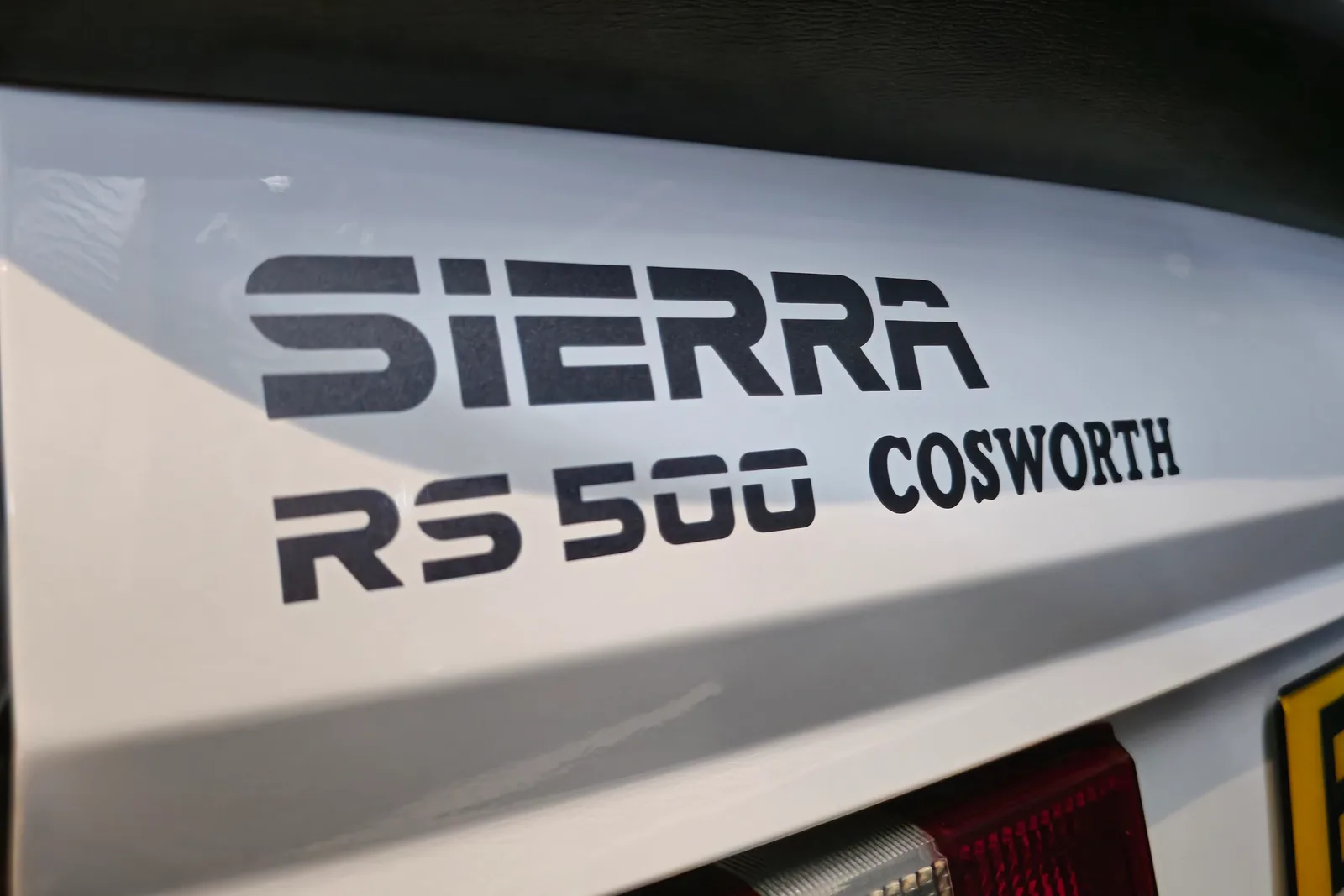
The tailgate of a 1987 RS500. The name comes straight from the number the rules asked for.
The road car had 224 bhp, about twenty more than the ordinary Cosworth. The racing version, with all those parts actually working, made 450 to 485 bhp depending on the source. It took Ford to the manufacturers' title in the 1987 World Touring Car Championship. So the road buyer paid for hardware that gave them nothing, because a race team could only use the parts once they had been homologated on the road car. Their car was the means of being allowed to build the other one.
Mercedes did the same in 1990 with the 190 E 2.5-16 Evolution II: 502 cars in three months, out of about 1.9 million W201s, at DM 115,260. Nobody had asked for that wing except the race team.
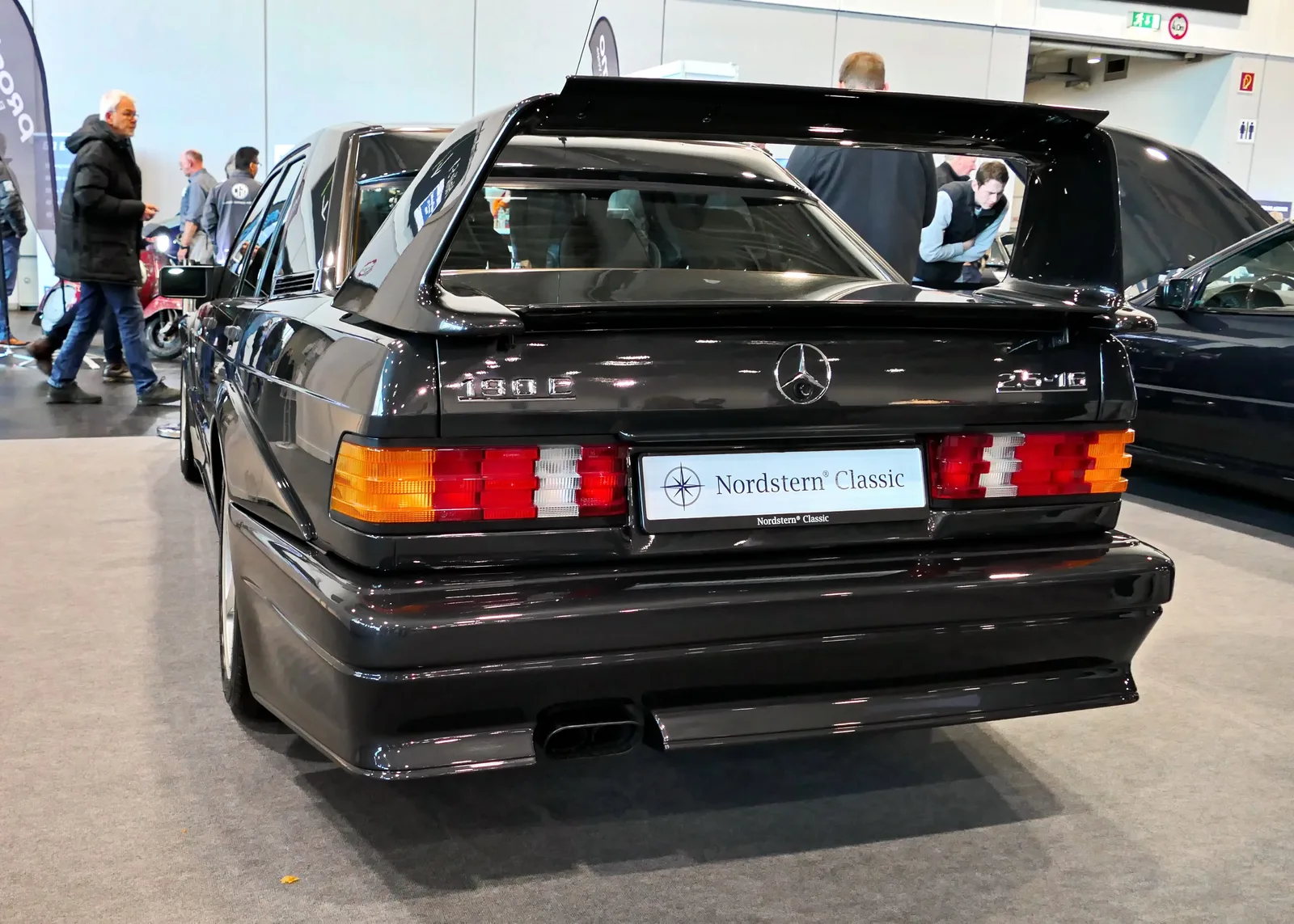
The wing of a 190 E 2.5-16 Evolution II. Mercedes built 502 for the road.
Decades later that side rule still sets the price. In February 2023 an RS500 with 5,192 miles made nearly £600,000 at Silverstone Auctions. The record for an ordinary RS Cosworth then stood at £132,750. Hagerty called the RS500 price an outlier, as its own guide value for a top car was £115,000. There is still a reason underneath: there are 500 RS500s and over 5,000 of the others, and that 500 is a number from a rulebook.
The rules also made bad cars
This story has a bias in it. We know the homologation cars that survived. Citroën also had to build 200 BX 4TCs for Group B. The car ran three rallies, came sixth in Sweden in 1986 and found 62 buyers on the road. Citroën bought many back and had them destroyed. Same rule and same number as the 205. Regulations force a factory to build something and say nothing about its quality. The cars admired today had a good base and a factory that really wanted to win.
Why it is not coming back
In 1997 the FIA ended it in rallying. From that year the World Rally Car was the only route to the title, and evo later wrote that the change effectively killed the homologation road car, because factories were spending fortunes on small runs. So motorsport cleaned up the accident itself, on purpose and for the money.
Then the rules for the road changed too. A road car today is a certified package of software, emissions and safety. In July 2024 Porsche took the petrol 718 off sale in the EU because it did not meet new cybersecurity rules, while the same car stayed on sale elsewhere. A conversion shop giving 500 finished cars a different turbo is hard to imagine in that setting.
The Toyota GR Yaris seems to contradict this. In October 2017 Shigeki Tomoyama of Gazoo Racing told evo that the next rally Yaris would get a homologation car and that Toyota had to build 25,000 of them in one year. That rally car never came: the pandemic upset testing and new rules applied from 2022. Toyota simply kept building the GR Yaris, and chief engineer Naohiko Saito said it would go beyond 25,000 if people wanted one. That shows what has changed. It gets built for whoever buys it, and then there is no reason to fit parts only a race team needs.
On the RS500 that reason can still be seen. Under the bonnet of an original car, next to the normal fuel rail, sits a second one with four yellow Weber injectors, not connected to the engine computer. They were fitted 500 times, to cars that had no need of them.
Images: Ford Sierra RS500 Cosworth Haynes by Calreyn88 (CC BY-SA 4.0); 1985 Peugeot 205 Turbo 16, engine compartment entire by Mr.choppers (CC BY-SA 3.0); 1987 Ford Sierra RS Cosworth RS500 -433 by Calreyn88 (CC BY-SA 4.0); Black Mercedes-Benz 190 E 2.5-16 Evolution II (54430613239) by More Cars (CC BY 2.0). Images resized.


