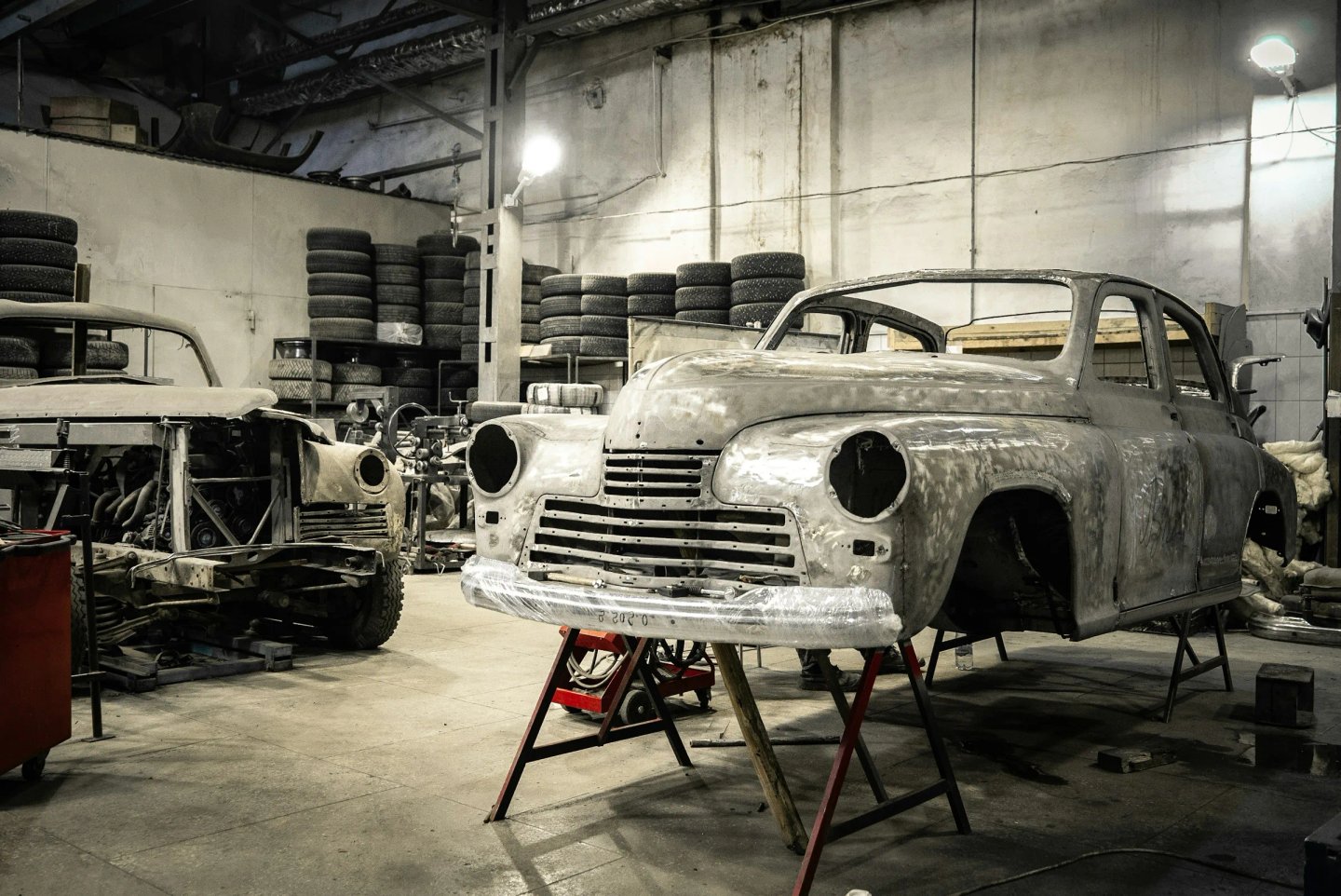
Anyone who abandons a restoration halfway assumes they now own more than the wreck they started with. Money has gone into it, after all. The buyer does the sum differently, and sometimes so differently that the wreck comes out ahead.
On 22 May 2021 at Bicester, Bonhams sold a 1960 Jaguar XK150 S 3.8 drophead that had been in a head-on crash in 1996. The auction house itself described its condition as mangled. It made £90,000, six times the estimate. According to Bonhams only 50 were built, the numbers matched, the leather was original and it had been with one owner since 1969. Everything wrong with it was there to be seen.
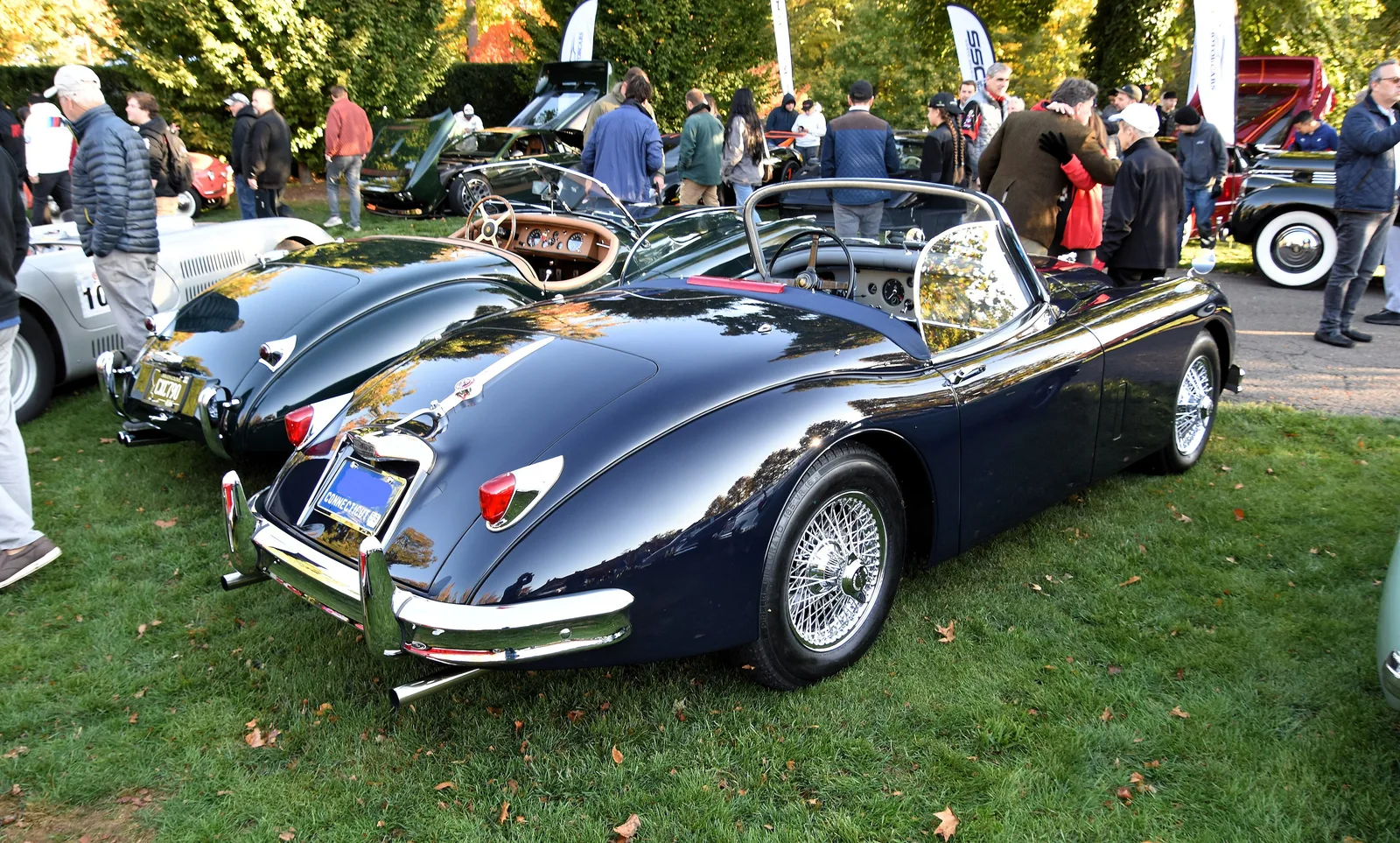
An undamaged 1958 Jaguar XK150 S Drophead Coupe. The Bonhams car was a 3.8 from 1960.
At the same sale a 1968 Aston Martin DB6, in the middle of a restoration, went for £153,000, double its estimate. So the headline on this piece does not always hold. Nor is a clean test possible, because the same car never sells twice, once as a wreck and once half done. What you can do is work out when it happens.
What a buyer can check
A buyer starts from the finished car and subtracts what it costs to get there. With a wreck that is a lot, but it is visible. The rust is where it is and the parts are on the car. With a half-finished car a second question comes in: was what has been done done properly? The answer lies under the paint, in welds nobody can see any more and in boxes whose proper contents nobody knows. And the person who took the car apart is not standing there to explain how it goes back together.
An example, with invented figures. Finished, the car is worth €60,000. From a complete wreck that costs €45,000, so the wreck is worth €15,000 at most. Now the same car half done. The owner has spent €25,000 and says another €20,000 will finish it. If the buyer believes that, they can go up to €40,000. If they do not, they start again: the full €45,000, plus €5,000 to get the paint off and €4,000 for what turns out not to be in the boxes. That leaves €6,000.
One car, two prices, with the wreck in between. The difference is not work or money. It is what the buyer can check.
Barney Gaylord, the MGA authority behind MGAguru.com, describes this curve from practice. Taking the car apart costs a lot of value at once: bumpers and trim that earned something on the car are worth little loose. The car is also now committed to the whole route. The value comes back late, about when the chassis is done and the painted body is ready for reassembly. Until then a partly finished car can often be bought for less than it cost to get that far.
Why the owner does not see it
Hal Arkes and Catherine Blumer showed in 1985 why this is hard to accept. Buyers of a theatre season ticket were given discounts at random: full price at $15, or $2 or $7 off. Those who had paid the most went most often. The money had gone in every case, yet it went on counting. That is the sunk cost, and you hear it from every owner who mentions €25,000 as soon as price comes up.
The obvious next step is the IKEA effect. Michael Norton, Daniel Mochon and Dan Ariely found in 2012 that people bid 63% more for a storage box they had built themselves: $0.78 against $0.48. It fits less well than it seems. In their third experiment some participants had to stop before the last two steps. They bid $0.59, against $1.46 from those allowed to finish. An experiment with 39 people and storage boxes says little about a Mercedes, but it points the other way from what you would expect: pride in your own work depends largely on the work being done. The owner of half a restoration does not have that to lean on. They are left with the bill.
Where it does not hold
At the top of the market this counts for much less. On 19 February 2021 in London, Bonhams sold a 1960 Aston Martin DB4 GT, off the road since 1983, with no doors or windows and nearly all its original parts alongside. Eight bidders took it to £1,975,000, above the £1.8 million guide. A finished car would be worth about £1 million more, according to Goodwood. That gap pays for a lot of work to be done again. Doubt about earlier work is a budget line here, whereas on an MGA it eats the entire margin.
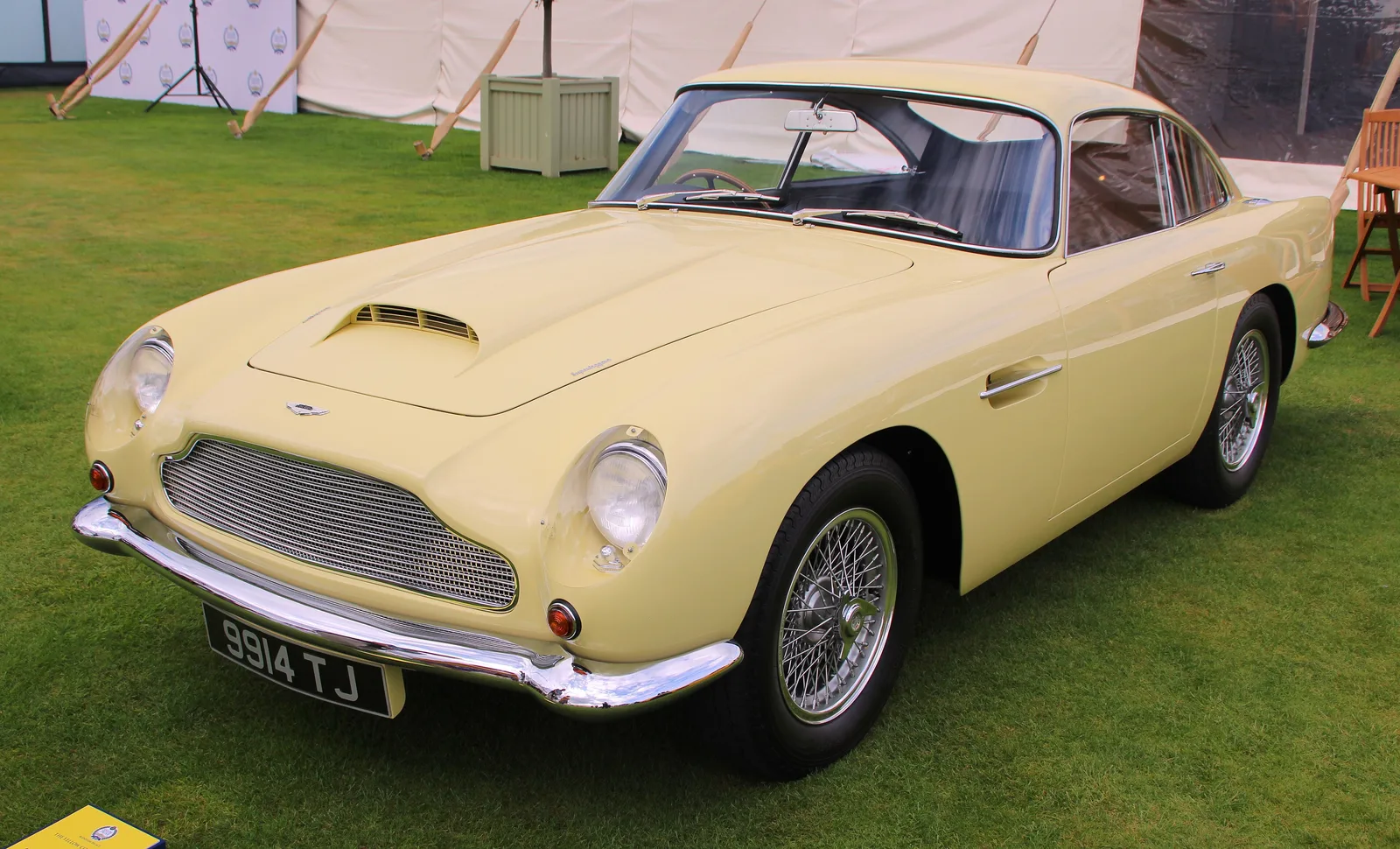
A finished 1960 Aston Martin DB4 GT at Salon Prive in 2023. Not the Bonhams car.
The same sale had a Bugatti Type 57S. Bill Turnbull bought it in 1969, took it apart and made the restoration his life's work. He died before it was finished. Bonhams offered it with no reserve, an estimate of £5 million to £7 million and only the final assembly left to do. It made about £4 million. A Bugatti is not an Aston and the auction house gave no explanation, so this is little more than one observation. Still, two half-finished cars sold that day, one above expectations and one below. How far the restoration had got did not settle it: the Bugatti was furthest along.
The most expensive coat
For an owner who has stalled, the consequence is that the most expensive coat on a half-finished car is the paint. Spraying it for the sale replaces something a buyer can see with something they have to believe, unless there are photographs of the bare metal. A photo book for each stage, labelled boxes and invoices in order cost next to nothing and move the price from the lower number towards the upper one. They are also the first thing skipped, because they add nothing to the car itself. With that folder the owner is selling their work. Without it they are selling a wreck with expensive paint.
Images: Photo by Egor Vikhrev on Unsplash; Jaguar XK150 S Drophead Coupé (1958) (54092748456) by Charles from Port Chester, New York (CC BY 2.0); 1960 Aston Martin DB4 GT SP23 by MrWalkr (CC BY-SA 4.0). Images resized.

